

Mowd founder pivots beyond mowing lawns to tech startup; offering landscapers an online payment platform
November 10, 2020 | Austin Barnes
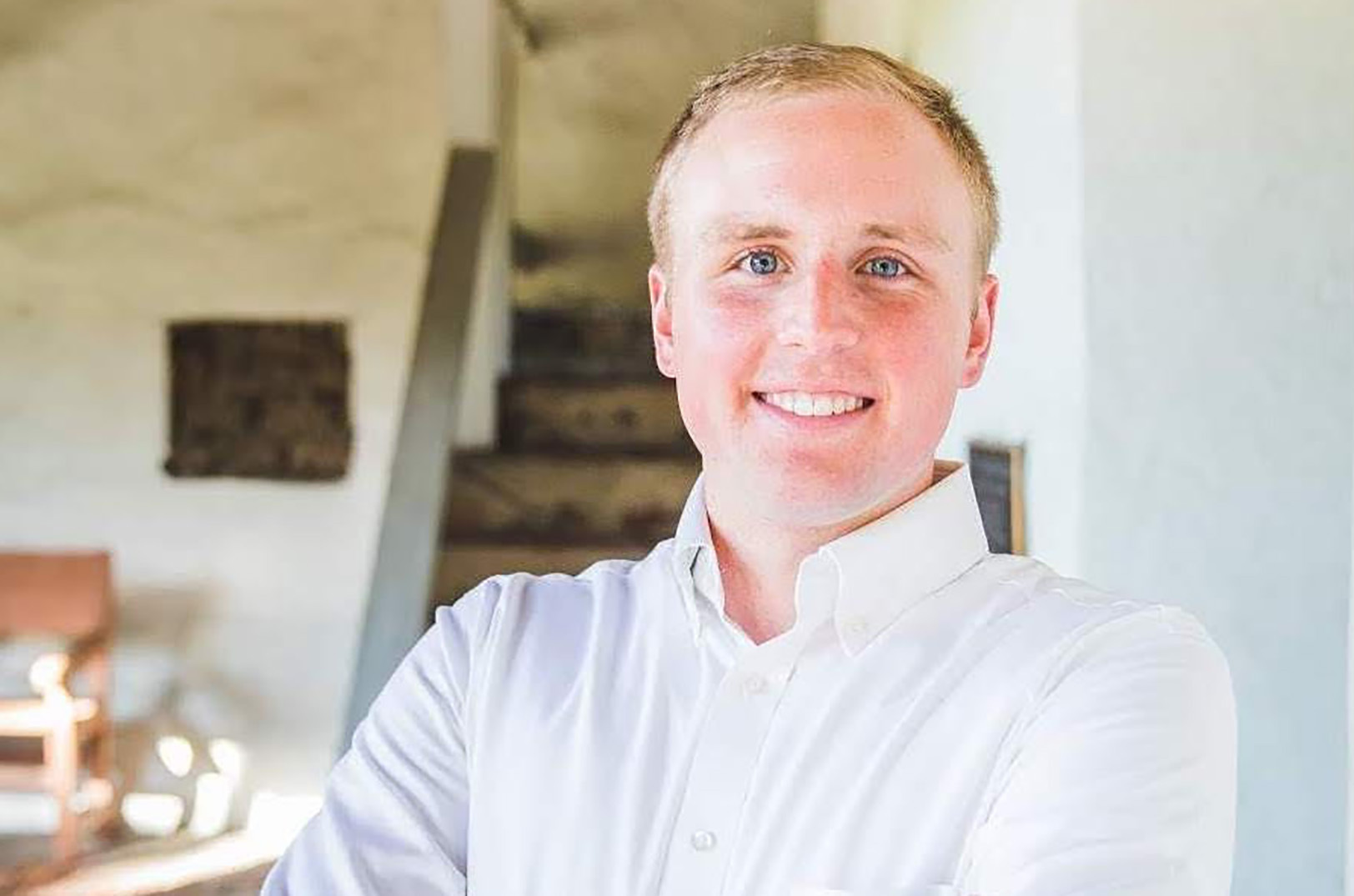
The grass isn’t necessarily greener on the tech side of entrepreneurship, mused Tate Hayes, but revenue and market opportunity grow wild.
“[Small businesses and startups] come with their own difficulties and maybe even simplicities,” said Hayes, founder of Mowd, comparing his newly launched startup to his previous venture — Kansas City-based Hayes Lawncare.
“[As a tech startup] you’re doing all the development work. Where the revenue is produced is not necessarily as labor intensive,” he continued. “So for me, it’s been kind of weird, because I’ve been used to feeling like if I’m not working in the moment, I’m not doing something for the revenue.”

And Mowd makes getting paid easier than ever — empowering lawn care companies to process payments through its easy-to-use customer management platform, designed to eliminate time-consuming and cost-intensive processes like scheduling and job quoting.
Click here to learn more about Mowd’s services.
Launched in January, Mowd is a culmination of experiences for Hayes — a Kansas City native and graduate of Park Hill High School. He eventually moved beyond his roots in lawn care and the metro, scaling a career in tech and fund analysis in such cities as Chicago and Austin before returning home.
“I have had very limited development experience and I kind of joke with people sometimes that the process of getting Mowd to the point it’s at now has been a lot of Google and stack overflow,” he laughed, noting the startup is a genuine example of real-world problem solving in action.
“It was [born from] a lot of problems I had, my friends had experienced, and trying to find a solution that could really modernize the lawn care experience — not only for the business, but for the customer,” Hayes said.
“When I was running my own lawn and landscaping company I found myself becoming increasingly frustrated with the operations side of the business — or the back office side,” he continued. “It just had a lot of tedious tasks that I felt like could be automated or at least simplified.”
Launched in the midst of the COVID-19 era, such simplicity is exactly what Mowd has offered landscape businesses looking to adapt.
“We learned very quickly that the lawn care industry within COVID has had kind of an interesting path,” he said.
“A lot of lawn care businesses are owner-operated or have just a few employees. They really are small businesses, and we realized that with a lot of these quarantine restrictions and mask mandates, a lot of the businesses that we brought on in the first few months of the year were forced to completely shut down.”
As challenges of the pandemic increased, interest in Mowd dried up, creating obstacles Hayes said he had hoped to avoid.
“The first few months of the year, when we went live, we really started to see a lot of interest. A lot of businesses were excited,” he said. “A lot of the businesses weren’t necessarily focused on growing their business. They were just focused on surviving all of this. For four or five months, basically, we saw very limited interest.”
When business owners nationwide found their bearings and started looking for COVID-friendly innovations that could get their businesses back up and running, Mowd started to surge, Hayes explained.
“[This is an industry built on] getting payment from customers via a check under the mat type of a system — texting and calling them back, back-and-forth scheduling services. They were excited to [have a way] to connect with customers online” he said, noting Mowd intends to find its footing helping lawn care services but could eventually expand to other service-based industries such as snow removal — strategies he was able to fully develop thanks to the downtime offered by the pandemic and new opportunities to complete more thorough research of the market.
“I learned very quickly that [my target customers] would get a phone call during the day and requests for quotes and they would be out working — so they couldn’t actually respond until later in the day,” he said of challenges the research period revealed and ways landscape companies rapidly shed leads.
“The biggest [opportunity] for Mowd is that we have the ability to quote a lot of properties instantly and that customer then can decide — in that moment — whether or not to go with the business,” Hayes said.
“That was where the structure of Mowd began. It was, ‘Let’s fix that problem,’ because if you can’t close leads you can’t really grow the business very effectively.”
Click here to follow Mowd on Instagram.


2020 Startups to Watch
stats here
Related Posts on Startland News

Cornstalks to cardboard: This KS company is turning farmers’ trash into sustainable fiber packaging
Startland News’ Startup Road Trip series explores innovative and uncommon ideas finding success in rural America and Midwestern startup hubs outside the Kansas City metro. WILLIAMSBURG, Kansas — One small town just south of I-35 in Franklin County — population 390 — soon will become home to a new world headquarters, said Mark Majors. Williamsburg’s…

Vine Street Brewing drafts ‘Afrodisiac’ Ale: A tribute to love, Black culture
A cross-Kansas City collaboration crafted specifically for the month of February could become a staple at Vine Street Brewing if customers fall in love with the blend as much as its brewers hope. Kansas City’s first Black-owned brewery — in partnership with André’s Chocolates and The Black Pantry — unveiled ‘Afrodisiac’ last week, offering a…

Fans packed Chiefs rally, one didn’t come home; citywide trauma from shooting won’t heal quickly, grief expert says
Trauma and grief come in waves, said Mindy Corporon, foreshadowing a long road ahead for those impacted — directly and indirectly — by Wednesday’s shooting near the Kansas City Chiefs’ Super Bowl victory rally. Like many across the region, Corporon, co-founder of the Merriam-based nonprofit SevenDays foundation, was watching the Chiefs parade on TV when…

Black leaders need to earn a ‘thriving wage’ before they can help others; an Evergy-backed cohort could help them ascend
A new program backed by entrepreneur support groups and Evergy aims to raise household income by at least 30 percent for participating Black professionals, nonprofit founders, and entrepreneurs, said Craig Moore II. “The ultimate goal is making sure you’re a leader who can do more than show up and talk about community — you have the…