

Startup veterans hope to save community banks from fintech ‘feeding frenzy’
November 3, 2020 | Austin Barnes

The future of small business lending has arrived — and it’s being built by a team of Kansas City tech veterans, at a critical time for the industry, said Hugh Khan.
“Small financial institutions are dying; they’re going away. Since the Great Recession, 40 percent are gone,” added Khan, founder and principal of Highploom.
“They’re not big enough to afford tech and [when big banks offer competitive services] their only way out is to get acquired or be replaced. … It’s a $27 trillion space. There’s a feeding frenzy of transformation that’s occurring.”
The newly launched fintech startup — more than two-years in the making and inspired by Khan’s 30-year career in tech — hopes to curb the dominance of big banking, designed to help local operations stay afloat with its affordable digital platform that overhauls the lending process through automation and digitization, Khan explained.
Click here to learn more about Highploom and how it works.
“If you have local customers, you have to engage with them digitally. Customers want the convenience of digital, but also want a physical presence,” he said of industry trends, known to double revenue when executed correctly.
Customer engagement has proven itself to be a common blindspot for banks, Khan added, detailing the importance of the Highploom platform and why it could prove to be transformative for the industry.
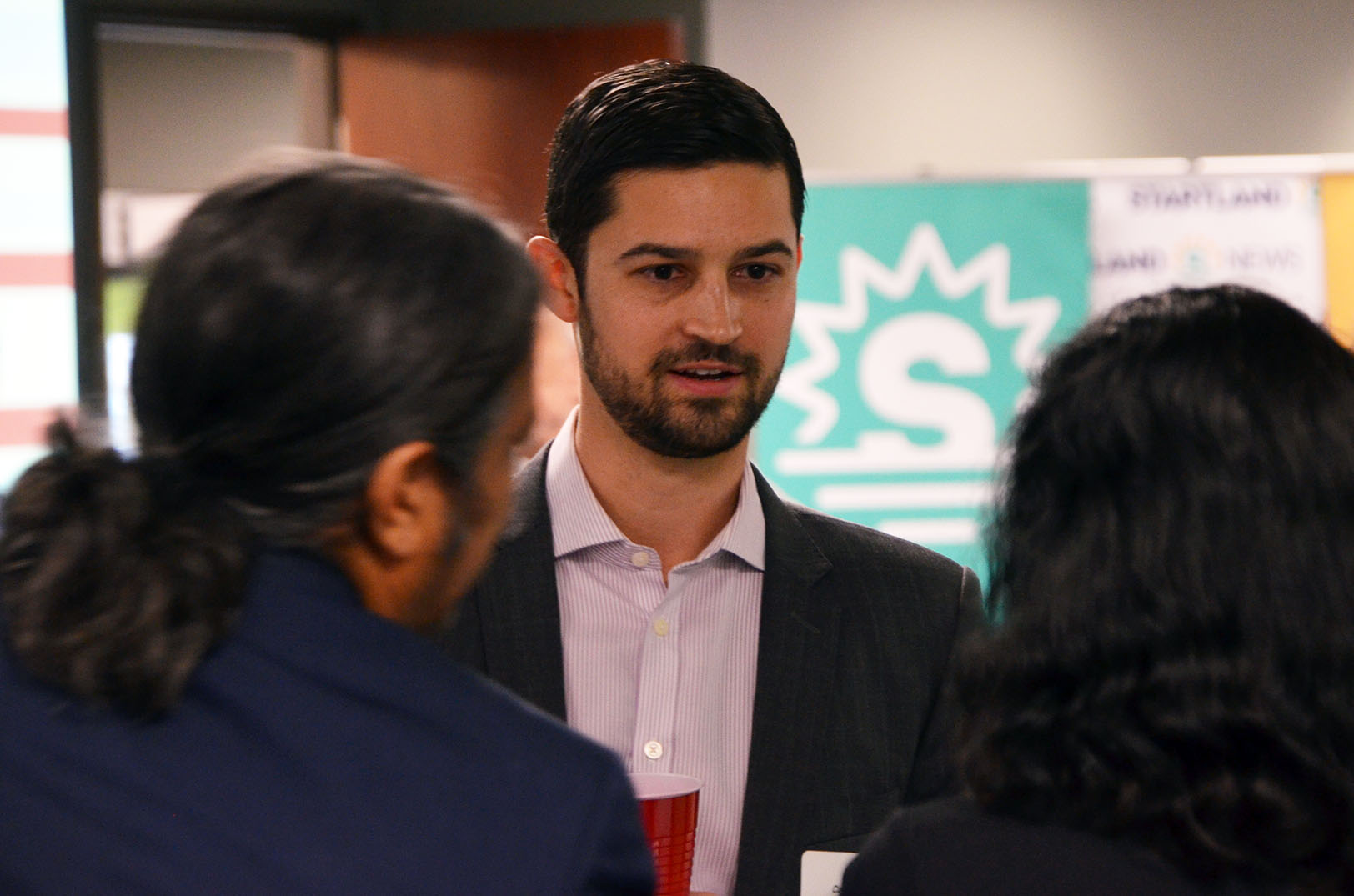
Clayton Richardson, Highploom; December 2019 Startland News’ Innovation Exchange
“Our technology enables financial institutions to serve their customers at scale across all product lines — in a highly curated, bespoke fashion — meaning we can, within seconds, create a customer portal that is a banker’s first point of contact,” Khan said, noting he, his brother, and co-founder Clayton Richardson have invested more than $1 million of their own money to get Highploom off the ground.
“We own all of our patents and all of our technology. We’re not partnering or using anything else, so we can provide technology to financial institutions at a much better rate and [they can] actually leapfrog the big banks with this technology,” he said.
Despite impressive resumes for both Khan and Richardson, Highploom hasn’t been realized without community support, Khan noted.
The startup took part in the Spencer Fane-backed STARTUP Lab, which helped its founders further realize the company as it took on customers.
“When the opportunity came to actually partner with them, we were at the right time and the right stage to get really superior legal help and also strategic help,” he said.
Click here to read more about the Kansas City law firm’s STARTUP Lab and its impact on another startup — Helix Health.
“They’re in the space and they know a lot of customers. The feedback on our strategy and the plan and the space that we got from them and are getting from them is invaluable.”
Leaning on his experience at such companies as Perceptive Software and an early iteration of Cerner, Khan said, perfecting the platform in private was key to rolling out the startup in a way that would deliver immediate benefit to customers — not just talk or empty promises of unrealized solutions.
“I wanted to figure out how we could look at the biggest problem that small businesses have, which is access to capital. Small financial [and] community institutions do a lot of relationship lending,” he explained.
“That’s the ecosystem I wanted to help. When digital currencies — which, of course, are our future — when they become relevant and more embedded in our regulatory and economic system, we could [help] transition some of the smaller financial institutions,” Khan said.
As the company comes online publicly, timing is everything, Khan said, noting the impacts of the COVID-19 pandemic on small banks and the crucial role they play in helping small businesses and communities navigate rough waters.
“We spent over a million dollars building this thing [at the time] without a customer — which is crazy and high risk; it’s not what everybody would do,” he said. “But fortunately I was in a position to take that risk. So now we have the basic system, how can we help solve the problem?”

Featured Business

2020 Startups to Watch
stats here
Related Posts on Startland News
Techstars KC alum Grit Virtual posts $840K oversubscribed seed round
Reality is starting to sink in for Grit Virtual, said co-founder Chris Callen. “It’s exciting to finally be able to talk about our funding rounds and the successes we have had,” Callen said. “It’s been an exciting ride so far, and we’re kind of gearing up to make it a real company, not just an R&D…

State of Entrepreneurship Address: Redefine ‘entrepreneur’ through inclusion
Entrepreneurship rates are half of what they were a generation ago, and although the U.S. population is increasingly diverse, educated and older, the nation’s entrepreneurial population isn’t changing at the same pace, Wendy Guillies said. Founders face too many barriers, said Guillies, president and chief executive officer of the Ewing Marion Kauffman Foundation, Wednesday morning…

Photos: Innovation Exchange returns with Top KC Startups to Watch celebration
So … What’s your spirit animal? Eleven startup founders and leaders joined Startland News and the Kansas City Startup Foundation on stage Tuesday for a rebooted Innovation Exchange experience — complete with casual conversation, jazz and few unexpected queries. Saluting the Top Kansas City Startups to Watch in 2018, the rapid-fire, Q&A-style event showcased the…

City gave into fear, failed the test on innovation with Airbnb vote, councilman says
Kansas City’s move Thursday to prohibit short-term rentals in large portions of the city sent a clear message to entrepreneurs with disruptive ideas and technology, Quinton Lucas said: “Not In My Backyard.” “I don’t know why a city that has so many innovators and that’s buzzing, that’s exciting — and frankly doesn’t always have…