

Entrepreneurs’ intellectual property rights: This is where things get tricky
November 16, 2020 | Chris Brown

Editor’s note: The opinions expressed in this commentary — the first in a four-part series — are the author’s alone. Chris Brown is the founder of Venture Legal where he represents startups, freelancers, and small businesses. This column is intended to be general in detail and does not constitute legal advice.
For many new businesses, the value of their intellectual property will exceed the value of their physical assets. Unfortunately, the laws which protect intellectual property are not always intuitive and are often blurry. In a four-part series for Startland News, we’ll explore what entrepreneurs should know about copyrights, trademarks, trade secrets, and patents. And we’ll start with copyrights.
What is a copyright?
Copyrights protect creative works, from art and music to business documents, computer software and more. It’s important to note that you can’t copyright an idea, but only your original expression of the idea. You may think of a food delivery app, but that’s just an idea. The expression of the idea would be the specific screen layouts, content, and user flow of the app itself. That expression is the component you can protect using copyright.
How do you obtain a copyright?
Copyrights spring to life as soon as an original work is reduced to a tangible medium (for example, in writing, an audio recording, or something similar). Although registration with the Copyright Office is encouraged, it isn’t strictly required. Of course, it is often best to register your works, and many entrepreneurs can do this on their own using the Copyright Office’s website.
Once you obtain rights, you can prevent others from reproducing, distributing, displaying, performing, or creating derivative works using your original work (we commonly call these the “bundle of rights”).
Who owns the copyright?
This is where things get tricky and entrepreneurs often get it wrong.
The default rule is that the person that creates an original work is the owner of the copyright to that work. However, there are three primary ways someone else might become the owner of the copyright. The first is easy–the owner assigns the copyright (in writing) to someone else. The second is also kind of easy–when an employee creates an original work within the scope of their employment, the employer will own the copyright.
The third is a bit more complicated, and it involves situations when an independent contractor creates an original work. In that case, the work may be (but usually is not) a “work made for hire.” And in either event, it is critical that the contractor and her client come to an agreement on copyright ownership in a written document (usually in a client or contractor agreement).
How long does a copyright last?
Generally speaking, rights under the Copyright Act will last for the life of the creator plus 70 years. There are situations where the length will be different, but it’s often easy to just assume “life plus 70” unless you really need to dig into the fact pattern.
What constitutes copyright infringement?
There are many misconceptions about copyright infringement out there (like the idea that if you change a work by 10 percent you are in the clear … which is not true). The true test is whether someone exercises one of the “bundle of rights” referenced above without authorization from the copyright owner. The “copy” doesn’t even have to be a literal copy. All that is required is that the copy be substantially similar to the original.
At this point, many entrepreneurs claim their use is “fair use” but it is important to note that the fair use defenses under copyright law are pretty narrow and you should never assume a use is fair use without speaking to a lawyer.
What’s next
Next up: We’ll talk about trademarks, and in future installments of this series we’ll cover trade secrets and patents.
Chris Brown is the founder of Venture Legal where he represents startups, freelancers, and small businesses. He also co-founded Contract Canvas, a digital contract platform for freelancers. www.venturelegalkc.com // @CSBCounsel

Featured Business

2020 Startups to Watch
stats here
Related Posts on Startland News

Fattyhead feeds demand for keto-friendly pizza crust; What’s the founder’s secret?
Fattyhead began as a labor of love: a path toward a more healthful diet that transformed into a booming business for Kansas City native Laura Manivong. “I started feeling better, I started having energy and my body stopped hurting as much,” said Manivong, creator of her own low-carb, ketogenic pizza crust. Manivong’s journey started 18…
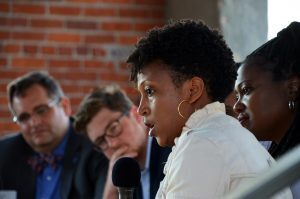
Innovation versus inclusive prosperity: Can hub developers create both in Kansas City?
Place and prosperity go hand-in-hand, said William Dowdell. Less clear, however, is how developers and communities will strike a balance in their efforts to generate innovation and wealth in Kansas City. “Geography is a big part of this. When we talk about expanding opportunity and bringing innovation, we also have to look at those spaces…

With an athletic look and fit, North KC’s TiScrubs aims to be the ‘Nike of scrubs’
The endurance and durability of TiScrubs help give medical professionals servicing children the air of an athlete stepping onto the field, said Natalie Busch. Founder of the North Kansas City startup, Busch saw the need for updated medical wear when working Team Smile, a nonprofit run by her husband, Bill, which partners with sports teams…

KCRise Fund launches second fund; first investments in backstitch, Bungii, Daupler
KCRise Fund today announced the launch of its second fund — KCRise Fund II — along with three new investments in high-growth, early-stage Kansas City tech companies. Backstitch, Bungii and Daupler are the latest startups to join the KCRise Fund family, and the first three portfolio companies for the new fund. All three are featured…