

Entrepreneurs’ intellectual property rights: This is where things get tricky
November 16, 2020 | Chris Brown

Editor’s note: The opinions expressed in this commentary — the first in a four-part series — are the author’s alone. Chris Brown is the founder of Venture Legal where he represents startups, freelancers, and small businesses. This column is intended to be general in detail and does not constitute legal advice.
For many new businesses, the value of their intellectual property will exceed the value of their physical assets. Unfortunately, the laws which protect intellectual property are not always intuitive and are often blurry. In a four-part series for Startland News, we’ll explore what entrepreneurs should know about copyrights, trademarks, trade secrets, and patents. And we’ll start with copyrights.
What is a copyright?
Copyrights protect creative works, from art and music to business documents, computer software and more. It’s important to note that you can’t copyright an idea, but only your original expression of the idea. You may think of a food delivery app, but that’s just an idea. The expression of the idea would be the specific screen layouts, content, and user flow of the app itself. That expression is the component you can protect using copyright.
How do you obtain a copyright?
Copyrights spring to life as soon as an original work is reduced to a tangible medium (for example, in writing, an audio recording, or something similar). Although registration with the Copyright Office is encouraged, it isn’t strictly required. Of course, it is often best to register your works, and many entrepreneurs can do this on their own using the Copyright Office’s website.
Once you obtain rights, you can prevent others from reproducing, distributing, displaying, performing, or creating derivative works using your original work (we commonly call these the “bundle of rights”).
Who owns the copyright?
This is where things get tricky and entrepreneurs often get it wrong.
The default rule is that the person that creates an original work is the owner of the copyright to that work. However, there are three primary ways someone else might become the owner of the copyright. The first is easy–the owner assigns the copyright (in writing) to someone else. The second is also kind of easy–when an employee creates an original work within the scope of their employment, the employer will own the copyright.
The third is a bit more complicated, and it involves situations when an independent contractor creates an original work. In that case, the work may be (but usually is not) a “work made for hire.” And in either event, it is critical that the contractor and her client come to an agreement on copyright ownership in a written document (usually in a client or contractor agreement).
How long does a copyright last?
Generally speaking, rights under the Copyright Act will last for the life of the creator plus 70 years. There are situations where the length will be different, but it’s often easy to just assume “life plus 70” unless you really need to dig into the fact pattern.
What constitutes copyright infringement?
There are many misconceptions about copyright infringement out there (like the idea that if you change a work by 10 percent you are in the clear … which is not true). The true test is whether someone exercises one of the “bundle of rights” referenced above without authorization from the copyright owner. The “copy” doesn’t even have to be a literal copy. All that is required is that the copy be substantially similar to the original.
At this point, many entrepreneurs claim their use is “fair use” but it is important to note that the fair use defenses under copyright law are pretty narrow and you should never assume a use is fair use without speaking to a lawyer.
What’s next
Next up: We’ll talk about trademarks, and in future installments of this series we’ll cover trade secrets and patents.
Chris Brown is the founder of Venture Legal where he represents startups, freelancers, and small businesses. He also co-founded Contract Canvas, a digital contract platform for freelancers. www.venturelegalkc.com // @CSBCounsel

Featured Business

2020 Startups to Watch
stats here
Related Posts on Startland News

UMKC top student entrepreneur’s refrain: It isn’t how many ideas you have, it’s what you do with them
Improvising is vital in jazz and entrepreneurship, noted Tate Berry, UMKC Student Entrepreneur of the Year. A double major in jazz studies and business administration, Berry is well-versed in both. “Composing music is a very long collaborative creative process, which has given me the skills to look at intricate problems from a distance and develop…

Marsha Willis joins Facebook accelerator to boost 30K-strong community of Black-owned businesses, supporters
Marsha Willis’ decade-long journey of supporting Kansas City-based, Black-owned businesses is headed to the next level — thanks to a funding infusion from Facebook and Willis’ own focused commitment to providing elevated experiences to the online community she’s built. “Our focus is to create a centralized place where we can share resources and education for…
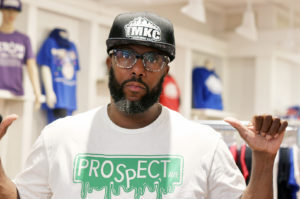
The Popper drips with KC: Why this award-winning brand won’t quit ‘until the aliens on other planets know’ his city
Walter Edwin is better known as the Popper, but it might as well be “KC,” he said. His love for Kansas City has inspired both his music career and award-winning apparel business. As a performer, he’s rapped about his hometown on his singles “I’m KC” and “For the City,” and as a collaborator on Tech…
10 finalists vying for ‘Fan Favorite’ in AltCap Your Biz competition; Here’s how to vote
AltCap’s marquee GEWKC competition for emerging entrepreneurs is returning in November, but fans of the businesses can cast votes now to determine a $2,500 “fan favorite” winner at the coming pitch event. Ten finalists for the AltCap Your Biz competition were announced this week. The live pitch day is set for Nov. 17 at iWerx…