

More than a virtual grocery store, Pantry Goods is keeping food (and soil) ‘alive’
October 3, 2020 | Austin Barnes
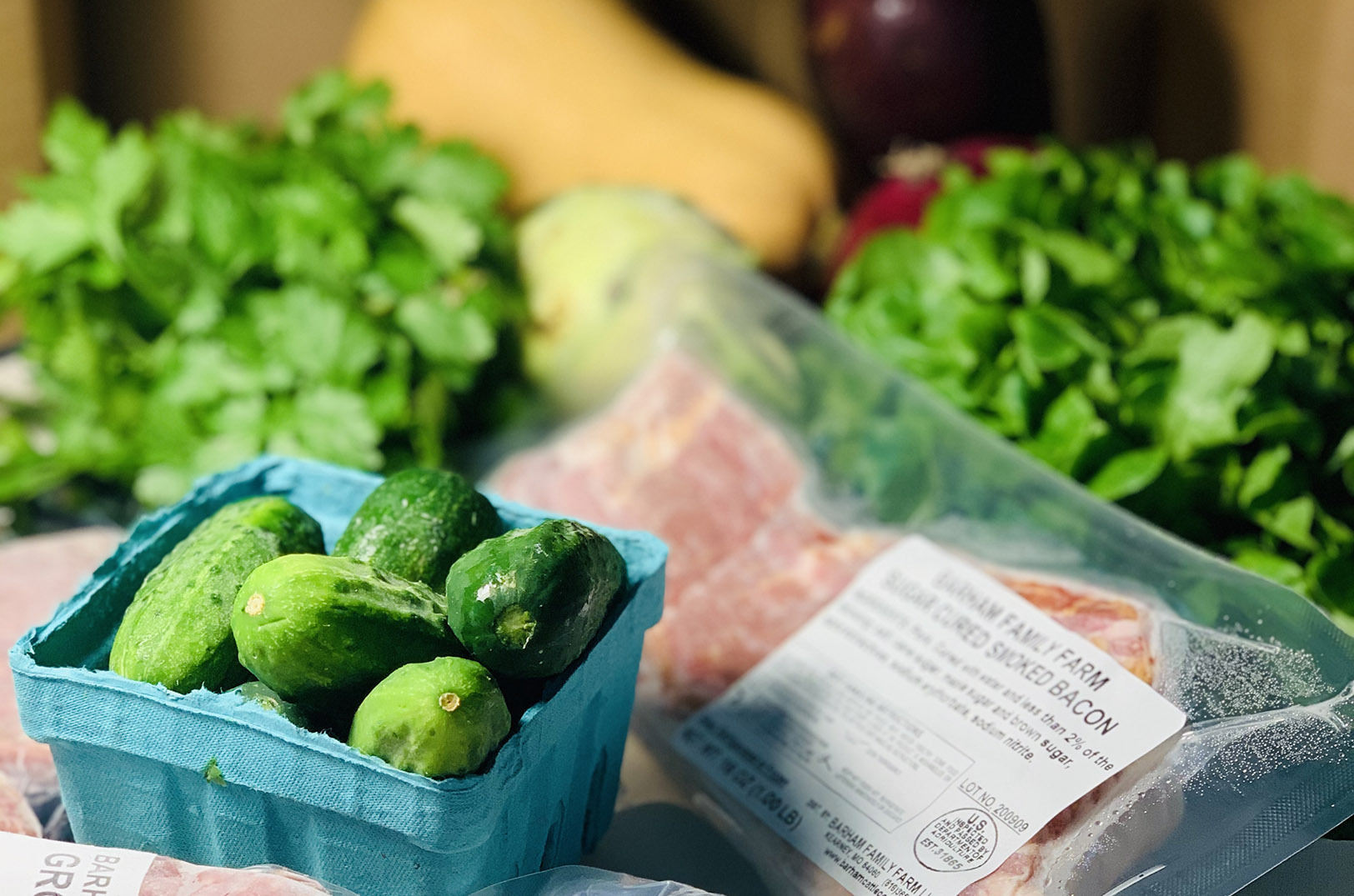
Whole foods have never been so affordable, Marcelle Clements said, as Pantry Goods sews seeds of sustainability in Kansas City and consumers reap a harvest full of benefits.
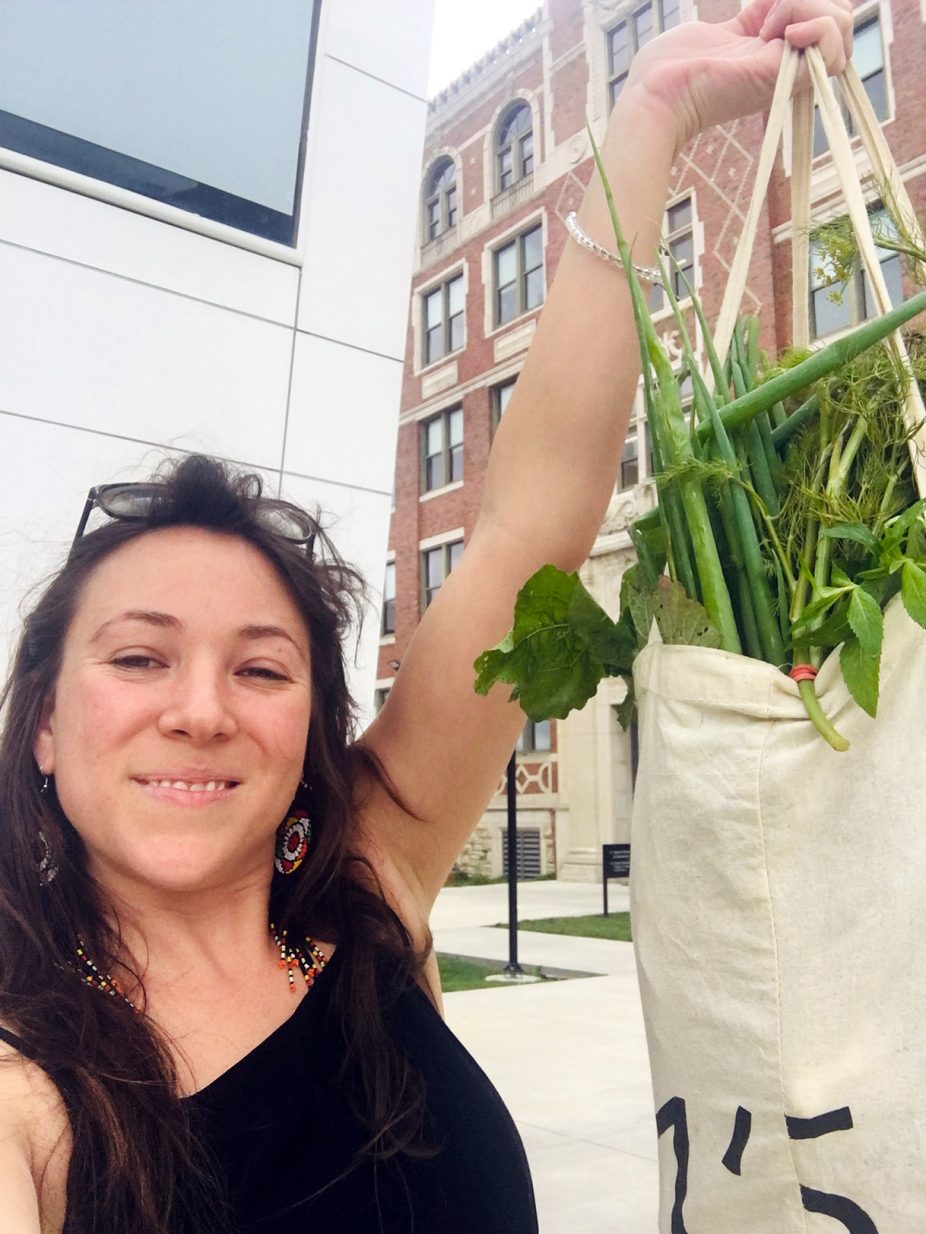
Marcelle Clements, Pantry Goods
“I’ve always had one foot in this farming, sustainable world,” said Clements, founder of Pantry Goods, discussing her passion for the project — a virtual grocery store, stocked with farm-to-table food boxes. The venture celebrates local growers and farmers and connects conscious consumers with healthy foods at affordable prices.
Click here to place a Pantry Goods order for delivery within a 35-mile radius of Kansas City.
The effort was born out of exposure to environmental challenges in Clements’ home country, South Africa.
“I’ve lived here for five years, but prior [to moving], I did work for a friend of mine’s nonprofit in South Africa. I headed up the environmental [work] of her organization and that led me on a path to the United States six years ago, to learn about earthships,” she added, detailing later work with the sustainable buildings in New Mexico, which further inspired her passion to grow food.
“For about a year-and-a-half I did due diligence on this project,” Clements said of work that went into the sustainability startup’s January launch.
“I surveyed people, I built the social media following. I was just kind of figuring out what the best approach would be — and it was a toss up between a brick-and-mortar store or doing an online store.”
When it came down to it, planting the business online was the most cost-effective choice for Clements.
“Once everything was said and done, it would have been about $300,000 to start an actual grocery store, so I decided to go with the online version and do delivery,” she added.
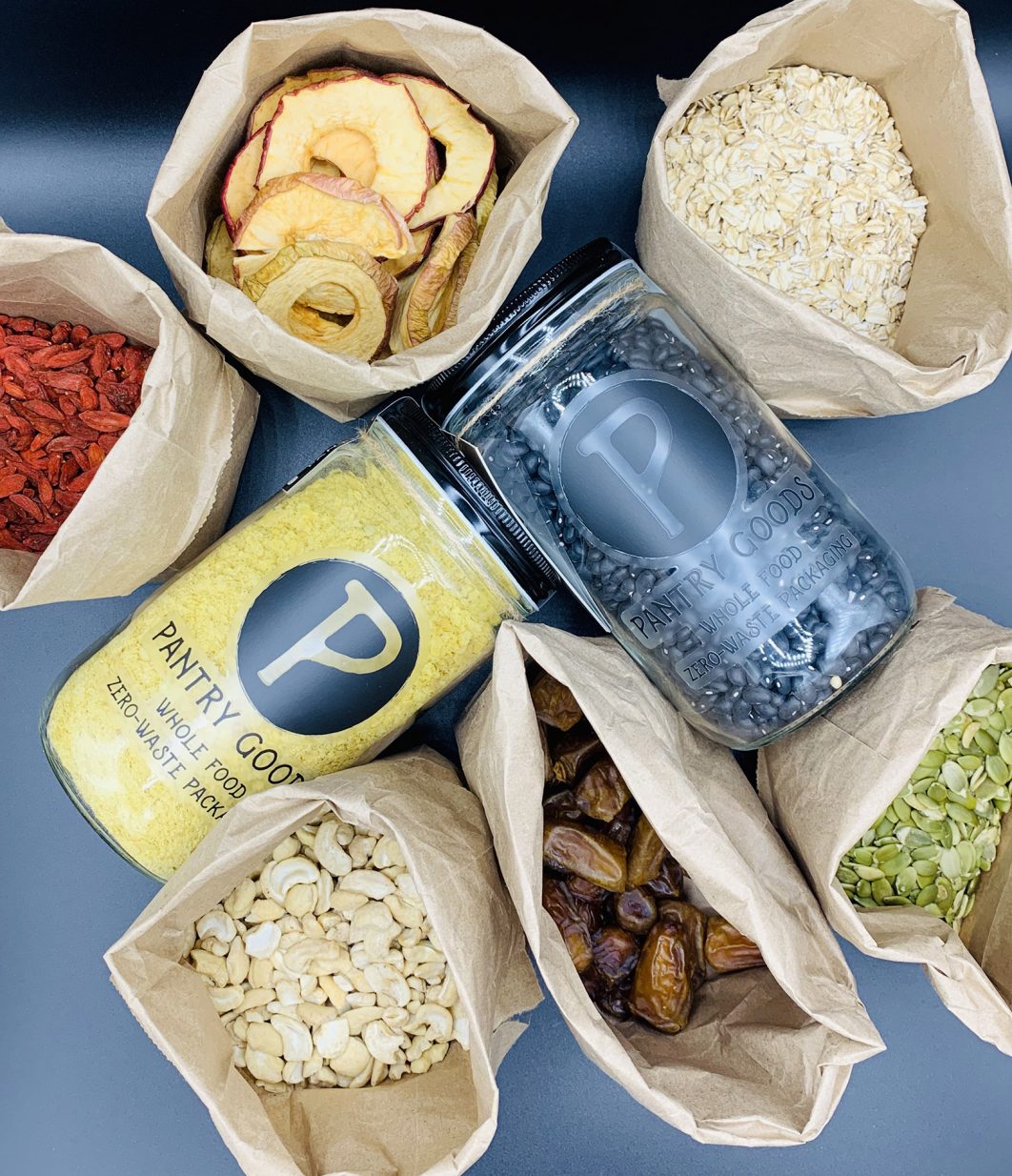
Pantry Goods
Offering three farm-to-table boxes — the omnivore, carnivore, and vegetarian — and fresh vegetables, fruits, nuts, and dry goods from such local suppliers as Marcell Coffee, Pantry Goods has gained sizeable momentum with customers amid the socially distant consumer landscape brought on by the COVID-19 pandemic, Clements explained.
“People are just so much more comfortable [grocery shopping online] and getting their food delivered,” she said, noting that while customers have a higher interest in the offerings of Pantry Goods, the business remains niche.
“We’re not just going to Whole Foods and shopping for you. We don’t have everything. So it is a little different. They get a box of stuff and they can basically just Google recipes and figure out what to do with it — and I think that’s fun for a lot of people.”
Click here to explore Pantry Goods’ offerings.
Farmers who partner with Pantry Goods practice regenerative agriculture and sustainable farming practices that benefit the health of soil, water, air, and biodiversity, Clements said.
“A lot of people don’t know this, but we only have [around] 60 years left of top soil and these farmers are keeping our soil alive basically. We can’t grow food in dead soil,” Clements said of the importance behind the farming practices and what’s at stake if they aren’t adopted on a wider scale.
“Every year we lose inches of topsoil to soil degradation and erosion because, for instance, we only grow corn or soy in very large areas and till the soil.”
When tilled, wind and rain wash inches of soil away where nothing is planted, she explained.
“People think, ‘Oh, if we have ground we can grow things,’ it’s not the case really. You need very fertile top soil with microorganisms to actually grow food.”
Farmers who stock the inventory at Pantry Goods make use of techniques that do their part to preserve the soil, Clements said, noting in addition to crops, all livestock is grass fed, with chickens and eggs raised free-range.
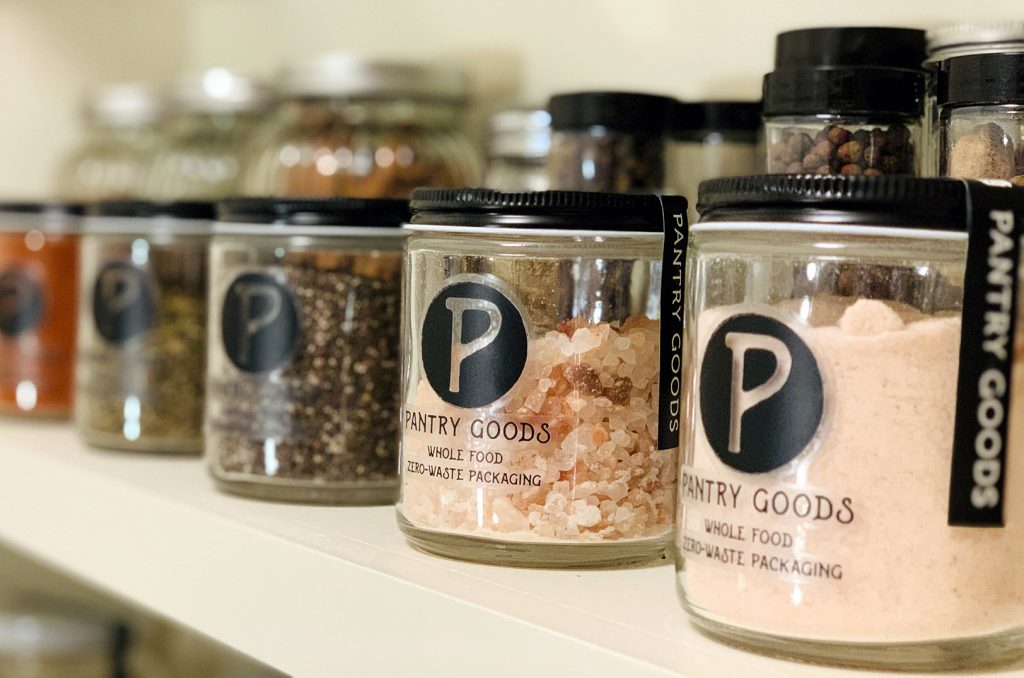
Pantry Goods
Beyond fresh foods and environment-focused farming practices, the company has also committed to using sustainable packaging.
“When we bring you your new order, we will return any packaging that you have left for us and provide you with a store credit for the returns. This way you never pay for packaging that you would only throw away in the trash. You just rent the packaging for a period of time and when you return it to us, we return your deposit to you,” the company explained on its website.
As the company comes into its own in the midst of an uneasy business environment, Clements said she’s eager to win over new customers, looking to try something different and support local agriculture.
“These farmers are really struggling because of how COVID has impacted the restaurant industry. I think that’s the most important thing,” she said.
“Supporting local farmers is so impactful for so many different reasons. Firstly, your food isn’t traveling thousands of miles to get to you like it does through conventional distribution methods. It’s really impactful from an environmental standpoint … A lot of our food is going extinct. Small farmers actually keep [it] alive.”


2020 Startups to Watch
stats here
Related Posts on Startland News
Kansas City startups flex pitch skills in national Kauffman contest
Four Kansas City area startups — and one Lawrence, Kan. firm — have qualified to the top 40 of Ewing Marion Kauffman Foundation’s 1 in a Million pitch competition. The competition offers those who have presented at 1 Million Cups in the last year a chance to snag a $25,000 prize. Hundreds of applicants — who…

Big Bang leverages smart city success, LaunchKC momentum
Editor’s note: This content is sponsored by LaunchKC but independently produced by Startland News. As Kansas City becomes a hotbed for smart city tech, one local startup is providing a spine for streamlined communication among the devices cities will leverage. Kansas City-based Big Bang’s Internet of Things software aims to work as the “central nervous…

JE Dunn leads $5M round in a local, ‘skunkworks’ tech spinout
One of Kansas City’s top corporations has led a $5 million investment round in a local tech firm that helps manage the torrents of paperwork associated with building maintenance and management. Kansas City-based JE Dunn led the Series A round in Site 1001, a software company that spun out of the construction giant to digitize…

Growing tech startup Campus Eye wants to make schools safer
College campuses aren’t the safest place to be. Nearly one in four female college students in the U.S. have experienced sexual assault. In the same study, 11 percent of female college students said they’ve experienced rape. And since 2013, there has been more than 76 instances of gun violence on college campuses. Campus Eye founder…