

Hyperloop taps West Virginia for $500M project; Missouri still in the running for future sites, advocate says
October 8, 2020 | Startland News Staff

A prized hyperloop project headed for West Virginia doesn’t mean Missouri’s hopes of a high-speed transportation system connecting St. Louis to Kansas City are off the rails, said Ryan Weber, KC Tech Council president.
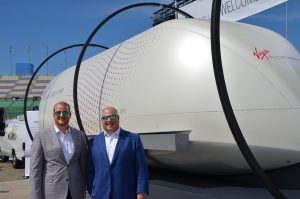
Ryan Weber, KC Tech Council; and Greg Kratofil, Polsinelli with a Hyperloop One pod; ARtechBBQ 2019
Virgin Hyperloop announced Thursday its plans to host a $500 million certification center and test track for billionaire Richard Branson’s experimental tech in West Virginia, according to Reuters, which first reported the story.
The news comes after a years-long competition between 17 states hoping to score the project.
Missouri was among the leading contenders for the Hyperloop Certification Center (HCC) — an effort championed by Weber’s KC Tech Council and its members, as well as corporate and governmental partners.
The hyperloop project planned for West Virginia is just one component of a broad slate of efforts connected to Virgin Hyperloop, Weber said, congratulating the Mountain State team on its selection.
“We are excited to continue working with Virgin Hyperloop, parallel to HCC, by building a commercial, revenue-generating hyperloop route in the Kansas City region,” he continued. “We can confidently say the Kansas City region provided a comprehensive response to the HCC request for proposal. Our team focused on speed-to-market, private financing support from institutional infrastructure investors, and a leadership team of experts from the public and private sectors.”
Click here to read about the feasibility of a Missouri Hyperloop line.
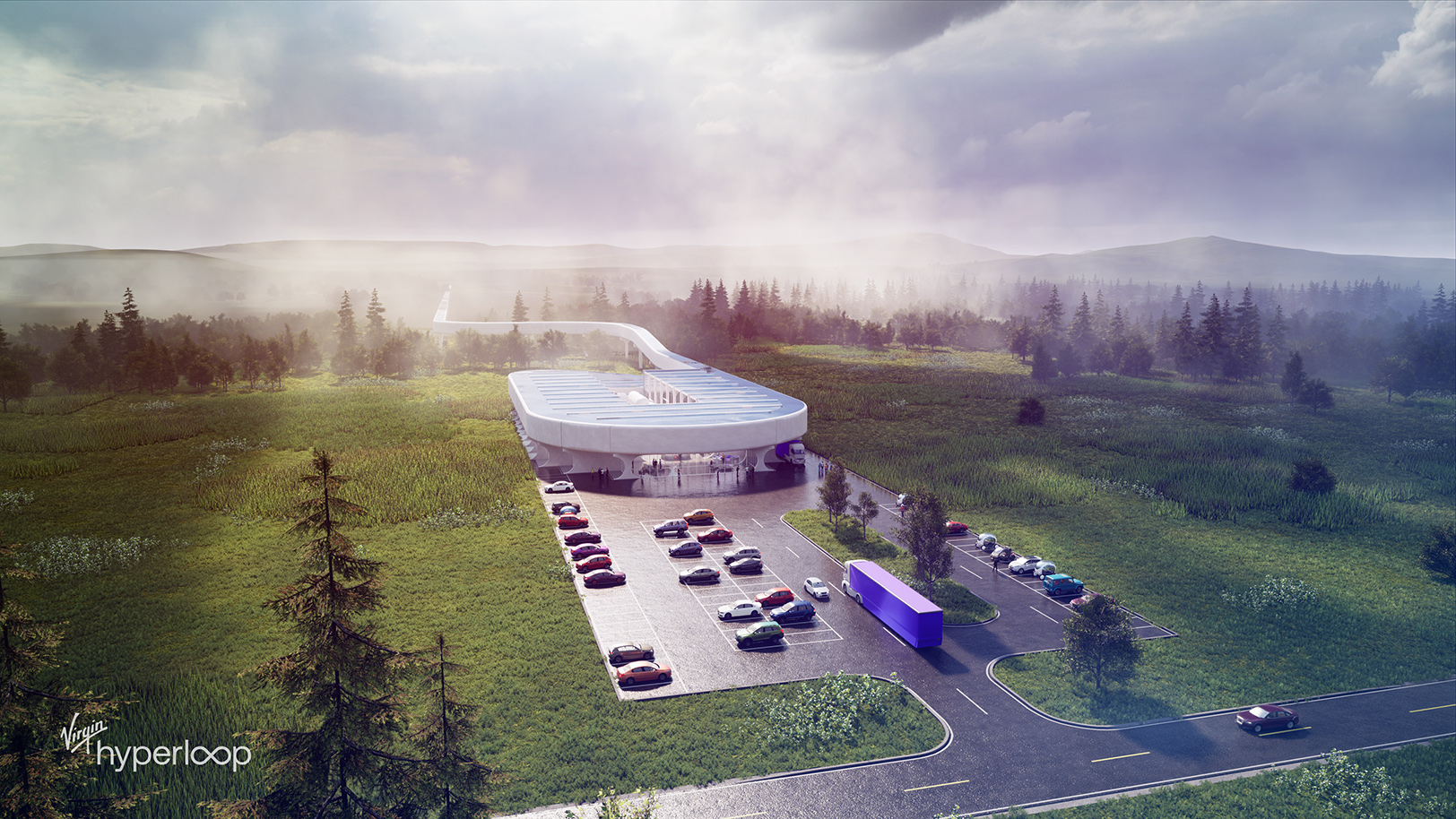
Hyperloop Certification Center (HCC) planned for West Virginia; rendering courtesy of Virgin Hyperloop
Construction of the HCC is slated to begin in 2022 on the site of a former coal mine in Tucker and Grant Counties, West Virginia, with safety certification by 2025 and commercial operations by 2030, Virgin Hyperloop said via Reuters.
How will it work?
Think of the hyperloop system as high-speed rail travel in a vacuum. Levitated pods are propelled at speeds reaching 670 miles per hour by electric motors through a series of interconnected tubes that create a low-pressure environment, allowing the pods to glide with limited friction at speeds that surpass air travel.
In such a system, a trip between New York and Washington would take just 30 minutes — twice as fast as a commercial jet flight and four times faster than a high-speed train, Reuters reported.
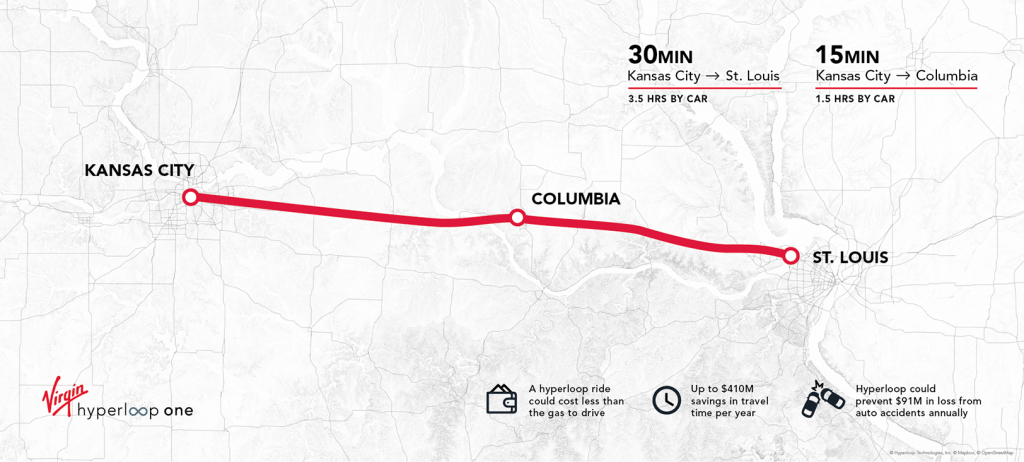
Missouri Hyperloop Map
For Missouri, advocates for the hyperloop effort also touted travel estimates of 30-minute commutes between St. Louis and Kansas City. The potential for that outcome hasn’t come to the end of the line, Weber said.
“We know there will be future opportunities to develop hyperloop, and other emerging transportation technologies, in the Kansas City area,” he said. “Our strong concentration of highly-skilled talent, coupled with our central location, supports this vision and reinforces our competitiveness for future industry growth. We look forward to pursuing new possibilities and providing the same support and dedication we showed to the Hyperloop Certification Center project.”
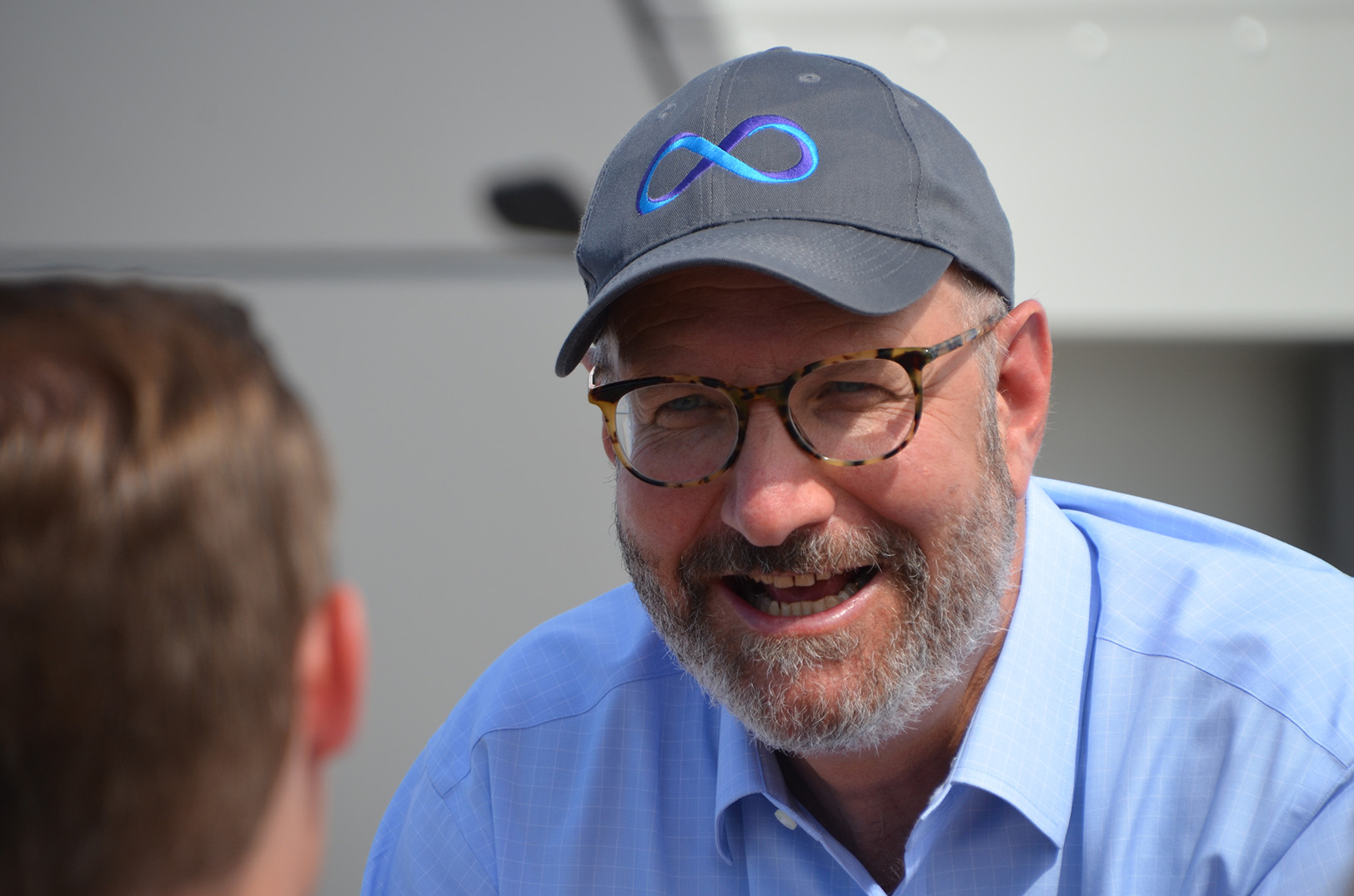
Jay Walder, Virgin Hyperloop One
In the company’s announcement of the West Virginia site, Jay Walder, CEO of Virgin Hyperloop, echoed Weber’s plans for continued work on additional hyperloop projects.
“Particularly as we look to emerge from the COVID-19 crisis, it’s clear that we need a 21st century solution that will propel us forward, allowing us to not just rebuild, but actually evolve,” Walder said. “Hyperloop is that solution, and we look forward to working with our partners across the country – in places like West Virginia, Ohio, Texas, Missouri, Washington, and North Carolina – to connect the country from coast to coast.”
Click here to read about Walder’s 2019 visit to Kansas City alongside a Hyperloop pod.
When a Virgin Hyperloop One pod was on display in September 2019 at the American Royal in Kansas City, Walder told Startland News that the technology remains so new that no human passenger had yet tested the high-speed method of transportation. The HCC is a key step in advancing to that next stage of testing.
“We’re talking about a first new mode of transportation in 100 years and people sometimes have a hard time imagining that,” Walder told Startland News at the time, emphasizing his company’s commitment to safely deploying the technology.
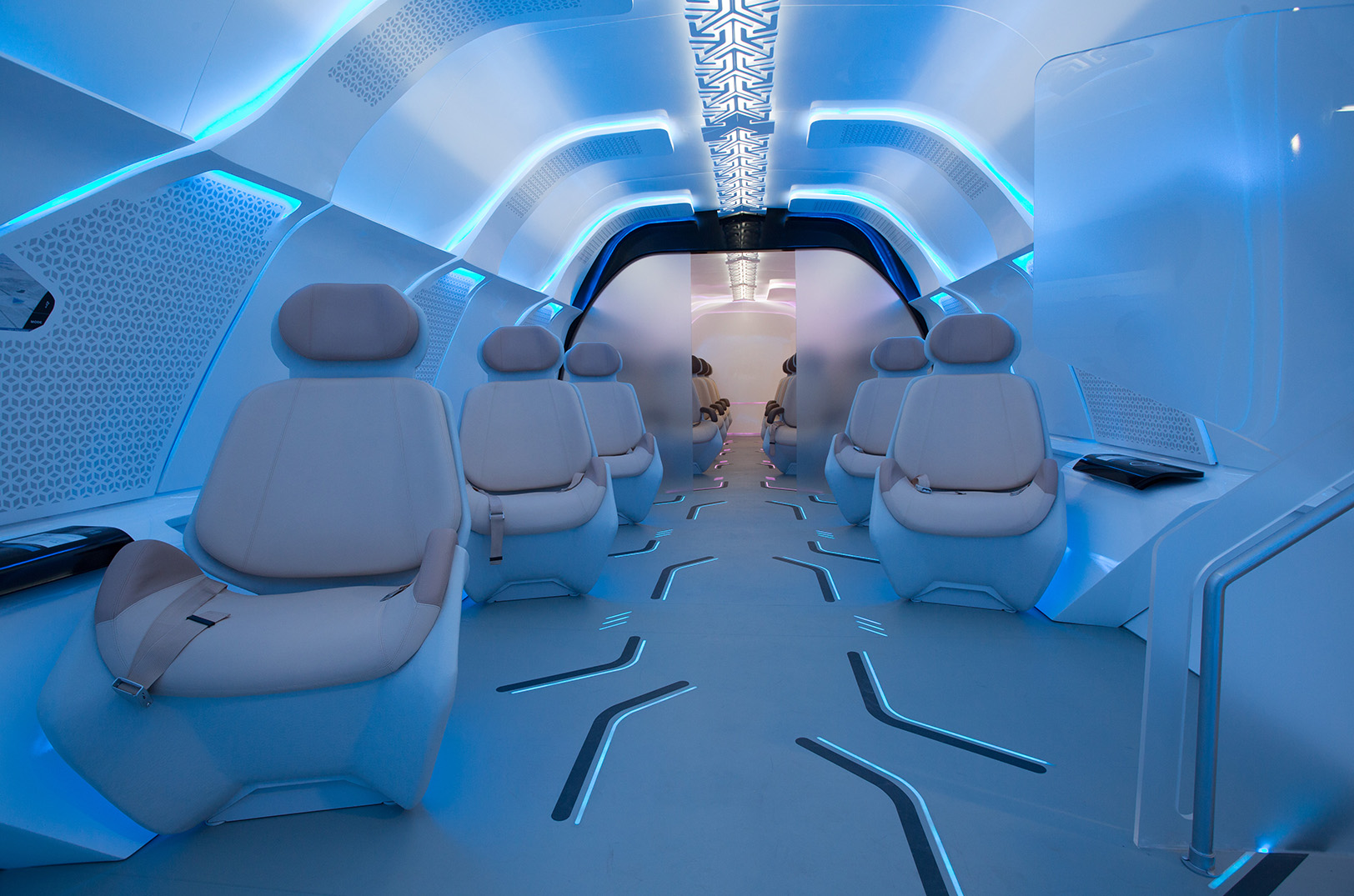
Check out interior photos of Hyperloop One’s pod in Dubai below.




Featured Business

2020 Startups to Watch
stats here
Related Posts on Startland News

Blake Miller’s ‘Future of Living’ podcast envisions a world changed by startups, tech, gig economy
The future is now, said Blake Miller, and it’s streaming. Kansas City IoT tech firm Homebase’s founder and CEO recently launched a podcast — “The Future of Living” — aimed at uncovering what tomorrow holds for startups, small businesses, and curious citizens alike, he explained. “You’ve got smart cities, you’ve got smart buildings — the…

‘First-of-its-kind’ AltCap investment pool aims to transform Kansas City’s urban blight
With more than 5,000 blighted homes and vacant lots, Kansas City’s urban core might soon see some help thanks to new AltCap investment pool. AltCap, a Kansas City-based community development financial institution, has partnered with Legal Aid of Western Missouri and Stinson Leonard Street to create a fund that’s focused on rehabilitation of housing in…
City asks: ‘What do we want to be when we grow up?’ Startups invited to answer Saturday, Tuesday
The startup community is a strong group the City of Kansas City, Missouri, should embrace — especially as it crafts local legislation and regulations that will shape the metro for generations, said Sarah Shipley. The Kansas City Startup Foundation board chair’s words come as KCMO officials organize a series of community work sessions, geared toward…
ScaleUP! KC announces eighth cohort of firms eyeing serious growth
The ScaleUP! Kansas City program has welcomed another large batch of growing companies hoping to accelerate their businesses. ScaleUP announced Wednesday that it accepted 17 Kansas City area companies into its ranks, offering the firms mentorship, resources and connections. The new cohort of entrepreneurs represent varied industries, such as IT, wellness, landscaping, education, architecture and…