

Sky’s the limit — and answer — for Genesis Systems’ atmospheric water generators
October 20, 2020 | Channa Steinmetz
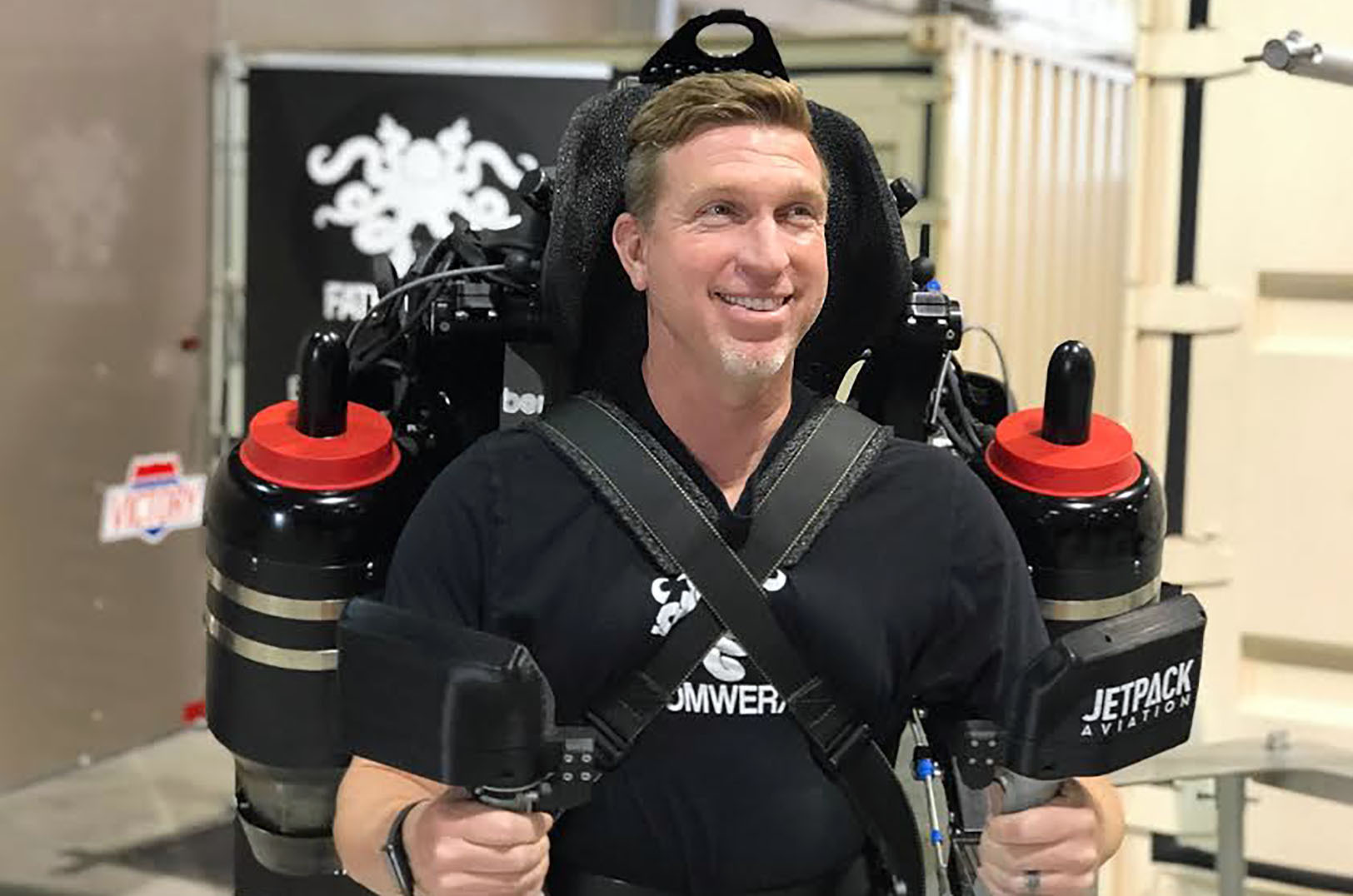
Pulling water out of thin air — a concept too good to be true or too obvious to ignore?
“The No. 1 problem we are going to face as a planet will be water,” said Erick Went, who serves as chief technology officer for Kansas City-based Genesis Systems. “I think we take that for granted in our society because it just comes out the tap, and we pay a penny a gallon for it. But even here [in the U.S.], we are rapidly depleting our water tables.

Founders: Shannon and David Stuckenberg
Founding year: 2017
Amount raised to date: $4M
Noteworthy partners: ENGlobal, FedTech, U.S. Army’s x Tech Search, Process Engineering Associates, Siemens, Rice University, University of Texas at Austin, Southwest Research Institute, Google, Avnet, USAF-AFWERX, Air Force Research Laboratory, Southland Holdings, Radix IoT
Current employee count: 10
Elevator pitch: As a way to solve worldwide water scarcity, Genesis Systems developed an atmospheric water generator that is able to bring mass amounts of water to all regions of the world.
“[Genesis Systems’] technology is the only solution I’ve seen that can address the water crisis on a mass scale,” he continued in reference to the startup’s atmospheric water generators.
Genesis Systems’ generator systems are capable of extracting water directly from the atmosphere — even in the driest of regions — and producing freshwater at an industrial scale, Went explained.
Click here to to learn more about Genesis Systems and its team.
The newest version of the generator is slated to launch in March 2021, Went shared. It’s roughly the size of a semi-truck trailer and can produce as much as 5,000 gallons per day, which in American utilization trends, would provide freshwater for more than 60 people.

Shannon Stuckenberg, Genesis Systems
Genesis Systems now has generators in Tampa, Florida, that generate up to 350 gallons per day. Went noted that the company has more installations planned for the spring.
“We are starting with small groups of people of around 50,” Went said of the target audience for the product. “But we have the ability to scale all the way up to cities.”
The sky’s the limit, Shannon Stuckenberg added with a smile.
Shannon co-founded Genesis Systems with her husband David in 2017. Their passion comes from David’s deployment with the U.S. Air Force at the Al Udeid Air Force Base in Qatar.
“David would watch the convoys of trucks going back and forth to [pump] water,” Stuckenberg noted. “He recalled looking down and realizing there really was only 1.3 days before [the national] water supply would be completely out. That spurred on the later discovery of just how great water scarcity needs are everywhere.”
An urgency to act
With the United Nations predicting that 1.8 billion people will be living in areas with absolute water scarcity by 2025, and two-thirds of the world’s population could be living under water stressed conditions, the duo said that the need for this technology is urgent.
“Every day that we’re not done with this, it is another day with more people who are suffering from water scarcity,” Went said. “So we feel that imperative every day with what we do.”
Stuckenberg recalled receiving a call a couple years ago when Genesis Systems was still in the beginning stages of building its first prototype. It was a request for help.
“We got a call from Uganda, and they asked for over a dozen units for people who were absolutely in dire need of water,” Stuckenberg shared. “I looked at David and said, ‘I don’t ever want to get a phone call or an email and not be able to provide these units to whoever needs them.’
“We have to continue to push ourselves so that when that phone call or that email comes through, we’re able to say, ‘Yes, we have these systems ready, and here they are.’ Never again should someone be without water.”
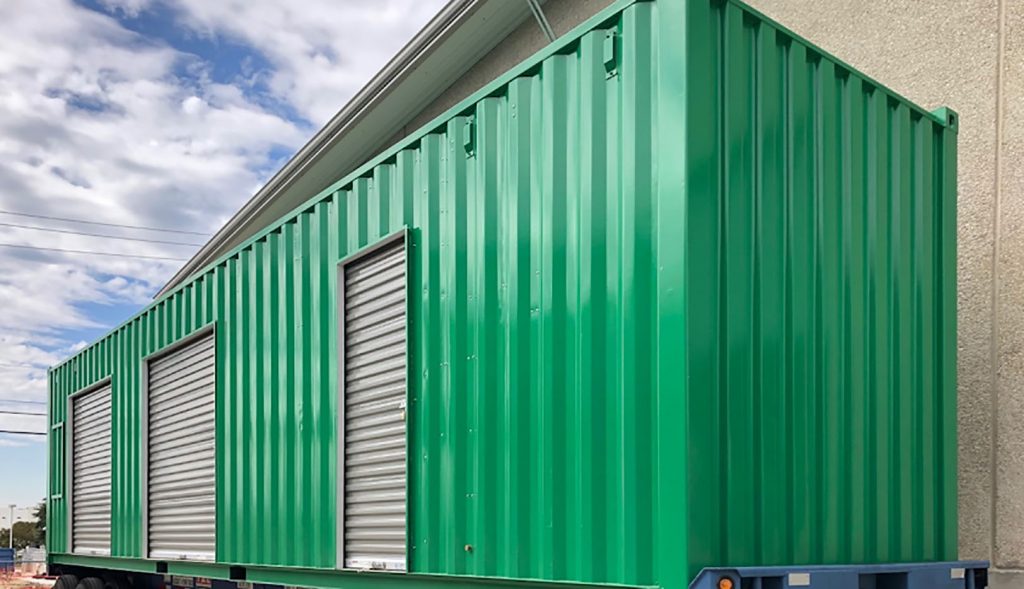
Genesis Systems generator systems
A sustainable cycle
Another option to creating freshwater is through ocean desalination, Went explained. Desalination is the process of removing salt from seawater to make it drinkable.
The issue: When done on a mass scale, desalination requires a large amount of energy and the concentrated “waste” is put back into the ocean — causing harmful and long-lasting effects to marine life and environments.
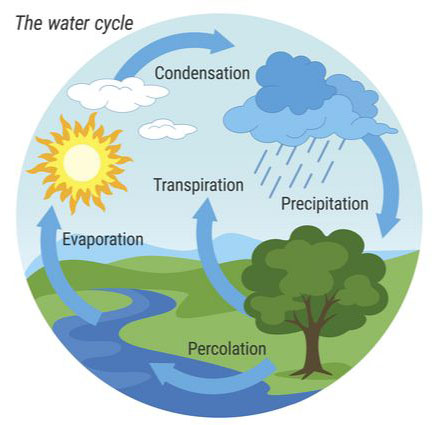
Pulling water from the atmosphere, however, involves water recycling every nine days, Went continued.
“If you have rain falling in Tampa, for example, that water came out of the ocean nine days ago in California; so every nine days we’re getting new water sources,” Went noted. “It’s a sustainable cycle that we’re taking part in.”
Power sources for Genesis Systems’ atmospheric water generators depend on the best option for the user’s region.
“You can plug it into the wall, you can use solar, geothermal,” Went said. “Our goal is to use some form of sustainable energy. We don’t want to make a bunch of carbon pollution and damage the environment to solve the water problem. We would love to solve two problems at one time.”

Featured Business

2020 Startups to Watch
stats here
Related Posts on Startland News

If their shop smells like Travis Kelce at Christmas, these candle chemists called the right play
When the owners of Decori home and gift shop at the Village at Briarcliff suited up to create a Travis Kelce candle scent, they turned to their virtual assistant to help make the call. Alexa suggested a play on the “audacious, confident and powerful” scents of Creed Aventus. Three formulations later, partners Ralph Liebetrau and…

Downtown food hall hits closing time; Strang’s chef-driven concept leaving lightwell
Strang Chef Collective is serving its final customers within the food hall’s downtown space, said CEO Shawn Craft, announcing the lightwell location would close Tuesday “despite the company’s best efforts over the past year to keep it open.” The chef-driven concept — through which diners experience a mix of global and elevated comfort flavors —…

KC Daiquiri Shop closing Dec. 1; iconic duo behind the party vibes plans to ‘regroup, reflect, and rebuild’
The good times roll through the weekend at KC Daiquiri Shop as the well-known Mardi Gras-themed getaway on Grand Boulevard shuts down its years-long revelry. “This decision has not come lightly,” Kinley Strickland and Calvin Vick, owners of KC Daiquiri Shop, said Monday in a social media post announcing the business’ plans to close Dec.…

Side hustle to help autistic adults belong in the workplace earns young founder Student Entrepreneur of the Year honor
Grace Kertz is redefining what workplace inclusivity can look like with Sensory Sync, an AI-powered platform designed to support neurodivergent employees. Her work on the innovative venture on Thursday earned her the title of UMKC Student Entrepreneur of the Year. “Sensory sync is an enterprise grade DEI and wellness platform sold to companies. It utilizes…