

Masked by fashion: COVID pivot pushes brand to local production, beyond mere ‘talk’ on social media
October 8, 2020 | Austin Barnes
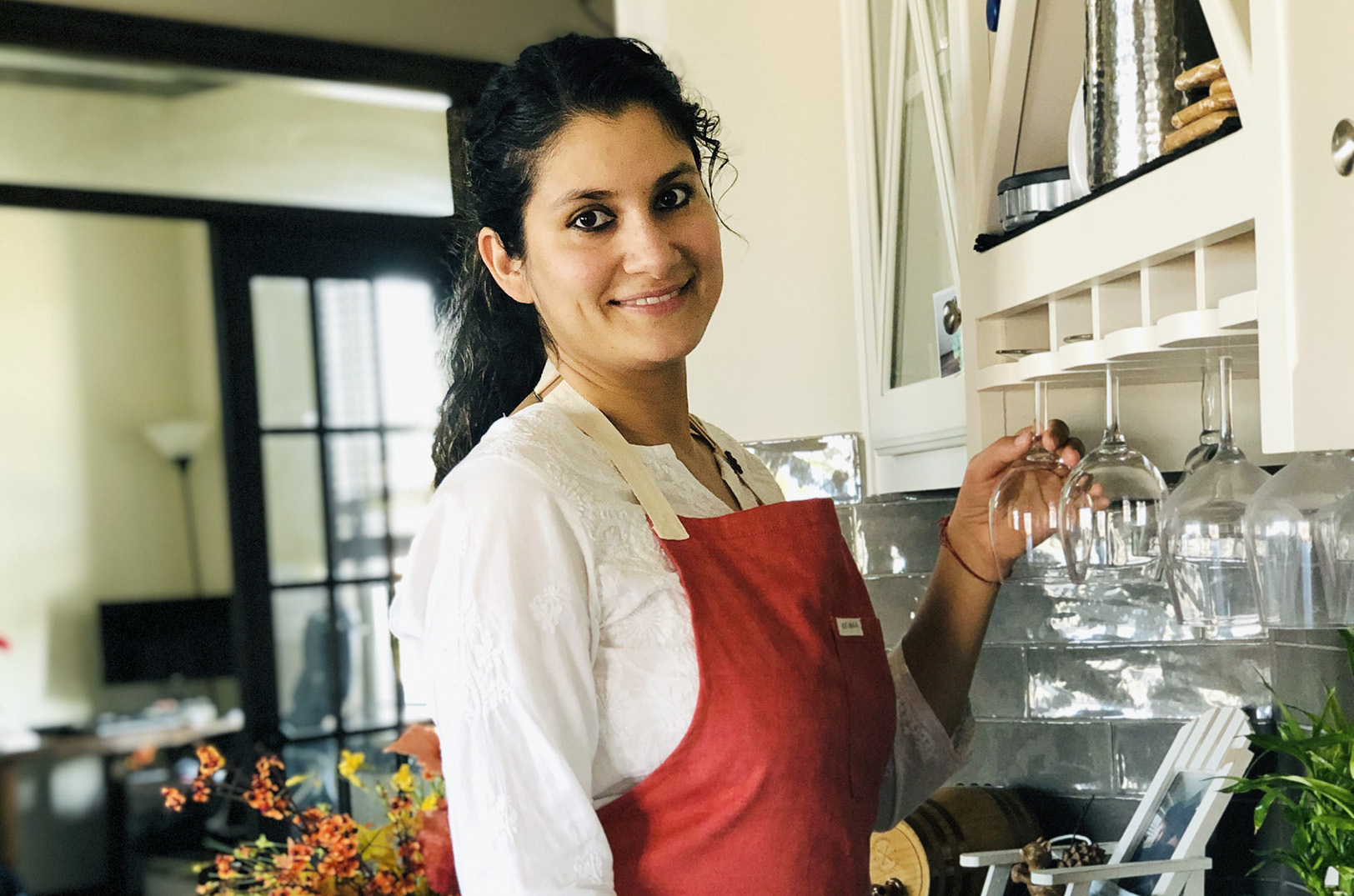
Editor’s note: The following is the second in a series of stories about Kansas City fashion companies putting their own creative spin on the often-utilitarian face mask.
Blessings are all around, Anita Koul said, sifting through memories of a year that’s been so far defined by wild hardships and tragic losses.
“We have to take care of each other,” said Koul, owner of Kufukaa, reflecting on the core mission behind her year-old maker’s marketplace.
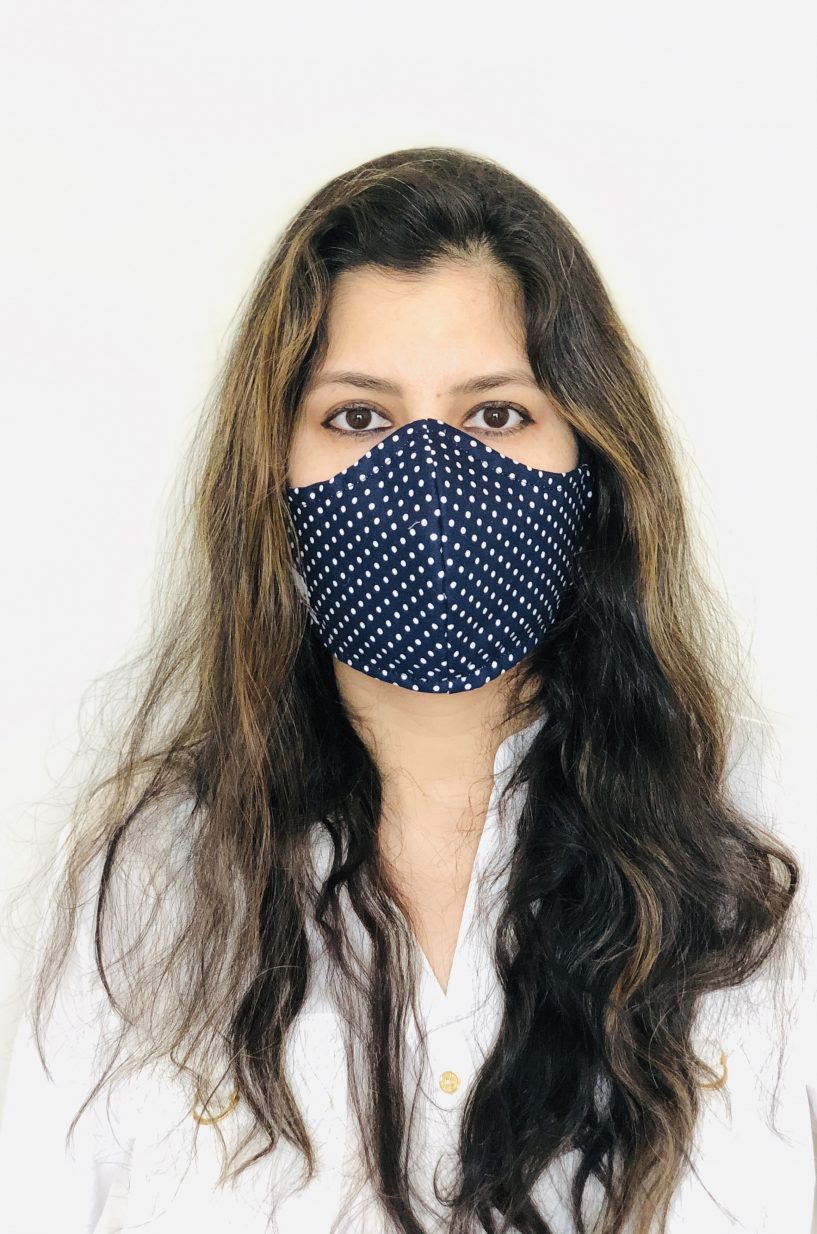
Anita Koul, Kufukaa
In March, Kufukaa switched threads; from solely selling housewares and apparel curated from global sellers to stitching face masks in Johnson County.
“When I started last year, I had a totally different thing in my mind. I wanted to reach communities all around the world,” she said, noting the onset of the pandemic made her realize how critical it was for Kufukaa to instead prioritize the needs of its Midwest neighbors — spread across the two-state, one-heart region.
As jobs shuttered because of the pandemic, Koul couldn’t think of a need more pressing than helping displaced workers maintain some semblance of income, she said.
“My main mission right now is to hire only those people who have lost their jobs and are looking for some kind of income,” she said, noting she’s worked with more than 10 people during the pandemic and provides them with everything they need to make masks from the comfort and safety of their own homes. For Koul herself, that means sewing in between duties at her full-time job as a business analyst manager at T-Mobile.
“I realized that we have to serve our community. That should be the priority. We have to care for each other,” she said.
Click here to shop Kufukaa’s masks and other odds and ends including hand-stitched aprons and apparel for pets.
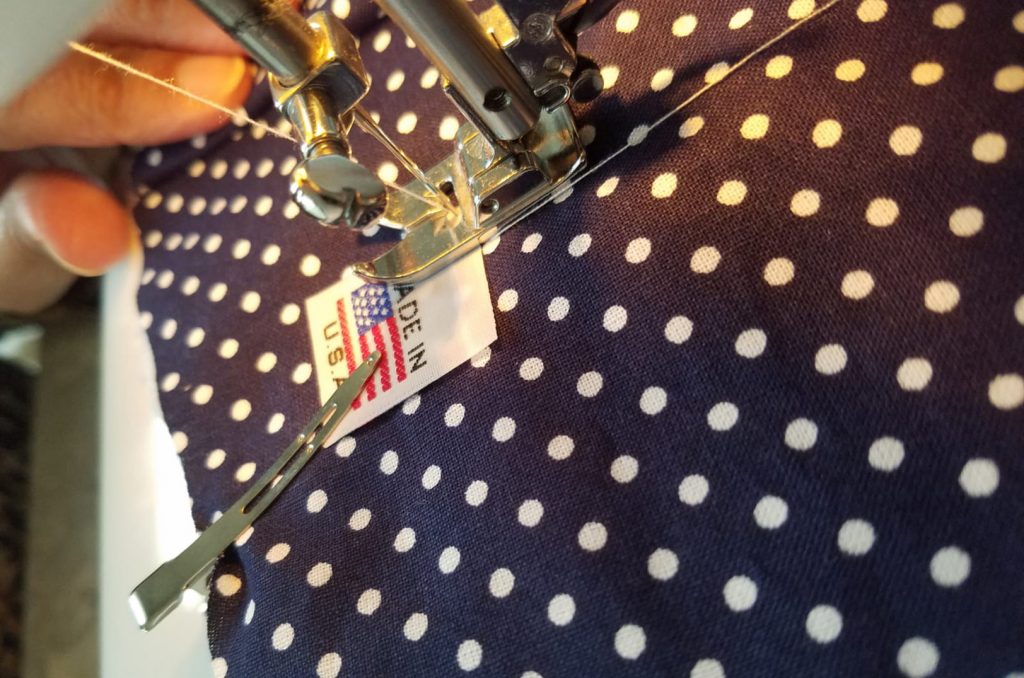
Kufukaa
Made in the USA
Using a buy one-give one model, Kufukaa masks are selling rapidly eight months into the pandemic, Koul said.
“We believe in the reverse techno-culture theory, an idea we invented which would allow people to practice traditional art/culture without worrying about the technical part. That’s our job.”
— Anita Koul, Kufukaa
“I asked [my team] to check on small businesses,” she added, noting a need to see how fellow business owners were faring in the early days of the pandemic and referencing the company’s community-focused mantra: time to shop local.
Kufukaa has also committed to purely U.S.-based manufacturing, Koul said.
“This pandemic is one thing where we all are united, to be honest. People come on [Instagram] and ask, ‘Oh are they made in the USA?’ People are asking if [products are] made in China,” she said of consumer interest in where goods are made given the origins of the Coronavirus and tensions between the U.S. and China.
While doubling down on U.S. production might seem combative, it’s anything but for Koul, a native of India who has lived in a number of countries over the course of her career.
Kufukaa
“I traveled to Kenya [and] I used to ask them, ‘What’s happening here? What kind of manufacturing are you doing here? What kind of business you are doing here?’” she recalled, noting similar experiences in such places as Italy, Malaysia, Singapore and Hong Kong.
“In Kenya, you will get tons and tons of tomatoes — but still they are not able to produce their own ketchup,” Koul said, describing supply chain bottlenecks overseas. “Ketchup comes from other countries.”
That realization first inspired Koul to launch Kafukka with a focus on uplifting foreign makers on a global scale, she added.
“I have seen [global] communities and how they struggle. We are donating a kind of charity to Kenya — but they don’t need charity,” Koul said. “They need empowerment, they need resources, they need support so that they get to sustainability in their own country.”

Taking ownership of transparency
In light of the pandemic, Koul has noticed an impactful trend: countries taking ownership of their manufacturing footprint, she said.
“We are a small business. We don’t compete with other small businesses. We believe that no matter how similar two products are, the companies behind them are always unique and should deserve support not competition.”
— Anita Koul, Kufukaa
“I now see, ‘It’s made in Thailand,’ or ‘It’s made in South Korea’ — I never saw those countries before,” she laughed, noting such transparency is a good move for manufacturers worldwide — including Kufukaa.
“I wanted to do something where there is that honesty. ‘It is made in America and it is expensive — I want to be very honest with you,’” Koul said of the company’s masks which retail for $12 to $15.
“The fabric I was buying back in March was $5 and now it’s $8. The cost is increasing, but I’m not looking at financials right now. I’m working all the time and whatever money I’m getting I’m investing all that money in Kufukaa right now.”
Click here to check out Kufukaa’s current lineup of products.
Doing so is, in Koul’s worldview, a civic duty, she added.
“We have to support the local community. We have to support the local businesses. I think we have to take that really seriously. It shouldn’t just be on social media — it shouldn’t be only talk,” Koul said, inspired by community support for Kufukaa and local influencers who’ve helped her spread the company’s message to the masses free of charge.
“We have to help each other. We have to support each other. We have to look after each other here right now because that’s how we’re going to get through this time. To me, it’s not only about the pandemic. It’s all our lives. We have to take care of each other.”

This story is possible thanks to support from the Ewing Marion Kauffman Foundation, a private, nonpartisan foundation that works together with communities in education and entrepreneurship to create uncommon solutions and empower people to shape their futures and be successful.
For more information, visit www.kauffman.org and connect at www.twitter.com/kauffmanfdn and www.facebook.com/kauffmanfdn


2020 Startups to Watch
stats here
Related Posts on Startland News

Arrowhead event: Teams are stronger with women; How the NFL is moving the ball forward
While nighttime NFL Draft festivities at Union Station put the focus on male athletes chosen to play professional football, Friday morning at Arrowhead Stadium was all about spotlighting women changing the landscape of the NFL and Kansas City. “As we talk about champions today, this is what we’re talking about: Women and men, moving the…

End-of-life care platform wins top UMKC prize in young startup’s first-ever pitch competition
Serving as someone’s informal caregiver is a rewarding experience, but the pressure of being fully responsible for taking care of a loved one can take a toll on a person physically and mentally, acknowledged Nicole Staab and Rachel Blankenship. Through their startup, Rings of Care KC, they are providing support and resources for informal caregivers…
Brewkery closing its North KC kombucha taproom as ‘Lucky Elixir’ production heats up
Five years after opening its popular North Kansas City hot spot, the Brewkery — home of Lucky Elixir Kombucha — is moving and closing its taproom, co-founder Amy Goldman shared. With its lease about to end and rent increasing substantially, Goldman said, the move makes sense for the growing kombucha business. Although it’s bittersweet to…

Variety entertainer’s magic trick: Knowing whether his audience wants a clown (or Ruby in drag)
Dennis Porter’s success as a performer is scripted by the North Kansas City native’s talent at reading a room — adapting his jokes and wide variety of entertainment styles to fit the audience. If he’s doing it right, one of Porter’s characters brings a healthy grin to their happy faces, he said. “I am over-blessed…