

What Duh Fog: Couple offers dual take on inclusivity with COVID-prompted venture
September 12, 2020 | Channa Steinmetz
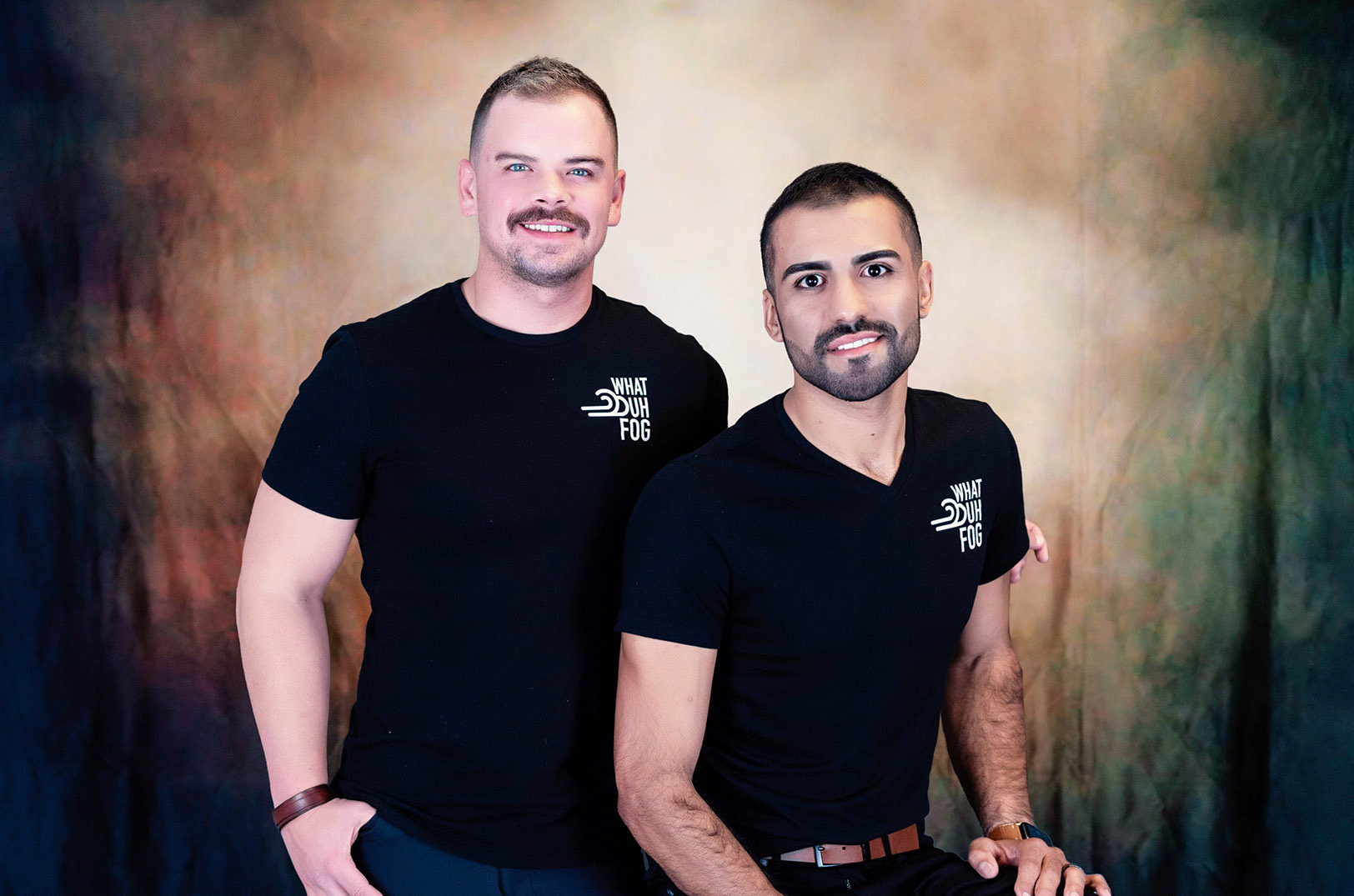
The threat of COVID-19 exposed gaps in access to effective and proactive cleaning services for small businesses hoping to reopen amid the pandemic, said Eruvial Montes-Boyle.
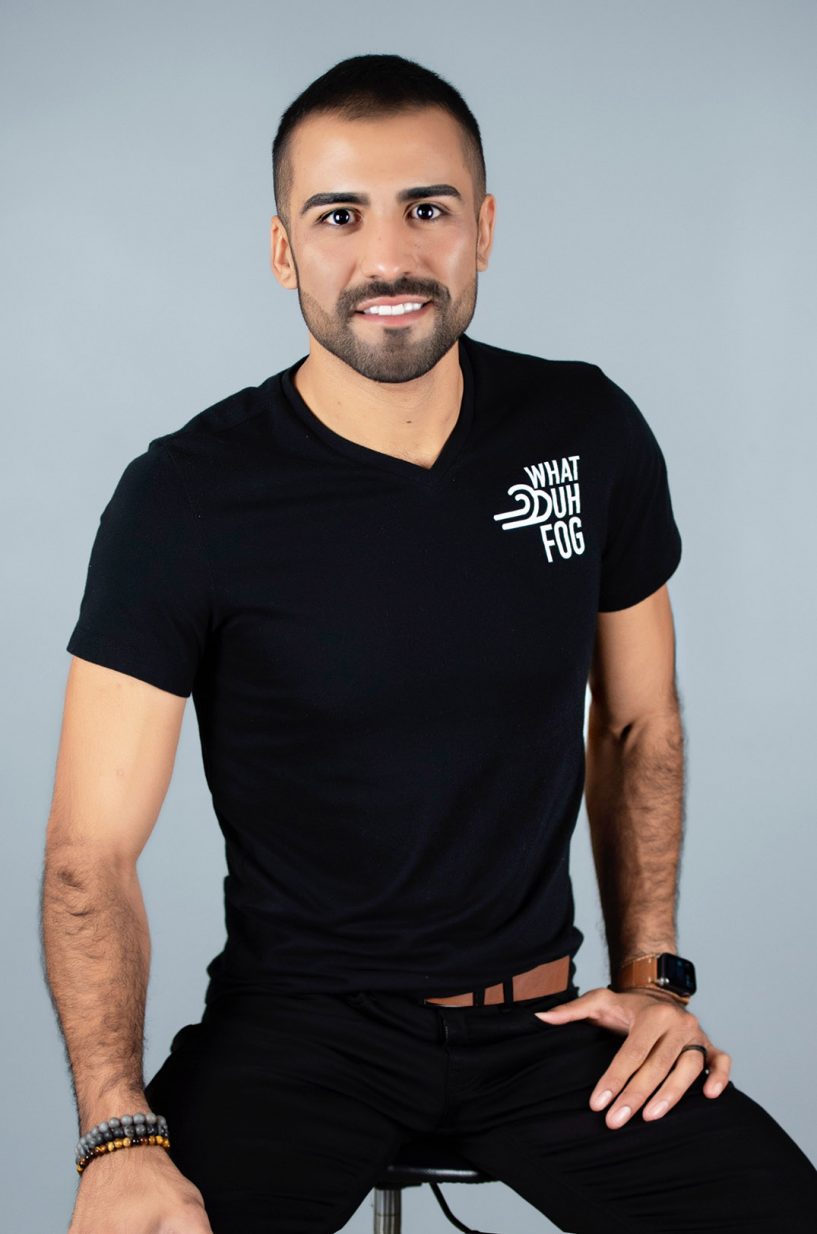
Eruviel Montes-Boyle, What Duh Fog
“We wanted to help people and businesses feel safe in their homes or shops, so making [fogging] available to all has been a huge driver for us,” said Montes-Boyle, co-owner of What Duh Fog — a disinfectant and antimicrobial coating fogging service.
An industry secret: fogging companies typically charge excessive amounts for a service that is inexpensive to perform, he said, making it difficult for many small businesses to take advantage of an option that could get their doors open sooner — and help them to keep operating safely.
“Fogging is a preventative measure, and everyone needs to have access to it,” he said.
Launching the business only a few months ago, Eruvial and his husband, Craig Montes-Boyle, said the opportunity to serve small businesses also came as a necessity for the couple.
Craig lost his job as general manager of an indoor amusement park in Johnson County, they said.
“I was probably one of the first people to be laid off back in March,” Craig said. “It hit me — once a month we would fog the park as a way to prevent the spread of germs and viruses; so, I thought, ‘Why not provide that service to small businesses and homes?’”
And with no LGBTQ+ businesses ranked on such local success barometers as Kansas City Business Journal’s Fastest-Growing Small Businesses list, the couple said they also hoped to improve representation and recognition in the broader business community. (Their story was featured this week in a Kansas City Business Journal article about the business’s launch.)
Eruviel and Craig Montes-Boyle
“I was slightly nervous about [receiving pushback] because we’ve been very forthcoming about our identities as a gay and multiracial couple,” Eruvial said. “But we want for there to be more representation for LGBTQ+ businesses; they’re rocking it here.”
“The community has also really been great,” Craig added. “I don’t know if it’s so much as us being forward that we’re gay, as much as we are a small business.”
“But the word of mouth from one business to another has been really incredible,” he continued. “We will fog for one place, then five hours later, we will have two or three other businesses calling us saying, ‘they said y’all are great!’ We’ve had a lot of support.”
The biggest challenge for the two: educating the public on the science behind fogging.
“What we do is take an antimicrobial coating, which is a long lasting disinfectant, and put it into a Ultra Low Volume Cold Fogger,” Craig explained. “Basically what that does is turn our product into an aerosol, and it positively charges the molecule. These tiny molecules are then attracted to all surfaces, killing and preventing bacteria from growing there.”
What Duh Fog’s rates start at 8 cents per square foot, and the antimicrobial coat is able to last for up to three months — setting What Duh Fog aside from other fogging companies, the two said.
“We’re more innovative than other companies because we’re using a long-lasting disinfecting,” Craig said. “That’s a big push for us in getting business. It’s like, ‘Hey, you’re using this fogging service that’s coming in two or three times a week to disinfect, whereas we are using a disinfectant that’s long-lasting; so we can come in once every two to three months, depending on the frequency and volume of people in that space.’”
What Duh Fog’s products are safe for children, pets and food, according to their website, and kills viruses causing bacteria, including COVID-19.
Click here to learn more about What Duh Fog’s services.
Families ties, franchise
Along with being a family-owned business, What Duh Fog offers services in Alaska and Arkansas where Craig’s brothers reside.
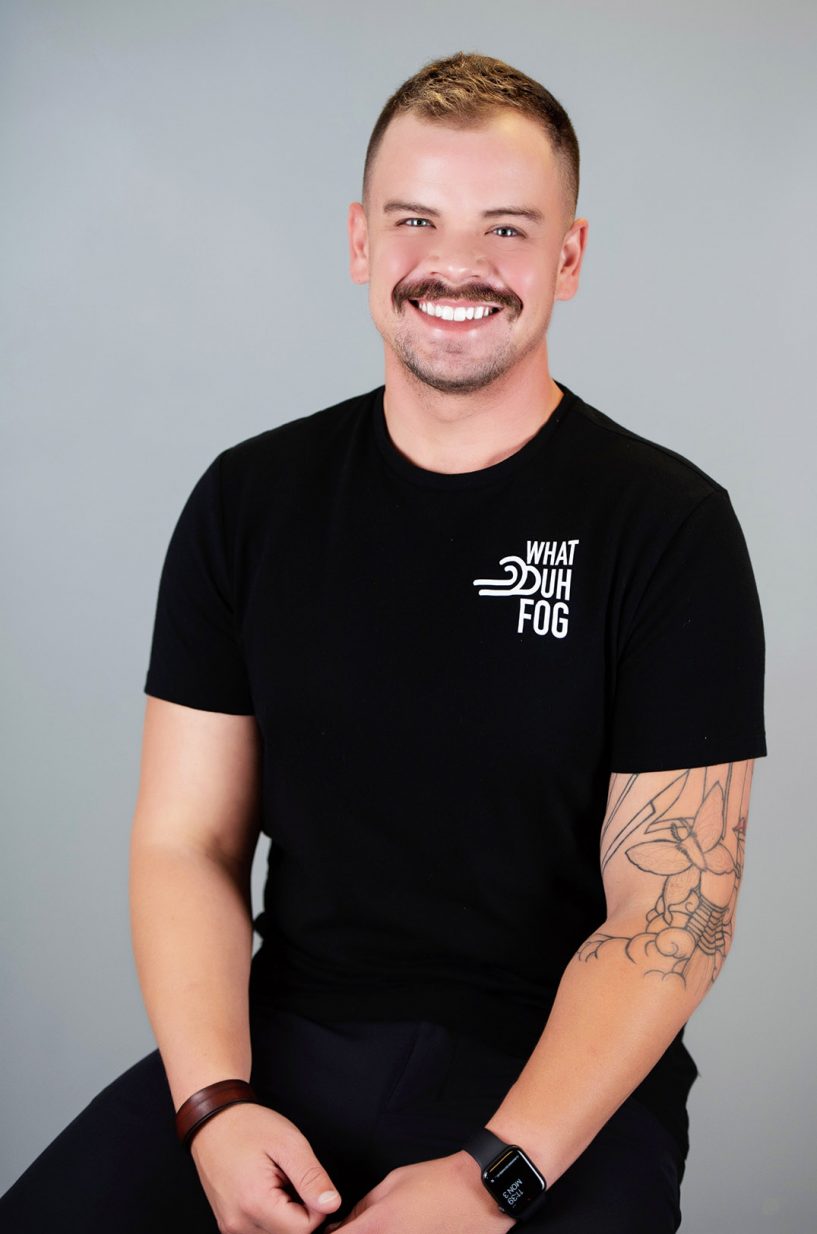
Craig Montes-Boyle, What Duh Fog
“Back in March, I was pitching the idea to my dad,” Craig said. “He thought it was a great idea and ended up telling both of my brothers — one being an accountant in Arkansas and the other is high-ranked in the military in Alaska.
“They wanted to be a part of it; so not only have we been able to grow, but we’ve been able to do so with family.”
The couple shared their goals of continuing to expand the business on a state and national level.
“We’re currently working with a law firm here in Kansas City to help us franchise the business,” Eruvial said. “So we’ll be able to take this to the market, and we’ll have a business model in the work … To take it nationally would mean everything to us.”


2020 Startups to Watch
stats here
Related Posts on Startland News
Hammerspace grows maker mission on Emanuel Cleaver Boulevard
Dave Dalton is a maker — a blacksmith, a bladesmith, a woodworker, an artist and a jack of all trades. More than just a sum of his skills, being a maker is all about perspective, said Dalton, founder of Hammerspace Community Workshop. And when a friend dared him to give his tip jar an upgrade, Dalton…
Innovation Stockyard selects first St. Joe startup for Digital Sandbox
A curbside recycling service is expected to be the first startup to receive Digital Sandbox KC proof-of-concept funding through the Innovation Stockyard incubator. Toss it Curbside, a service with which customers place unwanted items on their curbs to be recycled or donated, plans to use the funds and the St. Joseph-based incubator program to optimize…

Applications open: Sprint Accelerator dialing into ag tech, IoT with 2018 cohort
Investing in startups isn’t just about providing needed capital, Doug Dresslaer said. As the Sprint Accelerator gears up for its fifth year, Dresslaer, managing director of the program, said the accelerator’s 2017 cohort — the first since its move toward establishing corporate partnerships and pivot away from Techstars — proved industry relationships themselves create tremendous value.…

Entrepreneurial inspiration: How a wheelchair freed Wesley Hamilton
Editor’s note: Kansas City fitness and community advocate Wesley Hamilton offered four inspirational tips for entrepreneurs, illustrated by his own remarkable experiences overcoming adversity. Two bullets pierced Wesley Hamilton’s back, confining him to a wheelchair, but freeing his mind, the Kansas City adaptive athlete said. “I found that being shot by someone I never knew…