

Veteran founder unboxes startup smarts as new CEO, eyeing logistics company as KC’s next billion-dollar biz
September 10, 2020 | Channa Steinmetz
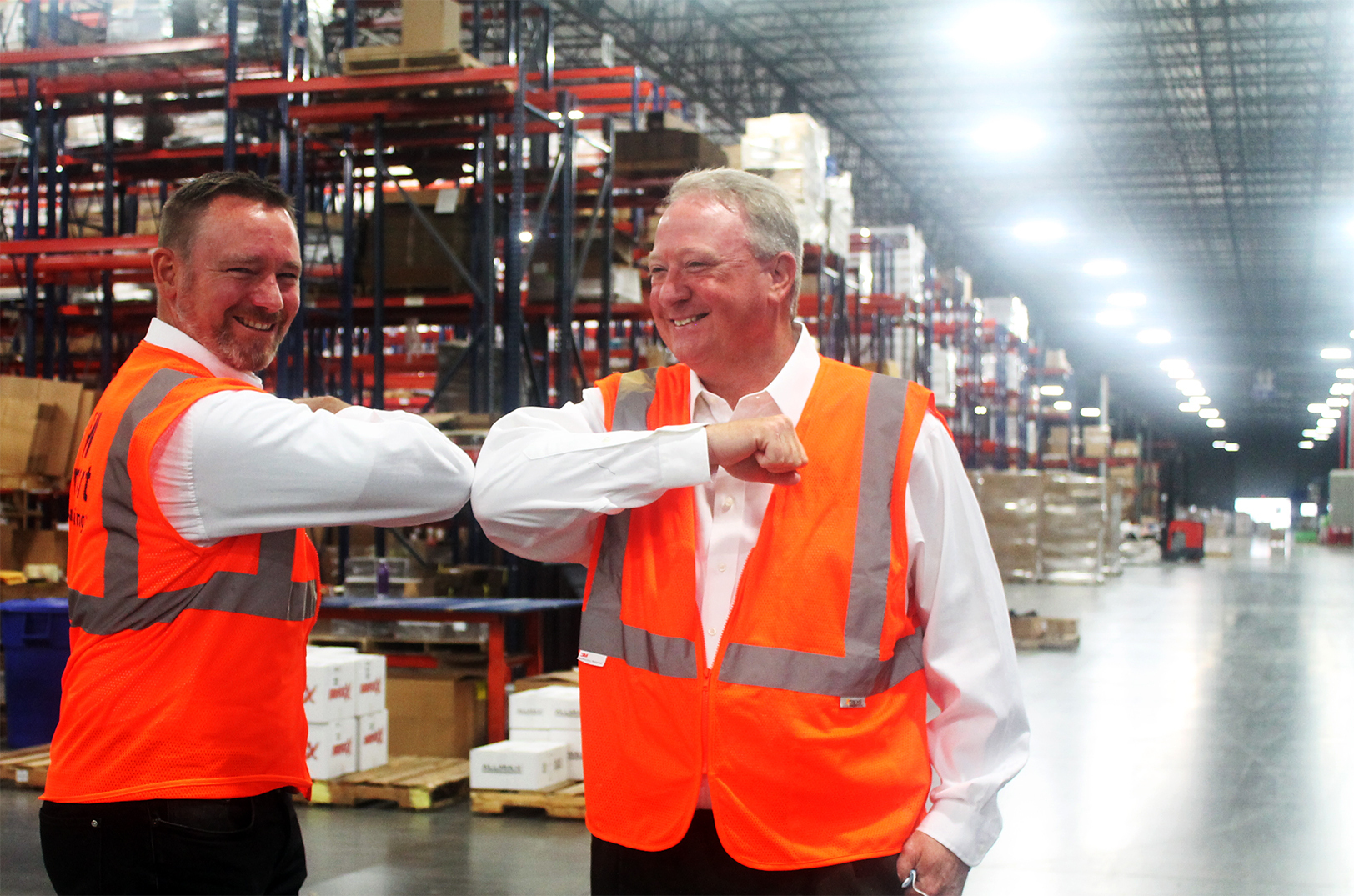
Toby Rush enjoys disrupting the status quo, he said, questioning market strategies with the startup sensibilities that made him one of the region’s most successful entrepreneurs.
As the new CEO of Smart Warehousing — an established, Kansas City-based logistics and supply chain company — the veteran startup founder plans to apply the same innovation-focused lens to the challenges and aspirations of the privately held, tech-heavy network of shipping management venture, he said.

Toby Rush, Smart Warehousing
“I felt like there was an opportunity for more established companies that already had proven business models, but could have someone come in and significantly boost either the strategic side or marketing or sales — take them to the next level with more of an entrepreneurial approach,” said Rush, whose previous startup EyeVerify sold for more than 100 million in 2016.
Buoyed by his own background and expertise, the new CEO offered a goal of increasing revenue for Smart Warehousing by five times in the next five years.
“It is going to take a lot of coordination, organization and more structure to what we are doing,” Rush explained. “I am thinking about how we fill out the rest of the leadership team; how do we make sure we’ve got an organization that can get to that idea of a billion dollar mark; and what kind of infrastructure organizationally is needed to be able to get to that scale?”
The company faces a crowded industry, Rush acknowledged.
“For Smart Warehousing, it’s important we ask, ‘How do we differentiate the market? Who are the big competitors?’” he said. “We will be looking at where we should be targeting our energy and focus, and then marshaling the resources to do that.”
Understanding before disrupting
Rush initially had different plans for 2020. Earlier in the year, the serial entrepreneur was in discussions to start a venture studio program to help startup founders in the pre-seed funding stage. But as COVID-19 caused winds to blow in a different direction, Rush said he put that project on pause and started looking for the right significant tailwinds to seize.
For entrepreneurs right now, it’s about studying macroeconomics and understanding trend lines, he said.
“Fighting the headwinds of COVID is going to be extremely difficult,” Rush said. “Look for the tailwinds, and be far more capital efficient than we’ve ever been. That is what investors are looking for.”
Smart Warehousing offers that opportunity for Rush, he said, noting the potential for his own personal growth. The next 100 days will be filled with learning and listening to how the company currently manages sales, business development and customer engagement, he said.
“My actual personal goal — I want to get forklift certified and be able to move products,” Rush added, smiling. “Really understanding the business and then charting that path forward.”
Established connections deliver
Officially beginning the CEO job Wednesday, it isn’t Rush’s first time working with Carl Wasinger, founder and COO of Smart Warehousing.

Carl Wasinger, Smart Warehousing
The two initially met through Rush’s first company, Rush Tracking Systems. Needing warehouse space to test his products, Rush leased space from Wasinger about 15 years ago, he said, and they have maintained contact ever since.
“We had a common investor, who invested in Smart Warehousing, EyeVerify and Rush Tracking Systems. And as I was casting this wide net, he said, ‘You should go talk to Carl,’” Rush recalled. “The more I talked to [Wasinger], the more I realized that this was exactly the kind of opportunity that was going to have a lot of tailwinds because of COVID.”
And with a major increase in online ordering thanks to the pandemic, Rush said, the timing was right for Smart Warehousing to seek innovative solutions to address the increasing complexity of how merchants are delivering to customers.
“[Smart Warehousing] handles the backend stuff that merchants like Amazon and Walmart don’t want to deal with,” he said. “Common scenarios such as sending a pallet to Walmart or a layer to Target or an individual item to a house, those may need to be kit differently. They’re labeled differently … We handle all that complexity, so our customers can focus on what they do best.”

Featured Business

2020 Startups to Watch
stats here
Related Posts on Startland News

Amid success, the Kansas City Startup Village is shrinking
It’s Nov. 13, 2012, and Kansas City’s Spring Valley neighborhood is in a frenzy. TV vans line the streets near 4454 State Line Road, the first house to receive Google’s ultra fast Internet service in the Kansas City, Kan. neighborhood. Reporters jockey for access to a handful of entrepreneurs and techies that moved to area…

Why coastal investors ignore the Midwest and what’s next for federal startup policy
Here are this week’s watercooler conversation-starters on why inland states struggle to find funding, coming issues in federal entrepreneurship policy and the success of innovation districts that are cropping up around the U.S. (and in Kansas City). More in this series here. International Business Times: Finding venture capital far from the coasts Of the $48.3…

Ebb and flow: The Kansas City Startup Village by the numbers
Startland News created an infographic on the growth and shrinkage of the Kansas City Startup Village since its 2012 founding. Here’s a colorful interpretation of its ebb and flow, as presented by Startland’s Kat Hungerford. Read more about the KCSV’s history, successes and possible future here.
Shawnee passes tax measure to attract startups
A tax incentive program that aims to attract high-growth startups to the City of Shawnee unanimously passed a city vote, paving the way for firms to tap a variety of benefits to alleviate initial costs. The city council voted 8-0 on the “Startup Workforce Relocation and Expansion Program,” which aims to encourage job growth and…