

More social, less media: KC startup launching platform with no ads, algorithms or addiction
September 24, 2020 | Channa Steinmetz
As the Digital Age flourishes with hundreds of millions of people on TikTok, Instagram, Twitter and other social media platforms, Grandview-based The Jump hopes to change the culture behind news and user feeds.

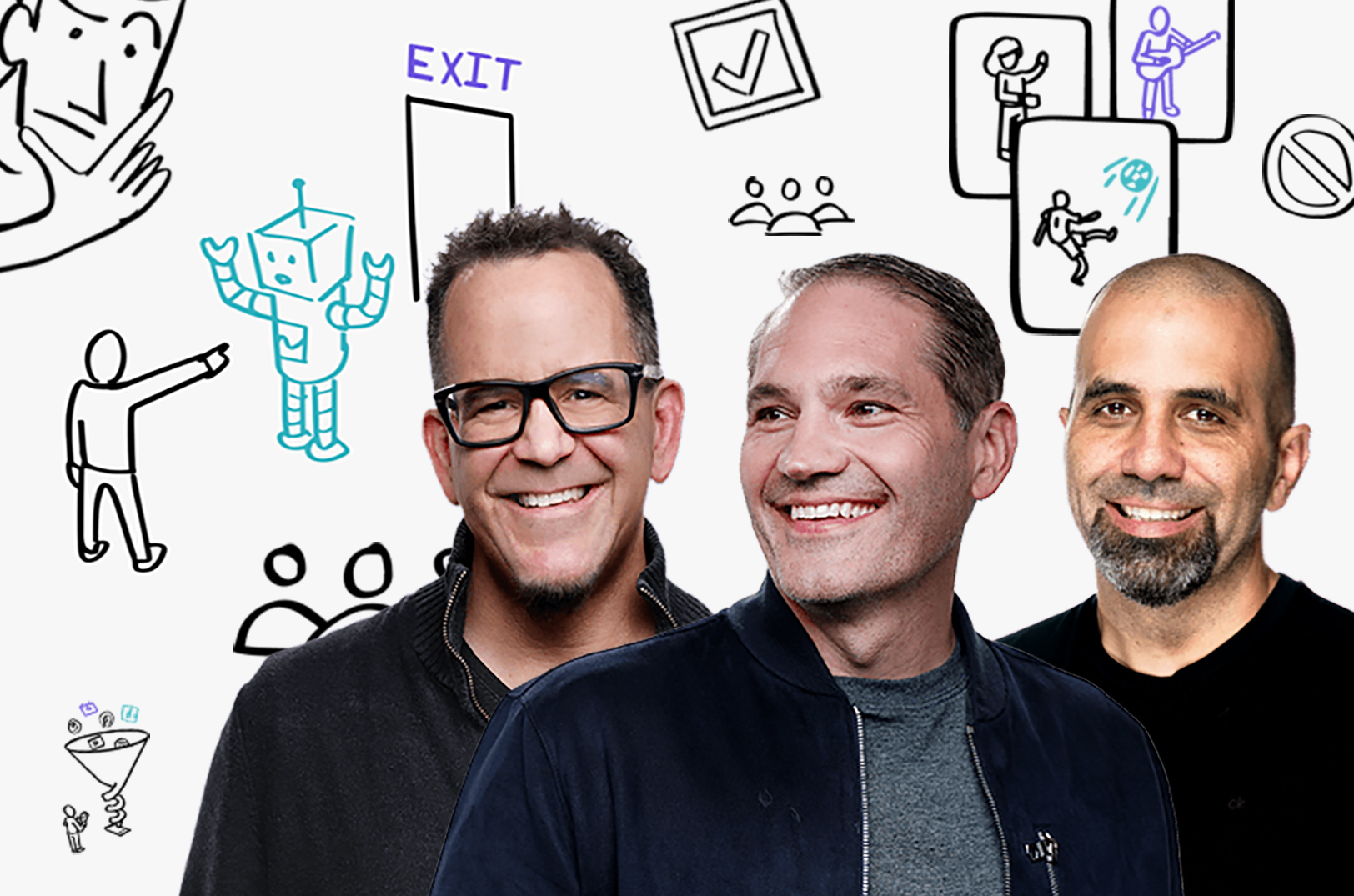
Founders: Peter McClung, Jermey Charbonnet, Michael De Vincenzi
Founding year: Spring 2016
Amount raised to date: $5M
Noteworthy investors: N/A (Privately funded)
Current employee count: 15
Elevator pitch: The Jump is a healthy social media platform where people can get together and share the things they enjoy and have in common.
The pitch: Create a healthier, positive place online where people can bond over common interests and form authentic relationships, said Peter McClung.
“I wanted to take an approach that really valued individuals and the things they enjoy,” explained McClung, co-founder of The Jump. “It’s striking when you look at some of the health effects of social media on people’s lives. A lot of the core problems with social media is how it’s been created to drive addiction, and in some ways, really just sell ads and make money.”
The Jump has not revealed details of its own revenue model, but its team — led by McClung and co-founders Jeremey Charbonnet and Michael De Vincenzi — pledges it will “never adopt the traditional interruption model used by almost every other platform.”
“We’d love to tackle that elephant in the room, but our revenue model is still in “stealth mode,” according to the company, which indicates revenue will be tied to partnerships between brands and creators.
Click here to learn more about The Jump.
Customizable features
To put power back in the hands of the user, The Jump contains no algorithms dictating what appears on a person’s feed. The display simply features friends and groups the user chooses to follow.
“In a feed, there’s normally an ad and an algorithm behind what you get; but with ours, we actually have a feed that you can customize,” McClung said. “No programming is deciding what you see.”
A filter bar allows users to explicitly follow friends and groups — or to filter out specific words. If someone didn’t want to receive content on politics, for example, they could filter out such words as “Trump” and “Biden,” McClung explained.
The Jump has both private and public groups that users can join to see posts and to post to others in the group. Public groups range from woodworking and Lego building to plant-based recipes. A “jump” is generated from within a group that one belongs to, inviting them to participate in a group activity — the goal is to connect both on and off the app, he continued.
“There’s local, private groups too, like the Olathe Northwest football team,” McClung noted. “They’re in their third football season of using The Jump. It’s great because it brings all the players, coaches and parents together to communicate in a really efficient way.”’

Peter McClung, The Jump
Another factor that sets The Jump apart from other social media platforms: no advertisements on the app. The Jump also does not collect and sell user’s data, McClung said.
“There’s a saying that, ‘If you’re not paying for it, then you’re the product,’” he continued. “A lot of people accept that, but they don’t know how far it goes.”
Branding on social media needs to see a shift in how products are advertised, McClung said. Rather than fueling insecurities, brands should engage with consumers in a healthy and authentic manner, he added.
“Over 130 billion dollars are spent on digital advertising in the U.S. every year,” McClung noted. “That is a massive opportunity to use that money in a more effective and engaging way … For example, we have a group of people connected to football. Nike could create content that would be helpful for players and coaches, and then share those materials.”
Click here to read more about The Jump’s unique features.
Creating a positive culture
The Jump’s project architect, Natalie Morgan, grew up on social media — even joining Facebook within the first six months of it launching, she said.

Natalie Morgan, The Jump
“When you look at Facebook, it sells your data and has a lot of predatory methods,” Morgan said, referring to the company’s former president Sean Parker’s comments on purposefully exploiting human psychology in order to get users addicted. “That doesn’t set up a user for success.”
Movements such as #BanFacebook or boycotting social media have arisen, but Morgan said she doesn’t see that as an answer.
“I think people still need to connect; they still want to know what their friends and family are doing,” she said. “And by implementing positive tools and having a foundation of positive intentions, we can flip the script on a lot of social media culture.”
The target audience for The Jump: people interested in connecting with others in an uplifting, authentic way, McClung said.
“We’ve seen [internet trolls] come onto our platform and post something negative,” he recalled. “Then other people will reply with, ‘Hey, this isn’t Facebook — be nice.’ Our product is architected so that our brand and culture is based in positivity.”
The Jump is free to download and can be found on Google Play or the App Store.

Featured Business

2020 Startups to Watch
stats here
Related Posts on Startland News

Drug side effects could kill you; meet the KS lab team using DNA testing to save patients
A clinical reference laboratory in Olathe is working to make DNA testing for genetically optimized medications more routine and accessible in healthcare, Dr. Ziyan Pessetto shared. Sinochips Diagnostics — founded in 2019 by Dr. Jiawu Song, along with Pessetto and Dr. Andrew Godwin — was conceived with the vision to make pharmacogenomics (PGx) an integral…
PHKC planning to open its retail incubator in mid-May; here’s a first look inside the east side space
A new space for entrepreneurs to test-run their retail businesses is envisioned as a 12- to 16-month stepping stone to their own permanent storefronts or locations, said Dan Smith, and the resource could be open as soon as this spring. “We’re preparing entrepreneurs to open their own brick and mortars on the east side,” said…

Chingu founders, Mean Mule partner for KC’s first soju — a Korean nod to vodka, distilled with culture
Serial foodpreneurs Keeyoung Kim and David Son are launching the Midwest’s first locally distilled premium soju — a pays homage to the traditions of soju, but embraces a new era of cocktail culture. Through a partnership with Mean Mule Distilling Co., the first release of Chingu Soju will be just 15-20 cases of the product. …

WeCode KC, high school partner to launch cybersecurity program for students
A new program from an expanding Kansas City nonprofit plans to expose high school students to job readiness and life skills that prepare them for careers in cybersecurity, right out of high school. WeCode KC, which promotes tech education and creating sustainable career pathways, recently announced a partnership with KIPP Legacy High School to introduce…