

Pitching your startup to investors is about more than selling an idea, says Pitch Perfect leader
September 4, 2020 | Channa Steinmetz
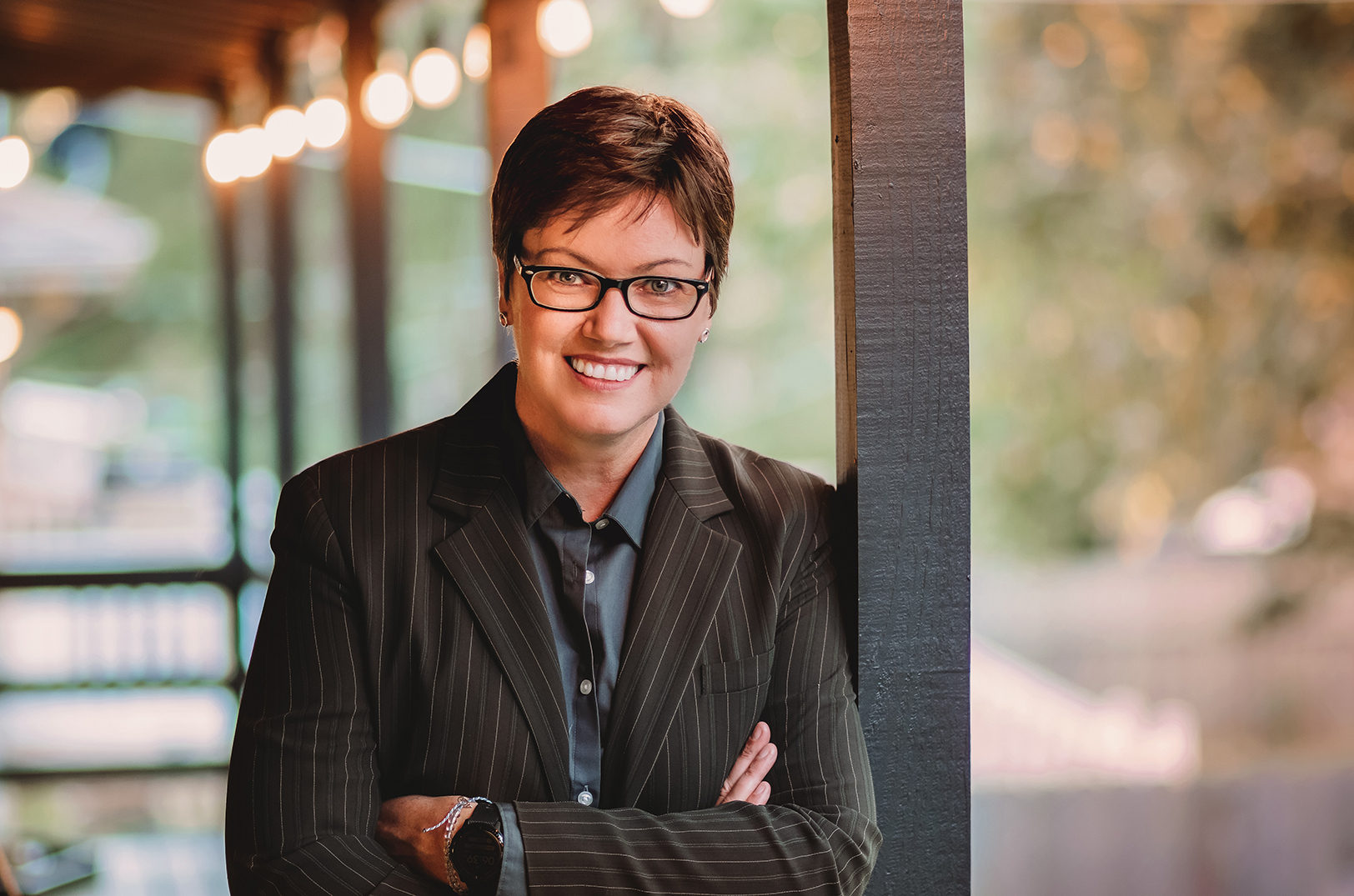
Perfecting a startup pitch depends on a founder’s ability to move beyond mere product knowledge and talk the investors’ language, said Kathryn Golden.
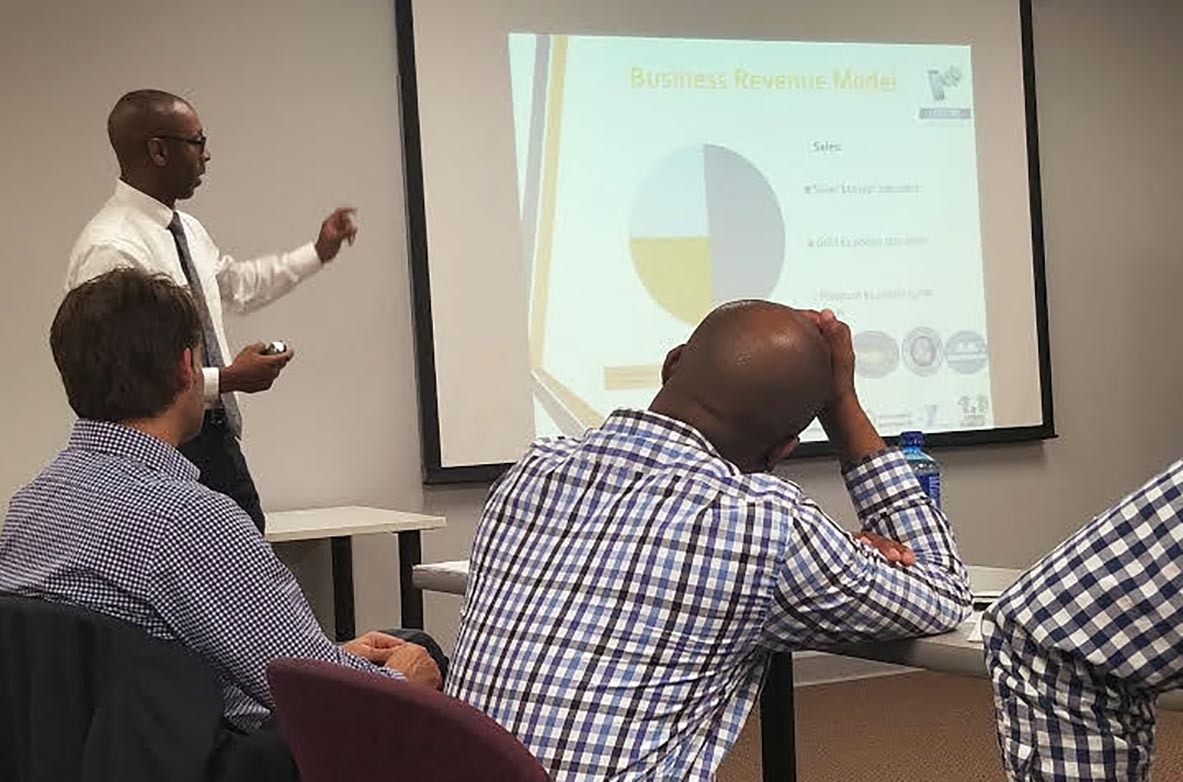
Pitch Perfect classroom setting
“The reality is investors aren’t buying your product; they’re not customers,” explained Golden, programs director at the Enterprise Center in Johnson County. “Investors are looking at the company and asking, ‘Is this company a good investment?’ That’s a completely different story for founders to tell.”
ECJC’s Pitch Perfect program — a nine-week bootcamp for business founders who are actively seeking to raise a minimum of $250,000 in seed capital — provides an entrepreneurial education for early to mid-stage founders seeking the correct framing for their companies.
“In many cases, they only get one shot at pitching, and there’s only so many investors in the Kansas City region,” said Golden, leader of Pitch Perfect, which is set to launch its sixth cohort Sept. 23.
Click here to apply for the newly virtual Pitch Perfect program. The deadline is Sept. 9.
Critical questions for founders to ask themselves, Golden said: Is the market big enough? Is your product solving a real problem? And are you the person for the job?

CaRessa Hutchinson, ModRN Health
CaRessa Hutchison, a nurse by trade, needed such guidance when she enrolled in the Pitch Perfect program in 2018 with her nurse technology company, ModRN Health, the health tech CEO said.
“Everybody remembers how terrified I was to present,” Hutchison said, laughing. “By the end, I was able to present in front of 20 investors in a small room with a camera in my face. It was quite the growth for me during that time, and I’ve been able to go on to raise money from that experience.”
When selecting founders from among the program’s applicants, Golden and class facilitator Keith Harrington look at how well founders know their business and who has the highest likelihood of being ready for investment, she said.
“There is now a seed fund in Kansas City, the Fountain Innovation Fund, and they fund people a little bit earlier in their journey,” Golden said. “We’re adjusting our application criteria to try to help people get ready for that seed stage. So, we’ll be considering companies that are a little bit earlier [along] than we have in the past.”
Adjusting ‘perfect’
Along with nine virtual Wednesday evening sessions, Pitch Perfect is expected to offer an additional three virtual Thursday night sessions, Golden said. Instead of a one-on-one mentor relationship, these three extra nights will be dedicated to a group of investors who will answer questions and provide founders with feedback.
Frank Keck, CoreBuild
Another change: less focus on soft skills.
For the previous Pitch Perfect cohort, the program partnered with Frank Keck, CEO of CoreBuild, to help founders with such skills as pacing and body language while presenting.
“Frank will be helping again, but this time he will be leading a session on helping founders get their ‘Why,’” Golden noted. “Asking, ‘What’s the story behind your Why?’ Because that feeds into the question of, ‘Are you the right person to be doing this?’ Which is something investors care about.”
With the shift to online sessions, Golden said, she would love to include founders from Iowa, Nebraska, Kansas and Missouri — states where the Ewing Marion Kauffman Foundation (which funds Pitch Perfect) is placing an increasingly regional focus on helping entrepreneurs.
“We are also looking for companies that local investors would potentially invest in, and that’s a bit of the same geographic area they are looking at,” Golden said. “With the drive to Kansas City no longer being necessary [because of virtual programming], this creates a great opportunity for many.”
Click here to read more about the Kauffman Foundation’s work with Pitch Perfect.
A lasting support network
One of Hutchison’s biggest takeaways for ModRN Health after completing Pitch Perfect: a human connection — specifically the person who would build her entire technology platform.

Bo Lais, Lula
“Bo Lais from the first cohort was listening to our pitches to give us feedback,” she recalled. “He understood exactly what I was trying to do and made an investment in me right there … He built our entire platform completely at risk. We were able to pay him back, and we still work closely with him for further development.”
Click here to read about ModRN Health’s dedication to helping low-income patients.
Lais, CEO of property maintenance startup Lula, was in Pitch Perfect’s September 2017 inaugural class. The collaborative nature of the program allowed him to form relationships he still has today, Lais said.
“Everyone had a lot of good input and insight,” he said of the professionals, mentors and other founders in his cohort. “We asked if we could have a couple hours for one of our meetings to allow the other entrepreneurs in the room to get feedback on our pitch deck, which we found that to be really valuable.”

Claude Harris, College Coaching Network
The program was able to take Claude Harris’s confidence and presentation skills to the next level, said the 2018 Pitch Perfect alum and founder of the College Coaching Network.
“As young people say, ‘It was dope!’” Harris said, smiling. “Their content from the business side to even graphics was really solid. I worked with a graphic designer who was able to help me tell my story through the visuals.”
For potential members of the upcoming cohort, Harris advised keeping an open mind.
“Don’t think you’ve got your whole business plan mapped out,” he said. “Because somebody can give you an idea that causes you to pivot; that pivot can save you a lot of heartache and help you scale a lot faster.
“They’re just trying to give you advice from a position of love,” Harris continued. “We want to see the community thrive. We want to see entrepreneurs in Kansas City making more money and creating more jobs. So I think, you know, just be open.”

Featured Business

2020 Startups to Watch
stats here
Related Posts on Startland News

Bobby Burch: ‘The mountains are calling, and I must go’ — farewell and thank you
Editor’s Note: Startland News co-founder and editor-in-chief Bobby Burch will depart the storytelling organization at the end of July. Tommy Felts will assume leadership of Startland effective immediately. It was three-and-a-half years ago when Kansas City Startup Foundation CEO Adam Arredondo approached me with a “what if” scheme to start a publication focused on entrepreneurship.…
WATCH: No reason for ‘lone wolfing’ the startup grind, LaunchKC past winners say as application window narrows
Editor’s note: This article is sponsored by LaunchKC but was independently produced by Startland News. With a July 11 application deadline nearing, LaunchKC past winners emphasized the popular, high-profile grants contest is about much more than chasing a payday. “There’s the community piece. There’s the exposure piece. But once you win — or even once…
Accelerate Tech Learning targets the (urban) core of KC’s programmer shortage
Training would-be programmers from Kansas City’s urban core isn’t about getting rich, said Joshua Clark, co-founder of Accelerate Tech Learning. But unfortunately that means it can be tricky to get underestimated students the costly education to become a certified developer in the world of information technology, added Mauri Trent, Accelerate Tech’s executive vice president of…
With Hy-vee Arena, KC Star project, southward expansion, KC Crew plans to double its players
Where KC Crew plays, growth and development follow, said founder Luke Wade. The adult sports and event company filled Kansas City’s Parade Park every night before the Urban Youth Academy broke ground on East 17th Terrace, for example, Wade said. “So it’s kind of that economic development. The same thing happened with the riverfront when…