

Still working from home? Don’t get too comfortable, cyber security experts warn
August 12, 2020 | Jack Anstine

Transitioning to home-based operations proved a valuable step in combating the COVID-19 threat this spring, but it appears to have exposed a remote, internet-reliant workforce to a different kind of virus — the ongoing scourge of cyberattacks.

Wyatt Cobb, SoftWarfare
“Cybercriminals have a much larger, more engaged audience right now to target because of the increases in peoples’ time online when there’s few other options to do things right now,” said Wyatt Cobb, CEO of Kansas City-based cyber security firm SoftWarfare. “The volume of potential for complex cyber attacks and simple cyber attacks to occur, no doubt, have increased greatly.”
Cybersecurity complaints increased by 300 percent between March and June, according to the FBI.
“The propensity for more people to be online who are making mistakes was magnified tremendously,” said James Curtis, Webster University cybersecurity professor, noting a correlation to more remote work where users might not be protected by the complex firewalls and other security checks associated with their regular workplaces. “You probably read some of these horror stories about people getting their government checks stolen, about getting tricked into buying things. And it’s all true.”
Attacking with fear
Cyber criminals are able to use fear of the Coronavirus to their advantage, Curtis said.
“The bad guys want to steal our stuff. That’s what it comes down to,” he said. “And they will take advantage of fear; they will take advantage of vulnerability.”
For example, cyber criminals register online domains with buzzwords related to the Coronavirus and COVID-19 to attract more people to their links, Curtis said. Such tactics lead to a 788 percent increase in high-risk domains in March, according to a study by cyber security leader Palo Alto networks.
“People would get online and start typing ‘Coronavirus,’ and they click on a link,” Curtis said. “The purpose for these was either to get you to buy something that was fake or to be able to put a virus on your system and then steal your stuff.”
Scam emails are another common method, said SoftWarfare’s Cobb.
“When they have enough information on a company they’re able to socially engineer — through email — a phishing attack where they get an employee to take some action that benefits the hacker and usually gives up assets from the company,” he said.
Brute force attacks — leveraging stolen credentials to try thousands of password and username combinations — also are increasingly common, Cobb said.

Fishtech Group Cyber Security Operation Center (CSOC), Cyber Defense Center
Businesses fighting back
The Cyber Threat Intelligence (CTI) League — which includes Kansas City-based cyber security operation CYDERES, a Security-as-a-Service division of Fishtech Group — is among those working to prevent, detect and respond to cyber crimes.

Eric Foster, CYDERES, Fishtech Group
“A lot of people came together to produce a community of cybersecurity professionals trying to do what they can to help fight COVID-related hacks and take care of cyber criminals that are trying to take advantage of the pandemic in any way,” said Eric Foster, president of CYDERES.
Participation in the league is his way of supporting those continuing to risk their lives during the spread of the Coronavirus, he said.
“I can’t necessarily be on the front lines helping treat patients, but we can try to make sure that the bad guys that are attacking hospitals or nurses or even just utility providers are dealt with as fast as we can,” Foster said.
SoftWarfare also worked to help during the pandemic by launching its Biothenticate software in June. The software uses iris, facial and fingerprint scanning to confirm the user’s identity when logging in.
“We moved very quickly to get that product to market when we saw things coming online,” Cobb said. “We knew we had a valuable solution that could help many small, medium and large businesses.”
Best defense? A good offense
Workers can be proactive in warding off cyber attacks, said Webster University’s Curtis, emphasizing skepticism and common sense over comfort when in a home office.
“Always look for trusted senders. Do not click on links from people that you don’t know,” he said. “When you get an email from someone saying ‘We need you to click on this link about your banking or your finances,’ don’t do it. Go into a search engine and then find that organization. Then go into your account. That way you’re initiating [the interaction], not responding to it.”
Businesses have a responsibility to expose their employees to cyber security precautions, Cobb said.
“One of the best things that any company can do is just give their employees the necessary training and awareness,” he said. “Making sure that every employee, no matter what their role is at the company, has some level of security awareness training.”
It’s about defending themselves, their data, their financial resources and their families, Cobb emphasized.
“There are major threats online and defending your assets and personal life from those threats is on you,” he said.
This story was produced through a collaboration between Missouri Business Alert and Startland News.

Featured Business

2020 Startups to Watch
stats here
Related Posts on Startland News
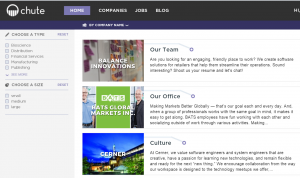
Kansas City receives new tech-focused jobs board
Businesses both big and small looking to fill technology positions in their companies have a new outlet to find talent: KCnext’s new job board. In conjunction with Kansas City’s inaugural Techweek, the KCnext team announced Chute Wednesday to help area businesses in their recruiting efforts — whether they’re members of the tech council or not. Millennials have shed light on…

Neighborly nabs $5.5M from Formation 8, Ashton Kutcher
Neighborly, a San Francisco-based startup with an office in Kansas City, recently landed a multi-million dollar investment for its community investment marketplace. The company, which relocated its headquarters from Kansas City to San Francisco after struggling to raise local capital, raised $5.5 million from venture capital firms Formation 8 and Ashton Kutcher’s Sound Ventures, according…

Techweek Wednesday: Big Data Summit
Techweek Kansas City has arrived with dozens of events scheduled around the city each day. Wednesday’s scheduled events are included below. Don’t forget to check whether the event is RSVP-only. Big Data Summit Who: The Big Data Summit spans Wednesday and Thursday, with the bulk of the events on Wednesday. The summit events start with…

5 takeaways from most entrepreneurial city report
A report analyzing progress on Kansas City’s goal to become America’s most entrepreneurial city highlighted a trove of information on the area’s early-stage business community. KCSourceLink’s second-annual “We Create KC” report dissects the metro’s entrepreneurial ecosystem, including its headway toward realizing a challenge to become the nation’s most entrepreneurial city. Expounding on such metrics as…