

Smart doorway could detect high temp, neutralize COVID on clothing, KC tech pioneer says
July 23, 2020 | Whitney Burke
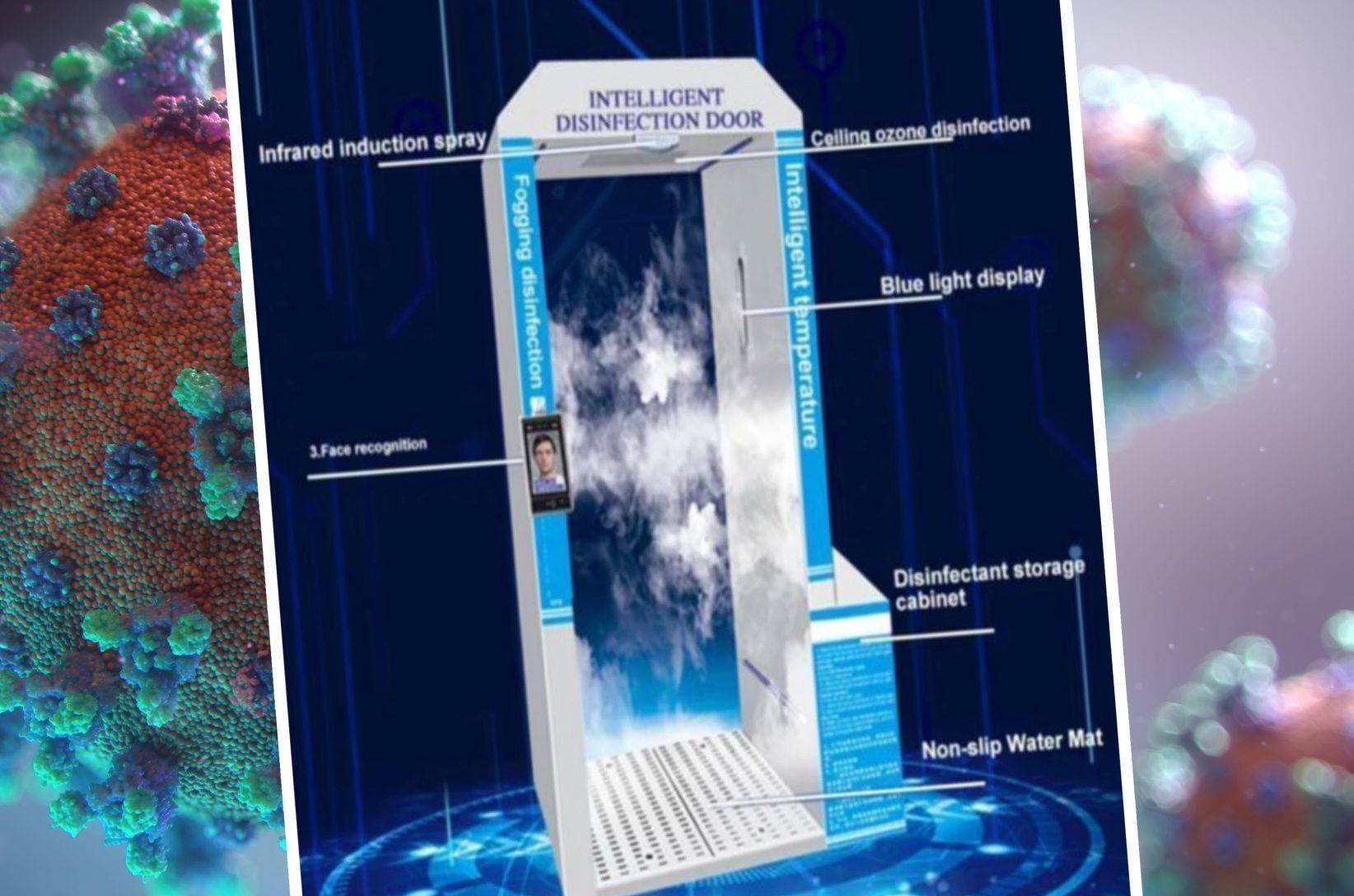
Blockchain might be the future, but eliminating exposure to COVID-19 is the now, said serial entrepreneur Shekhar Gupta as he takes an intelligent disinfecting doorway to market.
“When you go to the airport you have to go through the X-Ray machines, right? So we developed a similar structure, but to detect COVID-19 and neutralize it off your clothes,” said Gupta, COO of Blockchain Initiatives and director of software product and technology at Kansas City-based Interacshn, a startup focusing on machine learning and AI-based smart city and COVID 19 solutions.

Shekhar Gupta, Blockchain Initiatives, KCCOVID 19; STARTLAND’s Innovation Exchange, November 2019
After developing the health tech device this spring, 15 models were produced — all of them already sold and serving as market proof for the concept, he said, noting research conducted at Boston University on the effectiveness of UV rays on COVID-19 was key.
Click here to read more about the intelligent disinfection door.
“These are going to the investors who bought from me first,” Gupta said, specifically mentioning buyers in New York, Texas and Florida where outbreaks have been most extreme. “I am very excited about this door tech because I think we can use it in Kansas City, and I want to generate some enthusiasm in Kansas City about it too.”
After further testing of the sold devices, Gupta plans to offer the product to local businesses, restaurants and churches in Kansas City, he said.
“I may reach out to Mayor Lucas as well, as it could be a good installation in City Hall,” Gupta added.
“Kansas City is about two years behind in the technology world. Things get to New York City and California a lot faster and my entire goal is to put KC at the forefront of it,” he added. “We need to be a leader.”
Variations of the technology are also being manufactured by others in the space.

So how does the doorway from Gupta’s company work? It’s a multi-step solution, but only takes a few seconds, he said.
“First when you walk up to the gate, about one and a half to two feet away it will monitor your temperature,” he described. “Then when you step inside, the UV machine goes all around your body and neutralizes the COVID-19 from your clothes so you can walk up into your workplace safely without having to worry.”
Working with researchers who sprayed the virus on clothing, Gupta’s prototypes eliminated the COVID-causing elements with the UV light, he said.
“There is also a module that does a light mist of sanitizer over you,” he added.
Gupta’s intelligent disinfection door isn’t his only foray into the fight against COVID, he said. In addition to a sister product — a portable room fog disinfectant — Gupta also helped create an online platform to help connect those with needs during the pandemic to people with the ability to provide relief.
Click here to learn more about Gupta’s KCCOVID 19 site.
“We developed a website a few months back that matches a seeker with a donor that is free to use, because when this started, you walked into any store and the shelves were totally empty. You wouldn’t find anything,” he explained. “So to me that was like, ‘OK if people who are living in these suburbs are not finding it, then people who are living in urban areas do not have the means to go buy something that used to be really cheap that is now really expensive.’”
“Since people hoarded things like toilet paper and the hand sanitizers so much, my hope with the website was that I would be able to match a seeker with a donor so if you need something you would post it on there and someone who would have plenty of it would reach out and let you know they have it,” he added.
Response ranged from senior care centers in Kansas City to people from as far away as South Africa, Gupta said.
Up next: the never-resting entrepreneur is pursuing a National Science Foundation grant for another COVID-related effort, he said.
“This research project is not to track the disease; I am more onto tracking the clusters and finding out the relationship between one cluster to another cluster,” Gupta detailed. “My hope is that by doing that research that we would be one step ahead of the disease. We can even find out where an outbreak happens before it even does.”

This story is possible thanks to support from the Ewing Marion Kauffman Foundation, a private, nonpartisan foundation that works together with communities in education and entrepreneurship to create uncommon solutions and empower people to shape their futures and be successful.
For more information, visit www.kauffman.org and connect at www.twitter.com/kauffmanfdn and www.facebook.com/kauffmanfdn

Featured Business

2020 Startups to Watch
stats here
Related Posts on Startland News

Family-owned US Toy sells to Chicago-based novelty retailer; new owner pledges continued innovation
The strategic acquisition of a 70-year-old Grandview company that has become a household name for its novelty toys is expected to fuel its new owner’s ability to meet the evolving needs of modern-day customers. Chicago-based Windy City Novelties, Inc. announced the deal with US Toy this week, though financial details were not disclosed. Founded in…
Financier of the Year: Worlds’ biggest financial leaders applaud C2FO for job-creating capital access
C2FO would’ve been profitable in the US alone, CEO says; how solving for global needs made it an even stronger fintech leader The impact of one Kansas City-built fintech company is being felt far beyond the borders of the U.S., said Sandy Kemper, detailing how C2FO’s strategy to go global is creating hundreds of thousands…

Nelson-Atkins plans $170M new expansion, with an international contest to design ‘a museum for all’
Editor’s note: The following story was published by KCUR, Kansas City’s NPR member station, and a fellow member of the KC Media Collective. Click here to read the original story or here to sign up for KCUR’s email newsletter. The Nelson-Atkins Museum of Art is launching an ambitious expansion project that will transform its Midtown campus with a dynamic, open…

Storytailor pivots its AI-infused storytelling tech into therapy tool to combat childhood traumas
Kansas City-built Storytailor has a new pitch for parents facing a world of screen time: using its tech platform as a key resource for children’s mental health via therapeutic storytelling. “As adults, we often turn to comedy, satire, or metaphorical fiction to process our emotions,” shared JQ Sirls, founder and CEO of Storytailor. “Children do…