

Weed-destroying bots: Kansas startup scales chemical-free farming with fleet of four-wheeled doers
July 25, 2020 | Austin Barnes
Startland News’ Startup Road Trip series explores innovative and uncommon ideas finding success in rural America and Midwestern startup hubs outside the Kansas City metro. This series is possible thanks to the Ewing Marion Kauffman Foundation, which leads a collaborative, nationwide effort to identify and remove large and small barriers to new business creation.
CHENEY, Kansas — Familiar hums from combines and tractors fill much of the air in this rural community nestled just outside Wichita, home to farmers and small business owners.
But step foot onto MG Honor Farms and the sounds are joined by a new crop-cultivating chorus, further driving the future of robotics, explained Clint Brauer, the farm’s owner and co-founder of Greenfield Robotics.
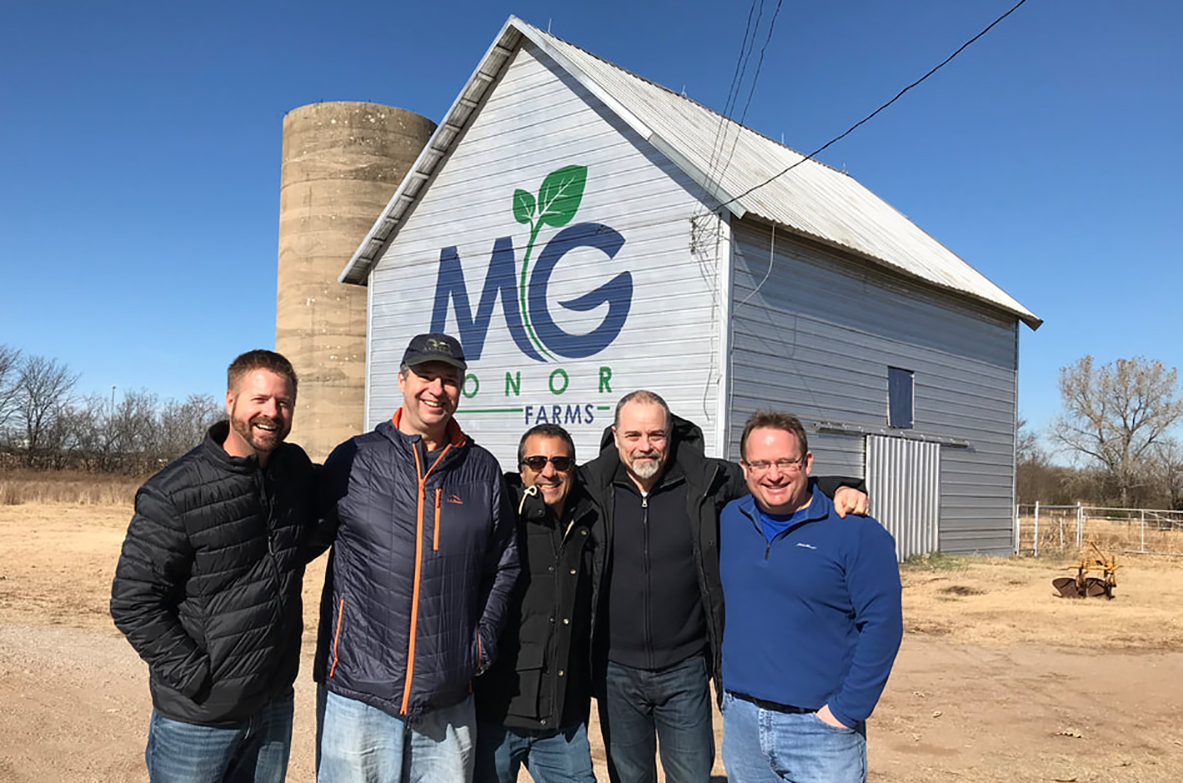
Clint Brauer, Carl Sutter, Nandan Kalle, Jay Samit and Steven Gentner, Greenfield Robotics
“Farming has always been centered around the farmer as a manager and the doer, sitting on a tractor. As time has gone by, it’s become increasingly hard to find — as you scale — other people to be the doer,” Brauer said.
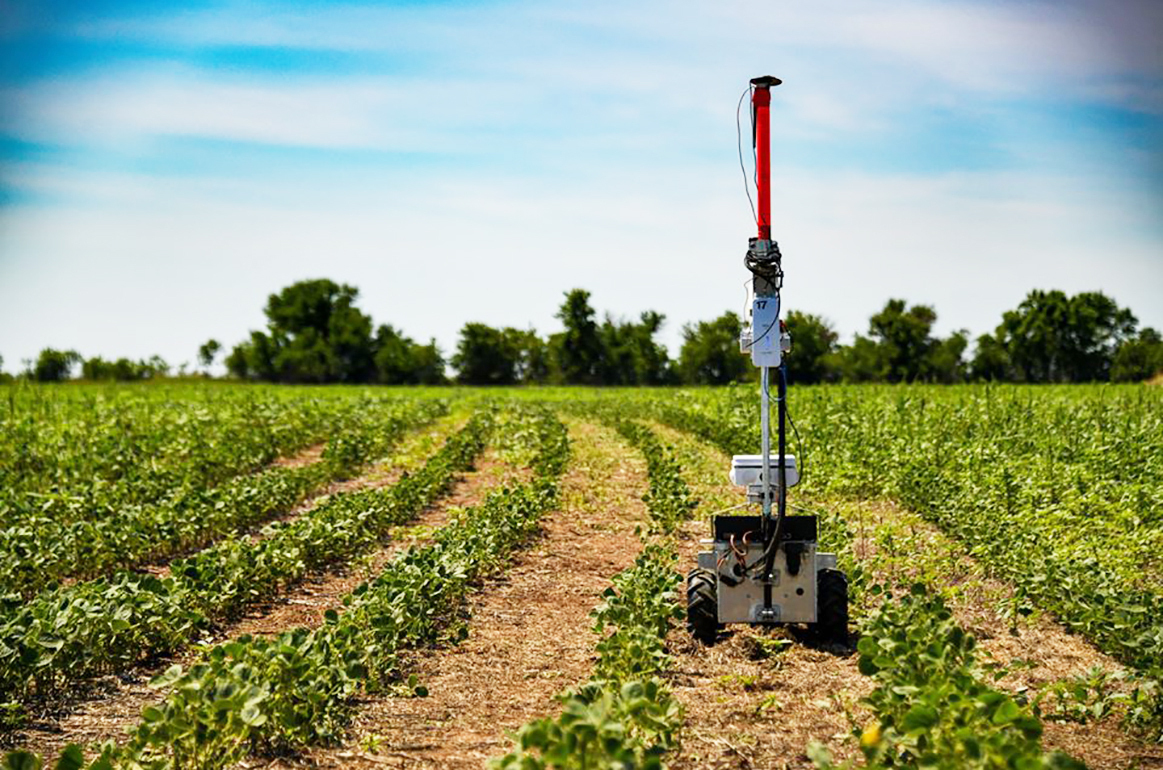
Greenfield Robotics developed a permanent solution: small robots that roam fields tending to weeds — eliminating the need for herbicides and tillage, he explained, noting two-for-one disruption that’s rooted deeply in purpose and creating a healthier world.
“We’re going to connect consumers and farmers,” Brauer said of the most obvious opportunity before the rural robotics startup.
Click here to learn more about the regenerative agriculture behind Greenfield Farms.
“All of your issues with food that you can’t trust — it’s because those two things are too far apart. So we’re using technology as a bridge to make it transparent and to get rid of the chemicals no one wants,” he said, noting every bit of the startup’s work is to better the lives of others.
“My dad had Parkinson’s [disease] and I started reading up on the chemicals we were using in fields back then, that just were not good. So I set my sights on driving them out of there,” Brauer said of his war on weed killers and other herbicides, which are primary sources for scaling farmland.
Greenfield Robotics
“How do you grow without chemicals? Nobody taught me. There’s really no one on vegetables to go and learn from, especially in Kansas. So we learned,” he said, of the experimentation process, which ultimately found the farm could use a bread preservative to destroy mold cells without causing harm to its vegetables.
“[Then we said,] ‘Well, how do we apply it to some of the larger fields,’ because my mandate, in my mind, has always been to get chemicals out of all food. If you’re talking about the 250 million acres of broadacre crops — corn, soybeans, milo, sunflowers, cotton, what are you doing?”
Robots held the key, Brauer discovered.
“Controlling weeds on single-digit acres or in greenhouses is pretty easy. Doing it on thousands of acres, not so easy,” he said of challenges that served as proving grounds for Greenfield.
“That’s where Greenfield started, solving a very present problem, and it expanded into enabling technology across regenerative ag — which I’ve practiced on my farm and know very well. And unfortunately, we also know too well the limitations of it right now.”
Weeding out frustrations
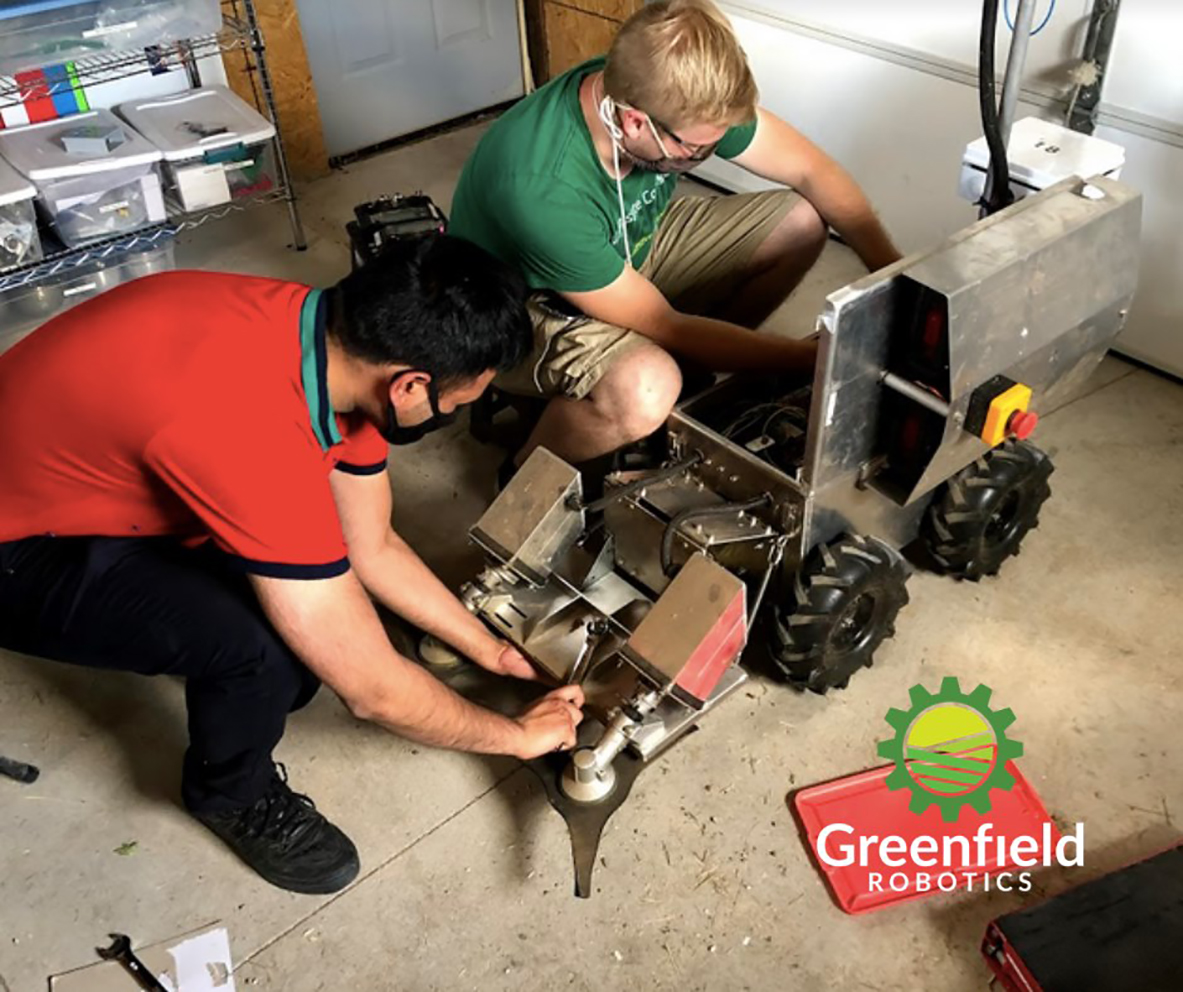
At less than 140 pounds each, Brauer’s fleet of robots are creatures of autonomy, roaming the fields of his farm row by row.
“It’s much different than a piece of equipment that you have to have someone sitting on top of. And they can go out there when it’s muddy or soaking wet and get the job done,” he explained.
Greenfield Robotics
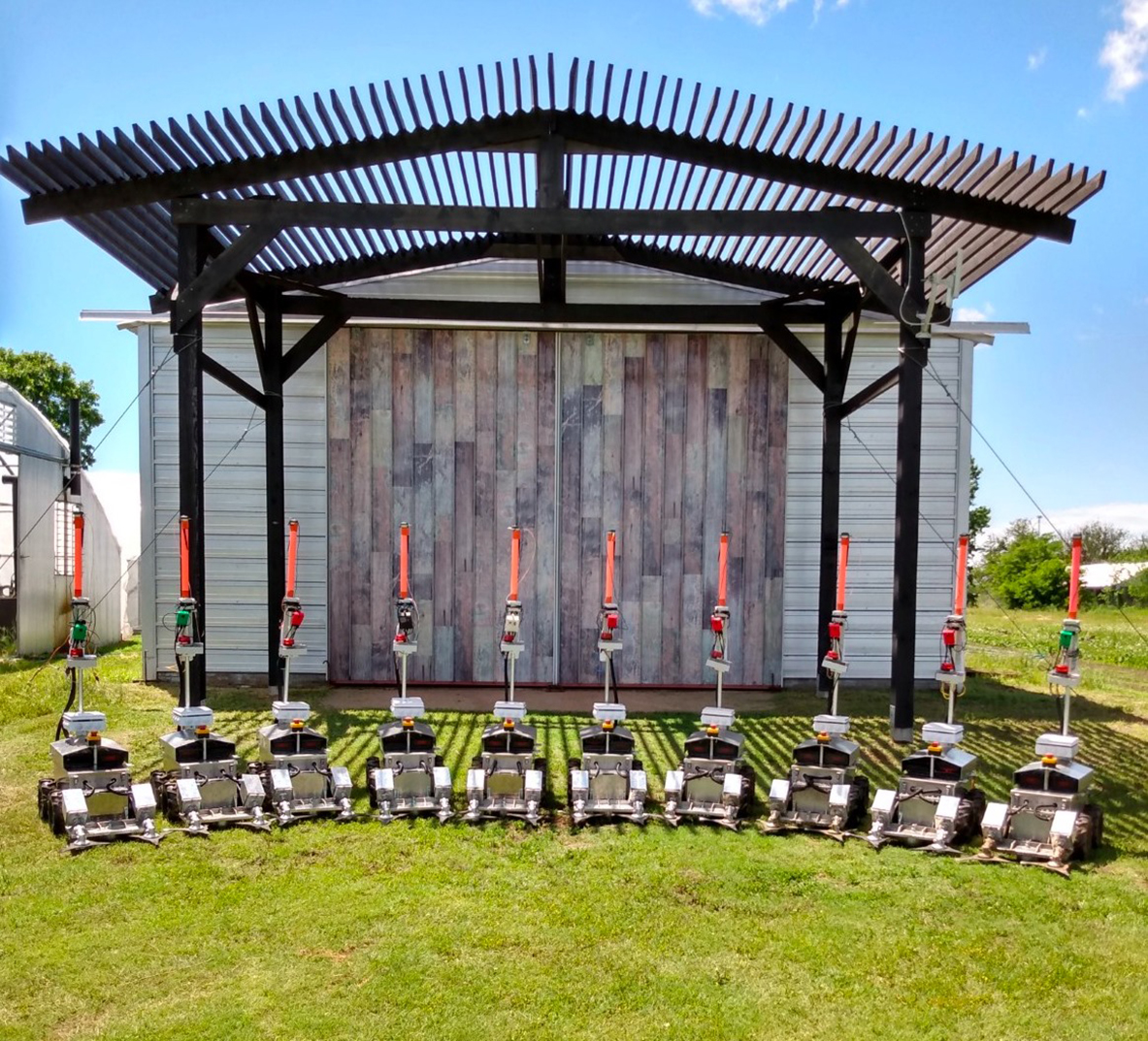
“The way we scale is more robots. They’re lower cost hardware and there’s just more of them. If something goes wrong, in most cases, we have nine others ready to go.”
Three years and a little less than $1 million in angel funding into the effort, Greenfield is showing promise and establishing itself among the greater Wichita region and its entrepreneurial ecosystem, Brauer said.
“It’s good, honestly. There were times I thought, ‘I don’t know if I’m going to make it,’ and I wouldn’t have if it wasn’t for the help of others. We’re in good shape now,” he said, noting fundraising has been the startup’s biggest overall challenge.
“We’re doing something a lot of people are passionate about and that is getting chemicals out of their food and preventing disease and helping with the environment … so that resonates with angel investors and we know it resonates with consumers and it resonates also with farmers,” he said.
“Fundraising has not been a lot of fun. … The traditional VC route, forget it. Being here in Kansas, agriculture guys in Silicon Valley just struggle. They just don’t get it. I spent a bunch of time educating them and that era is over. I’m no longer taking meetings with them unless they’re dead serious.”
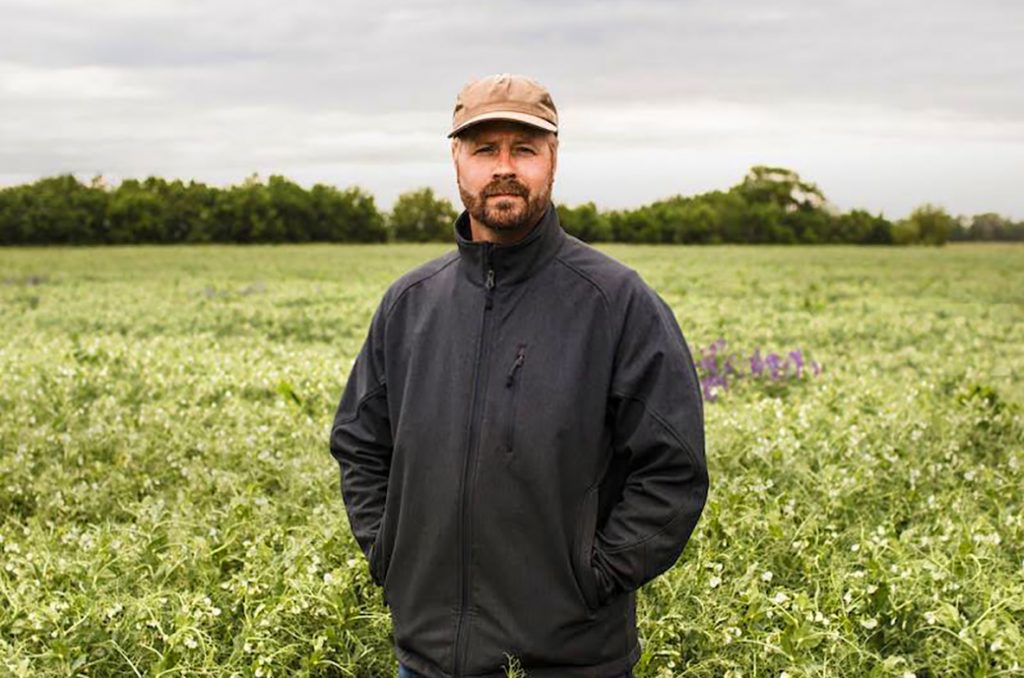
Clint Brauer, Greenfield Robotics
Tech transplant regenerates
Dealing with the frustrations of the West Coast is nothing new for Brauer who himself is a product of its booming tech ecosystem, once sharing the rare air of Hollywood with the likes of the chief financial officer at the Hollywood Reporter — a Winfield, Kansas native.
“I walk in, my car full of stuff from K-State, and somebody hands me a mango margarita,” he laughed, detailing his first day on the West Coast in his early 20s and how it opened doors to an entirely new and exciting world far removed from the farm.
“I listened to all these industry execs talk about movies and stuff. I had no idea. I was just quiet. It was a whole different experience — and I loved it,” he said of his tech scene experience that spanned marketing, operations and e-commerce in the entertainment industry.
Among additional challenges for Brauer: the vibes of Los Angeles and its breakneck hustle, he said, noting the culture led him down a rocky road of health challenges.
“[My boss and I] got a bunch of money from Sony and we started developing a company. We started this thing and I promptly just ran myself into the ground health-wise, gained a bunch of weight, ate like an idiot and ended up at a doctor’s office, taking pills for this and that,” he recalled.
“My co-founder said, ‘This nonsense is going to end, I’m taking you to Whole Foods.’”
More than meals, the moment led Brauer to a life of clean, organic eating and an intense boxing regimen that ultimately saw him throw a knockout punch to his life in L.A.
“I decided I wanted to do something that no one could argue was good. I wanted to go somewhere with a little more quiet and focus,” he said of his return to Cheney 10 years ago and the planting of MG Honor.
“Then I came back here and literally went from a $20,000-a-month expense account to growing tomatoes with my own hands,” he said sarcastically, joking as he reflected on his journey and the mission before him.
“We won’t be cowed and we won’t be run over and we’re going to get it done,” he declared.
“If someone’s listening to this, they should follow us on Facebook and get involved because what we’re doing is real. It’s beyond dispute good and we’re going to make it.”

This story is possible thanks to support from the Ewing Marion Kauffman Foundation, a private, nonpartisan foundation that works together with communities in education and entrepreneurship to create uncommon solutions and empower people to shape their futures and be successful.
For more information, visit www.kauffman.org and connect at www.twitter.com/kauffmanfdn and www.facebook.com/kauffmanfdn


2020 Startups to Watch
stats here
Related Posts on Startland News
This keychain could stop an opioid overdose; carry the antidote — not the burden of guilt
ST. LOUIS — Easy access to life-saving naloxone (better known by the brand name Narcan) could’ve prevented the fatal overdose of Danielle Wilder’s close friend in college, the tragedy-prompted entrepreneur said. Her friend was in possession of naloxone — a fast-acting medicine that can reverse the deadly impacts of an opioid overdose when delivered near-immediately…

Brookside restaurant spot shifts from Irish to Mexican flavors as two families expand their dream
Two longtime friends and their daughters — all seasoned restaurant workers — are joining together in a new East Brookside restaurant they can call their own. Muy Caliente Grill & Cantina is scheduled to open later this month at 751 E. 63rd St., Suite 110, in the former Brady & Fox restaurant. Owners Fredy Rivera…
Landlord’s solution to Kansas housing crisis: 3D print his own home inventory
TOPEKA — Regularly confronted with a lack of supply in the housing market — and the subsequent higher prices — landlord and general capital investor Chris Stemler faced a multi-dimensional challenge. “I thought to myself, ‘How do I help solve an inventory problem?’ the Topeka-based Trident Homes founder said. “I know I’ve got renters who…

Just-launched retail hub gets first tenant, battling ‘blight of the heart’ on Troost corner
‘We are each other’s bootstraps’ Transforming a long-vacant building along Troost into a space for neighborhood small businesses is about empowering the entrepreneurs already living and working in the east side community, said Father Justin Mathews. The newly unveiled RS Impact Exchange — built within the renovated, 1920-built Baker Shoe Building at 3108-3116 Troost Ave.…