

Peek inside Tesseract HQ: Robotics startup builds future in real time (with humans on the brain)
June 23, 2020 | Austin Barnes and Tommy Felts
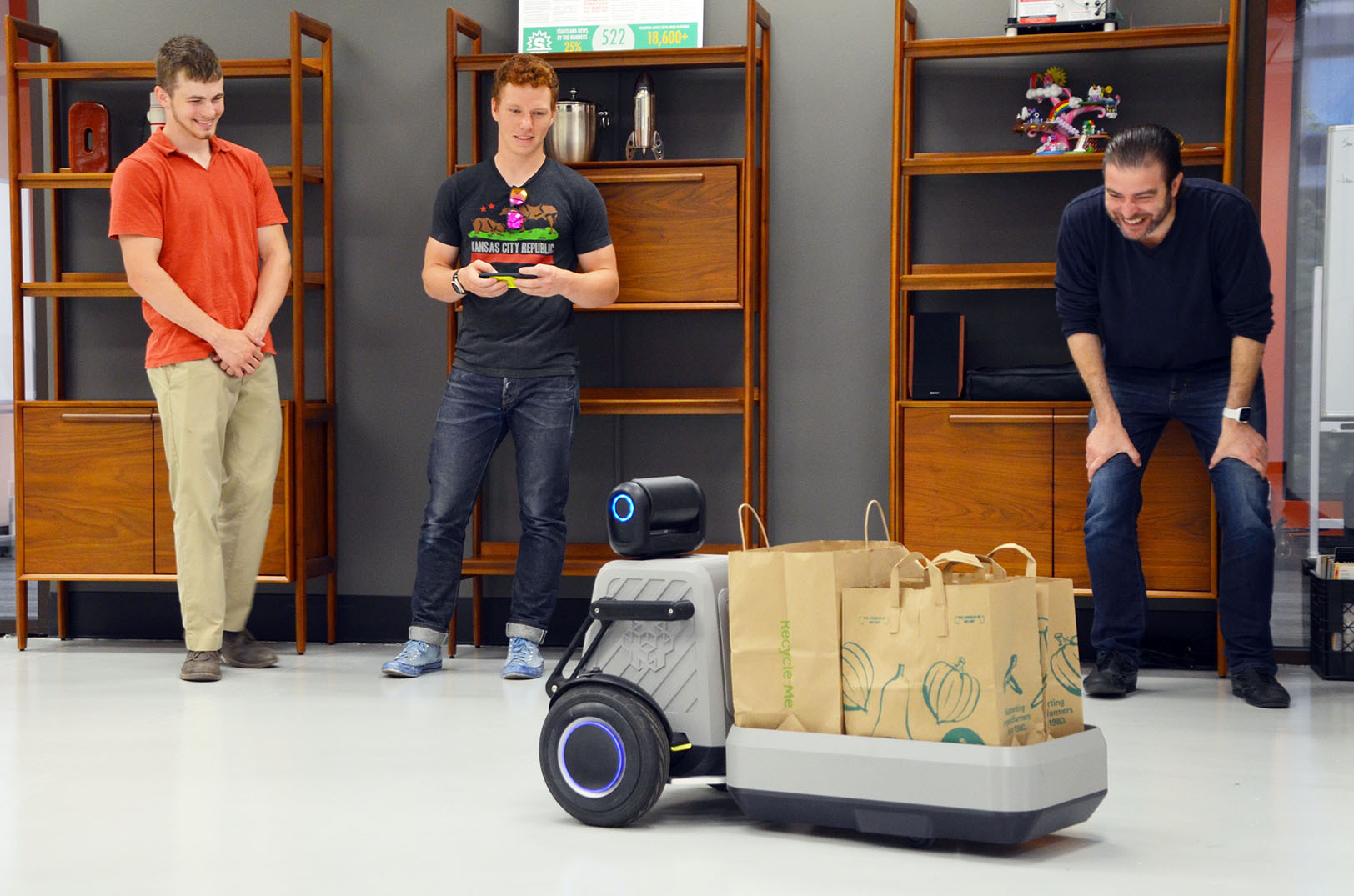
As an intentionally lowered screen begins to lift on Tesseract Ventures, once-seemingly-wild ideas that lived only in tech inventor John Boucard’s head are being realized.
With them, the future of work is taking shape — 3D-printed piece by 3D-printed piece — hardwired in the suburbs of Kansas City.
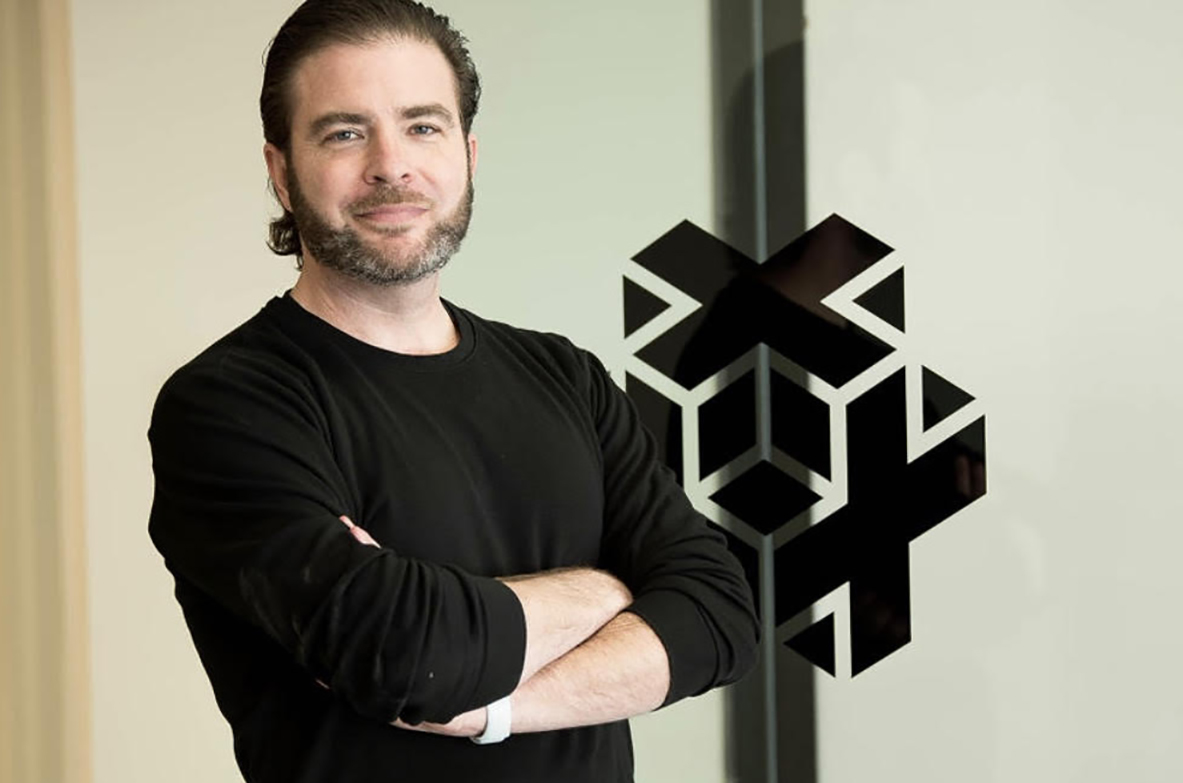
John Boucard, Tesseract Ventures
“We were a bit mysterious in the beginning, of course we were,” admitted Boucard, founder and CEO of the rising robotics startup, describing the company’s approach to its emerging body of work — the subject of curious whispers within the entrepreneurial and investor community for nearly two years.
“We have a tremendous momentum and focus. … It’s a different kind of company. We have creatives, we have engineers, we have strategists.”
And they have robots. But Tesseract is about much more than “Tess” — the name given to several vocal helpers rolling about Tesseract’s Johnson County headquarters, Boucard said.
Click here to learn why Tesseract was named one of Startland News’ Kansas City Startups to Watch in 2020.
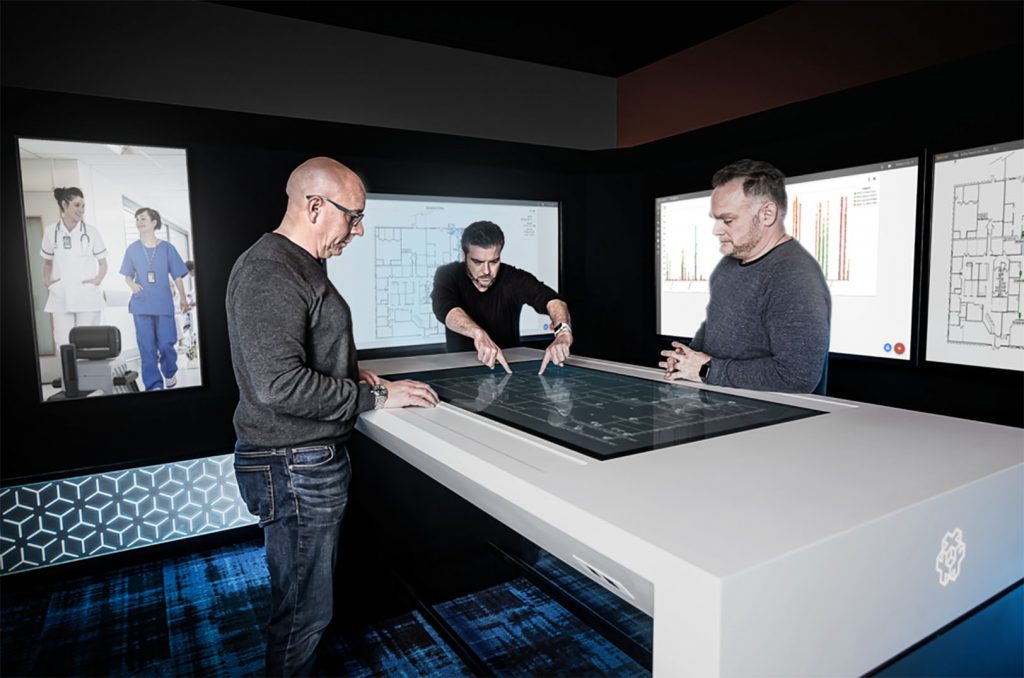
Dave Starr, John Boucard and Jason Harrell; Tesseract Ventures
Room for imagination — and practical use
While Boucard and his team remain tight-lipped about certain aspects of the startup’s product development, Tesseract started to reveal itself in May with the launch of its first mainstream product, the Tesseract PRISM — wearable badges that track and document the locations and proximity of workers.
PRISM by Tesseract
“We’ve been very careful how we message our business, because it’s a crazy creative place,” Boucard said of the launch of PRISM.
Its development and the ecosystem it creates within a construction work site — among many use cases for customers — is only the beginning for Tesseract’s capabilities, he said.
Progress toward the future is already well underway as Tesseract settles into its new, permanent home in Overland Park, Boucard told Startland News during a tour of the space where it proudly displays its latest creation alongside Tesseract-designed toys and still-under-wraps tech prototypes.
The move to a 5,500-square-foot office, creative studio space and workshop consolidates two locations formerly located in the Crossroads Arts District and Martin City.
“We see the integration of a Tesseract environment as a smart space of the future,” he explained, showing off the building’s “Tesseract room,” which was designed to bring its users’ workspace to life.
“We have exceptional microphones and cameras and we’re surrounded by screens. We can have confidential and secret conversations. People feel comfortable talking, it’s completely secure. We can capture every note and share it to everyone instantly that’s in the room with us,” Boucard explained of the futuristic-looking space, which looks and feels like the set of a science fiction or superhero movie.
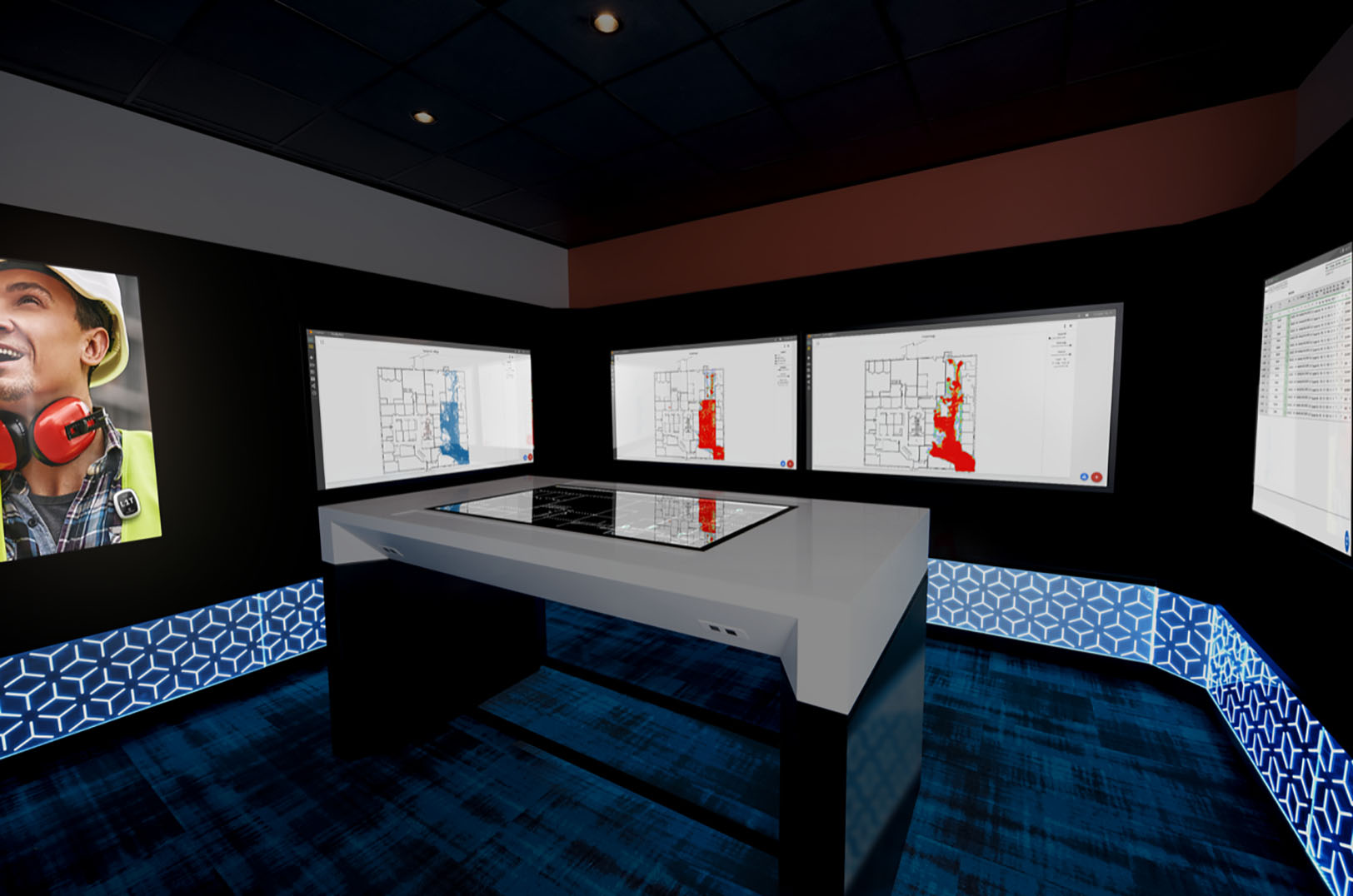
The Tesseract room
“We built it though. We actually went and did it,” he laughed, eager to show the space to the world and people who’ve dreamed of something like it existing.
“Why would we do that? Why would we build a room like that?” Boucard questioned, adding the space is most often used as a think tank.
“I wake up at 4 a.m. — no alarm — and I [can] walk into the Tesseract room and [when the room recognizes my PRISM badge,] I see Japanese cherry blossoms and we have a full blown stereo system, it’s second to none. It’s visually appealing and that’s the inspiration for me in the morning.”
Invigorated by the space, Boucard and his team, which includes Dave Starr, vice president of research and development, can then start their day in the smart space, analyzing everything from employee efficiency — with full PRISM integration — to catching up on emails, displaying blueprints in 3D and hosting virtual meetings with customers scattered across the world.
“We walk in the room, ‘Welcome Dave.’ ‘Welcome John,’ and all the documents that we’re working on show up on the screen,” Boucard said with enthusiasm.
“We have special pucks we can put on the table that [pull up] wraparound menus. We can touch it and then everything shows up. We’ve got our own Mosaic RTLS [real-time locating system] that keeps track of our own PRISM badges.”
What if buildings were robots too?
As the technology develops, Tesseract plans to continue working within the construction space, Boucard noted, adding the company sees it as a natural entry point for the introduction of robotics into society. Every location from hospitals to offices could one day benefit from the technology, he said.
“Our strategy is a bit different. … Even though we’re designing robots to integrate with people in the construction phase, the biggest business opportunity past that is the building of the future and the business that could occur if the building was intelligent from the start,” he explained.
Tesseract sees such a vision achieved by equipping new construction buildings of the future with fleets of robots that can alert property owners to such concerns as leaks and air quality issues, as well as sterilize working environments — an especially useful tool in the era of a pandemic, Starr added.
“I think long term it’s a much larger play around the Internet of Things and understanding where things are in spaces,” he said.
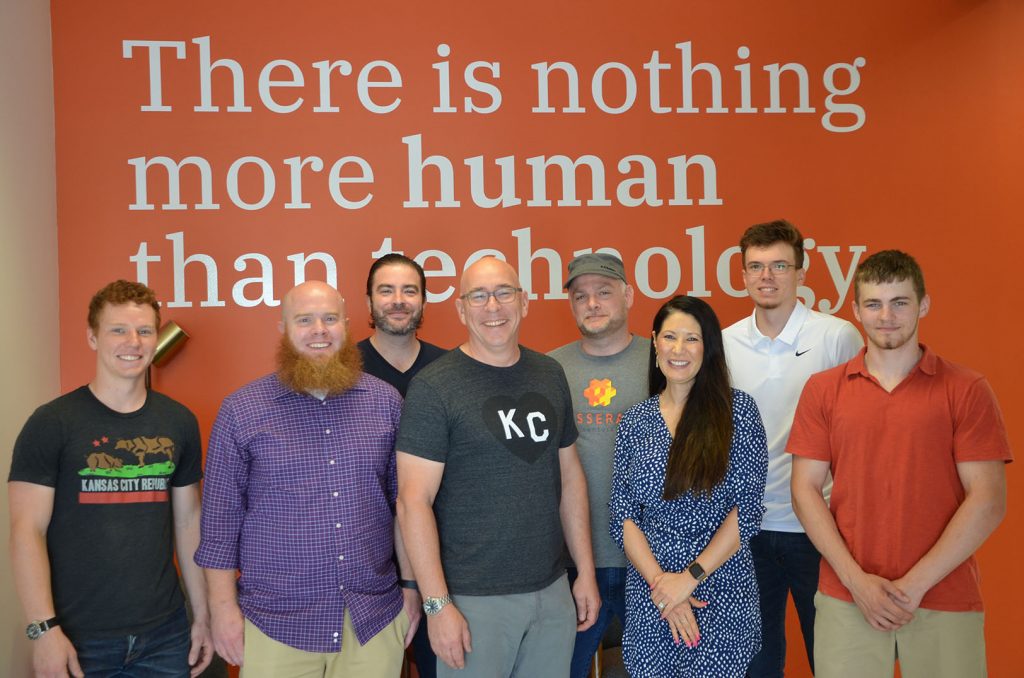
Decker Starr, Greg Lorett, John Boucard, Dave Starr, Jason Harrell, Helena Boucard, Spencer Cook, and Matthew Claar; Tesseract Ventures
Automation without replacing humans
“When you walk in, you see the quote on the front door that says, ‘There’s nothing more human than technology,’ and for us I think that means a lot because you can’t swing a dead cat without finding another software vendor out there that wants to automate something,” Starr said. “And while we believe and we understand that automation and streamlining is essential to the survival of business, how do you do that in a way that makes it more human and allows humans to work better together? That’s really at the core of what we do.”
Wired with purpose, robots designed with intention are the future, Boucard said, and Tesseract is the only place in the city where you’ll find them roaming the office and making jokes around the watercooler.
“It’s a different way to go about the market versus, ‘We’re going to build this robot and it’s going to go clean floors.’ … We’ve had big conversations with cleaning companies [as a result of the pandemic] where there’s unions and they don’t want robots replacing their jobs,” he explained.
“Our take is much different. We’re saying this is a solution that you want to send in before the humans.”
Perfect harmony between humans and robots might seem like the far-fetched plot of a science fiction movie, but for Boucard, no idea is off limits, he said.
“One thing that I remember when I first started the business, I pitched to Digital Sandbox,” he recalled of an early experience with the Kansas City proof-of-concept funding program. “I didn’t get it. It was [for] 25-large and I just thought, ‘You know what? I’m not thinking big enough.’”
The rejection ultimately lit a fire under Boucard and has served as fuel for what stands to become the only top tech startup in Kansas City to be 100 percent backed by local funders, he said.
“Now we have the great luxury of picking and choosing the best of the best — the best of the best in KC. And we’re lucky we have a very patient investor group of talented individuals that share that vision,” Boucard said.
Click here to read more about Tesseract’s most recent investment.
“No bullshit here. It’s not my style,” he said. “I’m straight up, let’s get it done, get the best people, the best technology, the best law firm, the best strategists and go do it. So we’re taking a swing at it.”

Featured Business

2020 Startups to Watch
stats here
Related Posts on Startland News

‘Never settle’: He started small, now Drue Stewart is bringing TikTok-famous food to former Westport Ale House
‘Bigger, better, crazier; Never settle; The building had a dark cloud but we are going to bring new life to it’ Less than a year after opening Holy Brunch KC in Westport — and one small expansion — Drue Stewart is making an enormous leap. He’ll go from 2,000-square-feet on one floor, to a 16,000-square-foot…

Great Jobs KC leaps closer to its $100M goal with massive grant to support adult financial stability
A just-announced $60 million investment by the Ewing Marion Kauffman Foundation marks a significant step in a Kansas City-based nonprofit’s plans to support 50,000 adults on their journeys toward financial stability, said Earl Martin Phalen. The grant to Great Jobs KC serves three priorities outlined within the Kauffman Foundation’s new grantmaking strategy: college access and…

Teens tackle universal pain points: Junior Achievement competition pushes students to pitch biz ideas
A new student innovation competition linked to Junior Achievement not only challenges Kansas City teens to develop business solutions for immediate real-world problems, said Will Bowler; fostering entrepreneurial thinking develops longer-term impacts. “This program empowers them,” said Bowler, a teacher at Olathe East High School, as students wrapped up Tuesday’s 3DE Innovators Showcase at the…

Trio of early stage Kansas City startups tapped to join K-State Accelerator focused on boosting Kansas economy
MANHATTAN, Kansas — Seven startups are expected to begin work this month within the K-State Accelerator, earning funds, training and resources to turn their concepts into successful Sunflower State ventures. Three of the selected companies hail from the Kansas City area, including dScribe AI; 4D Leaders; and Rebound Jerseys. The eight-week, virtual Center for Entrepreneurship…