

Neelima Parasker planned for snow days — COVID came instead; How SnapIT is weathering the pandemic in a new space
June 5, 2020 | Austin Barnes and Tommy Felts
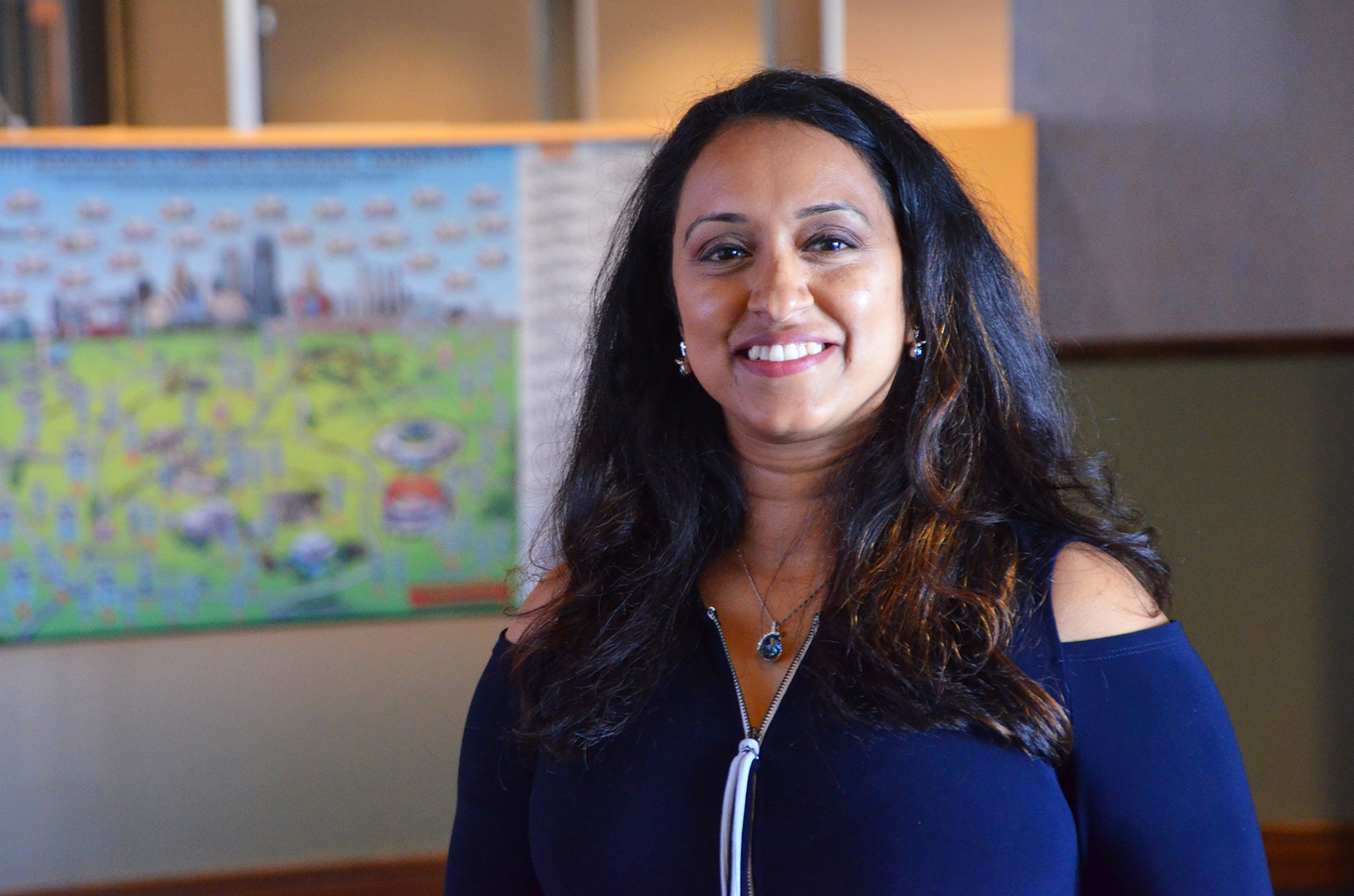
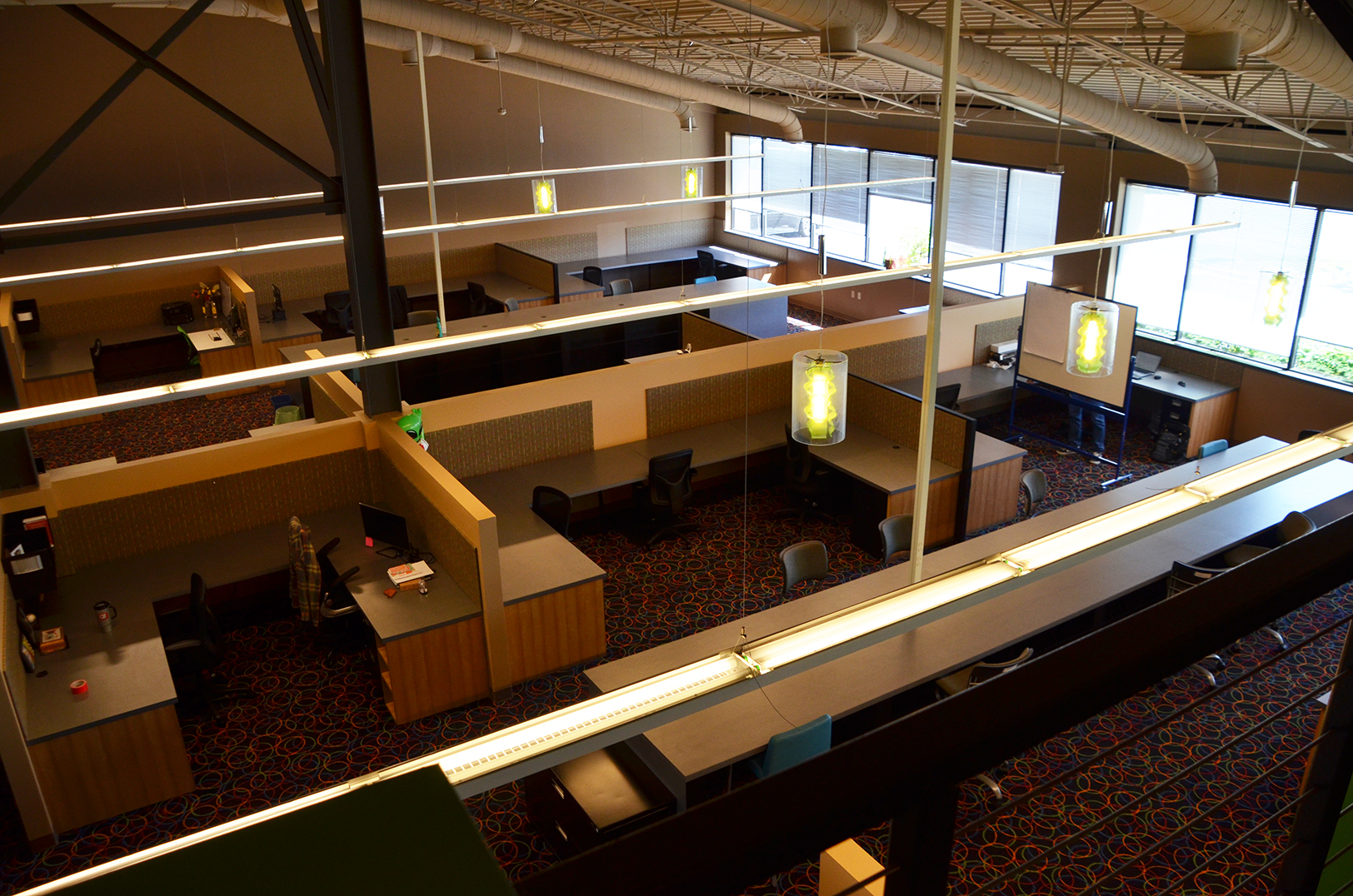
More than 20,000 square feet of silence greeted Neelima Parasker as she returned to work this week after Stay at Home orders lifted.
SnapIT Solutions
“Monday we opened up, but really, to very few people,” Parasker, CEO of SnapIT Solutions, said of the startup’s reentry to the traditional workforce — this time, inside a new office space that removes the company from the coworking scene.
Click here to learn more about the IT solutions startup, which specializes in minimum viable product buildouts, workforce development for programmers and other specialized capabilities.
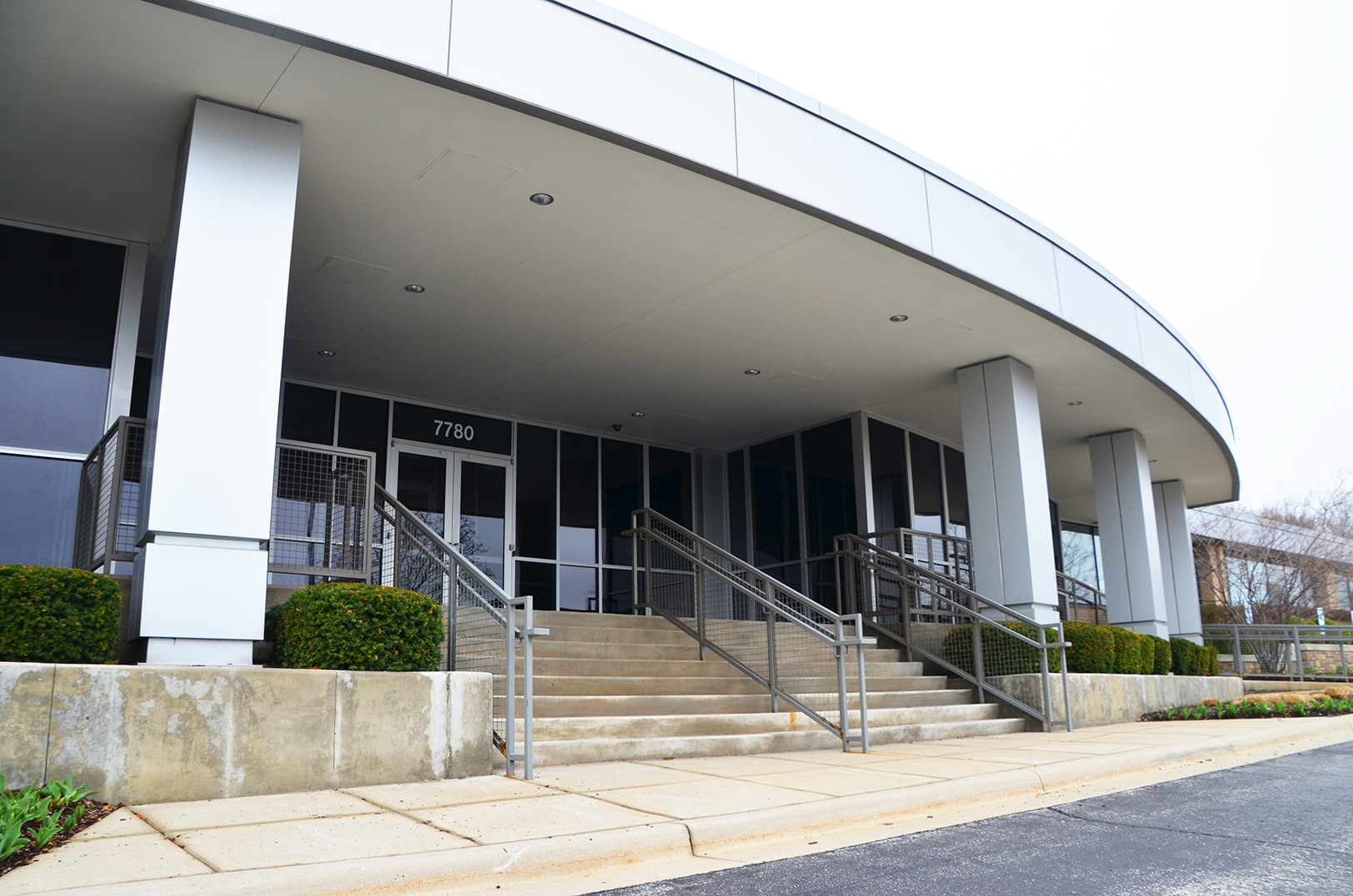
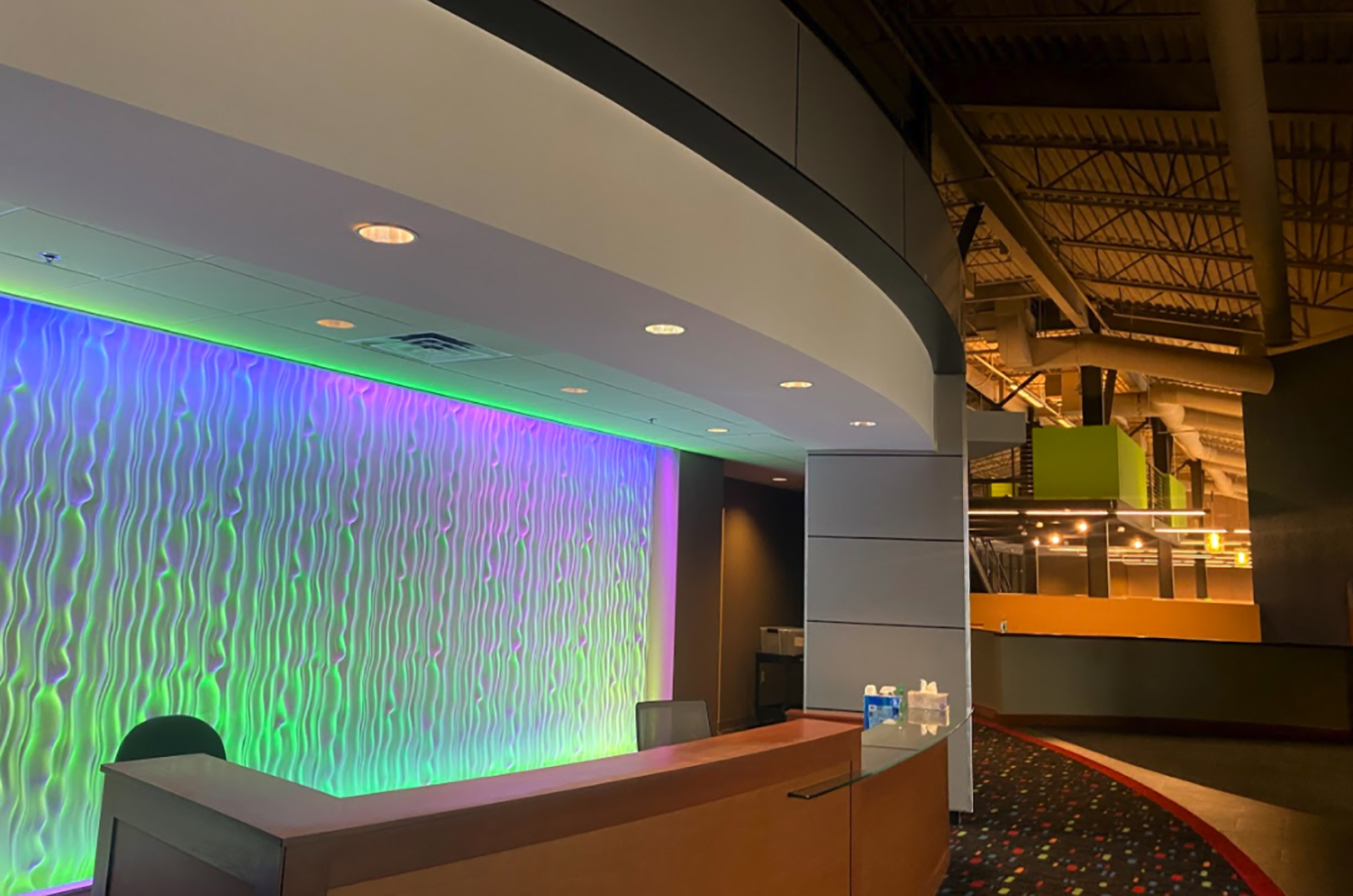
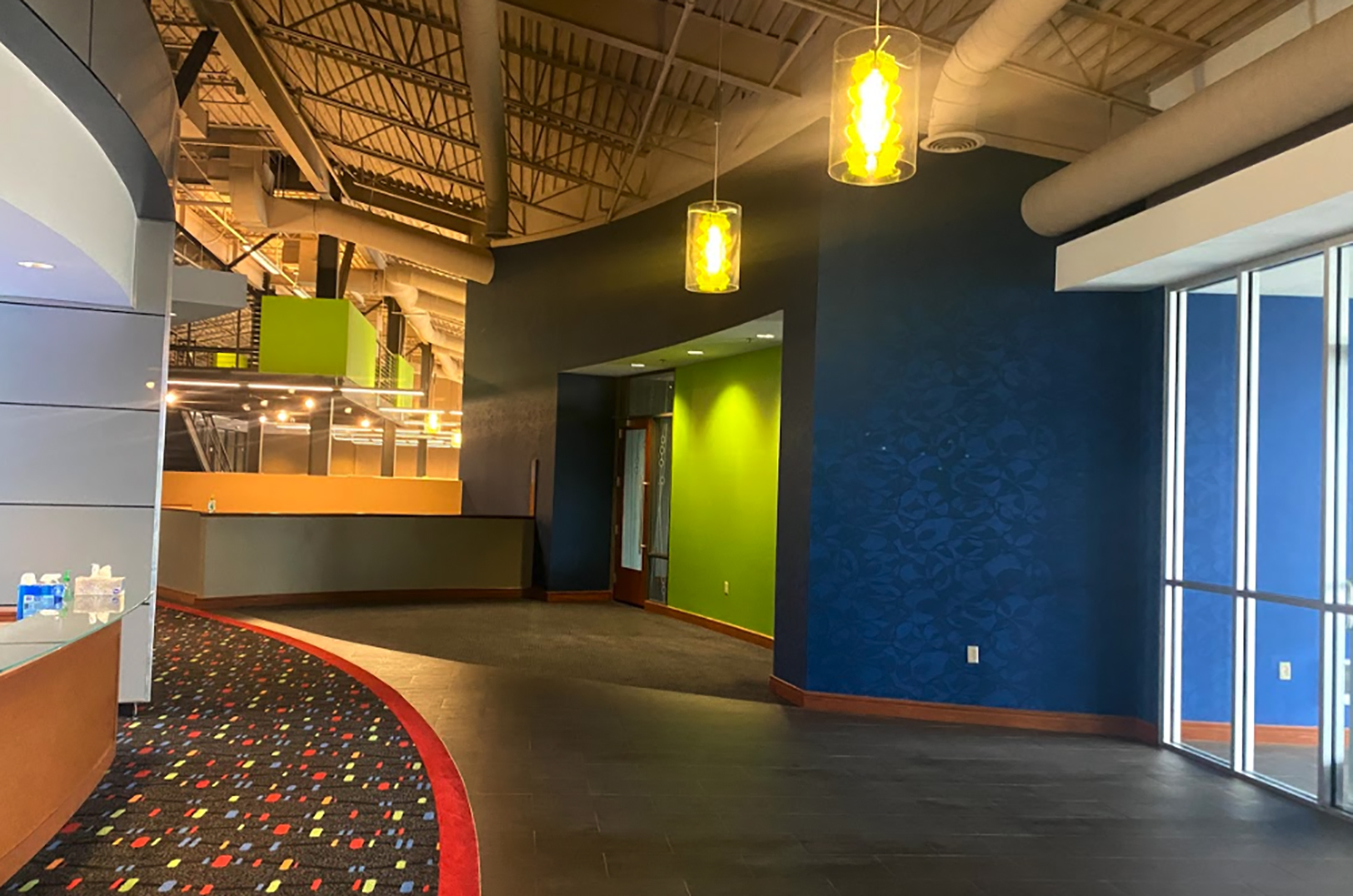
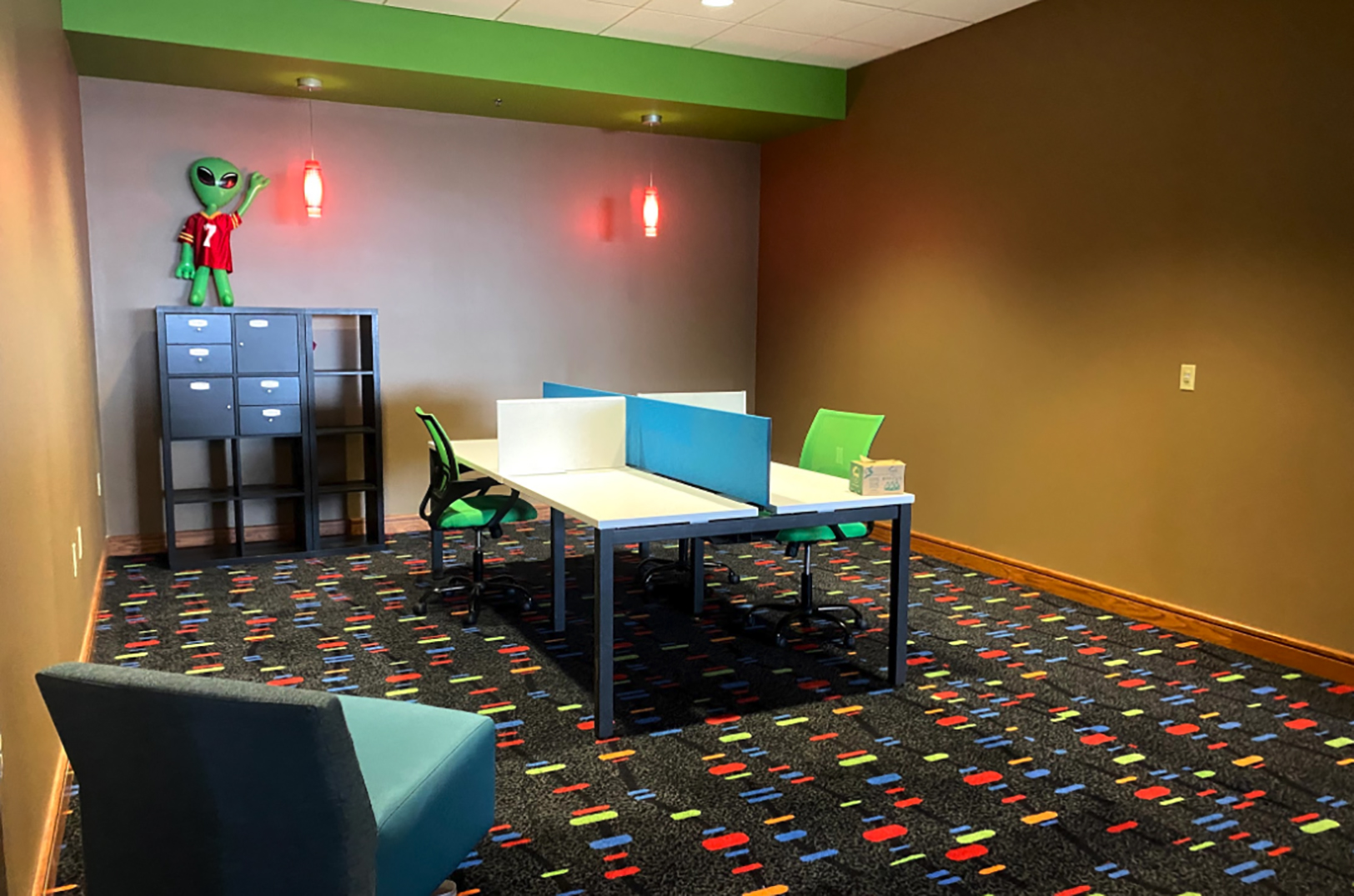
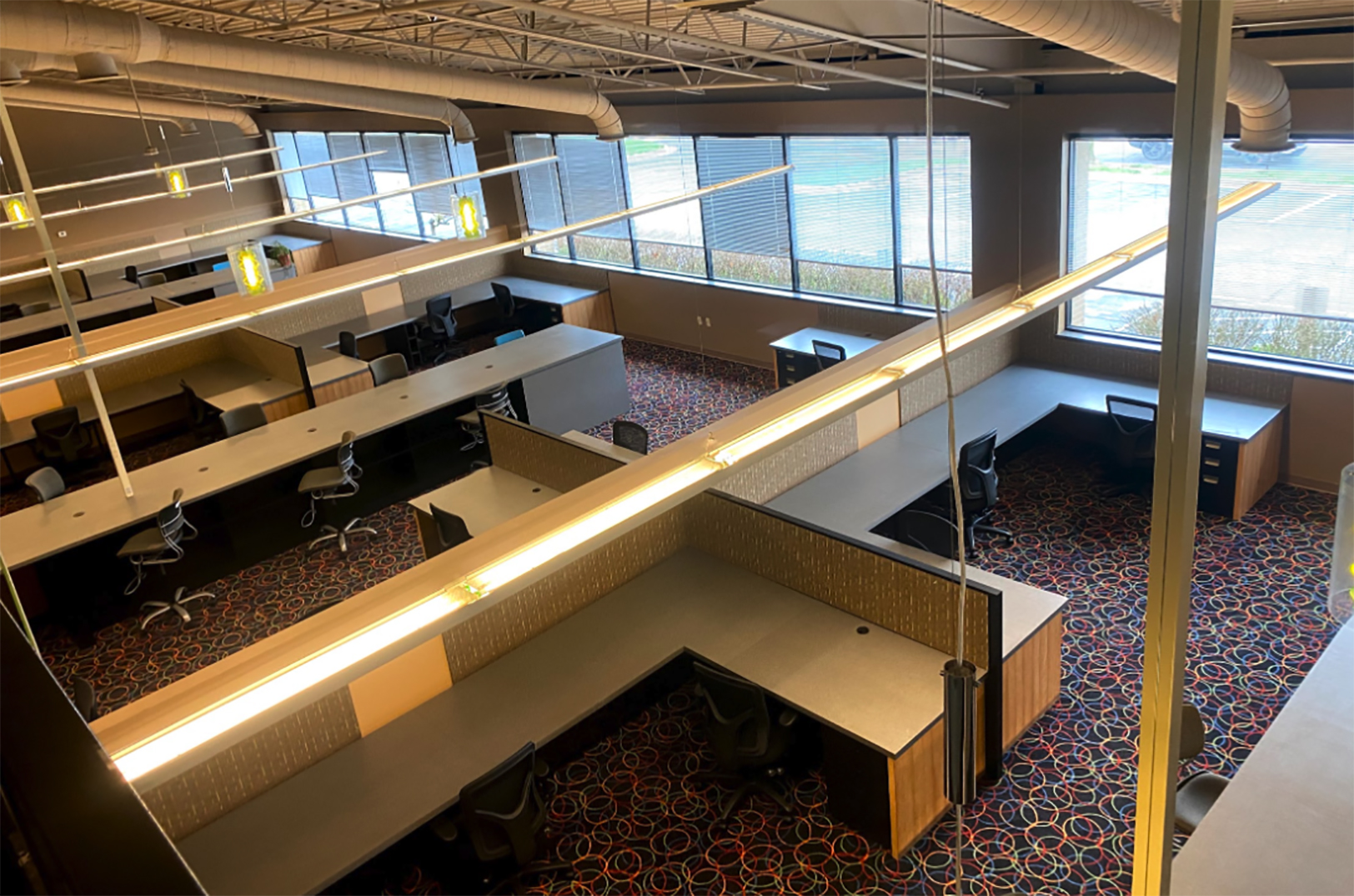
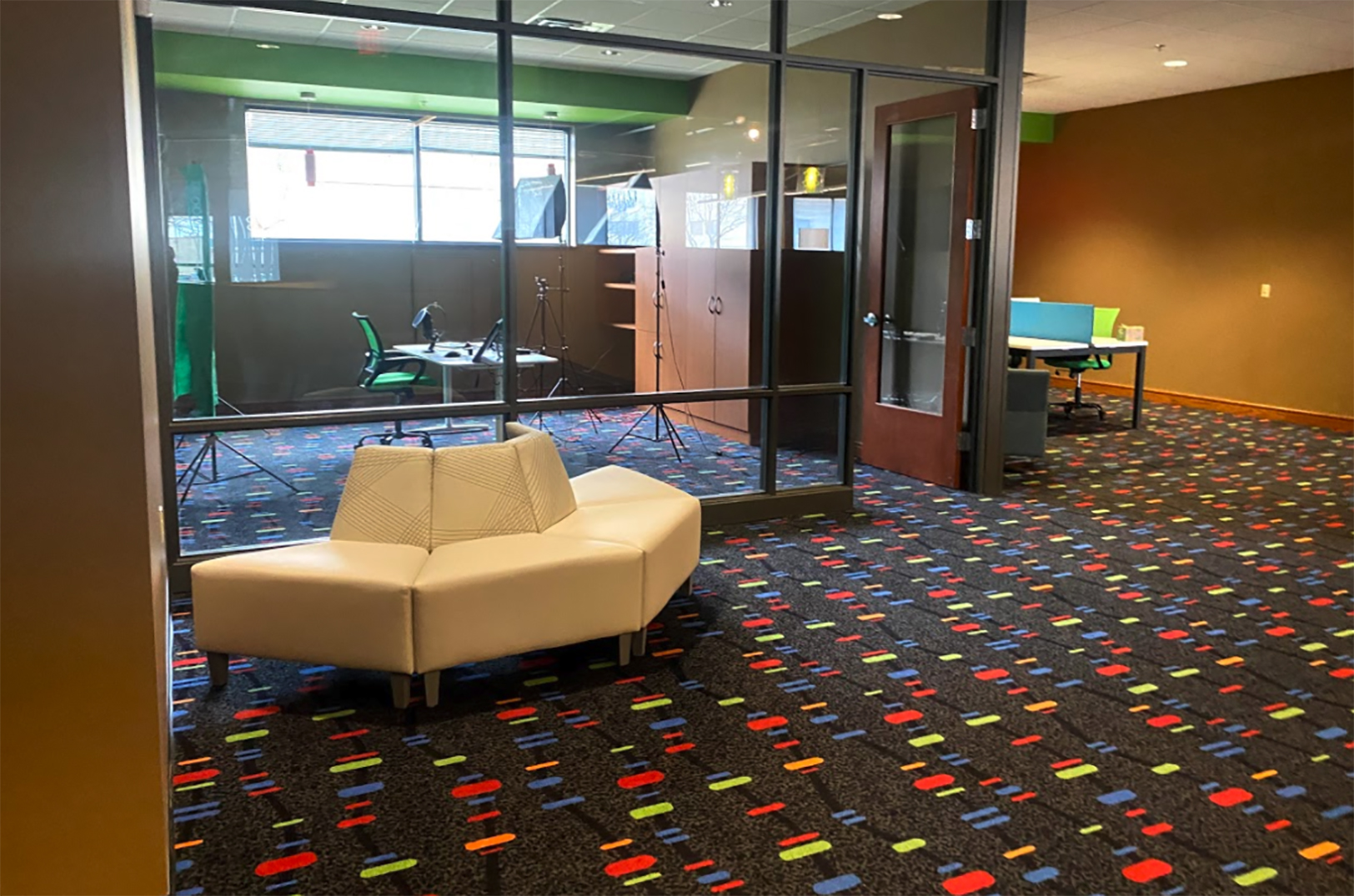
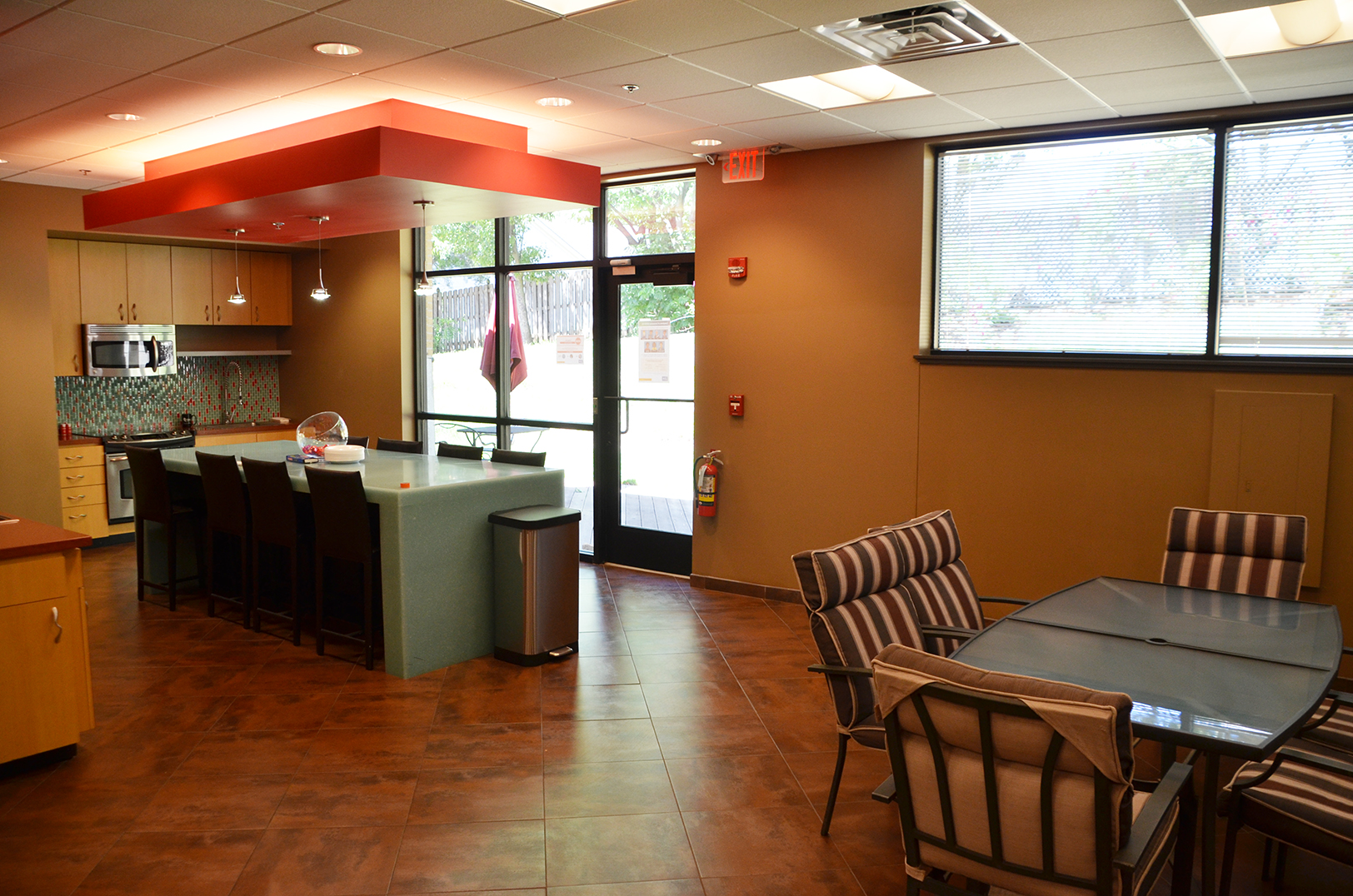
More than 10,000 square feet of the new space — located inside the Rosana Square office park in Overland Park — is secured for SnapIT, which started moving from the GRID Collaborative Workspace before COVID-19 hit in early March.
The Rosana Square facility includes conference rooms, a mezzanine, outdoor gathering space, a full kitchen, a gym, and plenty of space for employees to spread out.
But in light of the pandemic, fanfare over the move almost immediately silenced, and Parasker sent her 43-member team home.

“I’m really thankful that I’m globally connected, not just locally,” she said, noting messages from friends in China began pouring in before news of the virus was being taken seriously in the United States.
“There was a day when I was walking out of the office and I said, ‘OK, there is this message coming from China,’ so I ran back into the office and said, ‘Let’s implement the Snow Day Protocol.’”
Such a move is exactly what it sounds like — a plan the company had put in place for its programming students and staff to work remotely should winter weather hit and keep the SnapIT team out of the office for an extended period.
The effort included providing computers and WiFi hotspots to everyone who needed them. A workforce development partner helped SnapIT fill in any shortages, including computers that students could keep after their programming training.
Click here to learn more about SnapIT’s efforts to train Kansas City programmers.
Little did Parasker know, she had drafted the perfect plan to navigate months of home officing in the wake of a global pandemic, she noted.
“I’m glad we did that. … That was probably a small gap, but I didn’t feel like I was putting my employees [at risk,] making them get into contact with people,” she said.
“I’m quite proud of my team. To stand up and just do it at that stage.”

SnapIT Solutions
And while SnapIT is now open for traditional business, the policy will hold steady until the end of the year, for those who aren’t ready to return to the office, Parasker noted.
So far, roughly seven employees have made their way back to the space — which is currently undergoing social distance modifications and has implemented such protocols as temperature checks, a guest log, and one-way routes through employee islands in the heart of the office.
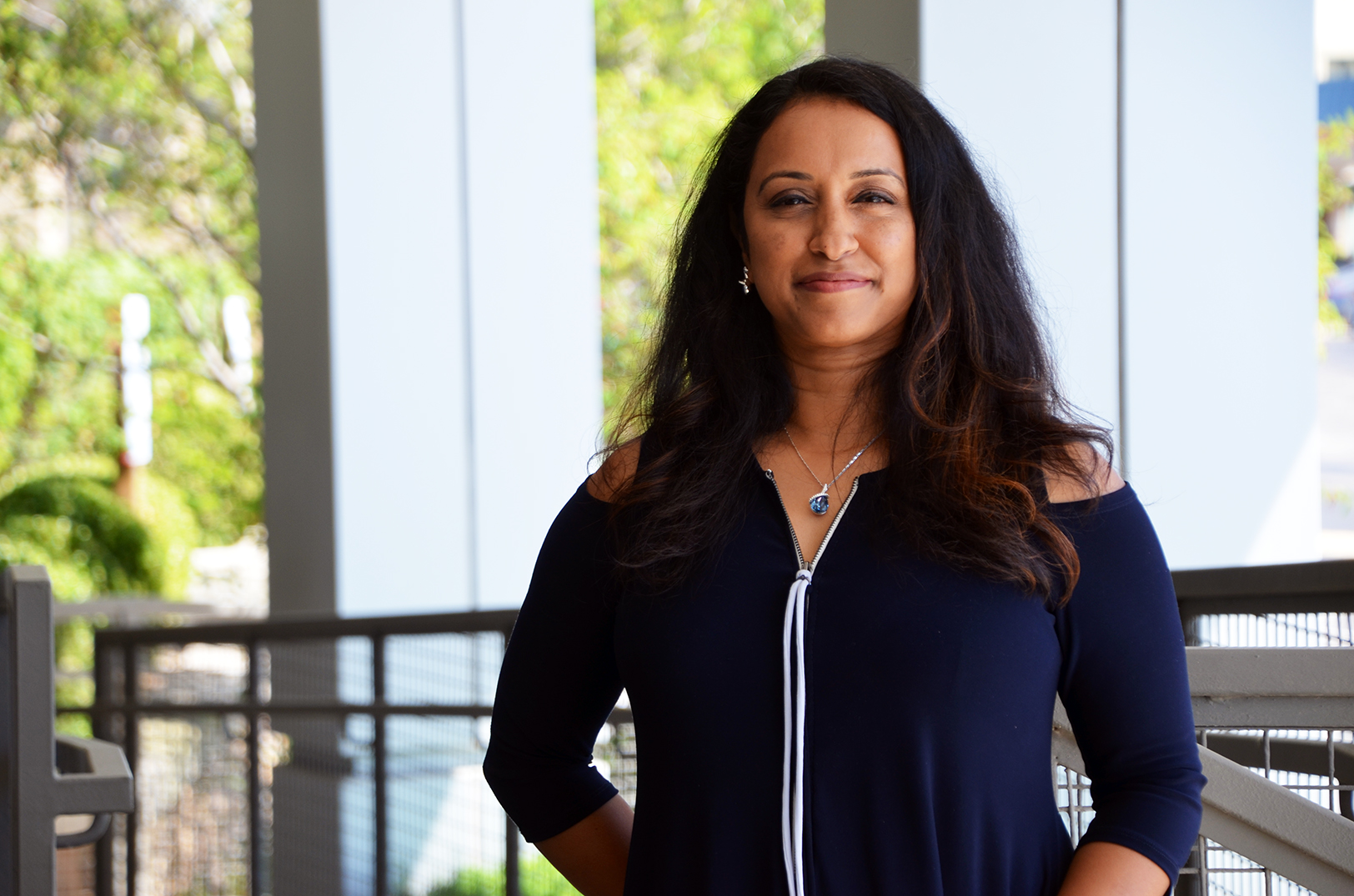
Neelima Parasker, SnapIT Solutions
“High-risk employees cannot come into the office — and definitely not during the office hours,” Parasker elaborated on new company policies, drafted by the company’s new COVID-19 committee.
“It’s difficult to meet in this time. I feel empathetic and I feel there are too many voices speaking at this time,” she said. “I wish we had one voice speaking that made sense, but we’re just not sure who’s words to follow at this point, so we’re making our own.”
The SnapIT COVID committee meets weekly to review best practices and new guidelines — an evolving process that’s challenging for company leaders, Parasker added.
“I’m really being the bad cop,” she said, noting enthusiasm to return to work is widespread, but she’s actively stopping it in the interest of keeping her team safe long term.
“Nobody knows the best protocol. … What happens if some gets COVID? What happens if there’s a team that’s isolated? What happens if someone is in that situation and there’s a fatality? We have all age groups, all types, all genders [of people], so we should be prepared for all of these.”

This story is possible thanks to support from the Ewing Marion Kauffman Foundation, a private, nonpartisan foundation that works together with communities in education and entrepreneurship to create uncommon solutions and empower people to shape their futures and be successful.
For more information, visit www.kauffman.org and connect at www.twitter.com/kauffmanfdn and www.facebook.com/kauffmanfdn

Featured Business

2020 Startups to Watch
stats here
Related Posts on Startland News
We Create KC report: Startup investment soared to $540M in 2017
A startling statistic for those who think capital merely flies over the Midwest: Kansas City saw a 69 percent increase in startup investment from 2016 to 2017, according to KCSourceLink’s We Create KC report. All told, early-stage businesses classified by KCSourceLink as startups — typically defined as those with 20 or fewer employees — nabbed…
Hack Midwest offers coders freedom through 24-hour app creation competition
Technologists are often surprised by what they’re able to accomplish when they work together in a competitive format, Mike Gelphman said. That’s part of the reason Hack Midwest is returning this summer with the objective to inspire more techies to embrace their imagination, said Gelphman, founder of the competition, as well as KCITP, an area…

KCultivator Q&A: John Coler champions making a quick impact, packs of dolphins
Editor’s note: KCultivators is a lighthearted profile series to highlight people who are meaningfully enriching Kansas City’s entrepreneurial ecosystem. Today Startland takes a closer look at startup ecosystem champion John Coler. Check out our features on Made in KC’s Tyler Enders, Hispanic business builder Pedro Zamora, ‘fashionpreneur’ Jordan Williams, Plexpod founder Gerald Smith, innovation coach Diana…

Backed by $4M round, Hilary’s Eat Well expanding organic food line, hiring 10-15 workers
Hilary’s Eat Well is growing its plant-based food line, company leaders said. The move to diversify the company’s offerings — as well as to more efficiently produce larger quantities of its free-from (dairy- and gluten-free) products — comes as the Lawrence-based operation moves its storage to an off-site facility, freeing up manufacturing space, said Lydia…