

I’m black and a Plaza business owner — in that order; why a Main Street entrepreneur joined KC’s protests
June 2, 2020 | Tommy Felts
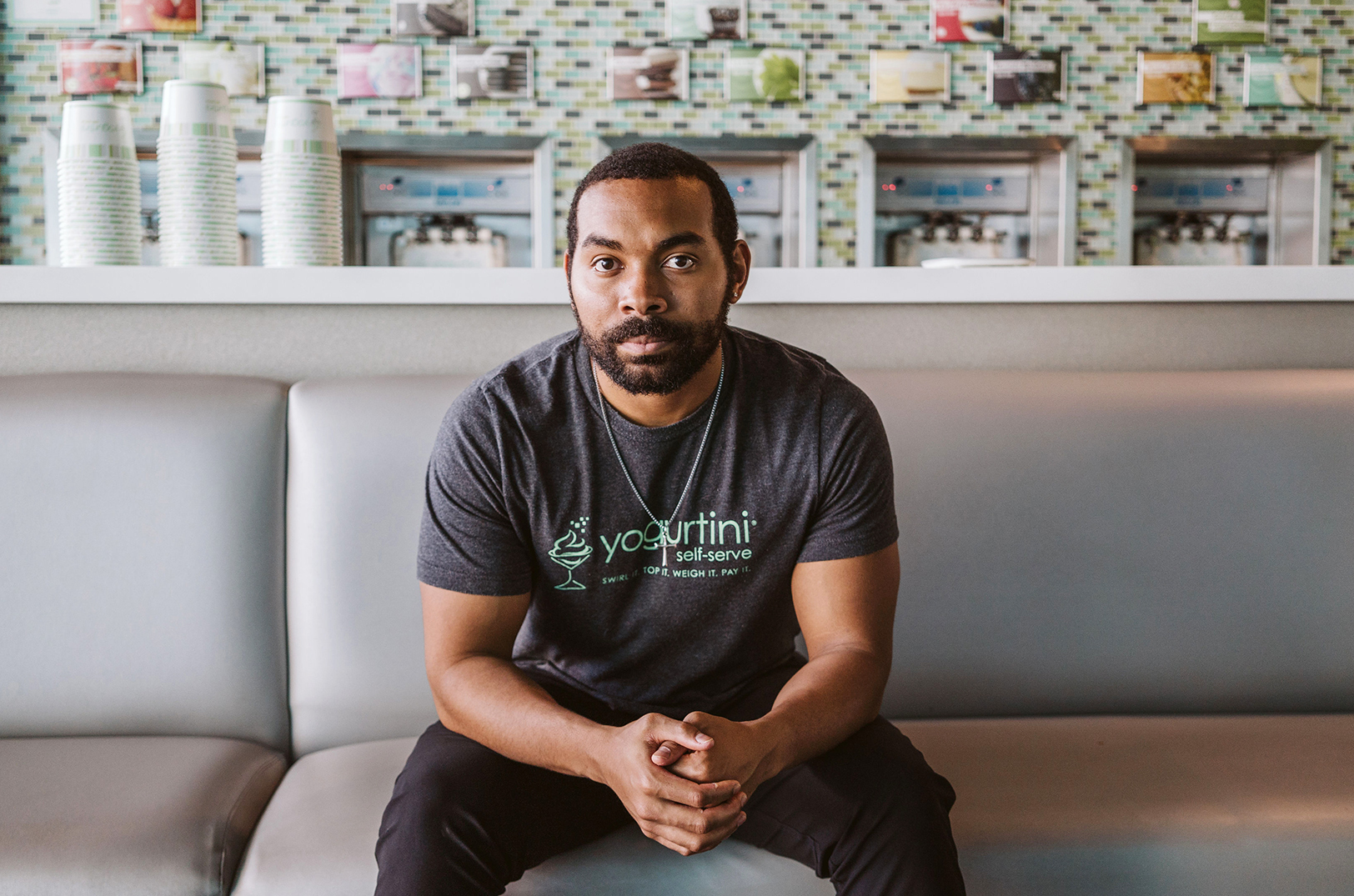
Isaac Collins is exhausted, but he can’t sleep. His wife and mother are both worried about the 31-year-old community entrepreneur whose business is just blocks away from the scene of late-night mayhem and unrest following peaceful protests on Kansas City’s Country Club Plaza.
But it isn’t rioters and looters that have Collins on edge, he said. The sleeplessness comes from the weight of centuries of oppression — sometimes subtle, but too often as overt as the killing of George Floyd, an unarmed black man in Minneapolis.

George Floyd
“We’re angry, but deeper than that — we’re scared,” said Collins, seated Monday inside his Yogurtini shop on Main Street south of the Plaza, where on Sunday the business owner joined thousands of peaceful protestors to demonstrate against police brutality and systemic injustices in the United States. “This is not a game to us. It’s not a joke. It’s spirit crushing.”
Collins is anxious. He’s sad. He’s defiant. And now he’s motivated.
Floyd’s death was a call to action, Collins said — not as an entrepreneur or even as a Kansas City native — as a black man in America.
“This one account happened in Minneapolis, but systemic racism — and racism and injustice in general — happens in every single city, every single county, every single town and territory and village in the United States,” Collins said. “Every single day. We all feel it.”
Escalating tensions and violence have whalloped major U.S. cities since Thursday with Kansas City among dozens of metros seeing volatile clashes between protestors and law enforcement in the wake of Floyd’s death while in police custody. Nearly 200 have been arrested locally with dozens of law enforcement injuries reported following four nights of confrontations.
“It’s time. We want to show the people in power that it’s time for change,” Collins said. “We want reform.”
“This didn’t start because black people were bad,” he added. “It started because the system is rigged against us. So it’s not a Minneapolis problem. It is an every-single-person problem. It is an every-single-city problem.”
And it isn’t just about police, he said. Contrary to the narrative of “Kansas City nice,” Collins’ hometown itself can be among the worst offenders, he said.
“I’ve had a ton of racist things happen to me in this city, in my business. Being a black man who owns a business on the Plaza — ‘where the white people go’ — I get it all the time: ‘How did you get this business?’ ‘You work here?’ ‘You’re the manager?’ ‘Oh, you’re the owner?’” Collins explained. “I get the looks. I get the confusion. I get the messages on social media when I post and people are stunned that a black man could own a business on the Plaza.”
Click here to learn more about Collins’ entrepreneurial journey with Yogurtini and, formerly, SERV Nutrition.
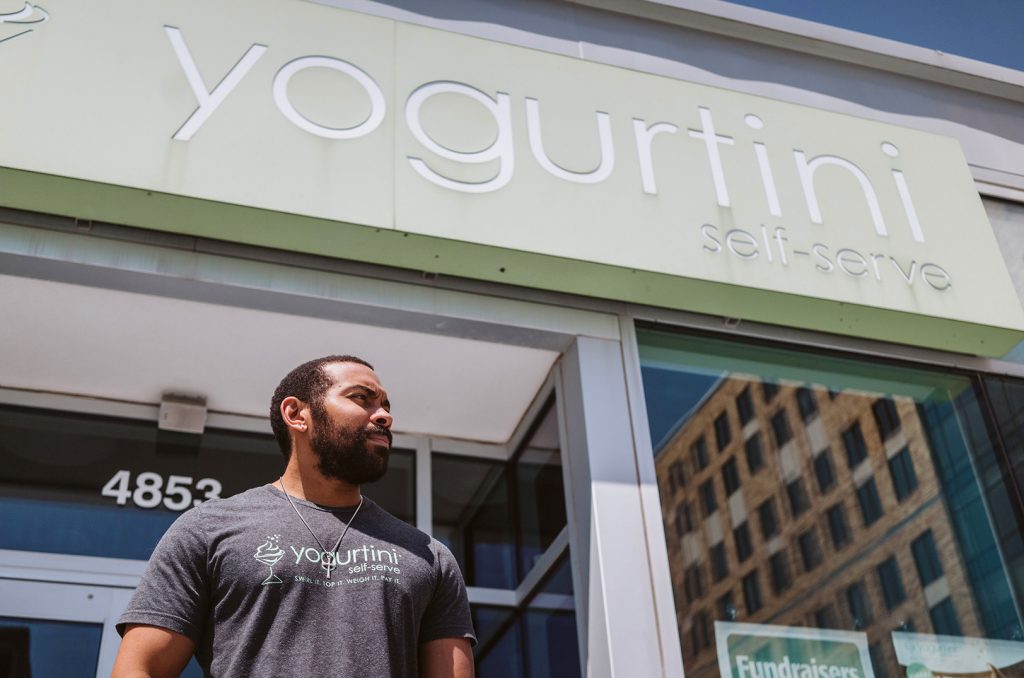
Isaac Collins, Yogurtini; Photo courtesy of Amber Baudler and Jamsine Baudler at Stellar Image Studios
Pushing the positive
Despite consecutive nights where buildings and storefronts in and around the Plaza were vandalized by late-night rioters, Collins said he isn’t concerned about his Yogurtini location being a target of the violence.
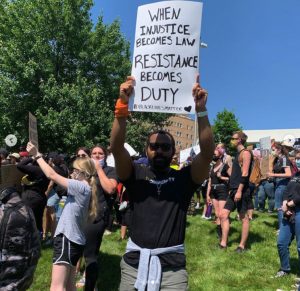
Isaac Collins, Black Lives Matter protest
“I’m not worried at all. People who are overly worried are watching more news than they are actually getting involved,” he said. “So if people are nervous and scared, they need to come out here and protest with us, so they can see it for themselves. It’s not bad at all, especially if you don’t stay out late. We’re pushing a positive message and encouraging conversations and listening.”
“We as a community don’t think all cops are bad; they aren’t. Just like not all black people are bad; not all protesters are bad,” Collins added.
He prefers to emphasize the tone of the weekend’s Black Lives Matter demonstration, which featured speakers and non-violent protests at Mill Creek Park, near the J.C. Nichols Fountain.
“Sunday’s peaceful protest was moving, and it was emotional,” Collins said. “The media, the president and everyone else want to portray our demonstrations as violence, as a bunch of thugs, as people doing this to get attention. The only thing they get right is that we are trying to get attention — but not to riot or incite violence.”
“It was amazing because you could look around and there were thousands of people there — all different colors, ages, sizes and ethnicities,” he added. “We were all there silently protesting with one another, in unity, to attack this racism and injustice in our society.”
‘Nothing else is working’
The serial entrepreneur is quick to draw a distinction between the midday protestors and the rioters and looters who came later — after he, his wife, and many of the demonstrators headed home from the event, he said.
“A protester doesn’t peacefully protest and then suddenly decide ‘Now I’m going to riot and loot.’ These are two different subsets,” Collins said. “However, everyone in the media is talking about how the protests turned violent. No, they didn’t. I was there. We had a protest, then a small, select group of people came in and did the rioting and the looting.”
But the sting of the violence that followed that peaceful gathering still lingers. Not far from the Yogurtini shop, a bank was defaced with various symbols and slogans — including “ACAB” (All Cops Are Bastards) and “White Pride” — suggesting multiple messages and motivations behind the unrest.
“I don’t like driving around and seeing windows broken, tags and graffiti — It’s not OK with me. I don’t condone it, but I’m also not going to condemn it,” Collins said, specifically referring to any vandalism from those inspired by Black Lives Matter and the death of Floyd. “People are forgetting the message of why these protests are happening. Yes, they get too intense sometimes. But black people have been screaming for 400 years for help from the government, from white people — screaming for change.”
“We have tried kneeling. We tried marching. We tried politics. But most of the time we’re just conforming, and none of that has worked,” he added, emphasizing his understanding of the emotions at play. “And after so long of not being heard or seen, people are going to retaliate and it’s going to lead to violence, like riots, looting and vandalism. I understand the anger and frustration. Nothing else is working. And if we want real change, things are going to get messy.”
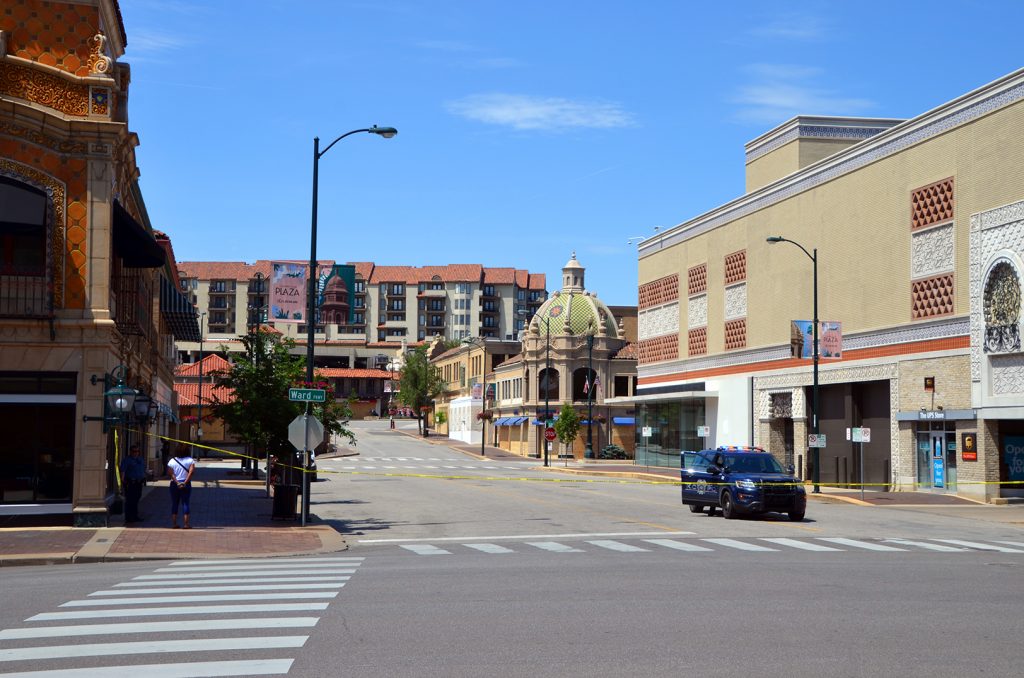
Country Club Plaza, closed for business, Monday, June 1
Invested in inequity
People watching coverage of the Kansas City demonstrations on TV and social media are right to share concern about the livelihoods of store owners on the Plaza, Collins said, but they likely aren’t picturing him when they conjure images of a business owner cleaning up the morning after the protests.
And that’s part of the problem, he said.
“They’re thinking of nicer, high-end stores and ‘How is it going to affect these large chain businesses that are owned by white people and predominantly serve white people?’” Collins said. “It comes back to the perception that the Plaza is prestigious and has this high amount of value — and the issue all across this country is that people who look like me are perceived as having less value than white people. So to perceive that the Plaza is luxurious and expensive, but then a black person owns a business on the Plaza … it goes against people’s paradigm of what they know to be normal.”
That internal conflict — the idea something or someone doesn’t belong because it’s abnormal — is at the core of the heavy law enforcement response to the weekend protests and subsequent violence, he added.
“The governor called a state of emergency. They called in the National Guard. They brought in police from other cities and state troopers to back them up,” Collins said of the effort to protect the Plaza and its businesses from demonstrators and antagonists. “You cannot tell me they would’ve had that many cops on Troost [Avenue, the city’s historic racial dividing line] because it would’ve meant rioting and looting and vandalizing our own businesses. They don’t care. And traditionally, they have shown us that they don’t care about us.”
“They were protecting their investment on the Plaza,” he added. “And we’re not their investment.”
Reform without a ‘but’
Collins reiterates his regret that rioters and looters struck any businesses in the city’s famed shopping district, he said.
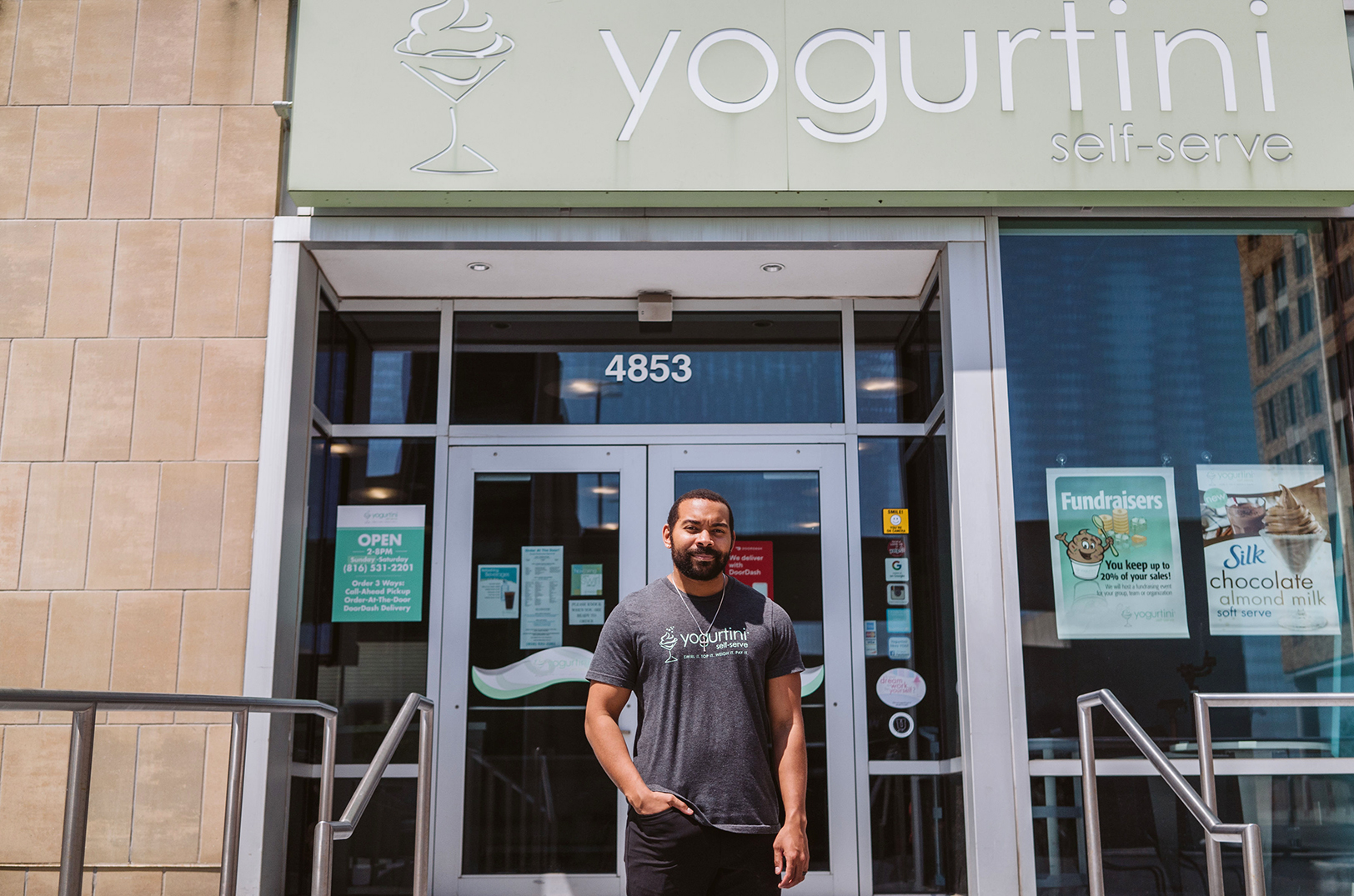
Isaac Collins, Yogurtini; Photo courtesy of Amber Baudler and Jamsine Baudler at Stellar Image Studios
“It’s not their fault that things got out of hand,” Collins said, emphasizing that the property damage and violence behind it — potent and passionate as it might be — ultimately can serve as a distraction from the overall purpose of the peaceful protests he champions.
“We don’t want people to combat our message with the narrative of ‘Well, yes, black lives matter but … you’re burning down your city’ or ‘Ending racial injustice is important, but … businesses are being destroyed.’ I don’t want there to be a ‘but,’” he said. “I wish we had more pure listening instead of the message being diluted by something else.”
Reasons for this weekend’s protests should be obvious, Collins said — and if they aren’t, those still seeking answers should go directly to the source.
“Before you believe a narrative, before you cast judgement, talk to your friends of color to get their perspective, do your research,” he said. “It’s very easy to read something on social media or watch the news instead of actually being empathetic or sympathetic for what people of color are actually going through or what they’ve experienced.”
“To understand our struggle is to understand why we’re protesting.”

This story is possible thanks to support from the Ewing Marion Kauffman Foundation, a private, nonpartisan foundation that works together with communities in education and entrepreneurship to create uncommon solutions and empower people to shape their futures and be successful.
For more information, visit www.kauffman.org and connect at www.twitter.com/kauffmanfdn and www.facebook.com/kauffmanfdn

Featured Business

2020 Startups to Watch
stats here
Related Posts on Startland News

designWerx makes room for growing makers in North Kansas City
A home garage workspace can be a lonely, stifling place for a maker trying to grow his or her business, said Pam Newton, who is leading the artistic vision for designWerx, a new coworking space and incubator specifically for makers in North Kansas City. “You’re alone constantly. Sometimes it’s hard to get motivated,” she said.…

KCultivator Q&A: Tyler Enders talks his biggest failure, the ‘Made In’ concept and Obama
Seated amid vintage mosaic tile and striking black-and-white portraits by Kansas City photographer Cameron Gee, founder Tyler Enders seems at home within the walls of the Made in KC Cafe. He’s an art lover with a finance degree — not to mention one of the minds behind Made in KC, a retail showcase for local…

Kimberly Gandy: Proof a startup can emerge stronger from its founder’s cancer diagnosis
Cancer needn’t mean can’t, Kimberly Gandy said. When the Play-It Health founder and CEO was diagnosed with an aggressive, mid-stage cancer in May 2016, her startup found itself at a crossroads. Gandy had just joined the Kansas City-based Pipeline fellowship and her company was poised for growth through its web- and mobile-based health regimen tracking…

Code Ninjas uses karate format to punch into KC youth STEM scene
Students often want more than their schools can offer, said Jason Hansen, of Code Ninjas. For some, that’s competitive sports teams or specialty athletics, he said. Others yearn for greater STEM-based learning opportunities — like those offered at Hansen’s Leawood center. “It’s just like you might have a dance studio, or a baseball academy,” Hansen…