

Created for collisions, coworking spaces adapt to a socially distant return to flexible offices
June 18, 2020 | Jack Anstine

Typically focused on in-person collaboration and interaction, coworking spaces are adapting to the realities of the ongoing COVID-19 pandemic — and seeing some unexpected opportunities, said Gerald Smith.
“Corporate inquiries just went through the roof because suddenly they’re now looking to de-densify their corporate headquarters,” said Smith, founder of Plexpod, a progressive coworking community with four locations in Kansas City. “We have companies that might have 200 employees, and they want 20 open desk positions that any of the 200 employees can access.”
At Plexpod’s Lenexa location, for example, the company this week teased on social media a new buildout for Crossroads-based Lead Bank within the Johnson County coworking space.
And while Plexpod kept its doors open throughout the pandemic, Smith acknowledged some of its clients canceled memberships to work remotely during the shutdown and possibly beyond.
The key to survival, he and other coworking leaders said, lies in remaining safe, resourceful and functional.
Plexpod Crossroads
COVID-era safety measures
To keep their clients safe and comply with reopening guidelines from local authorities, coworking spaces have adapted their amenities and offerings, said Ben Rao.
What is coworking?
Coworking companies offer membership-based workspaces where businesses, freelancers and other individuals work together in a shared office space. They often also include event spaces and other resources for their members.
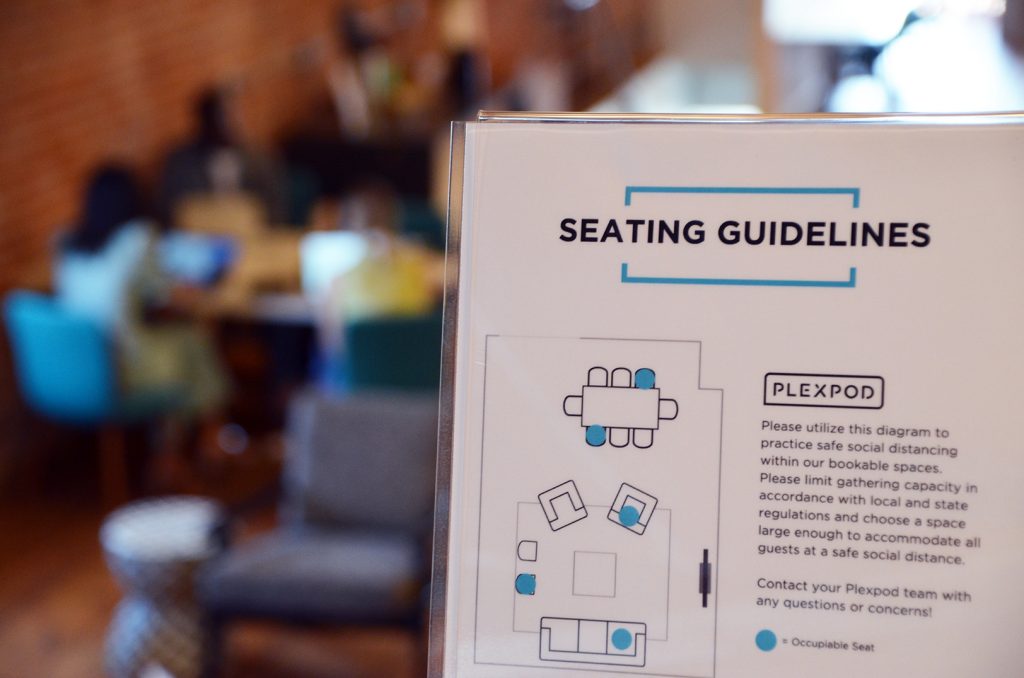
“We have mandatory check-ins, we have gallons of hand sanitizer as you walk in,” said Rao, president and founder of Bridge Space, a business incubator and shared workspace in downtown Lee’s Summit. “We’ve marked off some of the more social areas like the kitchen, or other areas to help people be reminded what six feet looks like. We’re following Jackson County’s guidance on how many people we can have in for an event.”
Coworking companies have also removed or reduced seating options so social distancing can be observed in office spaces and meeting rooms, he added.
“We took like 25 to 30 percent of all of our seating out of the building,” Rao said. “So if a table will traditionally seat six people, it might only have three chairs or two chairs in it. … If there’s rows of desks that are open, every other desk is marked ‘do not use.’”
Click here for a photo tour of Bridge Space.
Plexpod has followed similar safety measures, Smith said, but while the coworking community provides its members with the safety information they need, they’re allowed to self-regulate their behavior.
“It’s not our role to come down on someone if they’re not wearing a mask in the appropriate areas,” Smith said. “That’s probably one of the great things about coworking, it really is a peer-driven model.”
Embracing the online space
Online platforms and digital services also have helped coworking spaces connect with new clients while their buildings are only accessible, in some cases, to members, said Shervonne Cherry.
Spark KC, Two Light
“We’re doing Zoom and FaceTime tours because we’re not open to the public — we’re in member-only mode,” said Cherry, the director of community partnerships for Baltimore-based Spark. “We are waitlisting people and locking in new memberships.”
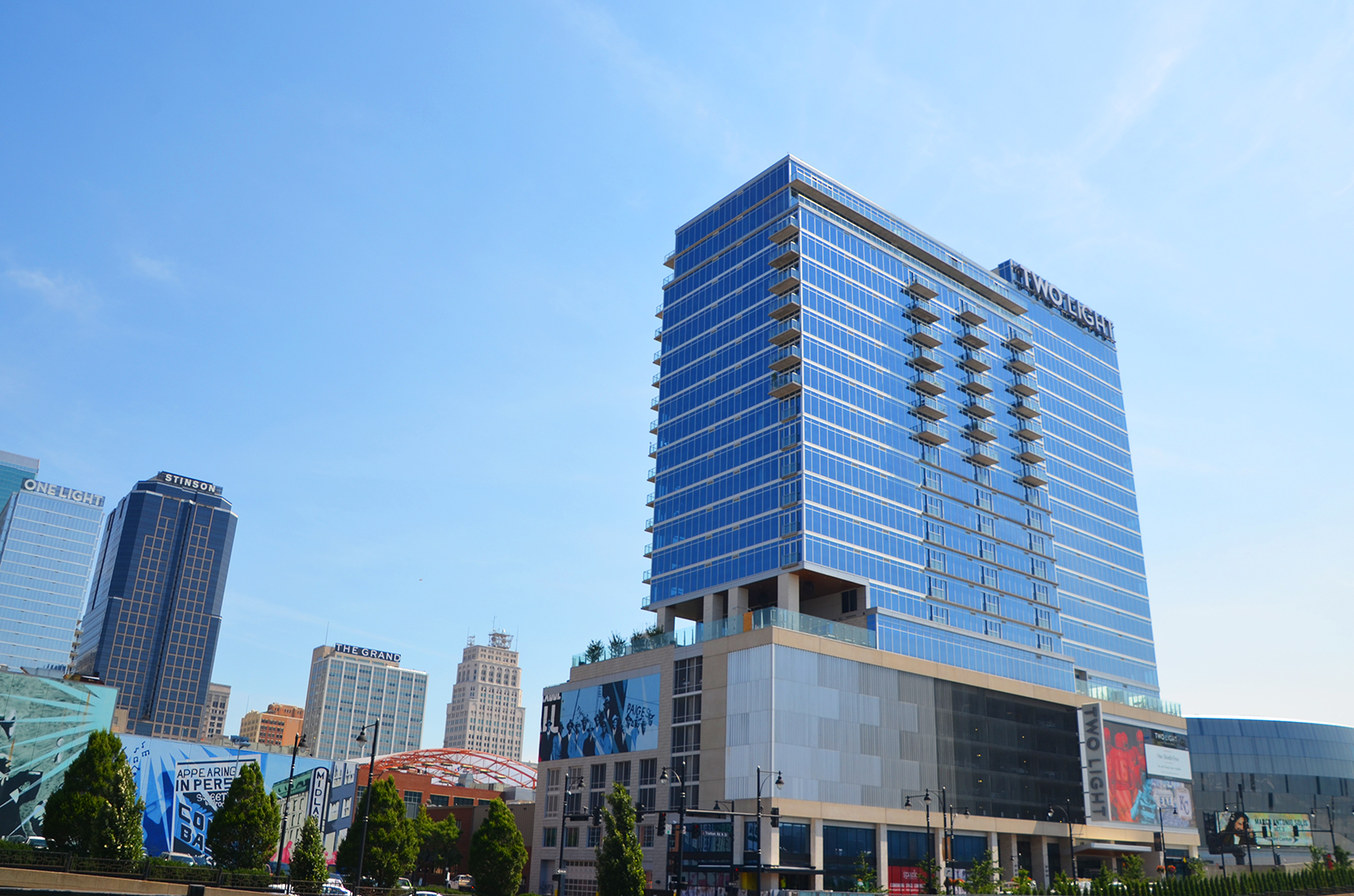
Spark is expected to open a collaborative coworking space later this summer within Two Light in the downtown Power & Light entertainment district.
Firebrand Collective, a female-focused coworking space located in Kansas City’s West Bottoms, is using digital services to stay in touch with current clients, said founder Megan Adams.
Video meetings can form a sense of community with members, she said, noting the company also helped them to navigate their individual businesses through the pandemic and addressed mental health concerns.
“It really involved moving our members from this physical space membership to this digital space membership,” Adams said.
WeWork, an international coworking giant that provides shared workspaces for startups and other companies worldwide, also provides online services for its clients through a digital member network.
“What we’re focusing on right now is posting content that is relevant to your locality, but also bringing in experts to talk about their areas of expertise and expose that to a greater audience,” said Erik Wullschleger, WeWork’s portfolio director for Detroit, Kansas City and St. Louis.
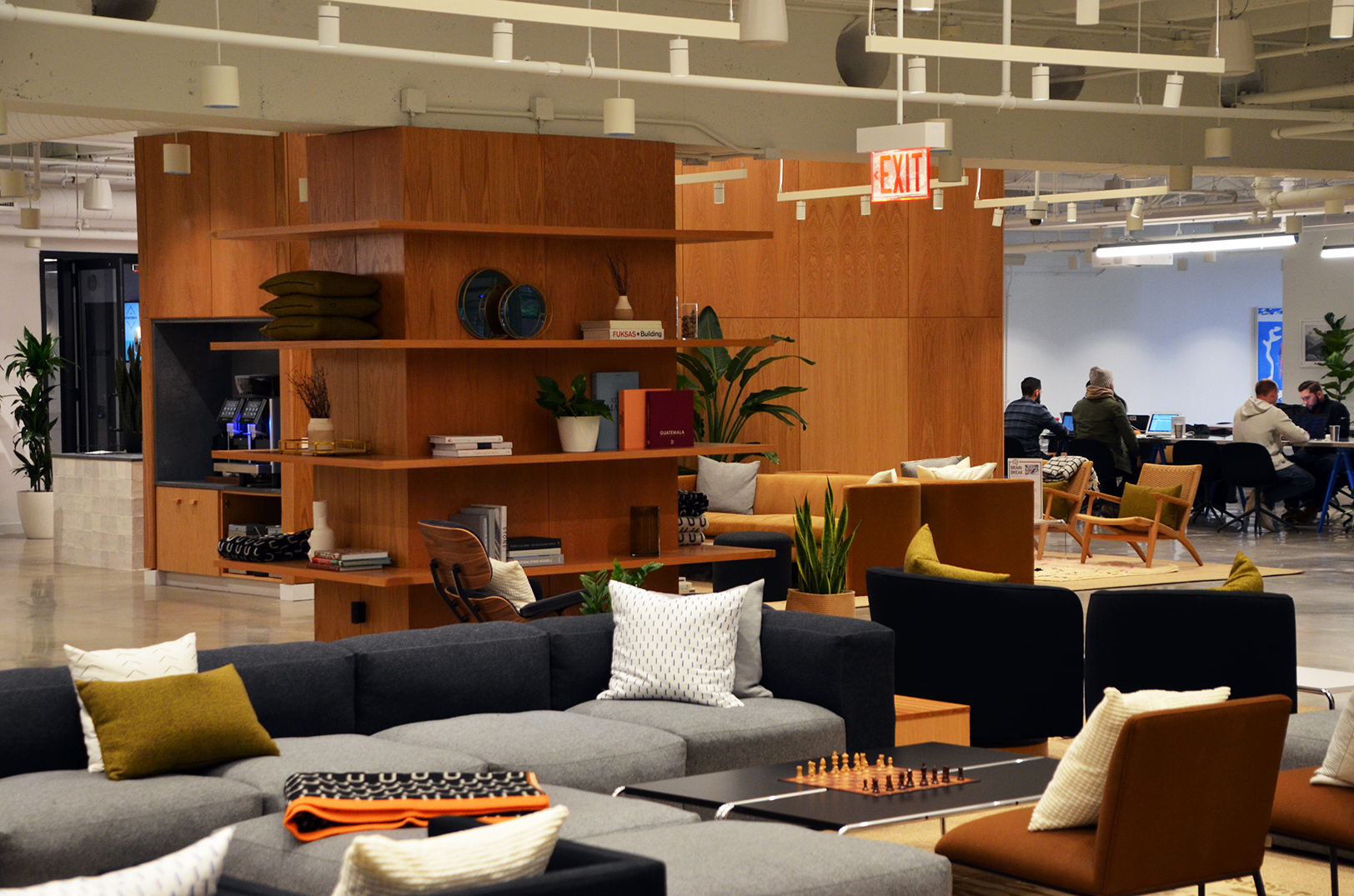
Click here for a photo tour of WeWork’s new downtown space, WeWork Lightwell.
WeWork is working to adapt to the needs of its members whether they are working in person or remotely, Wullschleger said.
“At the end of the day, people want to connect with others and we’re trying to find ways to make sure that we do that safely, and that may not always be in person,” Wullschleger said.
Spring revenue hit
When the COVID-19 pandemic first hit the Midwest in March, many coworking spaces lost revenue from scheduled events, Rao noted — $30,000 in event cancelations at Bridge Space alone.

Bridge Space event space, Lee’s Summit
“We had all kinds of different events — business events, social events, graduation parties — all those things you might expect that were coming up through April, May, June,” he said. “We shut everything down.”
Plexpod also canceled all scheduled events, leading a dip of more than $200,000, Smith said, since events make up 20 percent to 25 percent of Plexpod’s revenue.
Adding to the revenue decline, Plexpod provided its members with discounts, notably through April, to help offset costs for struggling companies, as well as to acknowledge some services that weren’t available because of the pandemic.
“We did everything we could to minimize the shock, minimize that impact,” Smith said. “They still had their office here and they paid for that, but all of the other amenities, we had to divide up into percentages of value and create a model for discounting. … April was really really hard for us, but it was the right thing to do.”
Coworking of the future
Looking ahead, the flexibility of coworking spaces like WeWork will attract more people because of the pandemic, Wullschleger said.
WeWork Lightwell
“There is going to be a movement of people wanting to work from home or not spend as much time in [a traditional] office,” Wullschleger said. “I think flexible work environments like what you see in coworking spaces are going to be in higher demand.”
Firebrand Collective is continuing to adapt the office spaces her business provides to the needs of the time, Adams said.
“There will be a renewed focus on private offices and private spaces,” Adams said. “It’s not really a demand right now — it’s almost a necessity.”
Meanwhile, other coworking spaces, like Plexpod, are expanding their business footprint while trying to stay afloat.
Click here to read about Plexpod’s newest concept — a downtown collaboration with Flashcube.
“We’re pivoting and we’re growing,” Smith said. “It’s really strange to be working on new locations while we’re trying to keep our doors open at other locations … but we certainly need to continue to find new creative ways to survive these next few months.”
This story was produced through a collaboration between Missouri Business Alert and Startland News.

Featured Business

2020 Startups to Watch
stats here
Related Posts on Startland News
Shawnee tax incentives aim to lure startups to the ‘burbs
The City of Shawnee is poised to kick off a tax incentive program that hopes to attract “high-growth” tech companies to the area by alleviating initial startup costs. Shawnee City councilman Brandon Kenig said that the “Startup Workforce Relocation and Expansion Program” will encourage job growth and innovation in one of Kansas’ fastest growing cities.…

Farmobile plows an agricultural revolution by empowering farmers with data
Agriculture techie Jason Tatge spent Monday morning as he often would: with a farmer interested in his company. The two kicked off the week in Fargo, North Dakota, kicking the proverbial tractor tires on Tatge’s ag tech business, Farmobile, and how the farmer’s data could generate additional revenue for his operations. They also chatted about…
‘Tis the season: Kauffman supports KC entrepreneurship with $1M in grants
The Ewing Marion Kauffman Foundation awarded more than $1 million in grants to not-for-profit organizations that serve Kansas City entrepreneurs. The grants — totalling $1,020,000 — are a part of the foundation’s projected $8 million of investments in Kansas City’s entrepreneurial community over the next three years. “The Kauffman Foundation is committed to helping Kansas…

Kansas Citians, Techweek study entrepreneurship, communism in largest U.S. tech envoy to Cuba
Only 5 months after President Obama re-opened diplomatic relations between the U.S. and Cuba, a group of Kansas Citians joined the largest tech delegation ever to visit the communist country. Five area entrepreneurs joined leaders and other innovators involved with the national tech conference Techweek in an exploratory visit of Cuba’s tech and entrepreneurial community.…