

Pivoting to freelance: Create a brand that speaks for you when you’re not in the room
June 29, 2020 | Chris Brown

Editor’s note: The opinions expressed in this commentary are the author’s alone. Chris Brown is the founder of Venture Legal where he represents startups, freelancers, and small businesses. This column — originally published by Venture Legal and part of a limited series on freelance entrepreneurism — is intended to be general in detail and does not constitute legal advice. Click here to read the previous column on creating an LLC, setting up finances and paying taxes.
A new-to-the-game freelancer seeking his or her first clients must remember an important distinction: branding and marketing are related, but they are not the same.
Your brand is your identity — the thing you want people to remember about you. Meanwhile, marketing is the act of pushing your branding and messaging to your target clients to win new work.
Creating your brand

Christina Hergott, Pink Moon Marketing, Kansas City
Be “consistent and cohesive,” says Christina Hergott, owner of Pink Moon Marketing. You should carefully craft your name, logo, website, messaging, and your overall look and feel.
“As a freelancer, you have the freedom to do something a little different, so don’t be afraid to be weird,” Hergott says.
My favorite definition of “brand” is that your brand is what people say about you when you are not in the room. Love it or hate it, but that’s your brand. A “Freelance Rockstar” and founder of Kansas City-based The Freelance Exchange, Julie Cortés emphasizes this by saying that you have to “discover your Unique Selling Proposition and what makes you different or better than your competition.”
Marketing your services
There are an infinite number of ways to market your business. But they all start with identifying your target client. You should know their pain point and be confident that you have a solution that can help them.

Julie Cortés, The Freelance Exchange
Both Hergott and Cortés believe that networking is one of the best ways to market your services. You should network with your target clients obviously, but also with other freelancers who might refer you work. With the current health crisis, that can be hard, but there are plenty of online networking opportunities through Zoom, Facebook, and other channels.
You should also establish a great online presence. First, create your website. If you can’t hire someone to build you a website, then you can get a simple, yet effective website through Wix or another DIY platform. You should also be active on whichever social media networks your target clients frequent.
And also consider producing as much content as you can. If you are the expert, consider writing blog posts, email newsletters, ebooks, and articles in local magazines or anywhere else where you can spread your expertise. Doing this is a great way to promote yourself as an expert in your field. Two of the easiest blogging options are Wix and WordPress, although there are many more. You can share that content using MailChimp, an email newsletter platform. And you can obviously share it on Facebook, Twitter, and elsewhere.
Setting your rate
This is often one of the trickiest topics for new freelancers. The thing to remember is that when you freelance, you are responsible for all of your own taxes, insurance (both health and professional), equipment, and more. If you were paid $25/hour at your last employment job, then you will almost certainly need to charge substantially more than that as a freelancer.
Cortés recommends finding one or more freelancers with more experience than you and asking them for advice. They can often help you establish a fair rate. They can also boost your confidence in general.
Freelance client agreements
I’m a lawyer, so I may be biased, but I think contracts are great. They can help you build better long-term client relationships and can reduce the odds of a dispute. Moreover, if a dispute arises, the contract can help you and your client resolve the dispute.

Chris Brown
Many freelancers write their own contracts. While others find templates online or hire a lawyer. There are pros and cons with all of those options.
Regardless, you need to make sure your client agreement covers (at a minimum) these topics:
- Party identification (if you have an LLC, use your LLC name, not your name);
- The services you will (and will not) perform;
- How much (and when) your client will pay you;
- Who will own the resulting work product and intellectual property;
- Whether any confidential information needs to be protected;
- If there are any restrictions on your client soliciting your subcontractors; and
- How (if at all) you and/or your client can terminate the contract early.
(To learn more about client agreements, you can download a free 22-page guide here. In full transparency, I’m a co-founder of Contract Canvas.)
What’s next?
In my next column, I’ll cover where to work, how to improve your skills, and tips for hiring subcontractors when you need extra hands or someone to compliment your skills.
Chris Brown is the founder of Venture Legal where he represents startups, freelancers, and small businesses. He also co-founded Contract Canvas, a digital contract platform for freelancers. www.venturelegalkc.com // @CSBCounsel

Featured Business

2020 Startups to Watch
stats here
Related Posts on Startland News

Kimberly Gandy: Proof a startup can emerge stronger from its founder’s cancer diagnosis
Cancer needn’t mean can’t, Kimberly Gandy said. When the Play-It Health founder and CEO was diagnosed with an aggressive, mid-stage cancer in May 2016, her startup found itself at a crossroads. Gandy had just joined the Kansas City-based Pipeline fellowship and her company was poised for growth through its web- and mobile-based health regimen tracking…

Code Ninjas uses karate format to punch into KC youth STEM scene
Students often want more than their schools can offer, said Jason Hansen, of Code Ninjas. For some, that’s competitive sports teams or specialty athletics, he said. Others yearn for greater STEM-based learning opportunities — like those offered at Hansen’s Leawood center. “It’s just like you might have a dance studio, or a baseball academy,” Hansen…
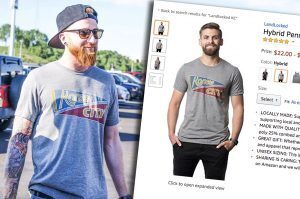
Landlocked, Marknology startups ‘killing it on Amazon,’ KC founder says
Landlocked is a brand many Kansas Citians recognize on sight, founder Andrew Morgans said. Marknology is the behind-the-scenes engine that sells it. While his dual companies — an apparel startup known for its popular hybrid pennant tee and a bootstrapped digital marketing firm specializing in Amazon sales — complement one another, the pairing is an…

Lula raises $420K, fueling expansion of home service offerings
A $420,000 funding round from Kansas City area investors will accelerate tech startup Lula to expand in Kansas City and soon two more large metros, CEO and founder Bo Lais said. The Overland Park-based firm is eyeing Phoenix and Dallas as its next service areas, but it first plans to focus on marketing its on-demand…