

Tesseract’s robot reveal: Wearable proximity trackers to keep workers at a safe distance
May 27, 2020 | Austin Barnes

Kansas City-wired clip-on robots could make social distancing a second thought, as Tesseract Ventures shares its first mainstream product with the world.
“This product exemplifies our mantra that there is nothing more human than technology and is a great example of what you can expect to see from Tesseract Ventures in the future,” said John Boucard, Tesseract Ventures founder and CEO.
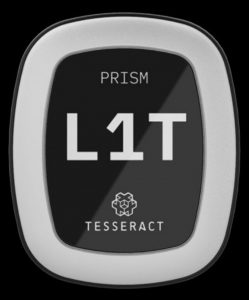
Tesseract PRISM
The high-tech robotics startup — one of Startland News’ Kansas City Startups to Watch in 2020 — announced the Tesseract PRISM (TM) Wednesday, marking the first major unveiling of a product for the company, which has raised significant venture capital from local funders — despite heavily guarding its plans and technology.
“We recognize how hard essential employees are working right now, and we are proud to be able to provide a technology that can help create safer work environments during this difficult time,” Boucard added.
Click here to read more about Boucard and his vision for the future of robotics.
Unveiled as Stay at Home orders continue their roll back, PRISM acts as part of a larger cyber-physical worksite-management system, in tandem with Tesseract PRISM Anchors — wearable badges which track and document the proximity of workers and students in real time and alerts staff and management if social distance is broken, ultimately creating safer work and school environments, the company explained in a release.
“The capabilities of this product are endless, now and in the future,” said Dave Starr, vice president of research and development for Tesseract. “Not only is PRISM a vital piece of technology for ensuring workers keep their distance from one another during this pandemic, it was originally designed to benefit industry operators by providing data to help them identify problem zones within a site.”


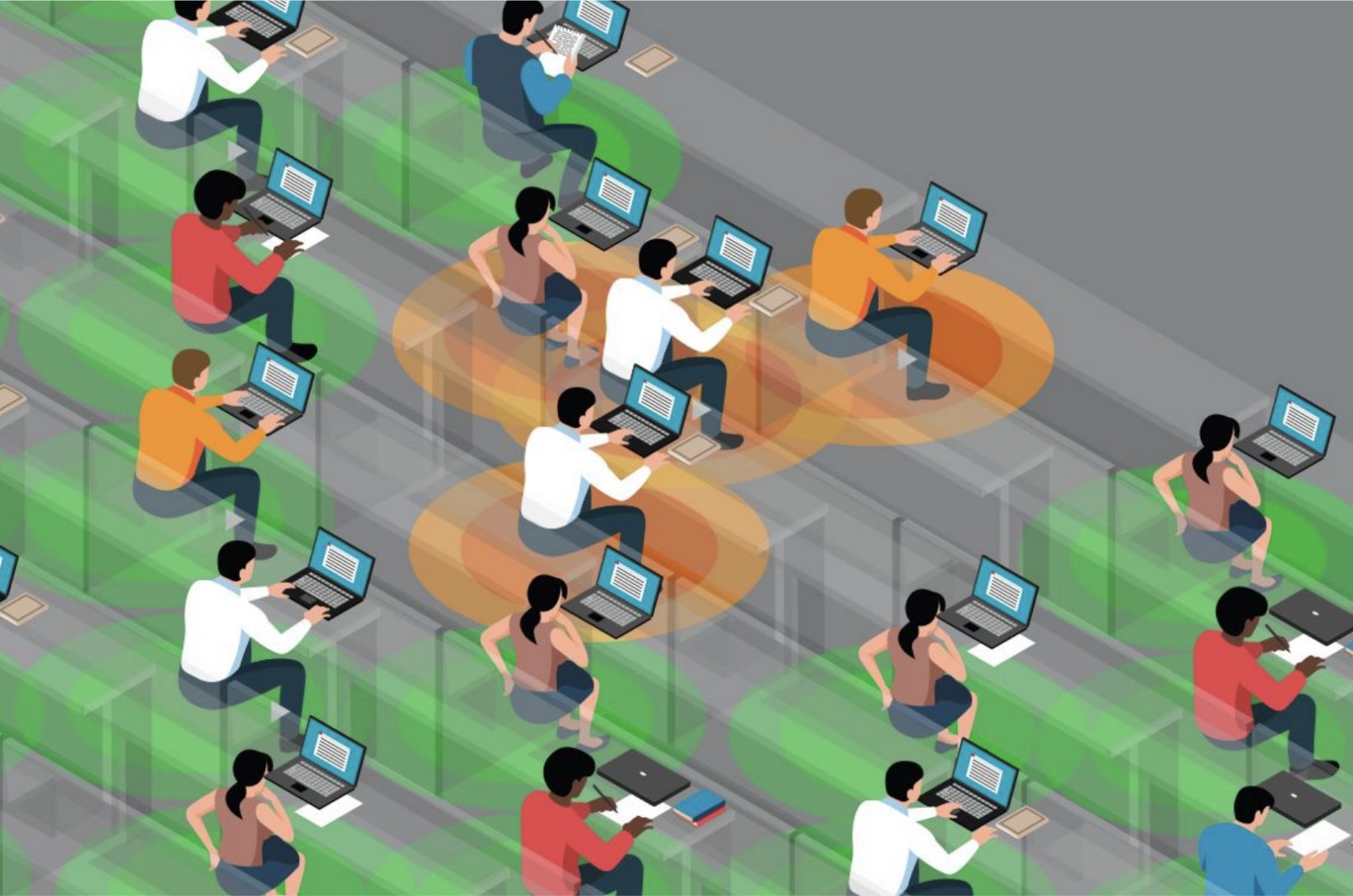
Full product capabilities include credentialed worker identification; emergency SOS beaconing; control site access, defined entry and exclusion zones within the job site; the ability to assign workgroups, privileges and certifications for individuals; the ability to assign personal space requirements and receive alerts when cross-contamination occurs; rugged, site-ready construction; and RFID compatibility with existing access points.

John Boucard, Tesseract Ventures
PRISM was developed in Tesseract Ventures’, Crossroads-based Future Lab — an advanced, multi-disciplinary R&D studio — and was built in the company’s Martin City-based Cyber-Physical studio, which develops products that will define the future of work.
The company has two additional development studios — Experiential Entertainment and Human Things — which round out its mission to empower businesses and people to be able to defy the boundaries of space and time, Boucard told a crowd gathered for the Startland News’ Kansas City Startups to Watch in 2020 Celebration in January.
The startup’s mission was most recently backed by a $2 million investment from UMB Capital Corporation in March.

Featured Business

2020 Startups to Watch
stats here
Related Posts on Startland News

The Jam KC offers space for musicians to get loud, turn up
In a small, Midtown Kansas City room brimming with musicians and their instruments, Allen Monroe peers over his 1963 Hammond B-3 organ at a handful of onlookers. A toothpick concealed by a thick grey mustache emerges as he smiles, preparing to deliver a gentle jab to the artists around him. “Remember, you don’t have to…

Video: Operation Breakthrough helping kiddos reach their full potential
Founded in 1971 by two nuns, Sister Corita Bussanmas and Sister Berta Sailer, Operation Breakthrough serves more than 450 children daily with a mission to provide a safe educational environment for children in poverty. The has adapted through the decades to meet the needs of Kansas City’s low-income community, Operation Breakthrough CEO Mary Esselman said. Implemented…

Coding at age 3? Operation Breakthrough connects STEM to program’s circuitry
Two small boys are standing on stools at a workbench, pretending to talk on outdated handset telephones. They might not yet know how the phones work, but they’re clearly familiar with how to take them apart. And they do. A few feet away, three children from low-income families are on iPads beginning a new lesson.…
Education network CAPS snags $145K from Kauffman Foundation
A homegrown education innovation network announced Wednesday it was awarded a $145,000 grant to expand its programming across the nation, courtesy of the Ewing Marion Kauffman Foundation. The Center for Advanced Professional Studies (CAPS) program began in the Blue Valley School District in 2009 and is now expanded to 33 programs encompassing 69 school districts…