

Drinking in $100K investment, Elango Thevar ready to carry the water for Neer full-time
May 21, 2020 | Elyssa Bezner

Editor’s note: The following is part of Startland News’ ongoing coverage of the impact of Coronavirus (COVID-19) on Kansas City’s entrepreneur community, as well as how innovation is helping to drive a new normal in the ecosystem. Click here to follow related stories as they develop.
Some products don’t require a pandemic pivot, said Elango Thevar, fresh off announcing his acceptance into a Wisconsin-based accelerator that comes with a helpful investment.
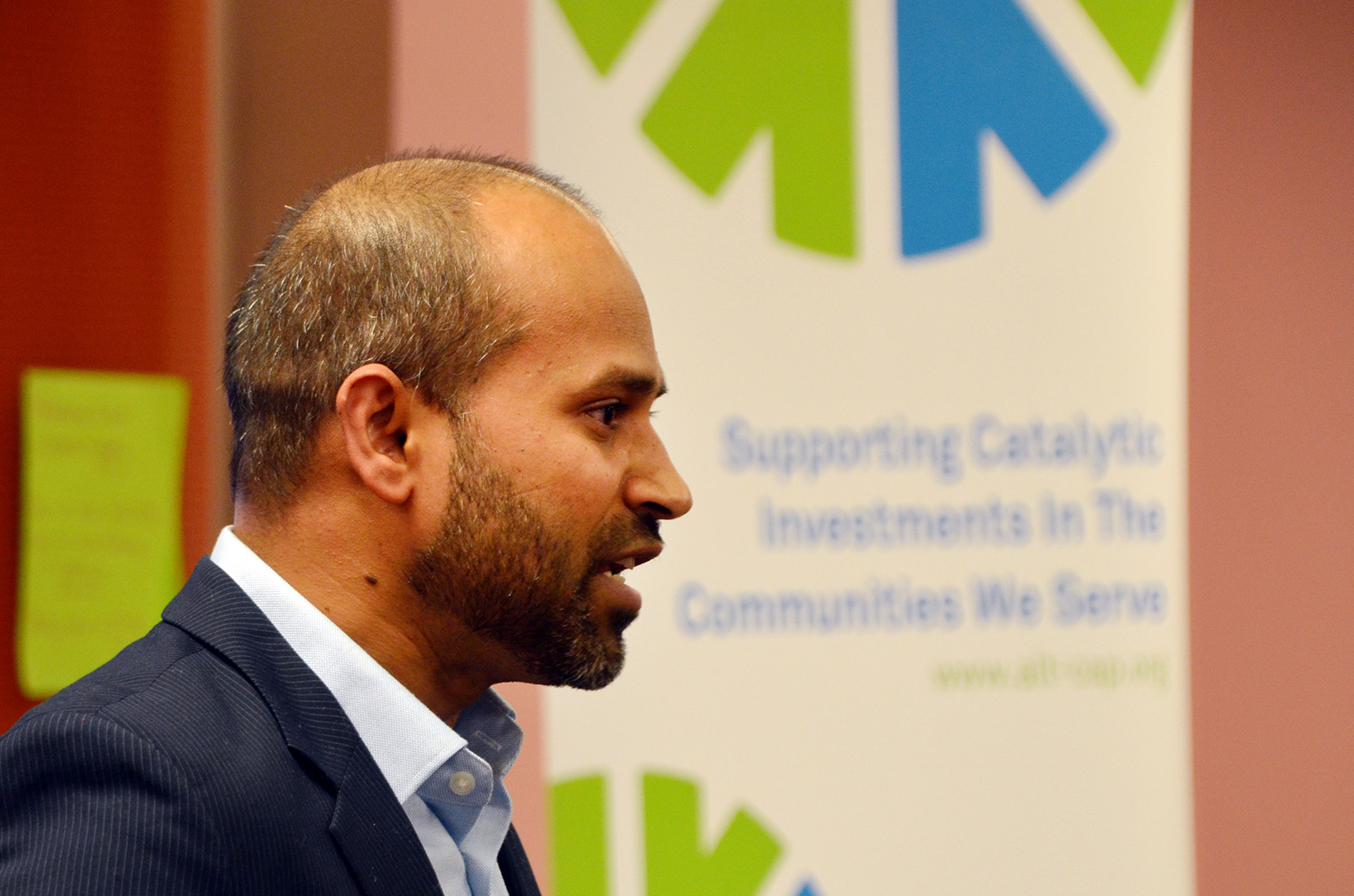
Elango Thevar, Neer
The founder recently went full-time on his Kansas City water management startup, Neer — which means “water” in several languages — despite COVID-related uncertainty and disruption that has caused other early stage companies to stall, he said, noting the need for Neer is emphasized in a time where basic needs on the city level could go by the wayside.
“It was perfect timing, actually. This pandemic didn’t stop me in going full-time because I do believe in this product,” he added. “We are positive it will change the water industry.”
Click here to learn more about Neer.
With city leaders looking more carefully at introducing smart city infrastructure in the wake of COVID-19, Neer adds affordability to the menu while focusing on the critically overlooked and crumbling North American water industry, said Thevar.
“Water touches every human and it’s one of those infrastructures that is invisible,” said Thevar, founder of Neer, a KC-based, AI-powered water management platform, formerly known as Blockchain Water. “We don’t see it, but it’s been 150 years since we’ve invested back in the water infrastructure [in North America]. Our goal is to bring this invisible infrastructure to light and to the city people who are managing these assets so they can save money, but at the same time, they proactively manage.”
“City employees need to monitor remotely what is happening underground now,” he added, noting the smart city solutions offered by Neer allow for remote monitoring of all water assets. “This digital transformation [is] definitely accelerating in the entire water sector and I think we are going to see faster conservation in the coming years.”
Since committing to the company full-time, Neer has signed on two clients and validated the technology backing it, he said.
“People are actually using our product now so it’s no longer [just] an idea,” Thevar said. “It’s good to see the results.”
Neer was recently accepted into gener8tor, Wisconsin-based accelerator program, he detailed, noting the admission comes with a $100,000 capital injection that the team will funnel into its plans to scale throughout 2020.
“We want to scale our business in the Midwest because we are a proud Kansas City company,” said Thevar. “We will expand our market share in the next 18 months and with the $100,000, we think we can scale pretty quick.”
Keep reading below the video.
Thevar’s passion for better water solutions goes back to his childhood in a small town in India, he added, noting at an early age, he was responsible for fetching water for the community because of the lack of running water in the home.
“My connection to water started at the age of 12. As a kid, you don’t really … love that job,” laughed Thevar. “I hated it as a kid, but you know, fast-forward [to now] and I never thought I would become a water engineer.”
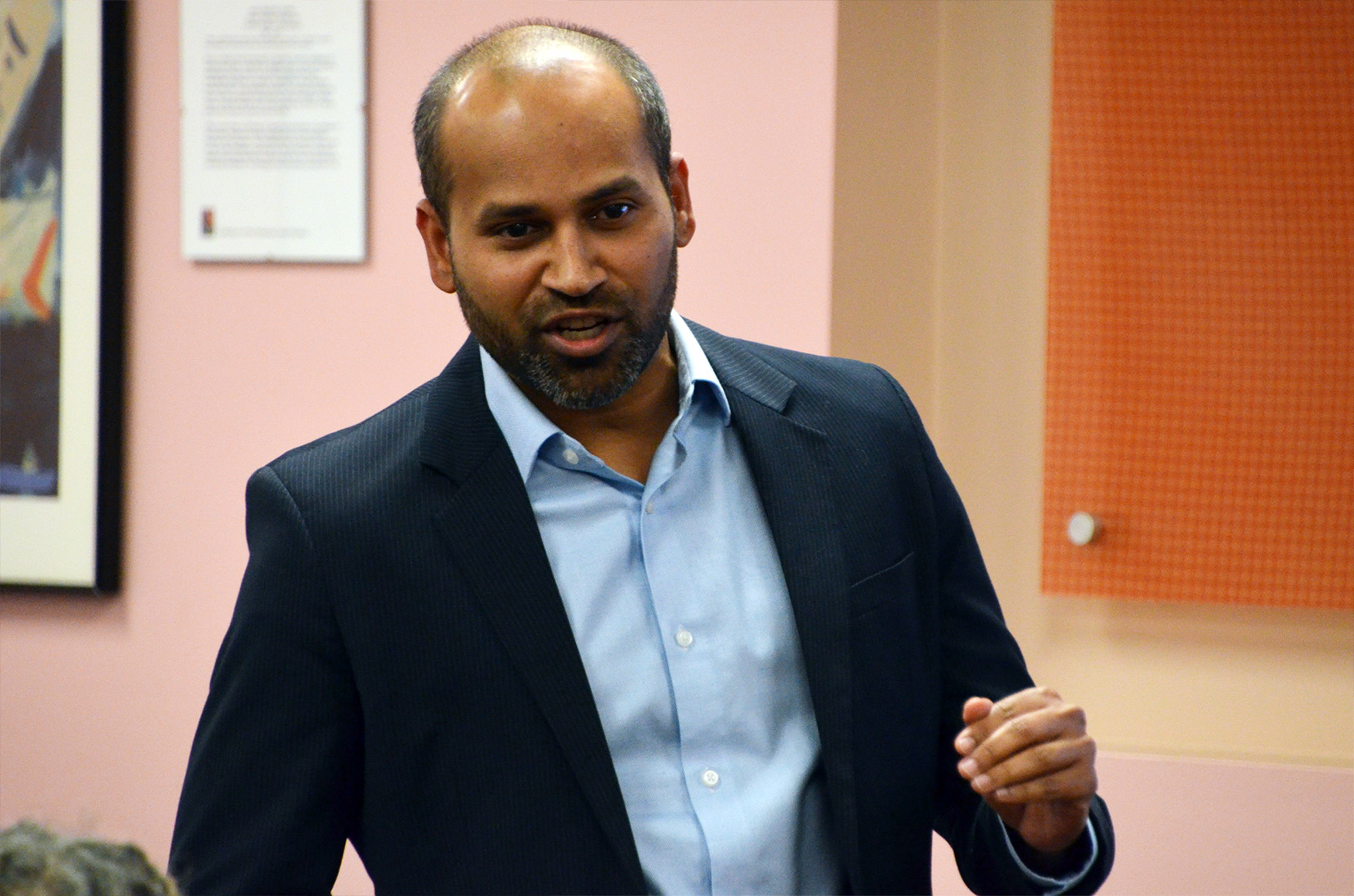
Elango Thevar, Neer
Starting a career in the U.S. in 2005, Thevar garnered more than a decade of experience at consulting firm CDM Smith where the widespread need for effective and affordable solutions for water systems across North America became very apparent, he said.
“I quickly realized that water is my passion because of the value that it brings to society and how critical the infrastructure is to make life easier for everyone — to bring that 24/7 clean, drinking water to our house,” he added. “So it’s a huge infrastructure and we really need it to function properly.”
Neer aims to provide the platform with transparent pricing to large cities to small communities, Thevar said, adding that one-third of the current American water infrastructure is in extremely bad condition or has already failed.
“That’s the reality of water infrastructure. We need to proactively invest and manage and on the city level, [officials] understand that [the current system] is failing but they are also constrained by the capital resources. That’s where we come in,” he said. “Cities can use our tool to identify those risky assets and be able to mitigate those risks before it’s too late.”

This story is possible thanks to support from the Ewing Marion Kauffman Foundation, a private, nonpartisan foundation that works together with communities in education and entrepreneurship to create uncommon solutions and empower people to shape their futures and be successful.
For more information, visit www.kauffman.org and connect at www.twitter.com/kauffmanfdn and www.facebook.com/kauffmanfdn

Featured Business

2020 Startups to Watch
stats here
Related Posts on Startland News

The Toolbox aims to bridge cultural entrepreneur gap in WyCo; opening new resource center Thursday
Editor’s note: This story is sponsored and was produced by Forward Cities, a non-financial partner of Startland News and a national nonprofit that is managing the implementation of the ESHIP Communities program as a grantee of the Ewing Marion Kauffman Foundation. Any opinions expressed in this commentary are those of the author. Pedro Morales, owner…

Report: UMKC Innovation Center helped create 500 new ventures, boost revenue by $245M in 2020
Amid a year of pandemic-prompted chaos in the business community, entrepreneurs forged ahead like rarely before seen, according to the UMKC Innovation Center’s new impact report, which details outcomes of the Kansas City-based resource network’s programming opportunities. “These entrepreneurs and leaders are our clients, our inspiration and our hope,” said Maria Meyers, executive director at…
Get sauced: Meet the hungry duo at the forefront of KC’s premier urban lunch counter
Jayaun Smith spent his free time as a kid watching “Iron Chef America” and creating his own unique recipes with what was available, he shared — noting it didn’t take him long to fall in love with cooking. “I spent a lot of time alone growing up,” recalled the 25-year-old chef, who now leads the…
Black, curvy and a certified yogi: How Mikita Burton is breaking down barriers with Yoga on the Vine
Yoga is meant to be inclusive, said Mikita Burton, even if that sentiment stretches the modern American picture of who practices yoga. “I’m a curvier girl. I’m African American — that’s just not the typical demographic for yoga,” explained Burton, who has been a certified yoga instructor for the past five years. “My hope is…