

$26K in prizes: Sidelined students pitch entrepreneurial empathy in COVID-19 virtual competition
May 28, 2020 | Tommy Felts
Editor’s note: STARTLAND is the parent organization of Startland News, though this report was produced independently by Startland News’ non-profit newsroom. The Ewing Marion Kauffman Foundation is a financial supporter of Startland News
A month ago, few students could’ve imagined pitching real-world solutions to COVID-19 challenges in front of a panel of Kansas City celebrity judges, said Anita Newton, much less collectively walking away with $26,000 in cash prizes.
“This is the time when students should have been walking across the stage, accepting a diploma, sharing prom pics, spending time with friends and accepting business offers. And instead we were telling them to stay in their homes,” said Newton, chief innovation officer at CommunityAmerica Credit Union, emphasizing the unique scenario that opened the door to a virtual competition for students sidelined by evaporated internship and social opportunities.
Wednesday’s COVID-19 Student Pitch Competition pitted eight finalist teams — four high school groups and four college teams composed of CommunityAmerica innovation interns — in a battle of empathetic ideas focused on the human response to a pandemic.

Connection Bear
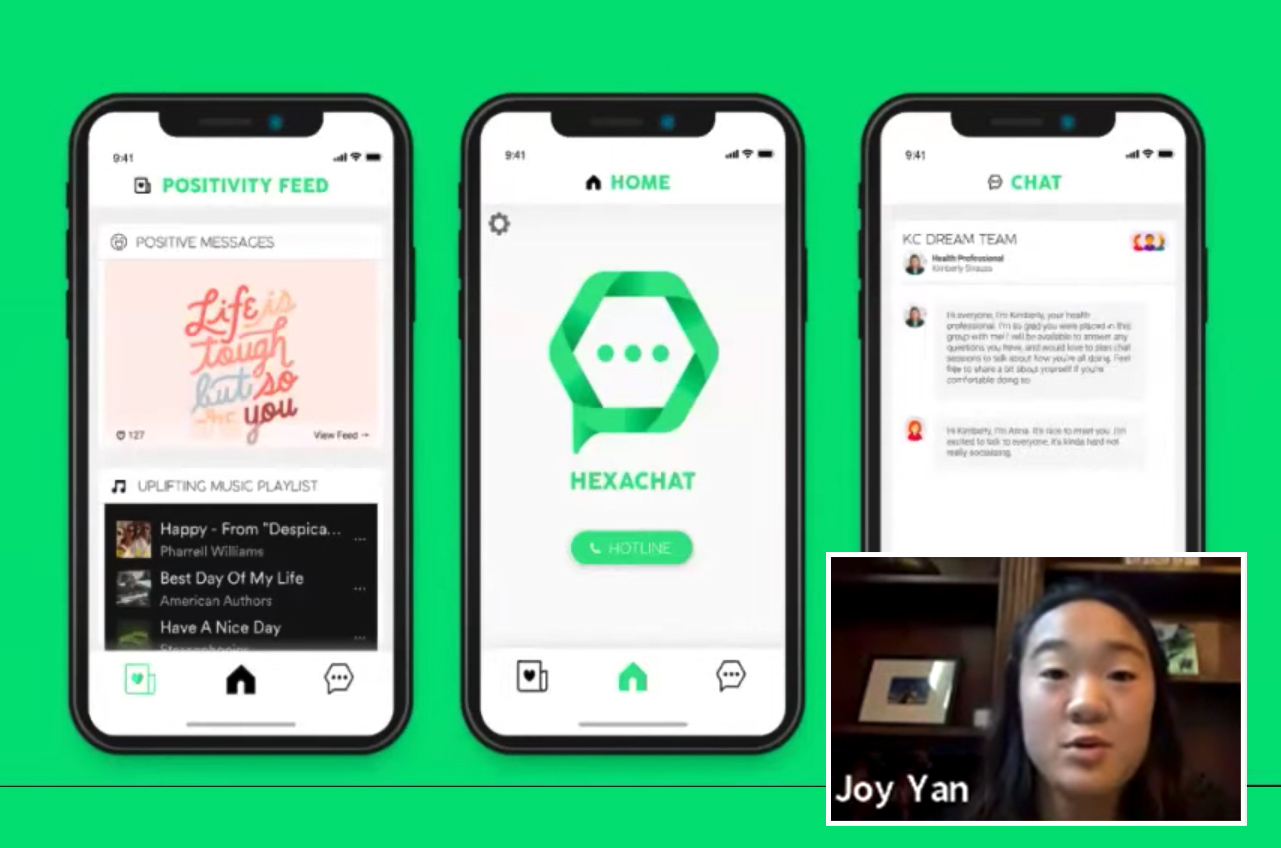
Winning pitches came from Connection Bear (college): a stuffed animal embedded with technology to help comfort families separated by COVID-19 circumstances; and HexaChat (high school): a mental health app and support group for teens in COVID-19 isolation.
Watch videos of the winners’ pitches below.
Other ideas ranged from connecting community members to essential resources, to companionship matching for linking young people with lonely seniors.
“We wanted students to leverage their teammates — who they just met — test their idea with users, compare it with competitors, scrub their numbers, validate their ideas with members and mentors — and do it in between college exams and AP tests and double shifts and babysitting duties, all 100 percent virtually and in less than three weeks,” said Newton.
Click here to learn more about the fast-paced learning and elimination process leading up to the competition, through which finalists were pared down from 357 local high school and college students from 105 schools who were distributed across 43 teams.
“This might be my proudest teaching moment and I never even talked to any of these students in-person,” said Katie Kimbrell, director of education for STARTLAND, which organized the pitch competition with CommunityAmerica. “They seriously implemented our feedback.”
The project really clicked with students, Kimbrell added, when they realized their solutions were more than theoretical or abstract concepts, but had real-world applications and could — with the right nurturing — become actual businesses.
KC celebrity judges
Judges for the COVID-19 Student Pitch Competition included “dapper rapper” Kemet Coleman, CEO and artist at Kemet Creative; Heidi Gardner, KC native and a current cast member on NBC’s “Saturday Night Live”; Lisa Ginter, CEO of CommunityAmerica; Wendy Guillies, president and CEO of the Ewing Marion Kauffman Foundation; and Sandy Kemper, founder and CEO of C2FO.
Judges too were impressed with the poise and acumen of the interns — most of which were not business students prior to the competition, they said, specifically noting the student pitches were on par with some presentations by adult entrepreneurs.
“There’s this myth that all the best ideas come from the coasts, and we know that’s not true, right?” said Wendy Guillies, president and CEO of the Ewing Marion Kauffman Foundation, as well as one of the competition judges. “Amazing people here in the middle of the country, here in Kansas City, are solving important problems every day. And we saw example after example of that during this competition.”
“I hope you keep asking why and asking why not,” she told the students.
In a surprise announcement during the event, the Kauffman Foundation matched the $13,000 in CommunityAmerica prize money initially allotted for winners — bringing the prize total to $26,000, and ensuring each of the eight finalist teams logged off the virtual event with at least $1,500 to split among the competitors.
“I’m just so inspired by all the students,” Guillies said. “So we at the Kauffman Foundation want to make sure everyone walks away a winner.”
Prize-winning finalists included:
- Connection Bear, college first place — $6,500 — a product that combines personalization, comfort, and technology to give users the chance to speak to family or friends via a stuffed bear.
- Adopt-A-Grandparent, college runner-up — $2,500 — a program connecting elders in retirement or nursing communities with high school and college-age students as pen-pals.
- SPARK — $1,500 — a platform connecting college students to employers with staffing needs.
- Safe Swap — $1,500 — a service for lending, selling, and donating products and services to people who can’t afford or find items they need at their local markets.
- HexaChat, high school first place, audience choice winner — $7,500 — a free mental health app that offers unity for kids and teens in a time of isolation during and after COVID-19.
- FitNest, high school runner-up — $2,500 — a social-educational fitness app for children and teenagers.
- BRIDGE, audience choice winner — $2,500 — a virtual communication program to allow those isolated in nursing homes to connect with younger generations to boost their moods, health, and happiness.
- EduHomeKC — $1,500 — a virtual book club that delivers books to kids’ doorsteps.
“I’m super proud of this generation,” said Kemet Coleman, event judge, recording artist and CEO of Kemet Creative. “It’s awesome how they have such a sense of agency and just a drive to do something better for the world. I really think that it’s very unique for this generation. I’d love to see it continue through the COVID-19 crisis and beyond, and hopefully inspire future generations.
Watch the full pitch competition below.

This story is possible thanks to support from the Ewing Marion Kauffman Foundation, a private, nonpartisan foundation that works together with communities in education and entrepreneurship to create uncommon solutions and empower people to shape their futures and be successful.
For more information, visit www.kauffman.org and connect at www.twitter.com/kauffmanfdn and www.facebook.com/kauffmanfdn

Featured Business

2020 Startups to Watch
stats here
Related Posts on Startland News

Events Preview: Conquer for Good, TEDxUMKC
There are a plethora of entrepreneurial events hosted in Kansas City on a weekly basis. Whether you’re an entrepreneur, investor, supporter, or curious community member — we recommend these upcoming events for you. Are you hosting a relevant community event? Feel free to add it to the FWD/KC calendar for increased exposure. Once your event…

Jaguar Land Rover invests in artificial intelligence startup Mycroft
Mycroft has received a significant boost in horsepower. Only a few weeks after entering 500 Startups, Mycroft has landed a strategic partnership with Jaguar Land Rover. The Kansas City-based artificial intelligence startup is among the first startups to enter the Portland-based Jaguar Land Rover Tech Incubator, which will provide Mycroft with a $110,000 investment and…
KC-based OYO Fitness closes a historically successful Kickstarter
To say that OYO Fitness has a successful Kickstarter campaign would be an understatement. The Kansas City-based fitness firm folded up and then crushed its recent crowdfunding effort, which raised a stunning $659,000 for its collapsible and compact exercise device. OYO’s DoubleFlex Black campaign — which snagged pre-orders from 4,200 backers — was the second…
Survivor, innovator Kim Gandy rewards patients for sticking to treatments
In her 20 years working as a transplantation clinician, Kim Gandy found it baffling that a seemingly simple problem had such a difficult time finding a solution. Transplant patients consistently struggled to adhere to their health regimens, resulting not only in significant costs for care providers but also death. “We were literally losing patients,” Gandy…