

SINGER gives 30 sewing machines to face mask effort; Rightfully Sewn doubling goal after passing $125K in donations
April 9, 2020 | Tommy Felts
Editor’s note: The following is part of Startland News’ ongoing coverage of the impact of Coronavirus (COVID-19) on Kansas City’s entrepreneur community, as well as how innovation is helping to drive a new normal in the ecosystem. Click here to follow related stories as they develop.
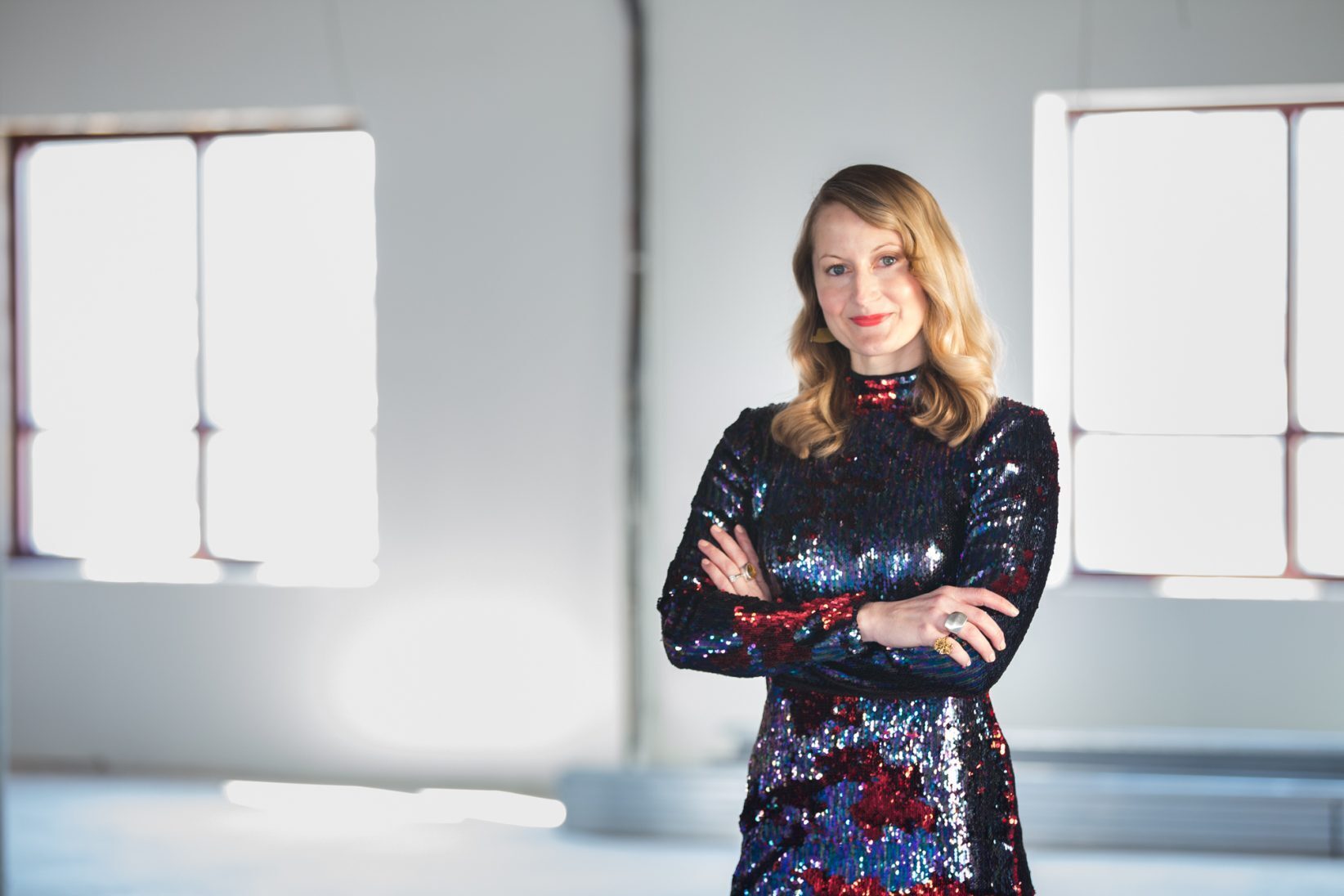
The pieces are coming together for a massive, face mask-making mission that unites sewists across the city behind a single cause, said Jennifer Lapka, announcing significant donations to the Rightfully Sewn-led project.
Rightfully Sewn
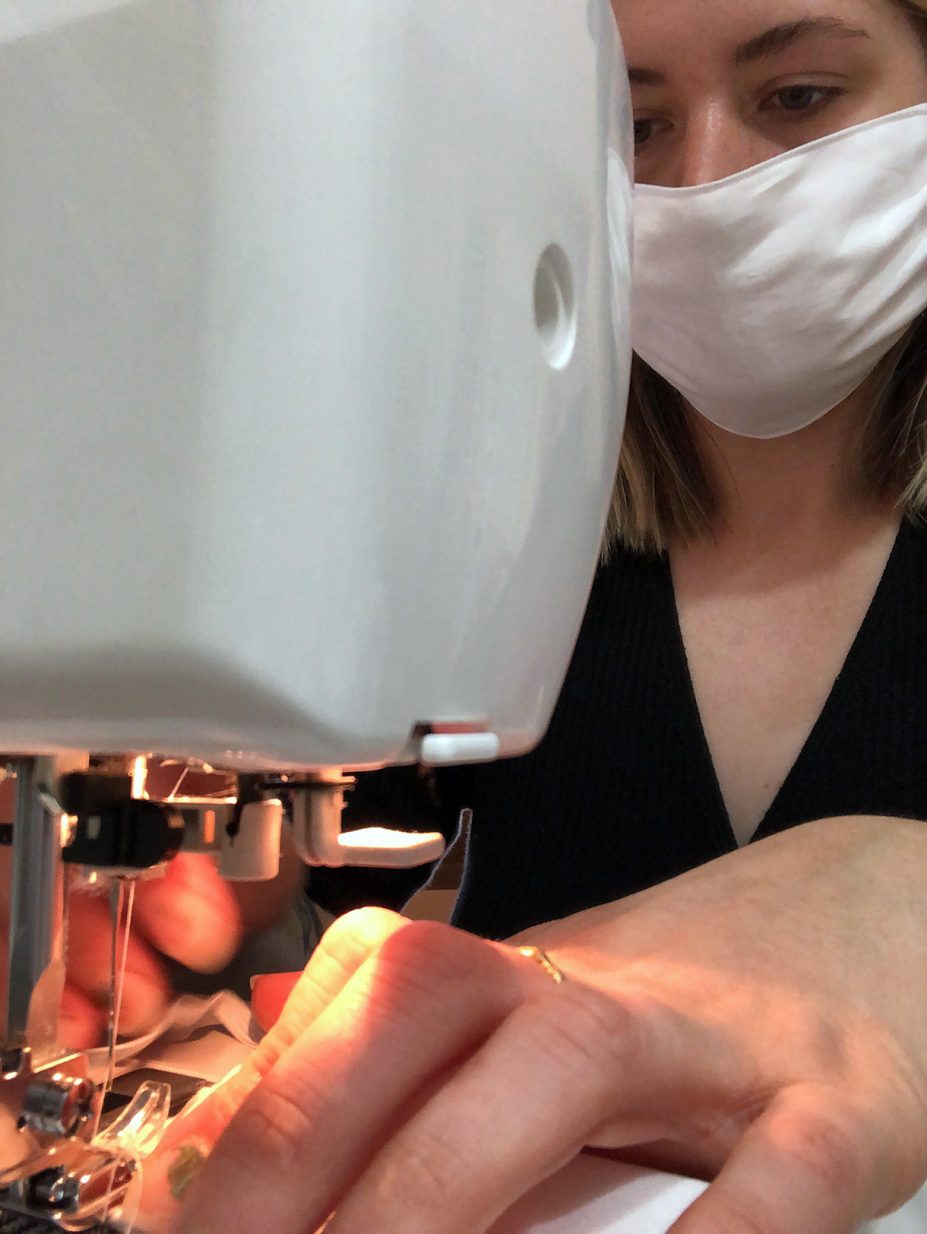
“Since our launch two weeks ago … the storied American sewing machine brand SINGER found out about us and shipped us 30 machines and two sergers for our efforts to donate masks to Kansas City hospitals,” Lapka said, detailing a wave of support for the effort.
Rightfully Sewn — Lapka’s Kansas City-based fashion atelier and seamstress training program in the Crossroads — is converting its small-batch production capacity to produce nonmedical-grade fabric masks for donation to hospital workers.
Click here to donate toward the effort.
In observance of the city’s and state’s Stay at Home orders intended to help combat the spread of COVID-19, the Rightfully Sewn atelier is currently shut down and masks are being sewn at a network of undisclosed locations where social distancing is possible. Mask production is then coordinated for direct delivery to the hospitals themselves.
“The [donated SINGER] machines are being distributed to our seamstresses on staff and the five contractors we are bringing on,” Lapka detailed. “The contractors are graduates of our seamstress training program who have been laid off the jobs we helped place them in; seamstresses will return to their employers when those businesses pick back up again.”
Having the same machines across sewists allows for easy troubleshooting and consistency in quality, she added.
SINGER is allowing the extra machines to be used for Rightfully Sewn’s seamstress training program when it resumes, Lapka said, noting a machine is lent to each class participant for the duration of the course so they can carry out their homework.
Rising demand, rising goals
Rightfully Sewn quickly met its initial $125,000 fundraising goal, having logged substantial financial gifts from a number of charitable entities — among them, Dimensional Innovations Foundation, Evergy, Hall Family Foundation, Bank Midwest, Oppenstein Brothers Foundation, Sprint Foundation, VMLY&R Foundation, Walsh Family Foundation and Robinson Family Foundation.
Rightfully Sewn
But after being approved as an official Personal Protective Equipment (PPE) provider with the Missouri Department of Economic Development — meaning Rightfully Sewn is now getting mask requests from hospital systems on both sides of the state line, as well as nursing homes and small health care operations — a new fundraising goal is on the table: $276,750.
“With the increased demand, we have been asked to double our output — from 20,000 masks as originally conceived to 40,000 masks in the same three-month time period,” Lapka said. “With the increased demand, comes increased supply, equipment, and labor costs — but even with the increased costs, we are still able to produce masks for less than $7 per mask.”
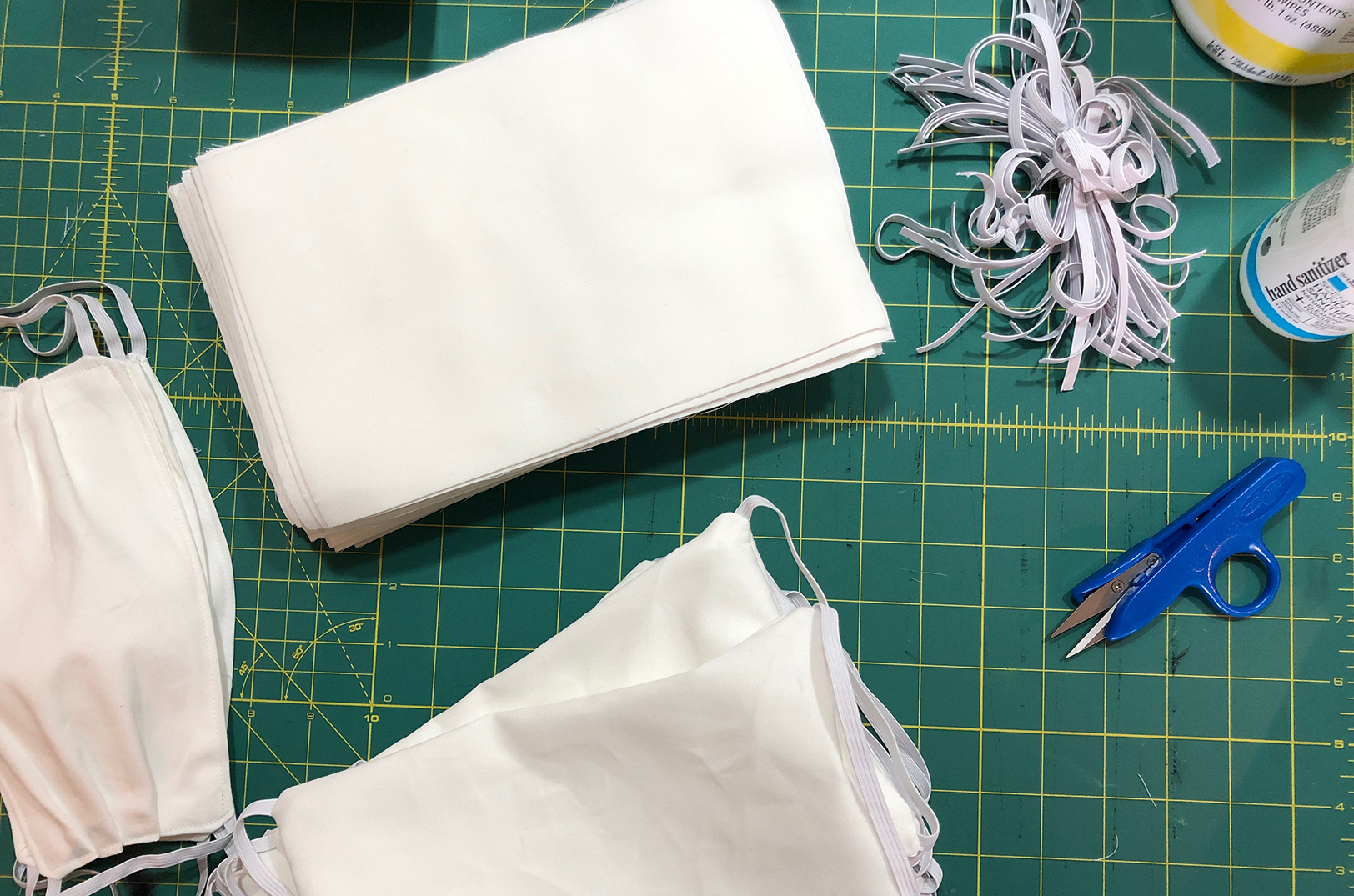
Fabric for the project arrived in Kansas City April 1 in plastic, she detailed, noting the virus can live on plastic up to three days; therefore the delivery was quarantined before being turned over to fashion designer Christian Micheal who joined the effort as a cutter.
“He has unique experience running the computerized, laser-cutting table owned by Eleve Dancewear, which owner Lisa Choules is allowing us to use for exponentially increasing our mask production capacity,” Lapka said. “He cut 3,400 masks in less than nine hours. These have been distributed to our seamstresses this week and they are conducting time trials to understand how many can be sewn in an hour.”
“Like any new task or job for a human, it takes some time to get the hang of it,” she continued. “When they do, their pace will quicken.”
Consumer-facing designs in the works
With the recent recommendation from the Centers for Disease Control that all Americans should wear face mask when leaving their homes, Rightfully Sewn is anticipating the need for an eventual pivot to a consumer-facing approach — as well as more advanced designs.
“We are perfecting Rightfully Sewn’s own mask design, and ordering gorgeous, environmentally-friendly fashion fabrics to sell to the public,” Lapka said. “They will be sewn by our on-staff professional seamstresses who receive living wages ($15 to $22.70 per hour) and benefits.”
Masks are expected to be made from a mix of GOTS-certified and OEKO-TEX Standard 100-certified fabric — meaning the fabric was made to the highest environmental, labor, and consumer safety standards, Lapka emphasized — and fabric made out of recycled water bottles.
Click here to register for notifications of when Rightfully Sewn masks are available to the public.

This story is possible thanks to support from the Ewing Marion Kauffman Foundation, a private, nonpartisan foundation that works together with communities in education and entrepreneurship to create uncommon solutions and empower people to shape their futures and be successful.
For more information, visit www.kauffman.org and connect at www.twitter.com/kauffmanfdn and www.facebook.com/kauffmanfdn

Featured Business

2020 Startups to Watch
stats here
Related Posts on Startland News
Nell Hill’s founder returns to retail with ‘this little secret’ — a micro shop with an old-fashioned, in-store experience
Mary Carol Garrity’s last home furnishings store was 18,000 square feet. Her new one? A “petit bazaar” at just 400. Garrity is teaming up with longtime friend, Rebecca Wood, on diebolt’s in Midtown’s Gillham House Antiques & Furnishings. The shop, which is scheduled for an April 19 soft opening, is expected to offer a “fun…
Urban designer behind Royals’ Crossroads ballpark pioneered the modern MLB stadium (and he has the bats to prove it)
It’s difficult to find a Major League Baseball stadium that Earl Santee hasn’t influenced with his philosophy of community-oriented design. Called the “Godfather of ballparks,” Santee — the recently named CEO of Populous and literal architect of the proposed Kansas City Royals ballpark district in the East Crossroads — either designed or renovated two dozen…
Royals change stadium plan to keep Oak Street open to traffic, but fate of businesses is uncertain
Editor’s note: The following story was published by KCUR, Kansas City’s NPR member station, and a fellow member of the KC Media Collective. Click here to read the original story or here to sign up for KCUR’s email newsletter. The Royals’ original plan was to place the team’s corporate offices and entertainment venues on Oak Street, which would close the…
Royals Crossroads ballpark plan revs parking debate; how ‘creatures of comfort’ would need to adapt to a new downtown
Editor’s note: This story was originally published by Kansas City PBS/Flatland, a member of the KC Media Collective, which also includes Startland News, KCUR 89.3, American Public Square, The Kansas City Beacon, and Missouri Business Alert. Click here to read the original story. Here’s the essential message that the Kansas City Royals have for folks fretting about…