

Sickweather’s new COVID-19 Score a leading predictor of next cities hit by Coronavirus
April 9, 2020 | Austin Barnes
Editor’s note: The following is part of Startland News’ ongoing coverage of the impact of Coronavirus (COVID-19) on Kansas City’s entrepreneur community, as well as how innovation is helping to drive a new normal in the ecosystem. Click here to follow related stories as they develop.
Extending Sickweather’s illness forecasting tech to track and predict Coronavirus (COVID-19) risk factors is a natural cultivation of the Kansas City-based startup’s potential, said Laurel Edelman.
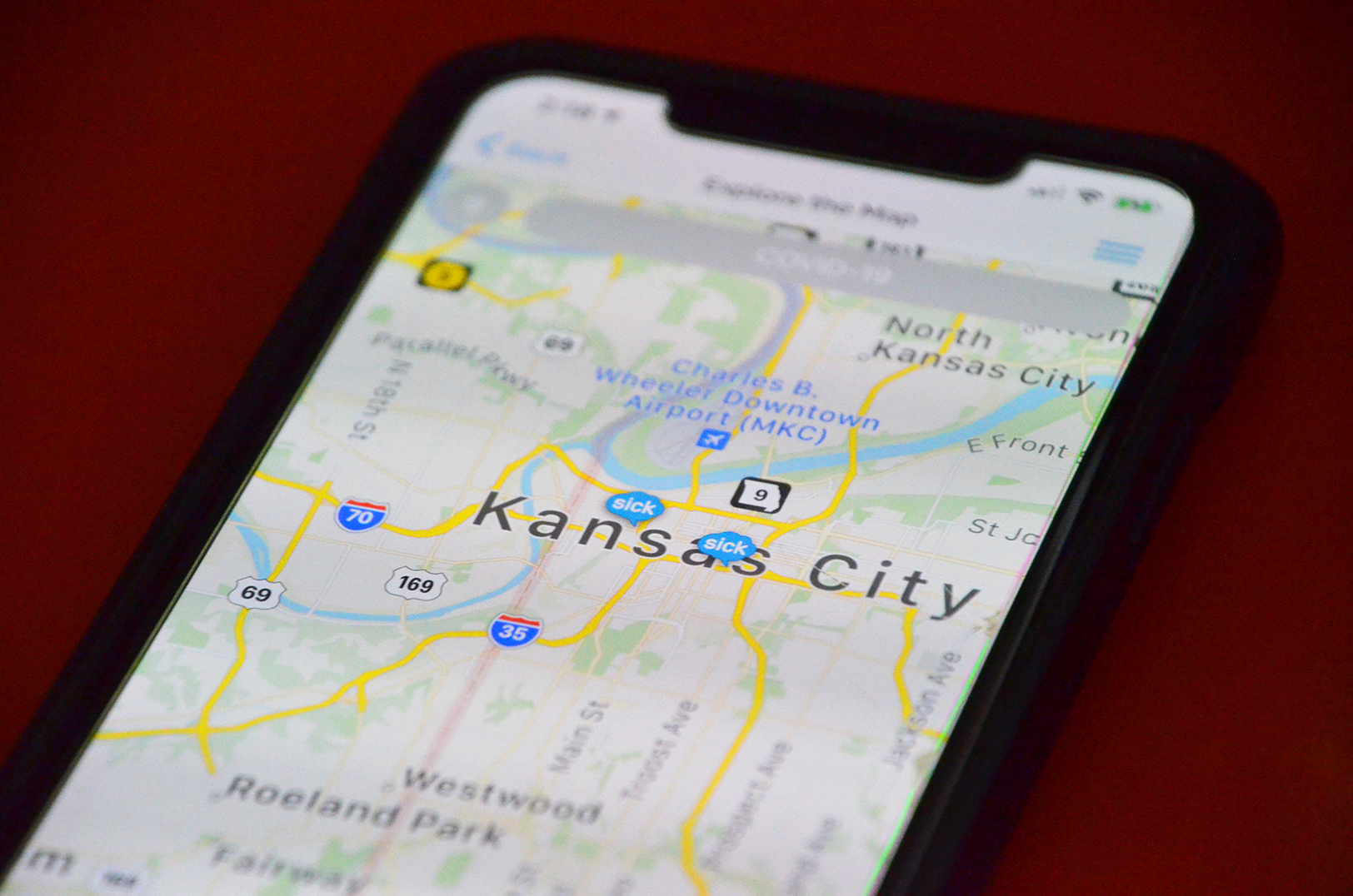
And it’s good timing: leading indicators show cases are rising in the City of Fountains — with more to come.
“We’re seeing that [COVID-19] spread is happening and that growth of the virus is happening before our eyes and we want to share that with people,” said Edelman, Sickweather CEO, describing the company’s new COVID-19 Score.
Available through the free Sickweather app, the COVID-19 Score is similar to the startup’s daily SickScore, which reveals the illness risk factor of the city a user calls home.
Until Thursday, Kansas City hadn’t ranked on the high risk index, Edelman told Startland News.
“People haven’t been exposed to this before. This is a brand new virus. … New York may have the brunt of it right now, at this moment — but there’s still a large part of the country where people haven’t been exposed to it,” she said, noting the company’s commitment to helping its users in every part of the country stay ahead of the curve that people across the globe are working to flatten.
According to Sickweather data, the nation’s highest risk city as of Thursday was the Dallas-Fort Worth area.
Click here to learn more about how Sickweather works.
Narrowing in on COVID-19
Sickweather first started looking into the illness in January when its routine data indicated there was something lingering beyond flu season, Edelman said.
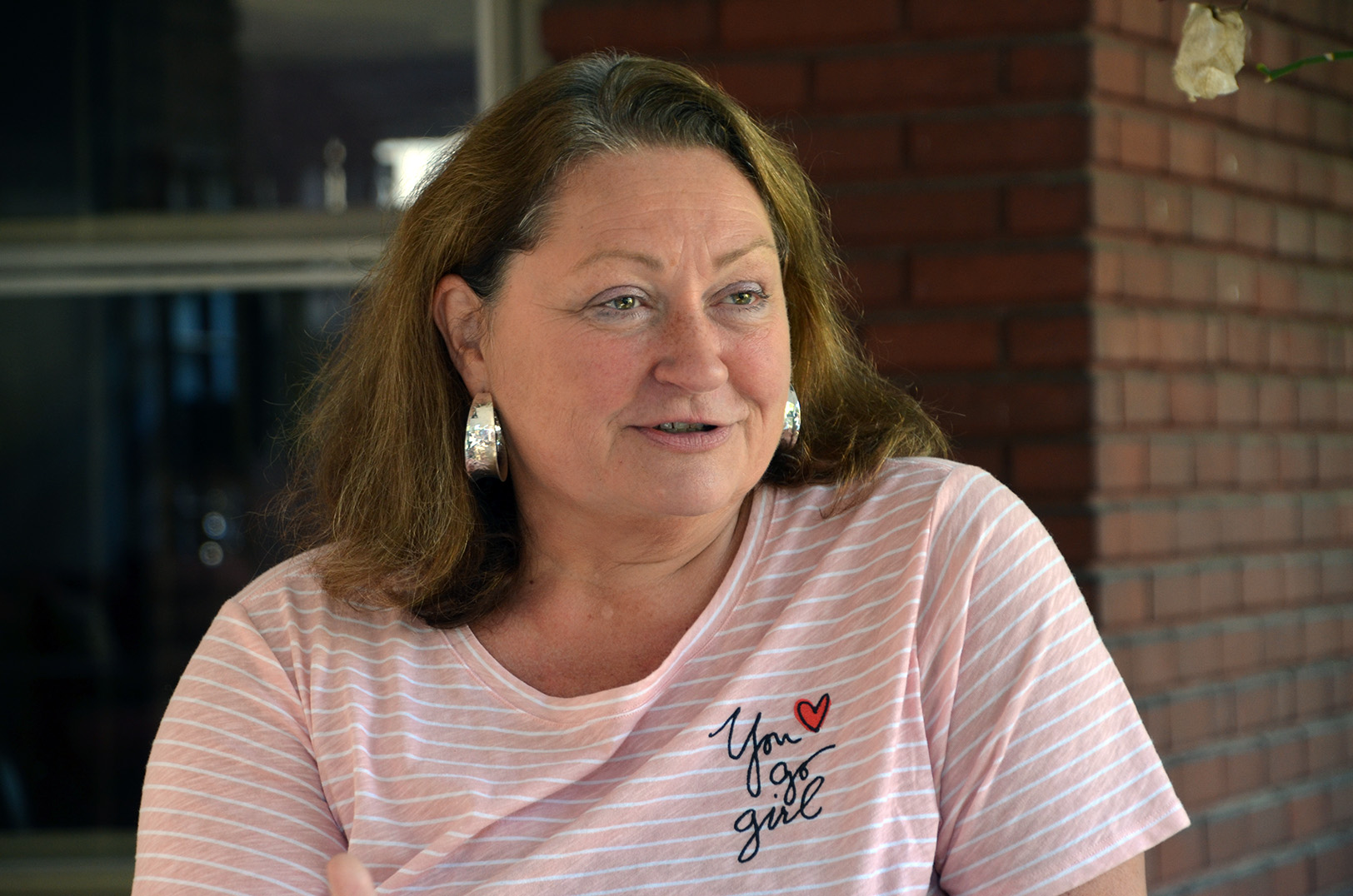
Laurel Edelman, Sickweather
“At that time, I consciously made a decision not to call it ‘Coronavirus’ — because we didn’t have testing that confirmed that it was Coronavirus,” she continued. “Now of course, looking back in hindsight, that appears to be what it was.”
Sickweather quickly began monitoring the developing situation across the U.S. but Edelman chose to hold off the launch of its COVID-19 Score until they were certain there was enough testing available for the virus, she said.
Users will also have the ability to report COVID-19 cases within the app, added Dr. Kevin Payne, lead data scientist consulting for Sickweather and founder of Chronic Cow.
“[The app has] always given you the ability to report 27 different conditions, and we’ve added the ability to report COVID-19 or dry cough. We’re getting data in that way and it’s pretty exciting,” he said, noting Sickweather’s unique position to collect data not currently being gathered.
Leading the conversation
“All the other reports that you see out there about COVID-19 are compilations of official figures. Sickweather is a leading indicator,” Payne said. “A SickScore begins by picking up on how people are talking about it in their social media use.”
Of course, that presents a challenge when so much of the social media traffic is based on news reports, rather than users’ own personal experience, he highlighted.
“[We’ve had to] separate out how people are talking about the news rather than how they’re talking about their own symptoms or the symptoms of people around them. … If you go back and look at our data from metropolitan areas over the past few weeks and the official reports, you see that our data is moving slightly in advance,” Payne said, noting the benefit of social listening in combating awareness of the illness.
“You know how gossip is news running ahead of itself in a red dress? Well, social media is kind of like that. The boots on the ground discussions haven’t yet reached the point of official reporting.”
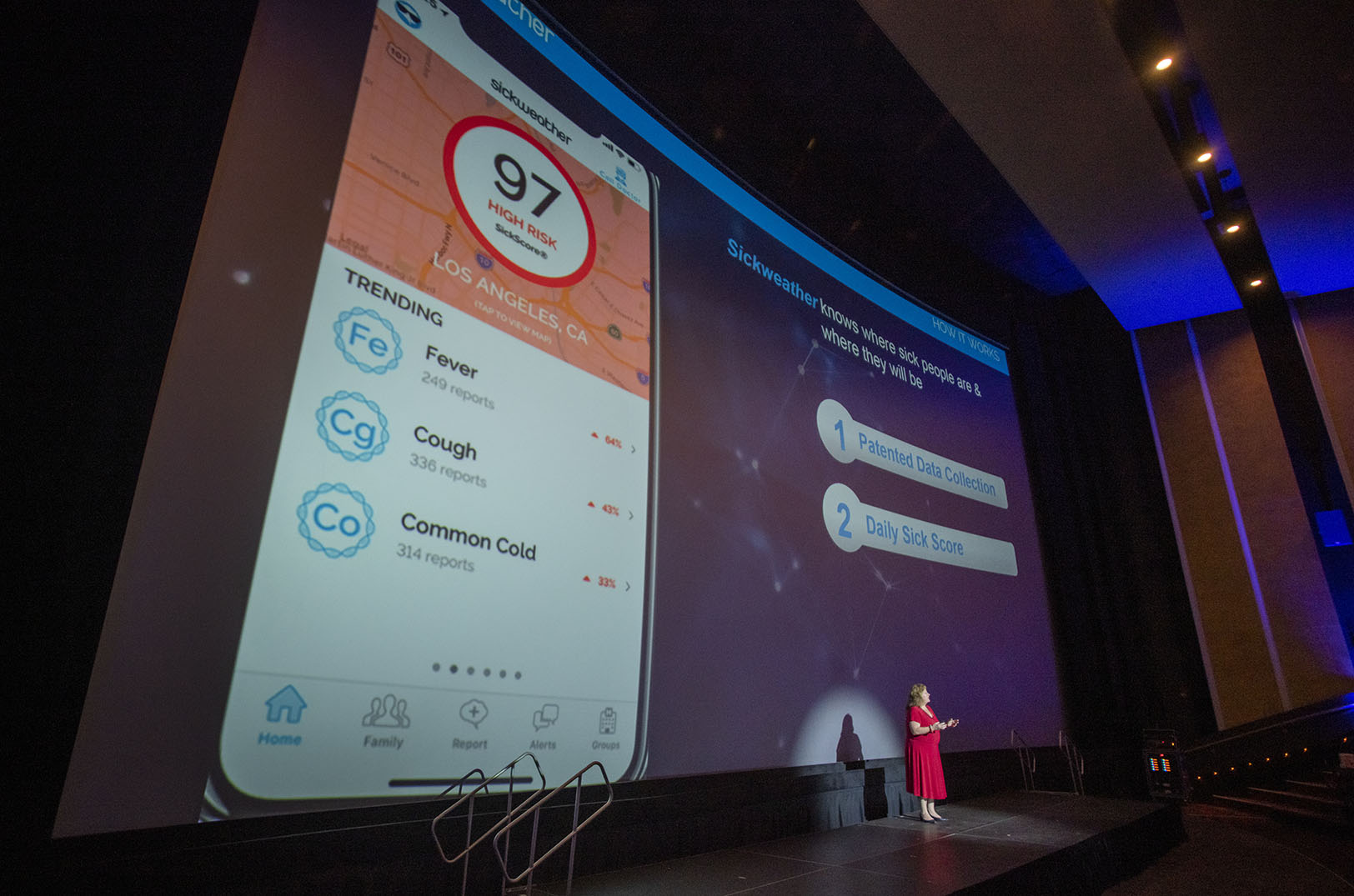
Laurel Edelman, Sickweather, Launch Health demo day
High interest in who’s at risk
With no end to the pandemic in sight — and the possibility COVID-19 could make an annual return — the COVID-19 Score is likely to stick around, Edelman said, citing high customer expectations and a developing need from the Sickweather user base.
“[It was more of a] ‘So when are you …?’ as opposed to, ‘Are you?’” Edelman said of the demand for a tool that could help monitor COVID-19. “Our customers are excited about having this available to them.”
Customers looking forward to the release of the COVID-19 Score include the U.S. Department of Defense, she noted. Sickweather was scheduled to pitch in a DoD demo day prior to the pandemic.
“What we know is that we’re providing a leading indicator based on modeling that we’ve done and work that we’ve done in the past,” Edelman said. “We know that epidemiologically, until you have three years or more of data, sometimes it’s really tough to know what’s going to happen next. We want to balance the information that we provide so that people know we’re supporting them.”
A company that’s seen major changes to its leadership in the last year, with the exit of Graham Dodge, founding CEO, Sickweather is no stranger to shifting gears.
“We’re really excited that Sickweather can be helpful in a brand new way with everything we’re facing now as a society, as a world,” said Payne.
The company’s second patent just reached publication, which will allow Sickweather to anonymously track users with various conditions and will play a role in moving the company forward, he added.
“We hope Sickweather is going to be right there at the forefront of those public health efforts as well,” Payne said.

This story is possible thanks to support from the Ewing Marion Kauffman Foundation, a private, nonpartisan foundation that works together with communities in education and entrepreneurship to create uncommon solutions and empower people to shape their futures and be successful.
For more information, visit www.kauffman.org and connect at www.twitter.com/kauffmanfdn and www.facebook.com/kauffmanfdn

Featured Business

2020 Startups to Watch
stats here
Related Posts on Startland News

KC Crew Riverfront project casts Millenial net with sand volleyball, kickball
A new recreation sports complex is part of a series of developments along Berkley Riverfront Park that hope to attract more Millennials to downtown Kansas City. Kansas City-based rec sports league KC Crew has partnered with Port KC to open six sand volleyball courts and two kickball fields toward the east end of the park,…

What the Flokk? Startup to connect residents with area events
For Trey Rhedrick, the alarm sounds at 5 a.m. He rises before the sun to work at Black & Veatch as a chemical engineer project manager. When finished at 5 p.m., Rhedrick conducts a couple meetings for his other gig before heading home to snarf down dinner. For the next six to eight hours —…

Sprint Accelerator graduate acquired by medical giant
A large California-based health care provider recently announced that it acquired Medicast, a graduate of the Kansas City-based Sprint Mobile Health Accelerator program. Providence St. Joseph Health purchased the firm for an undisclosed amount for its logistics and management platform that automates remote care delivery. In 2014, Medicast participated in the inaugural, three-month program at…

Uber finds KCMO’s proposed ride-sharing regulations ‘troubling’
In a move that will likely reignite lively discussions among government, businesses and residents, the City of Kansas City, Mo. is now considering changes to its ride-sharing regulations for companies like Uber. By directive of the Kansas City Council, city officials are reviewing rules drafted in April of 2015 that aim to ensure public safety…