

Rieger revolution: Why Chef Howard Hanna won’t return to ‘business as usual’ after COVID-19
April 16, 2020 | Austin Barnes
Editor’s note: The following is part of Startland News’ ongoing coverage of the impact of Coronavirus (COVID-19) on Kansas City’s entrepreneur community, as well as how innovation is helping to drive a new normal in the ecosystem. Click here to follow related stories as they develop.
This story contains some explicit language.
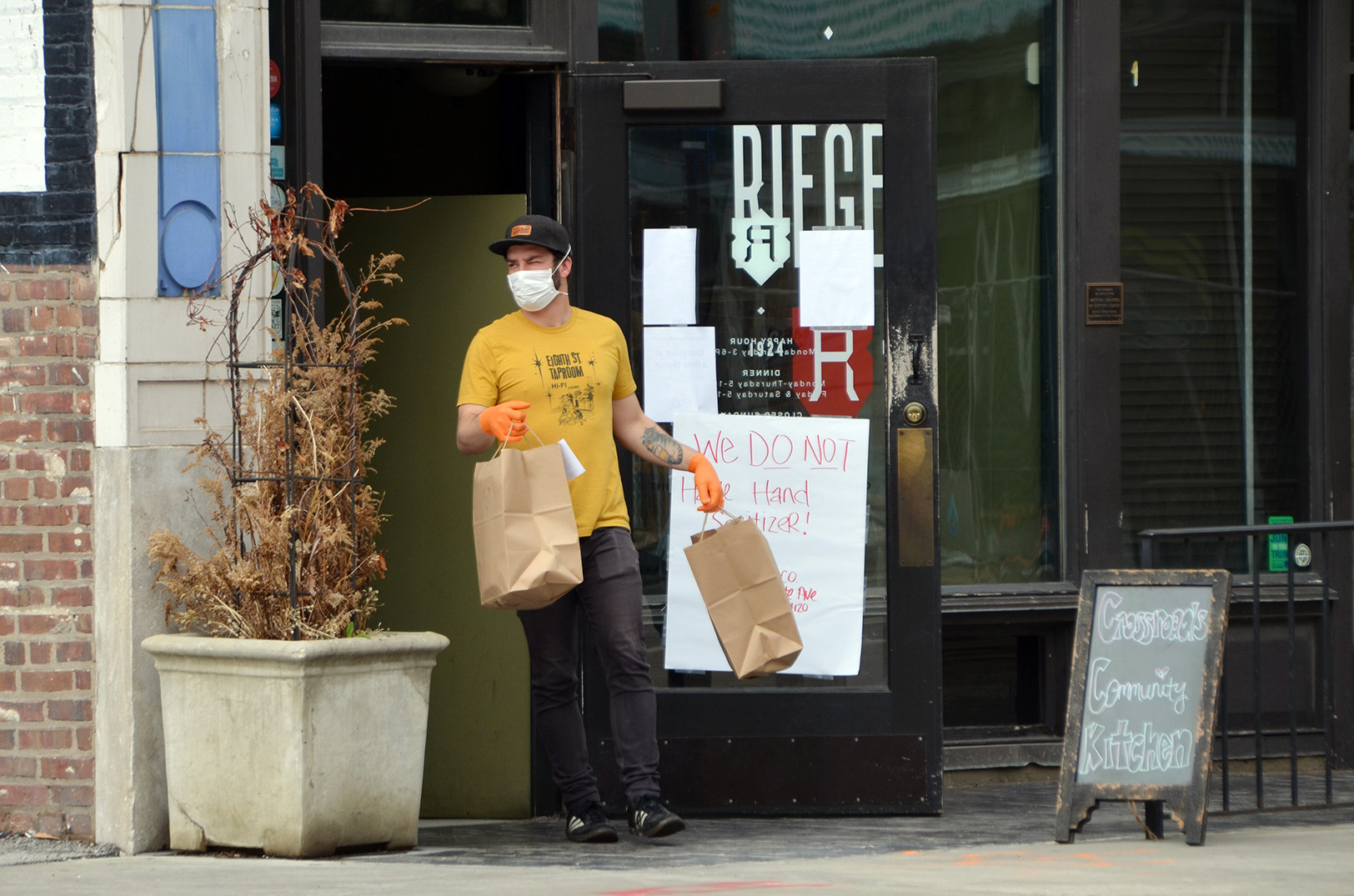
As the Coronavirus (COVID-19) crisis crept into Kansas City, Chef Howard Hanna knew it would mark a time that required the Rieger to think beyond itself — leaning into a gut feeling that corners of the community would go hungry while its fully stocked food inventory rotted amid a citywide Stay at Home order.
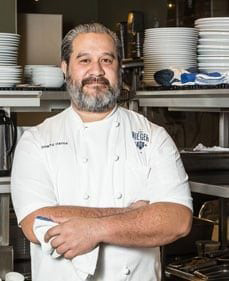
Howard Hanna, The Rieger
“That seemed fucking crazy and unacceptable, so we decided to just start cooking and try to get all the food we had to people who needed it,” Hanna, head chef at the Crossroads Arts District-based Rieger, said of the birth of its new community outreach project — Crossroads Community Kitchen — and the restaurant’s mission to combat food waste and save jobs.
“We were inspired very much by Chef Jose Andres of World Central Kitchen, his work feeding people in Puerto Rico, Haiti, and elsewhere after natural disasters, and his book ‘We Fed an Island,’” Hanna said, recalling his pitch to the Rieger management team on March 16.
“We launched [Crossroads Community Kitchen] a few hours later and served 21 meals that evening,” he said, noting the initiative now serves more than 200 meals each day.
Pivots at the Rieger, known for its Italian-inspired cuisine and upscale feel, also included the launch of a GoFundMe page to benefit hourly employees voluntarily working to sustain the kitchen’s operation.
“We were well over $17,000 total in less than a month,” he said, overwhelmed by Kansas City’s spirit of giving, which has already raised more than $47,000 of its $75,000 goal.
“[From that moment on] we felt compelled to get creative and cook as much as we could, as fast as we got it in,” Hanna said. “I would have a really hard time not working right now and cooking for people is not only keeping me sane, but [it is] actually fun.”
Now that Rieger employees are joining the 22 million Americans currently receiving unemployment benefits, money still in the pot from the GoFundMe campaign will be used to keep the meal program stewing, Hanna said.
Click here to support Crossroads Community Kitchen with a donation.
Exposing the status quo
“For me personally, this work is the most fulfilling that I’ve done in a long time, maybe ever,” he said. “I am happy to have something positive and helpful to focus on during such a crazy time, [I am] really proud of the way my team has stepped up to make this all happen and keep it going, and inspired by the generosity our community has shown for us and each other.”
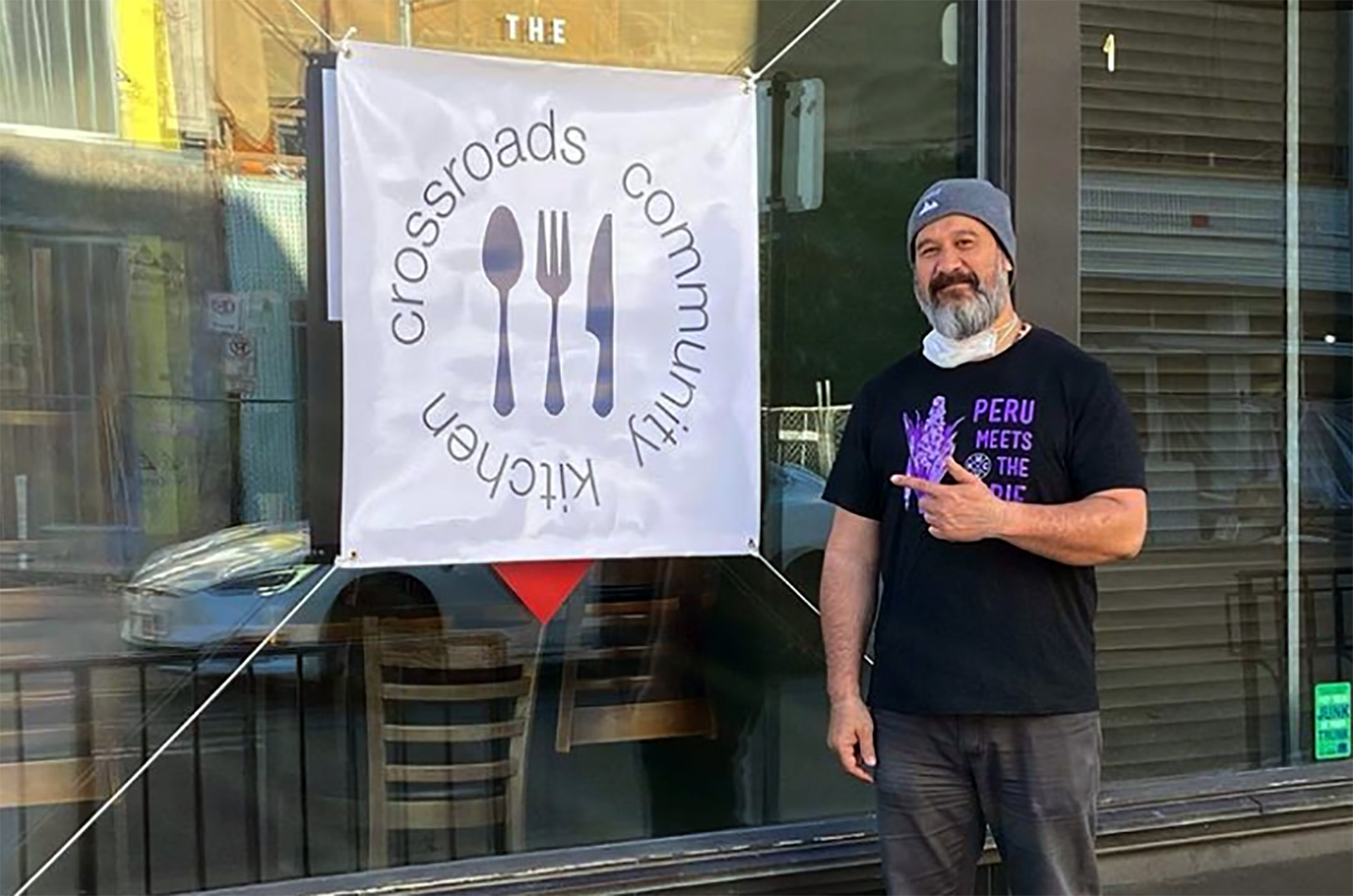
Howard Hanna, The Rieger, Crossroads Community Kitchen
A similar sense of inspiration could be found within the health crisis when all is said and done, Hanna added.
“I think there are a lot of silver linings to this pandemic. People have shown real creativity, resilience, heart, and have shown up for each other in major ways,” he said of pandemic-produced positives.
As with all things, plenty of negatives exist, bringing with them opportunities for change, Hanna said.
“It has also exposed some of the biggest problems in our old status quo — systemic racism, lack of affordable housing, lack of access to healthcare, the need for a living wage, health insurance, paid sick leave, and many other issues,” he said.
“Because those issues are so much at the forefront now, we can’t go back to pretending that everything was OK before this,” Hanna continued. “I’m not interested in returning to, ‘Business as usual,’ if that means so many people are one paycheck away from being food insecure, and maybe two or three paychecks away from being evicted and out on the street.”
More equitable access to food
A similar attitude of community involvement has spread in Kansas City’s food and restaurant community, leading to the creation of Chef Collective KC and the Community Meals Project — a subsidiary of REACH Collaborative and a collaboration between Kansas City chefs and restaurants, keeping their doors open by meeting a rising demand for food.
Crossroads Community Kitchen, Black Sheep, and Classic Cup will lead the charge as the initiative’s founding restaurants, REACH Collaborative announced.
“This new collective will be working together through a centralized operating, procurement, marketing, packaging and distribution model to provide free packaged breakfast, lunch and dinner to our citizens who need it the most,” the organization said.
“REACH Collaborative is working to launch and fund Phase 1 of the Collective (to last 6 months) with monetary donations from top food distributors, industry partners and local philanthropic contributors.”
Max Kaniger, Kanbe’s Market
Among distributors involved with the project is Max Kaniger, founder of Kanbe’s Market — a Kansas City-based nonprofit providing fresh, healthy foods in designated food deserts.
“We had access to more and more food and we had excess that we didn’t need to get to our partner convenience stores the way we typically do,” he said of how he got involved with the project, which was a byproduct of conversations with Hanna who was approached by Jon Taylor, founder of REACH Collaborative.
“This crisis that’s happening has magnified the issues in our food system,” Kaniger said. “And so it gave us an opportunity to kind of step in and help out really quickly.”
Click here to learn more about the Chef Collective KC and the Community Meals Project.
As the project grows, it aims to evolve into a scalable model that will enable single chef-led restaurants to collaborate and gain buying power and brand representation held by larger franchises.
“When this is over, we have a responsibility to rebuild in ways that are more equitable and that benefit all of us — not just those at the top,” Hanna said of what the future could hold for Kansas City.

This story is possible thanks to support from the Ewing Marion Kauffman Foundation, a private, nonpartisan foundation that works together with communities in education and entrepreneurship to create uncommon solutions and empower people to shape their futures and be successful.
For more information, visit www.kauffman.org and connect at www.twitter.com/kauffmanfdn and www.facebook.com/kauffmanfdn

Featured Business

2020 Startups to Watch
stats here
Related Posts on Startland News
Compute Midwest named top national tech conference
Consistently attracting futurists and tech leaders from around the U.S., Compute Midwest recently was named a national tech conference that shouldn’t be overlooked. Inc. Magazine included the annual, Kansas City-based conference on its “Top Tech Conferences You Can’t Miss This Fall” list, noting the event’s traditionally strong lineup of speakers. Presented by the Disruption institute,…

Dozens of skyrocketing KC firms break into the Inc. 5000
Kansas City held its own on Inc. Magazine’s annual ranking of the nation’s fastest-growing, private companies. The Wednesday unveiling of the Inc. 5000 featured 44 metro firms — including several area tech firms, like k12itc and Rhythm Engineering. K12itc, which in January made Startland’s 2016 top 10 startups to watch, delivers cloud-based IT services to…
Backstitch wants to fix a billion-dollar communication dilemma
With the cost of poor business communication climbing as high as $37 billion a year, Backstitch founders Jordan and Stefanie Warzecha saw an opportunity to clear the air. The married couple — who say communication has never been a problem for them — founded their corporate communications platform in 2012. Backstitch aims to mitigate the…

Google Fiber names local duo as digital inclusion leaders
After a successful first year, Google Fiber — in partnership with the Nonprofit Technology Network — has announced its second round of Digital Inclusion Fellows. As part of the program, fellows will create and lead digital literacy efforts in the 11 metro areas with Google Fiber, including Kansas City. Initiatives include assisting adults with high…