

It isn’t just free money: PPP loan funds come with strings attached
April 24, 2020 | Husch Blackwell

Editor’s note: The opinions expressed in this commentary are the authors’ alone. Kirstin P. Salzman, Jessica Zeratsky and Kyle Gilster are partners at Husch Blackwell. This op-ed is sponsored by the Husch Blackwell law firm, which has offices in Kansas City and across the nation, and intended to provide additional insight into the Pacheck Protection Program (PPP) and its extension this week.
As Paycheck Protection Program (PPP) loan proceeds start coming in the door, businesses are looking to spend those funds as permitted under the CARES Act. Below is a list of important points to consider.
The 8-week loan forgiveness period begins to run on the date that the loan proceeds are disbursed to you.
- Keep in mind that the manner in which these proceeds are spent will be scrutinized during this 8-week period. Take steps to safekeep the money and accurately document the uses of the funds on authorized and forgivable costs.
Deposit the loan proceeds into a segregated bank account.
- Although not required under the Act, segregating the funds may help you prevent commingling with other funds and more easily track the PPP loan proceeds for forgiveness calculation purposes.
- A segregated account may also help ensure that the funds are not inadvertently used for unauthorized purposes. If the funds are used for unauthorized purposes, they must be repaid, and, if knowingly used for unauthorized purposes, you may be subject to additional liability, such as fraud.
- If you decide to keep the loan proceeds in a segregated account, you should coordinate that with your bank and, if you have one, your third-party payroll processor.
If you haven’t done so already, consider preparing an internal impact statement and/or board resolution authorizing actions in connection with the PPP loan.
- If an impact statement and/or board resolution documenting the need and authority for the business to obtain the PPP loan was not prepared in connection with the initial Loan Application, it may be beneficial to prepare such documentation during this time.
- An internal impact statement and/or board resolution should, for example: (a) acknowledge the current economic uncertainty related to the COVID-19 pandemic; (b) illustrate how the business’s ongoing operations are reasonably anticipated to be impacted (and/or have, in fact, been impacted); (c) express the business’s intention to use the PPP loan proceeds to continue its ongoing operations; and (d) authorize the execution, delivery and performance of the PPP loan documents.
Maintain proper documentation to substantiate “payroll costs” and other authorized costs paid during the 8-week period.
- PPP loan funds should only be used to pay “payroll costs,” payments of interest on mortgage obligations incurred before February 15, 2020, rent payments on leases dated before February 15, 2020, and utility payments under service agreements dated before February 15, 2020. An outline of what constitutes a “payroll cost” can be found in our FAQ: CARES Act SBA Loan Programs.
- Payroll tax filings and other appropriate documentation (i.e., cancelled checks, payment receipts, and transcripts of accounts) will be necessary to document that the proceeds were spent on authorized expenses during the 8-week period. This verification must be provided in connection with the loan forgiveness application.
Remember that at least 75 percent of the loan proceeds must be used for “payroll costs.”
- The U.S. Small Business Administration (SBA) requires that at least 75 percent of the loan proceeds be used for “payroll costs.” Further, at least 75 percent of the forgiven amount must be attributable to “payroll costs,” and no more than 25 percent of the forgiven amount may be attributable to eligible expenses other than “payroll costs.”
The amount of loan forgiveness will be reduced if you do not maintain your staff and payroll.
- When making difficult workforce decisions, remember that your loan forgiveness will be reduced if you decrease your full-time employee headcount or if you decrease salaries and wages by more than 25 percent (compared to their most recent full quarter) for any employee that made less than $100,000 annualized in 2019.
- However, reductions in employment or wages that occur between February 15, 2020 and April 26, 2020 (as compared to February 15, 2020) will not reduce your amount of loan forgiveness if you eliminate such reductions by June 30, 2020.
After the 8-week period, file a loan forgiveness application with your lender.
- The SBA has indicated that it will be issuing additional guidance regarding loan forgiveness. However, you should contact your lender directly to confirm what its loan forgiveness process will be, and what documentation it will be requiring.

Featured Business

2020 Startups to Watch
stats here
Related Posts on Startland News

Photos: Take a look at Virgin Mobile USA’s startup-like office space
Many in the Kansas City startup community often call upon corporations to better engage with earlier stage entrepreneurs. Virgin Mobile USA wants to flip that script, said Justin Scott, Virgin Mobile director of communications. Despite being a subsidiary of Sprint Corporation and backed by billionaire investor Richard Branson, the firm — which selected Kansas City for…

Olathe mayor touts startup community in pitch for Amazon HQ2
With a workforce rich in entrepreneurial spirit, Amazon would be wise to tap Kansas City for its second headquarters, Michael Copeland said. “The climate has cultivated world-class start-up businesses and nurtured corporate giants, and it’s been a source of support and stability for everything in between,” said Copeland, mayor of Olathe. “It fosters risk-taking and…
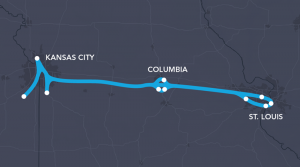
Hyperloop to AP: Kansas City-St. Louis route among top 5 as finalists narrowed
Kansas City’s hopes to land a high-speed commuter route to St. Louis continue to shoot forward, a Hyperloop official confirmed Thursday. Two weeks after the State of Missouri entered into a public-private partnership with Hyperloop to study the feasibility of a 23-minute supersonic track between the two cities, the Associated Press reports Missouri is a…

After shootings, ‘It’s most important to keep the public safe,’ Smart City leaders say
Citizens expect public safety from their city government to encompass such basics as sidewalks and water, Bob Bennett said. And for that reason, improving public safety must be a top concern for smart city projects around the nation, the chief innovation officer at the City of Kansas City, Missouri, added. “We have to provide the…