

Are VC-backed startups excluded from federal aid? KC Tech Council urges SBA rethink rules
March 31, 2020 | Tommy Felts

Editor’s note: The following is part of Startland News’ ongoing coverage of the impact of Coronavirus (COVID-19) on Kansas City’s entrepreneur community, as well as how innovation is helping to drive a new normal in the ecosystem. Click here to follow related stories as they develop.
Legislation signed into law last week to provide broad assistance across all sectors of the economy falls short of protecting venture capital-backed startups and companies in Kansas City, said Ryan Weber.

Kara Lowe, Haley Regan, and Ryan Weber, KC Tech Council
The loan program under the Coronavirus Aid, Relief, and Economic Security (CARES) Act appears to specify that companies with equity investors are ineligible from receiving relief through the U.S. Small Business Administration (SBA) effort, said Weber, KC Tech Council president.
“At this time of uncertainty, there are no good reasons why VC-funded startups should be excluded from receiving federal aid,” he said. “If one thing is certain — startups create jobs. In 2019, startups created nearly three million jobs in the U.S. Without access to federal relief aid, it would be fair to assume there would be a dramatic decrease in jobs created by startups this year.”
The KC Tech Council, along with more than 100 other organizations across the U.S., sent a letter this week urging the SBA and U.S. Department of the Treasury to clarify VC-backed startups should not be excluded from the CARES Act.
Click here to read the letter in full.
“Without clear guidance enabling startups and small businesses supported by equity investment to access the loan facility, many of these startups may be rendered ineligible,” the letter reads. “The confusion alone could lead to waves of preventable layoffs.”
Such layoffs will also have broad short-term downstream economic consequences, including for service-oriented businesses like restaurants, coffee shops, and bars, who rely on these workers as customers, according the letter.
“In addition to laying off workers, startups will have to shut down critical research and development (R&D) projects in fields like bio-research, medical technology, and artificial intelligence, setting back our country’s competitiveness and delaying the creation of new tools to combat the COVID-19 pandemic,” the letter continues. “Bottom line: not providing this critical support to startups now will cause both short-term pain and long-term consequences that linger for years.”
In Kansas City, the outcome could be particularly dire, Weber said.
“Not only would those companies struggle to maintain traction, but economic conditions could make it harder for them to reach key performance indicators — detracting investors from participating in future funding rounds,” he said. “Savvy investors diversify investment portfolios to manage risk. Compared to larger markets, KC’s startup portfolio isn’t as robust or mature, and therefore more sensitive to changing market conditions. Pair these conditions with a lack of available disaster relief aid, and we run a very serious risk of our VC-backed startup portfolio collapsing.”
In the long term, a lack of investor returns could build a negative perception among early-stage investors, Weber continued.
“If those investment dollars dry up in Kansas City, our ability to scale high-growth startups would reach an all-time low,” he said.
Click here to share your thoughts and/or support with the KC Tech Council on the inclusion of venture-backed startups in the CARES Act.

Featured Business

2020 Startups to Watch
stats here
Related Posts on Startland News
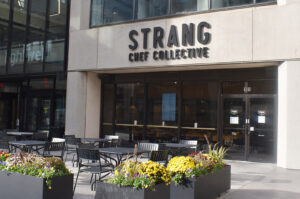
Downtown food hall hits closing time; Strang’s chef-driven concept leaving lightwell
Strang Chef Collective is serving its final customers within the food hall’s downtown space, said CEO Shawn Craft, announcing the lightwell location would close Tuesday “despite the company’s best efforts over the past year to keep it open.” The chef-driven concept — through which diners experience a mix of global and elevated comfort flavors —…

KC Daiquiri Shop closing Dec. 1; iconic duo behind the party vibes plans to ‘regroup, reflect, and rebuild’
The good times roll through the weekend at KC Daiquiri Shop as the well-known Mardi Gras-themed getaway on Grand Boulevard shuts down its years-long revelry. “This decision has not come lightly,” Kinley Strickland and Calvin Vick, owners of KC Daiquiri Shop, said Monday in a social media post announcing the business’ plans to close Dec.…

Side hustle to help autistic adults belong in the workplace earns young founder Student Entrepreneur of the Year honor
Grace Kertz is redefining what workplace inclusivity can look like with Sensory Sync, an AI-powered platform designed to support neurodivergent employees. Her work on the innovative venture on Thursday earned her the title of UMKC Student Entrepreneur of the Year. “Sensory sync is an enterprise grade DEI and wellness platform sold to companies. It utilizes…

UMKC Entrepreneur of the Year: How Populous designed a legacy, built to go global
Kansas City-built design firm Populous brought to reality more than just great venues, Tom Bloch shared; it developed great experiences for a worldwide audience. “From its start here in Kansas City as HOK Sport in 1983 until now, Populous has set an unmatched standard for stadiums, convention centers, and event spaces,” Bloch told the crowd…