

Are VC-backed startups excluded from federal aid? KC Tech Council urges SBA rethink rules
March 31, 2020 | Tommy Felts
Editor’s note: The following is part of Startland News’ ongoing coverage of the impact of Coronavirus (COVID-19) on Kansas City’s entrepreneur community, as well as how innovation is helping to drive a new normal in the ecosystem. Click here to follow related stories as they develop.
Legislation signed into law last week to provide broad assistance across all sectors of the economy falls short of protecting venture capital-backed startups and companies in Kansas City, said Ryan Weber.

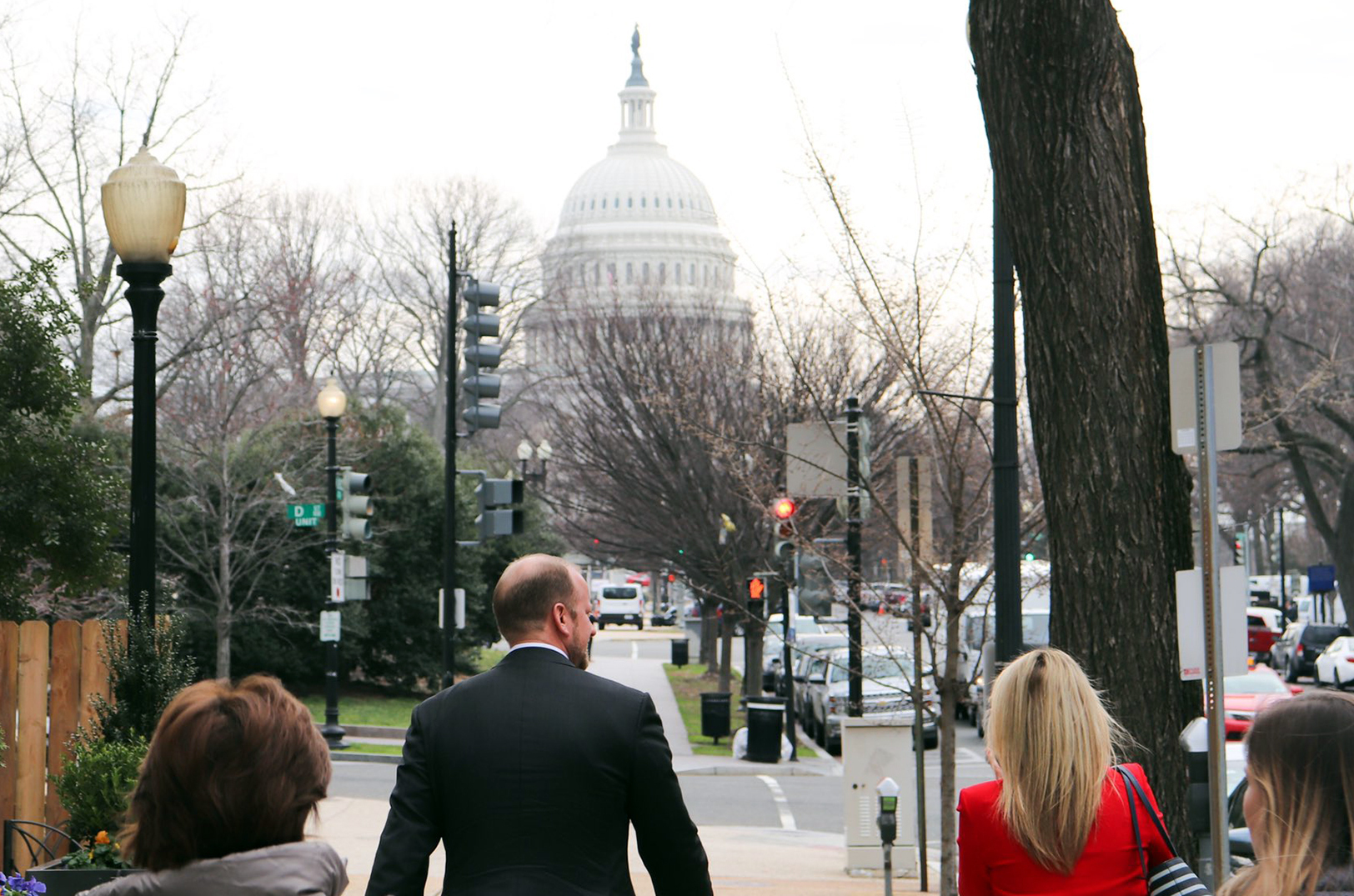
Kara Lowe, Haley Regan, and Ryan Weber, KC Tech Council
The loan program under the Coronavirus Aid, Relief, and Economic Security (CARES) Act appears to specify that companies with equity investors are ineligible from receiving relief through the U.S. Small Business Administration (SBA) effort, said Weber, KC Tech Council president.
“At this time of uncertainty, there are no good reasons why VC-funded startups should be excluded from receiving federal aid,” he said. “If one thing is certain — startups create jobs. In 2019, startups created nearly three million jobs in the U.S. Without access to federal relief aid, it would be fair to assume there would be a dramatic decrease in jobs created by startups this year.”
The KC Tech Council, along with more than 100 other organizations across the U.S., sent a letter this week urging the SBA and U.S. Department of the Treasury to clarify VC-backed startups should not be excluded from the CARES Act.
Click here to read the letter in full.
“Without clear guidance enabling startups and small businesses supported by equity investment to access the loan facility, many of these startups may be rendered ineligible,” the letter reads. “The confusion alone could lead to waves of preventable layoffs.”
Such layoffs will also have broad short-term downstream economic consequences, including for service-oriented businesses like restaurants, coffee shops, and bars, who rely on these workers as customers, according the letter.
“In addition to laying off workers, startups will have to shut down critical research and development (R&D) projects in fields like bio-research, medical technology, and artificial intelligence, setting back our country’s competitiveness and delaying the creation of new tools to combat the COVID-19 pandemic,” the letter continues. “Bottom line: not providing this critical support to startups now will cause both short-term pain and long-term consequences that linger for years.”
In Kansas City, the outcome could be particularly dire, Weber said.
“Not only would those companies struggle to maintain traction, but economic conditions could make it harder for them to reach key performance indicators — detracting investors from participating in future funding rounds,” he said. “Savvy investors diversify investment portfolios to manage risk. Compared to larger markets, KC’s startup portfolio isn’t as robust or mature, and therefore more sensitive to changing market conditions. Pair these conditions with a lack of available disaster relief aid, and we run a very serious risk of our VC-backed startup portfolio collapsing.”
In the long term, a lack of investor returns could build a negative perception among early-stage investors, Weber continued.
“If those investment dollars dry up in Kansas City, our ability to scale high-growth startups would reach an all-time low,” he said.
Click here to share your thoughts and/or support with the KC Tech Council on the inclusion of venture-backed startups in the CARES Act.

Featured Business

2020 Startups to Watch
stats here
Related Posts on Startland News

The red carpet, garageband and laboratory of funding models
Editor’s note: The opinions expressed in this commentary are the author’s alone. “Funding! Funding! Funding!” It’s the warrior’s cry of the startup community. In the world of entrepreneurship, there’s an incredible amount of pressure to run a startup that can be described as “disruptive,” “innovative” and “scalable.” Those descriptions come with a hefty price tag,…

Kauffman Foundation CEO serves up 5 policies for entrepreneurial growth
Adaptation, experimentation and research. No, those aren’t tips to run a startup. Rather, they’re a few of the recommendations for lawmakers to consider if they’d like to spur nationwide entrepreneurial growth, according to Wendy Guillies, CEO of the Ewing Marion Kauffman Foundation. Now nearly a year into her tenure as CEO, Guillies recently presented five…

Google opens applications for Digital Inclusion Fellowship
Just two months after it unveiled free access to gigabit internet for low-income households in Kansas City, Google Fiber is again ramping up efforts to close the digital divide. In partnership with the Nonprofit Technology Network, Google Fiber has again opened applications for its Digital Inclusion Fellowship, this time looking for 22 bright minds to…

Crawl through Kansas City’s startup scene with this happy hour tour
After a two-year hiatus, a popular city-wide tour of area startups will return to offer residents a chance to learn about the entrepreneurs and innovative businesses around them. Set for May 20, the 2016 Kansas City Startup Crawl will wind its way through several of the area’s startup hotbeds, highlighting coworking studios, accelerators and community…