

Stimulus bill update: Additional SBA relief open to businesses impacted by COVID-19
March 28, 2020 | Husch Blackwell
Editor’s note: The opinions expressed in this commentary are the authors’ alone. Jessica Zeratsky and Kyle Gilster are partners at Husch Blackwell. This op-ed is sponsored by the Husch Blackwell law firm, which has offices in Kansas City and across the nation, and intended to provide additional insight into the just-signed federal stimulus bill in response to Coronavirus (COVID-19).
An additional estimated $377 billion in Small Business Administration (SBA) relief will be available to eligible small businesses as a result of the Coronavirus Aid, Relief, and Economic Security (CARES) Act, which was signed into law by the president Friday. This much anticipated stimulus package:
- provides loan forgiveness grants to small businesses and non-profits to maintain existing workforce and to help pay for other expenses like rent, mortgage and utilities;
- offers SBA emergency grants of up to $10,000 to provide immediate relief for small business operating costs; and
- subsidizes 6 months of payments for small businesses with existing SBA loans.
SBA 7(a) paycheck protection program
Under the SBA’s 7(a) loan program, an estimated $349 billion has been allocated to the Paycheck Protection Program.
Who is eligible?
Small businesses, 501(c)(3) non-profits, 501(c)(19) veteran’s organizations, and Tribal business concerns meeting the SBA’s published guidelines, as well as sole-proprietors, independent contractors and other self-employed individuals are eligible.
Typically, the SBA also determines eligibility by measuring a small businesses’ affiliates; however, the SBA has waived its affiliation rules for businesses in the hospitality and restaurant industries, for franchises that are approved on the SBA’s Franchise Directory, and for small businesses that receive financing through the Small Business Investment Company (SBIC) program. Of note, the scope of the affiliation waiver for SBIC-financed small businesses is being explored and will likely be the subject of additional SBA guidance.
The SBA is also waiving its credit-elsewhere test, meaning that small businesses with credit available elsewhere are eligible for loans under the Paycheck Protection Program.
What are the key program details?
Eligible enterprises may obtain a loan of up to $10 million. The loan amount is calculated by reference to payroll costs incurred by the business and roughly equal to 2.5 times the company’s average monthly payroll costs.
Loan proceeds may only be used to support payroll (not including compensation above $100,000 in wages), such as employee salaries, paid sick or medical leave, insurance premiums, and mortgage, rent, and utility payments. Borrowers are required to certify that the loan is necessary due to the uncertainty of current economic conditions caused by COVID-19; that they will use the funds to retain workers and maintain payroll, lease, and utility payments; and that they are not receiving duplicative funds for the same uses from another SBA program (e.g., the Economic Injury Disaster Loan [EIDL] program).
No collateral or personal guarantees are required, loan payments are deferred for at least 6 months (and not more than one year), there is no prepayment fee, and all fees are waived.
Most notably, loans made under this program are eligible for loan forgiveness. The borrower must apply for forgiveness with its lender directly. The amount forgiven is based upon a formula, taking into consideration—for example—employee retention and amounts spent by the borrower on eligible payroll costs, mortgage interest payments, rent payments and utility payments during a specific period of time. Any amounts forgiven are not taxable to the borrower as gross income. Any loan amounts not forgiven at the end of one year must be paid by the borrower over a period of up to 10 years at a maximum interest rate of 4 percent.
What is the application process?
Loans under the Paycheck Protection Program will be made through lenders that have been approved by the SBA. Applicants work directly with those lenders. The SBA will guarantee these loans. The SBA has an online tool that helps small businesses connect with SBA-approved lenders. Additionally, the U.S. Treasury has the authority to approve additional lenders. Business owners can also check with their local SBA District Office for an updated list of approved lenders participating in the Paycheck Protection Program.
Treasury Secretary Steven Mnuchin has indicated that lenders should be able to issue small business loans under the Paycheck Protection Program by the end of next week.
Emergency EIDL grants
Earlier this month, the SBA announced that in designated states and territories small businesses and private, non-profit organizations that are suffering substantial economic injury as a result of COVID-19 may qualify for EIDLs. EIDLs are low-interest working capital loans—up to $2,000,000—made directly by the SBA. In connection with this stimulus package:
- Tribal businesses, cooperatives, and employee stock ownerships with fewer than 500 employees, as well as sole proprietors and independent contractors, are also now eligible for EIDLs;
- personal guarantees on advances and loans under $200,000 are not required (but will still be required on advances and loans over $200,000);
- the requirement that an applicant must have been in business for one year is waived; and
- the credit-elsewhere test is waived, meaning that small businesses that have credit available elsewhere are now eligible for EIDLs.
The stimulus package also establishes an estimated $10 billion Emergency Grant under the EIDL Program. Key details about this emergency grant include:
- an eligible entity that has applied for an EIDL due to COVID-19 may request an advance on that loan, up to $10,000;
- the applicant must certify that it is an eligible entity under the SBA guidelines;
- the SBA is required to distribute the emergency advance to the applicant within three (3) days of the applicant’s request;
- the advance may be used towards paid sick leave to employees, payroll, increased costs of materials, rent or mortgage payments, and repayment of other obligations that cannot be met due to revenue losses; and
- the advance does not need to be repaid, even if the applicant is subsequently denied for an EIDL loan.
SBA subsidy of existing small business loans
Small businesses with existing SBA loans through the SBA 7(a), 504 and Microloan programs are also afforded relief under the CARES Act. The SBA will be subsidizing those loans, up to an estimated amount of $17 billion. Key details about this subsidy program include:
- the SBA will pay the principal, interest, and any associated fees that are owed on existing covered loans for a six (6) month period, starting on the next payment due date;
- for covered existing loans that are already on deferment, the SBA will begin making these payments with the first payment after the deferral; and
- SBA loans that are made under these programs—not including the Paycheck Protection Program—within the next six (6) months will also receive a full six (6) months of loan payments by the SBA.
Small businesses with these existing covered loans should contact their lender directly for additional details regarding this SBA subsidy program.
The CARES Act contemplates that the SBA will issue additional regulations and guidance in connection with this unprecedented economic relief to small businesses. Husch Blackwell has launched a COVID-19 response team providing insight to businesses as they address challenges related to the coronavirus outbreak.

Kyle Gilster
Jessica Zeratsky
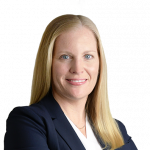
Jessica Zeratsky is a partner at Husch Blackwell in Milwaukee, Wisconsin. Kyle Gilster is an office managing partner in Washington, DC.

Featured Business

2020 Startups to Watch
stats here
Related Posts on Startland News
Bardavon acquires San Fran health app to complete hybrid treatment platform for workers
Adding PeerWell — and the San Francisco startup’s leadership — to the portfolio of tools at Bardavon Health Innovations will help the Overland Park health powerhouse complete the industry’s first digital solution for worker musculoskeletal health, said Matt Condon. Together, Bardavon and PeerWell will pair in-person therapy, virtual coaching, and self-care for injury prevention and…
Community Builders to Watch: Vicky Kulikov embraces ‘Tikkun Olam’ in journey to supporting KC’s small business owners
Editor’s note: Startland News is showcasing five Kansas City changemakers from five local organizations through its second annual Community Builders to Watch series. The following highlights one of the 2022 honorees, selected from more than 100 initial nominees. Click here to view the full list of Community Builders to Watch — presented by Engenious Design. Vicky…

Urgent culture: Let your brain breathe by setting, enforcing work boundaries (Holistic Hustle)
Kharissa Forte is a writer, certified health coach, and columnist for Startland News. Read her “Holistic Hustle” columns for Startland News here. For more of her self-care tips on how to keep your cup full, visit graceandgrind.co. Truth be told, urgent culture isn’t anything new, but it’s a problem that seems to be impacting more…

SafetyCulture invests $2.1M in IoT startup Inauro, growing tech portfolio focused on frontline safety
A $2.1 million investment by SafetyCulture into a data and IoT software startup is part of an ongoing, focused effort to boost emerging technologies that enhance frontline processes, the global workplace operations company said Monday. “We’re constantly pushing to find new ways to innovate and automate processes so tasks can be done to higher standards,…