

Startup Road Trip: Student-led KU Blockchain Institute has high-tech dreams with graduation nearing
February 11, 2020 | Elyssa Bezner
Startland News’ Startup Road Trip series explores innovative and uncommon ideas finding success in rural America and Midwestern startup hubs outside the Kansas City metro. This series is possible thanks to the Ewing Marion Kauffman Foundation, which leads a collaborative, nationwide effort to identify and remove large and small barriers to new business creation.
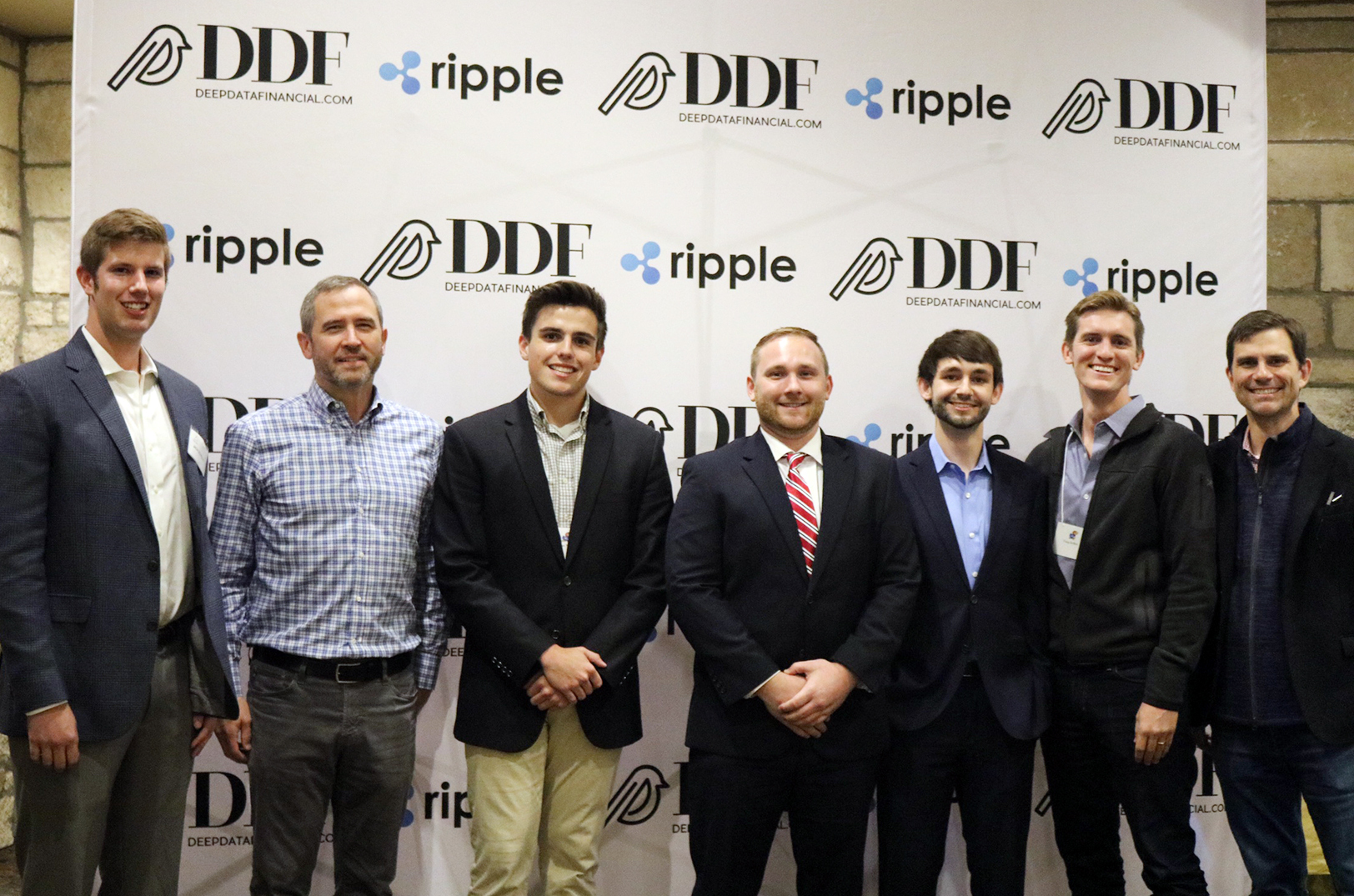
LAWRENCE — A “perfect storm” created the KU Blockchain Institute — a student-run organization shooting for the college town known for its sports to become the rising tech hub of the Midwest, said Daniel Jones.

Daniel Jones, KU Blockchain Institute
“If you look at these tech hubs in the country, you have the disruption and innovation hubs in the Silicon Valley, you have the financial hubs in Chicago and New York City, but there’s not a major player in the Midwest,” said Jones, president and co-founder of the student-led tech initiative, and second-semester senior majoring in supply chain management and finance.
“What we really want to do is make Lawrence the tech hub of the Midwest through the research, education and development of blockchain technology at [The University of Kansas.] That’s our mission statement down to the core of the organization,” he added.
Click here to read more about the KU Blockchain Institute.
The Institute came together because of a combination of meeting the right people at the right time and a capital injection of $2 million donated from Silicon Valley-based Ripple Labs in early 2019, which supports the university’s blockchain-related initiatives and research, Jones said.
A student-led executive team — which drives the endeavor with the guidance of Dr. Perry Alexander, principal of the donation to the Information Telecommunications Technology Center — came together through a chance encounter that led to an immediate desire to rally behind the idea, Jones added.
The group focused on being business partners first, though friendship developed among the four-person leadership team once they started collaborating on projects and tying together the group’s diverse backgrounds and majors, said Jack Schraad, co-founder and vice president of the Institute.
“There’s just something about the technology, the entrepreneurial aspect of blockchain, and the different applications of it that draws a lot of talented and ambitious people,” Schraad said. “We’ve been very fortunate that KU students have shown interest and then having meetings every week — that’s a great time to bond with one another and get to know each other.”
Building a coalition, balancing classes
The team immediately set about curating and hosting larger-scale conferences to inspire and educate KU students about blockchain. An October 2019 conference had the support of Ripple Labs, IBM, FedEx, Lockheed Martin, and the University of Arkansas, Jones said.
“The day-of just worked itself out — it was a lot of interfacing with company executives and reaching out to students, a lot of guerilla marketing and making sure there were warm bodies in the room,” he added. “But more than anything, I think people just want to hear about what’s going on at the cutting edge of industry right now and how companies are using this specific technology to alleviate some of their pain points, but also research and development to try to get ahead of where they think this industry is going.”
Balancing classwork and maintaining an organization of some scale is challenging, but not overwhelming for the determined team, Jones said.
“I forget sometimes that I have these things called classes that I have to do sometimes,” he laughed. “The way that I look at it is that being in classes is what keeps me on my feet and keeps me thinking. It gives me some time to digest what my classes are teaching me, but also how I can apply it and and those soft skills to hosting events to create something meaningful out of the Blockchain Institute.”
“It’s a big-time commitment, but I think I can speak for everyone on our team that we all love what we do,” Jones added. “That’s probably the highlight of our week is getting together in a room with the leadership team and knocking heads and scheming about what big thing we’re going to do next.”
Though running the Institute required some heavy lifting from the team, the educational aspect of the day-to-day kept it from getting too stressful, noted Schraad.
“It’s doesn’t really feel like work,” he laughed. “It’s just because it’s something I’m curious about. I kept questioning, kept looking, reading, and asking questions so that it doesn’t get old. Just with most of the people in our group — we go really hard at things we find important.”
New blockchain enthusiasts needed as graduation looms
Ensuring the Institute continues past the graduation of its entire current executive team is a high priority for the group, he said, noting the next step for the evolving organization is already beginning: developing a looser realm of all tech-focused initiatives.
“We’re really focusing on grooming the next generation of leaders to take over the Institute once all of our members graduate at the end of this semester,” said Jones. “But, we’re also looking to create a Kansas technology entrepreneur coalition. That’s something we’re really excited about.”

Jack Schraad, KU Blockchain Institute
The coalition is expected to maintain a decentralized network of tech-driven students and student organizations to focus on collaboration across industries, he said.
“If you think that blockchain is this niche area of technology … we realize that it’s hard to get people to buy into this one small area, but what we’re working on is uniting everyone under the same, common umbrella of technology,” he added. “So we’re approaching the AI clubs, the analytics, the cybersecurity — any organization or student that is passionate about technology, and passionate about what the future is.”
Many of the executive team members have already accepted full-time offers at different companies — Schraad is expected to join the technical sales team at IBM in Chicago — or are exploring entrepreneurial routes at this stage, Jones said.
“We’re working to develop cool blockchain use cases and create something that has the potential to challenge the status quo and make the lives of general consumers better — but it’s to be determined on how all of that shakes out,” he added.
The continuation of the Institute for the sake of the Lawrence hub and for the development of well-rounded, tech-focused KU students is a high priority, Jones said.
“[The Institute] is a big value add for delivering talent into the global business community so if we can focus now on training KU students to be fluent in these technologies, and fluent in the soft skills needed to do business around these technologies, people will want to hire KU graduates, and they will want to have Jayhawks in their workforce,” he said.

This story is possible thanks to support from the Ewing Marion Kauffman Foundation, a private, nonpartisan foundation that works together with communities in education and entrepreneurship to create uncommon solutions and empower people to shape their futures and be successful.
For more information, visit www.kauffman.org and connect at www.twitter.com/kauffmanfdn and www.facebook.com/kauffmanfdn

Featured Business

2020 Startups to Watch
stats here
Related Posts on Startland News

StoryUp levels up again: KC-area VR startup secures spot at Apple camp for women-led tech
It’s the ultimate “nerdy” thing for tech entrepreneurs, Sarah Hill said as Columbia-based startup, StoryUP joins an Apple summer cohort — specifically designed to support women-led companies. “To have direct communication, to troubleshoot in an area of media that’s difficult to create. It is valuable for us and we’re honored and we’re really excited about…

You’ll soon have 20+ smart devices in your home; How many will steal your data?
Consumers of smart technology need to be wary of most of the lesser-known brands in retail stores, said Scott Ford. “Most likely they’re using a platform architecture that sits on a foreign market, sending your data to who knows where, without the protections that are common in the U.S,” said Ford, CEO of Pepper IoT,…
Project UK earns $100K prize to help build out tech ecosystem, connected community
A $100,000 injection will position Project United Knowledge for growth that could further fill diversity and inclusion gaps in Kansas City’s tech ecosystem. The accelerator program landed the investment as a winner of the Kapor Center’s $1 million Tech Done Right National Challenge, said Quest Moffat, head of innovation at Project UK. Beyond financial support,…

More than a makeover: ‘Queer Eye’ gives Wesley Hamilton an opportunity to thank the shooter who put him in a wheelchair
Wesley Hamilton’s clear vision for his potential impact took away the nerves while in front of cameras for Netflix’s “Queer Eye,” he said. “Me being able to get on a show with that type of exposure and spread my message to those within my community and outside of it… I’m just really excited for the…