

Beyond just bats: Pro Athlete takes a swing at apparel, innovation with its first acquisition
February 8, 2020 | Austin Barnes

Whether a company has just left the bench or been in the game for more than 30 years, the key to innovation is simple: maintain a startup mentality and growth is sure to follow, said Andrew Dowis.

Pro Athlete
“One of our core values is embracing innovation,” explained Dowis, CEO of Pro Athlete — a Kansas City-grown bat and glove shipping company that recently acquired Milwaukee-based apparel and sports accessories retailer Routine Baseball. The hard-hitting small business is best known for its Just Bats and Just Gloves brands.
“We’re a great example of a company that was a brick and mortar store [and pivoted.] If we wouldn’t have embraced innovation [by moving business online in the 1990s], we wouldn’t be an online company [now] and we wouldn’t be making this next acquisition,” he continued, detailing the Pro Athlete promise to continuously seek creative opportunities for growth — which led to the development of the company’s innovation division.
“We call it, ‘Phenom-X,’ short for phenomenal experiences. The whole goal is to go out and create experiences for our customers that will blow their minds,” he said, indicating the mission is embodied by the acquisition — which saw two of the Routine Baseball’s 10 employees called up to Pro Athlete.
“Operationally we’re pretty sound, but honestly … we don’t know how to design and get shirts made and stuff like that,” he said. “So these are the two key positions [from Routine Baseball.]”
While it might sound simple, acquiring a company is no light lift and years of preparation went into perfecting the deal that brought the two companies together, Dowis explained.
“About four years ago, we reached out and wanted to see if they wanted to do some kind of collaboration. We’ve always kind of admired their product and their brand, and we talked a little bit about some stuff and the timing never really worked. So we kind of put it to bed,” he recalled.
Fast forward to Spring 2019 and Dowis came across the correspondence once again, archived in his inbox.
“We went [to Milwaukee] several times and met with them, looked at their facility, researched their website … did some research on what we thought the world thought of the brand — and came to the conclusion that it’s really strong,” he said. “It’s a very similar demographic to the customer base that we have for bats and gloves. We thought it was a good value add.”
The acquisition closed Dec. 6, 2019, he noted.
Pro Athlete
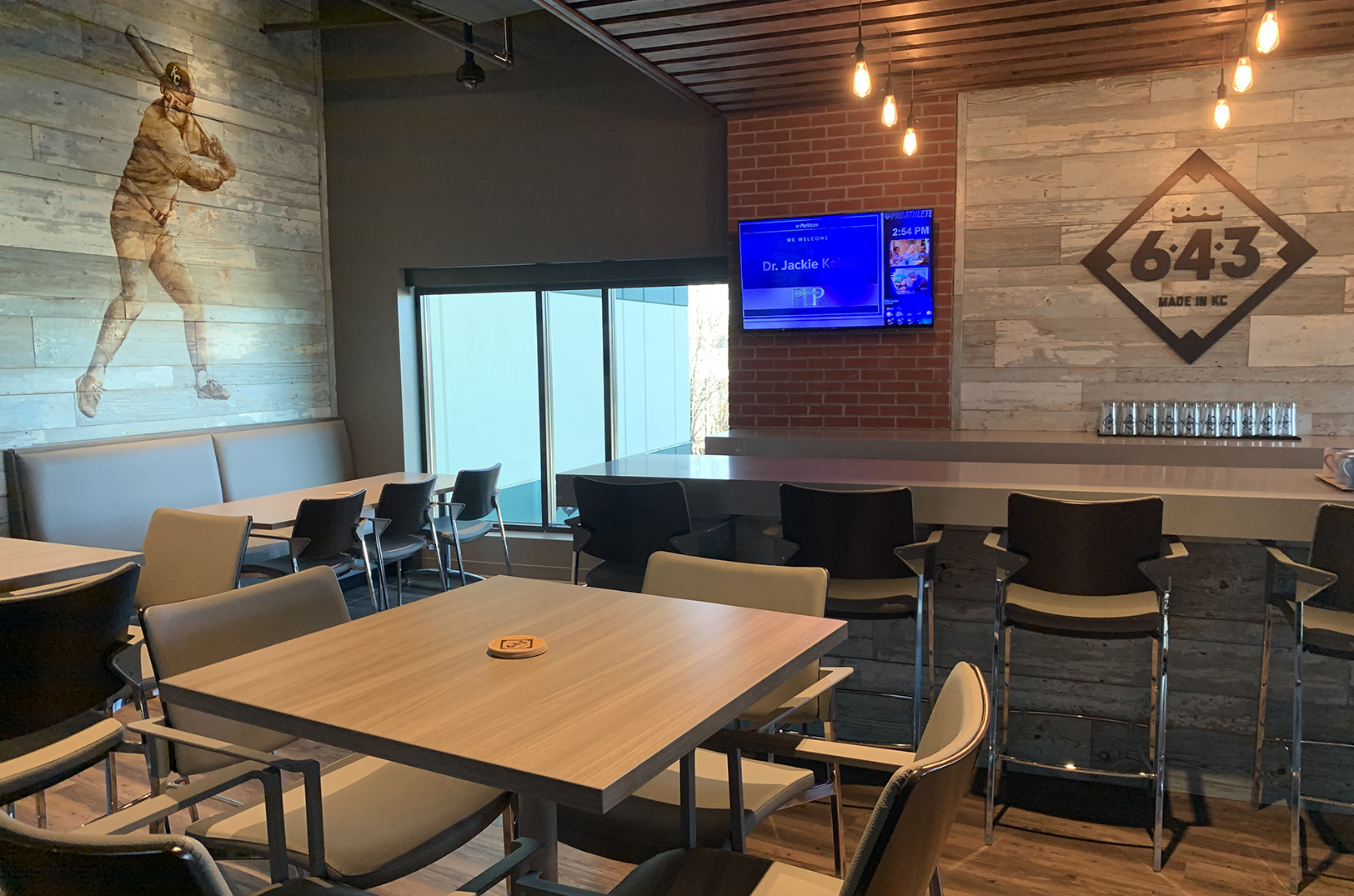
Now a legacy company that acts as a startup — it’s workplace north of the river boasts such amenities as a swimming pool, cafe, free lunch, sauna, library and full gym — Pro Athlete’s decision to acquire Routine Baseball is but another example of the company’s ability to pivot, Dowis said.
“We’ve done a couple of things in the last year that we hope is going to keep innovation at the forefront of what we’re doing,” he said, highlighting the company’s innovation lab — comprised of teams from within the company who collaborate on innovative ways to push it forward.
Such a line of thinking kept the company open to expanding its offerings — despite having scaled back in the past, Dowis acknowledged.
“We’ve been laser focused for over 20 years just selling bats and just selling gloves and you know, this is definitely a new challenge,” he said, noting intense excitement and a dose of nerves.
“We’ve never been in the lifestyle apparel space, so we’ve got a lot to learn for sure,” Dowis added. “But the main factor in this acquisition was the ability to have our own brand with our own products.”
And while chasing growth isn’t always easy, no company would ever score big if they didn’t take risks, he said.
“We’re obviously realists in the fact that there’s a lot of things we don’t know how to do. There’s always that worry in the back of your mind that you won’t be able to do what you did with the previous business,” Dowis said. “But I think we’re ready. We’ve got good people. People seem excited for a new challenge and just kind of ready to try something new.”
For founders eager to sell their startup or larger companies looking to buy, Dowis advised one thing: let relationships drive the deal.
“We tried to really understand the business and the people running the business first. … We weren’t trying to pull one over on them and they weren’t trying to pull one over on us,” he said, noting it was important to connect with the founders of Routine Baseball, opening the door for them to remain part of the company’s story.
“We wouldn’t be able to acquire their company had they not taken that chance to start it back in 2011,” Dowis said. “We were obviously interested in the brand on the surface, but we really tried to dig in and you understand more about the business, talk to the employees, and really understand what makes it tick.”

Featured Business

2020 Startups to Watch
stats here
Related Posts on Startland News

mySidewalk CEO steps down, Stephen Hardy takes the helm
Nick Bowden, the former CEO of Kansas City tech firm mySidewalk, recently resigned from the firm he co-founded. Effective immediately, the company’s former COO, Stephen Hardy, will serve as CEO, Hardy told Startland News. Bowden will remain with the company as an advisor and will serve as a board member. “The company has my full…

Roberts: Court action to make KC a patent troll haven will squash innovation
Editor’s note: Melissa Roberts is urging the Kansas City business community to sign a petition that aims to halt an effort to establish Kansas City as an area friendly to “patent trolls.” The commenting period on the proposed changes closes 5 p.m., Nov. 26. The opinions in the commentary are the author’s alone. I used…

Nick Ward-Bopp: Local maker community harkens to KC’s creative roots
Editor’s Note: Nick Ward-Bopp co-manages the MakerSpace at the Johnson County Library, helping the community use tools for digital fabrication like 3D printers and laser cutters. He also spends his nights and weekends co-running Maker Village — a small wood and metal shop in Midtown Kansas City — where it focused on building community through workshops…

Kansas City’s slow, steady entrepreneurial growth nabs No. 23 ranking
For the second year in a row, Kansas City maintained its rank as No. 23 out of 40 metros in entrepreneurial activity, according to the Ewing Marion Kauffman Foundation’s 2016 Main Street Entrepreneurship report. The annual report covers the rate of business owners, established small business density, survival rate and more. These metrics are calculated…