

Clark Hunt: Super Bowl-bound KC Chiefs didn’t get it right overnight; founders won’t either
January 20, 2020 | Austin Barnes and Tommy Felts

If entrepreneurs want to win like the Kansas City Chiefs, they must be unafraid of pivoting, explained Clark Hunt.
“The National Football League is extremely competitive and it’s very difficult to win games consistently — even with a talented roster. But it is impossible to win if everyone is not aligned and working together to achieve the organization’s goals,” Hunt, Chiefs chairman and CEO, told a crowd gathered in February 2019 for a briefing on the KC Rising initiative.
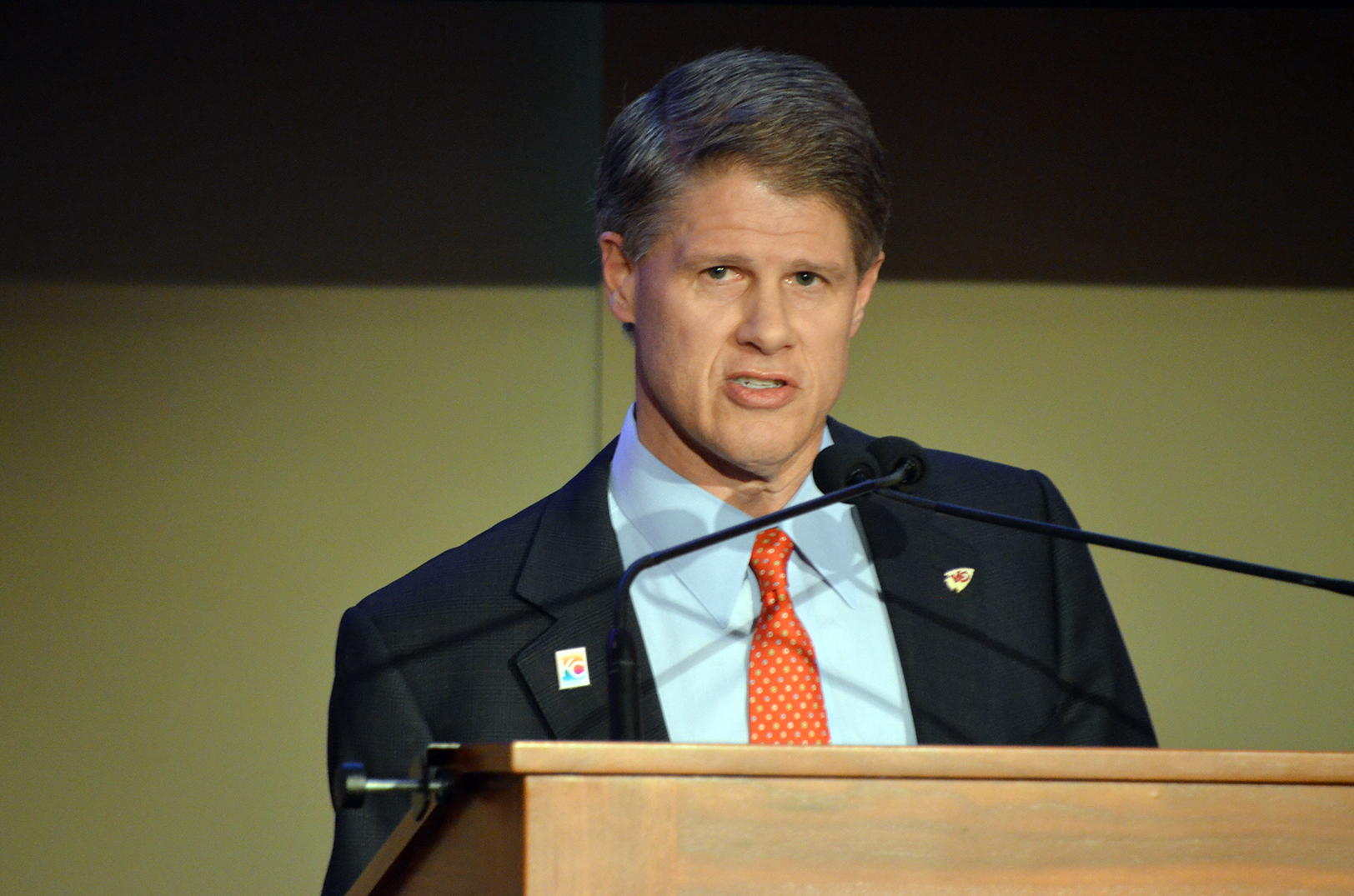
Clark Hunt, Kansas City Chiefs
His words nearly a year ago came after a hard-fought season that saw the 2018 Chiefs fall just short in the playoffs. Today, Kansas City is in a different position: preparing for its first trip to the Super Bowl in more than 50 years, secured Sunday in a 35-24 victory over the Tennessee Titans.
The Chiefs’ slow-build to redemption didn’t come overnight, Hunt said, “it required a long term vision and an outstanding team of people working together toward a common goal.”
Such a process has proven effective — with team cohesion more important than ever — Patrick Mahomes, the Chief’s MVP quarterback, told Yahoo News ahead of Sunday’s the historic game.
“I’m not the only leader on this team. We all communicate with each other, I think that’s the great thing about this team,” Mahomes said.
Hunt echoed a similar sentiment in his remarks to Kansas City leaders, urging the region’s decision makers and keepers of innovation to reimagine their philosophy around team building.
“[Our success] wasn’t the result of a single individual … The team had fallen on hard times both on and off the field and we needed new leadership and a new direction,” he said, offering insight into the business side of running a sports franchise.
Part of the Chiefs’ shift in strategy included a new approach to recruiting, which ultimately landed the team a deal with Mahomes.
“We shifted our philosophy from a roster of veteran players assembled through free agency, to a roster largely assembled through the draft,” he said. ‘This allowed us to build a team of men who bled red and gold and were passionate about winning a championship in Kansas City.”
While startups and small businesses might not be headed for the Super Bowl, a similar focus on passion could make all the difference for founders and civic leaders working to build strong teams, Hunt said.
“[In 2007,] I was in our locker room before [a] game talking to our head coach at the time, Herm Edwards, and he said, ‘Clark, you know what the problem with this team is? We don’t have any Chiefs,’” Hunt recalled, noting the comment left him confused.
“He said, ‘No, we don’t have any Chiefs whose heart is really in it. These guys, a lot of them came here as free agents and they’re just here for the financial gain, not for the love of the club or the opportunity to win a championship.’”
Enlightened, Hunt was challenged for the first time to explore the importance of company culture, he explained.
“[From that moment on] we worked hard to create a culture of integrity and accountability throughout the operation, which required some difficult conversations and an honest look at where we were and where we wanted to be,” he said. “Most importantly, we made it a priority to bring in people who believed in the importance of the team, people who were willing to put the best interests of the collective above their individual interests.”
Such selflessness is the first quality operations should look for as they make leadership decisions, added Hunt.
“It’s not uncommon in professional sports organizations for the football side and the business side to not get along. But in our case, they work closely together and when they have disagreements, they work through them all toward our common goal,” he said, explaining the team’s commitment to shared vision and its work to avoid falling victim to an “I” mentality.
Beyond pivoting and strong team cultures, if founders, civic leaders and Kansas Citians want the region to win, they must embrace community, he said.
“It will take a total team effort and if we work together to achieve our goals, I know that we can be successful,” Hunt said.

Featured Business

2020 Startups to Watch
stats here
Related Posts on Startland News

Kauffman Foundation dishes $840K to 8 area accelerators
The Ewing Marion Kauffman Foundation is hitting the gas on its support of area accelerator programs. As part of the 2016 KC Accelerator Challenge, the Kauffman Foundation announced Tuesday that it’s awarded a total of $840,000 in grants to eight local venture accelerator programs. “Our goal is to increase entrepreneurial success in Kansas City through…

Efficiency, innovative home construction are cornerstones for Prairie Design Build
David Schleicher was just looking for something to get back on track. In 2012, the president of Prairie Design Build, a house building company located in Kansas City, had watched his then six-year-old business begin to suffer because of the recent recession. Schleicher was desperately seeking a way to keep his head above water, not…

Listen: When the grind gets gloomy, experts discuss mental health challenges and entrepreneurship
About 72 percent of entrepreneurs have self-reported mental health concerns, according to a study done by the University of California San Francisco. More specifically, about 30 percent of entrepreneurs experience depression and about 30 percent experience ADHD, the same study found. In recognition of Mental Health Awareness Month, Startland News and Think Big’s May Innovation…
6 tips and tricks to stay sane while scaling fast
Frequently taking on more demands and shirking personal care, entrepreneurs’ work-life balance often skews toward work. Deadlines, finding clients, making payroll and dozens of other stressors can put entrepreneurs at risk of mental illness or compound existing challenges. Furthermore, entrepreneurs are disproportionately affected by such issues as ADHD, bipolar disorder and depression, according to studies…