

Downtown innovation district: Developers envision 30-story Lightwell project as its own startup hub
October 2, 2019 | Austin Barnes and Tommy Felts
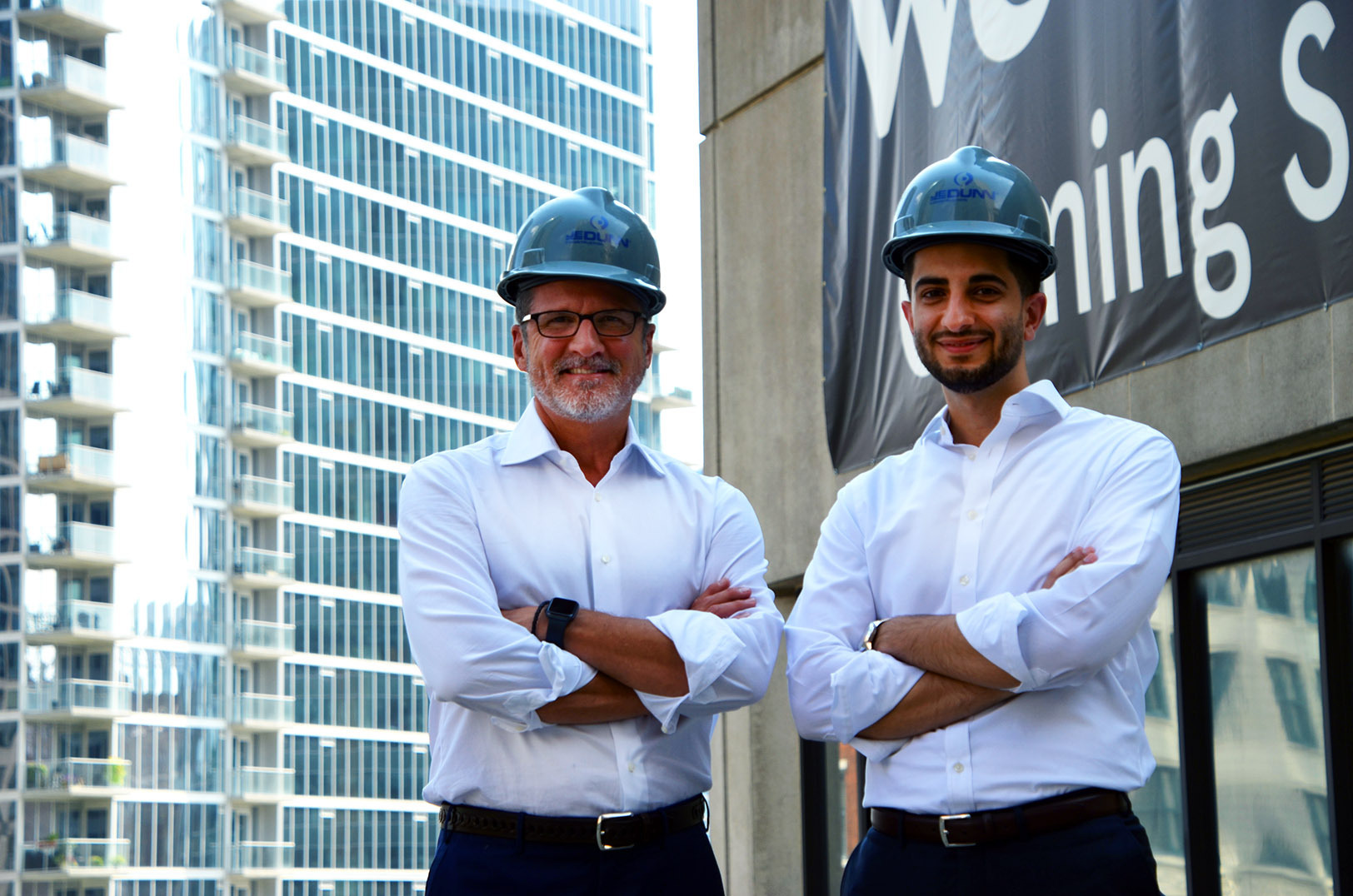
It’s possible the Lightwell building’s exterior hasn’t been cleaned since 1977, joked Tim Schaffer as he walked a vine-wrapped rooftop terrace that overlooks downtown Kansas City.
“It was totally unintentional, the way it came together,” Schaffer, president of AREA Real Estate Advisors, said of the multi-million-dollar office redevelopment project that’s quickly evolved into what Schaffer and the Lightwell team liken to a downtown innovation district.
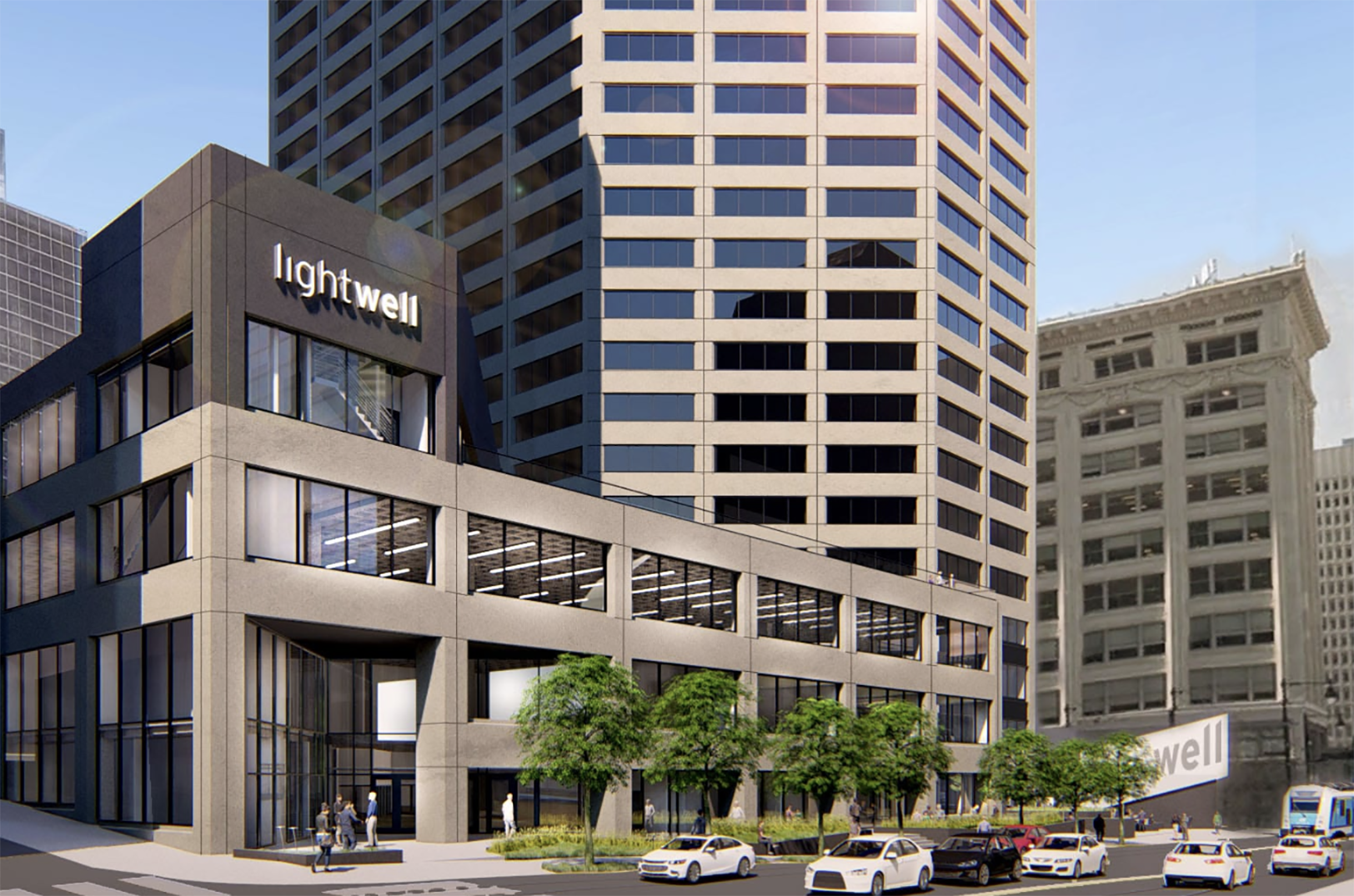
Lightwell building, downtown Kansas City
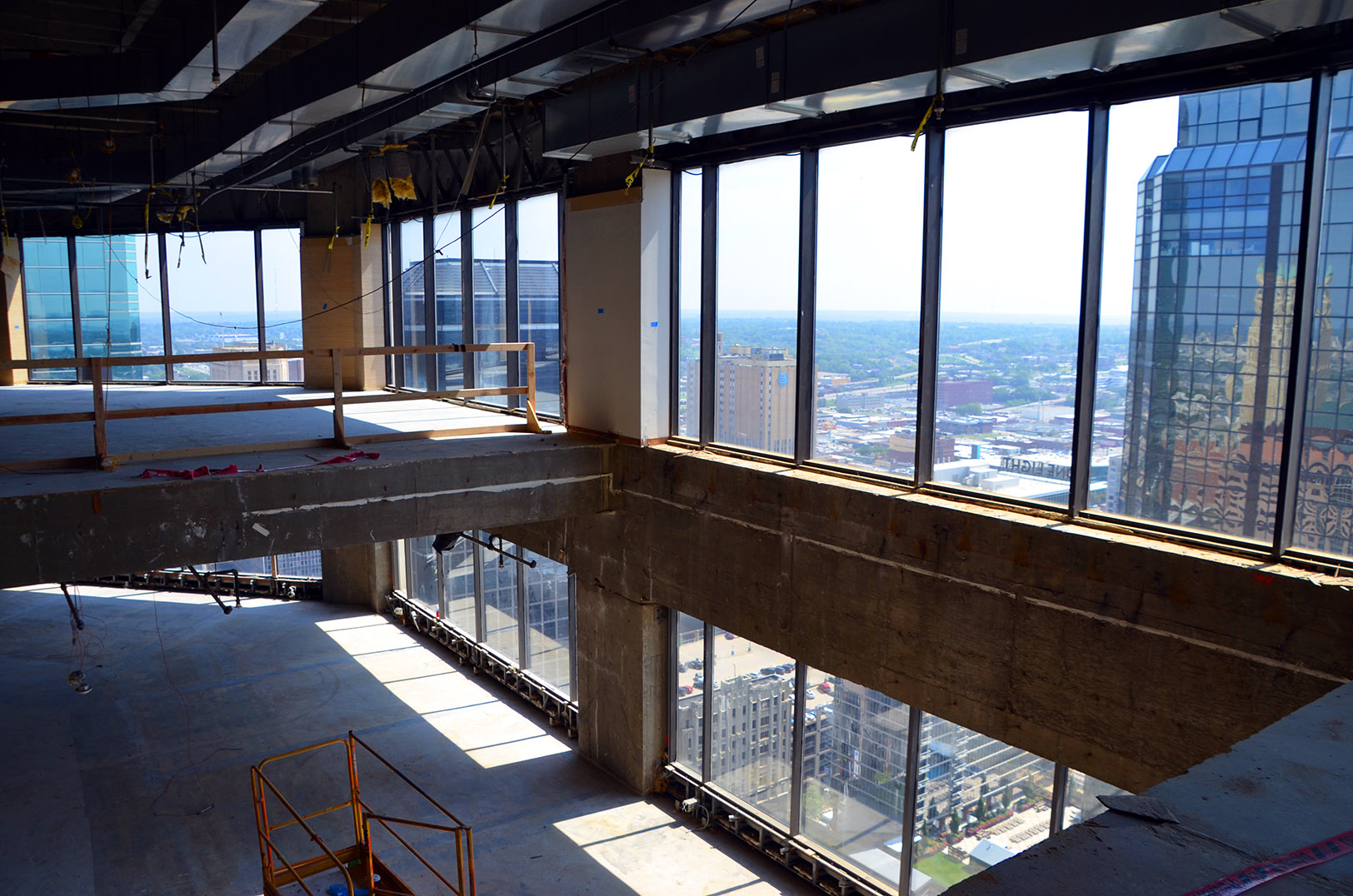
Beneath the 30-story former City Center Square building’s dated, wood-paneled walls and dust-drenched carpets lie polished concrete floors and pillars, exposed beams and floor-to-ceiling windows overlooking breathtaking views of the city’s skyline. More than an aesthetic, the blank-slate features signal the building’s modern rebirth and serve as a symbol of the redevelopment team’s commitment to severing ties with archaic approaches to corporate real estate, said Schaffer.
Where some simply see an aging vertical office complex that evolved from an indoor shopping mall into the home of numerous law firms — and a building whose history and unique features slipped from the public eye as newer high-rise projects emerged around it and deterioration set in — Schaffer and Basel Bataineh envision something more significant to Kansas City’s future, they said.
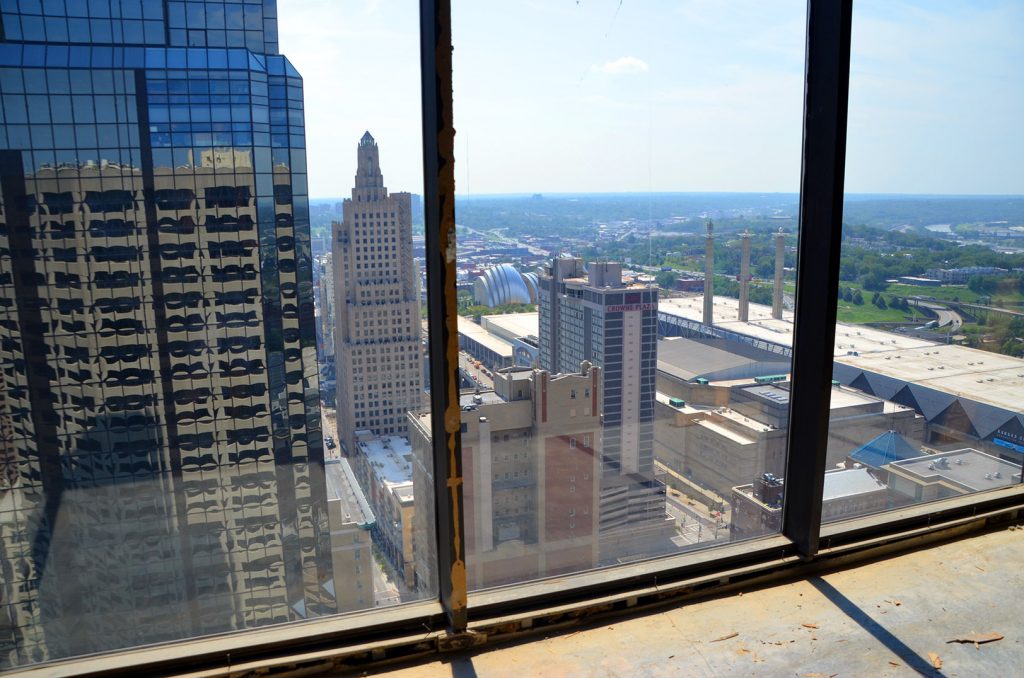
Lightwell
Lightwell is expected to provide a three-stage system for tech-growth in Kansas City — a school for tech talent, coworking space for startups and private office space for scaling companies, explained Bataineh, vice president at Somera Road, the New York-based commercial real estate investor working to redevelop Lightwell alongside AREA.
“If we’re going to have five tech companies upstairs that are having credible funding and are growing super fast, we need a school downstairs that’s producing employees to keep them growing,” he said.
“We want education going on in the building so that [students] can just get on the elevator and go up to their new job,” Schaffer added, noting the team’s overall vision for reimagining the decades-old building, which could include partnerships with such tech training programs as LaunchCode. The developers already locked a deal with WeWork to open a second Kansas City location, occupying more than 100,000 square feet of space between Lightwell’s third and fourth floors.
Click here to read more about WeWork’s second metro location, slated to open before the end of the year.
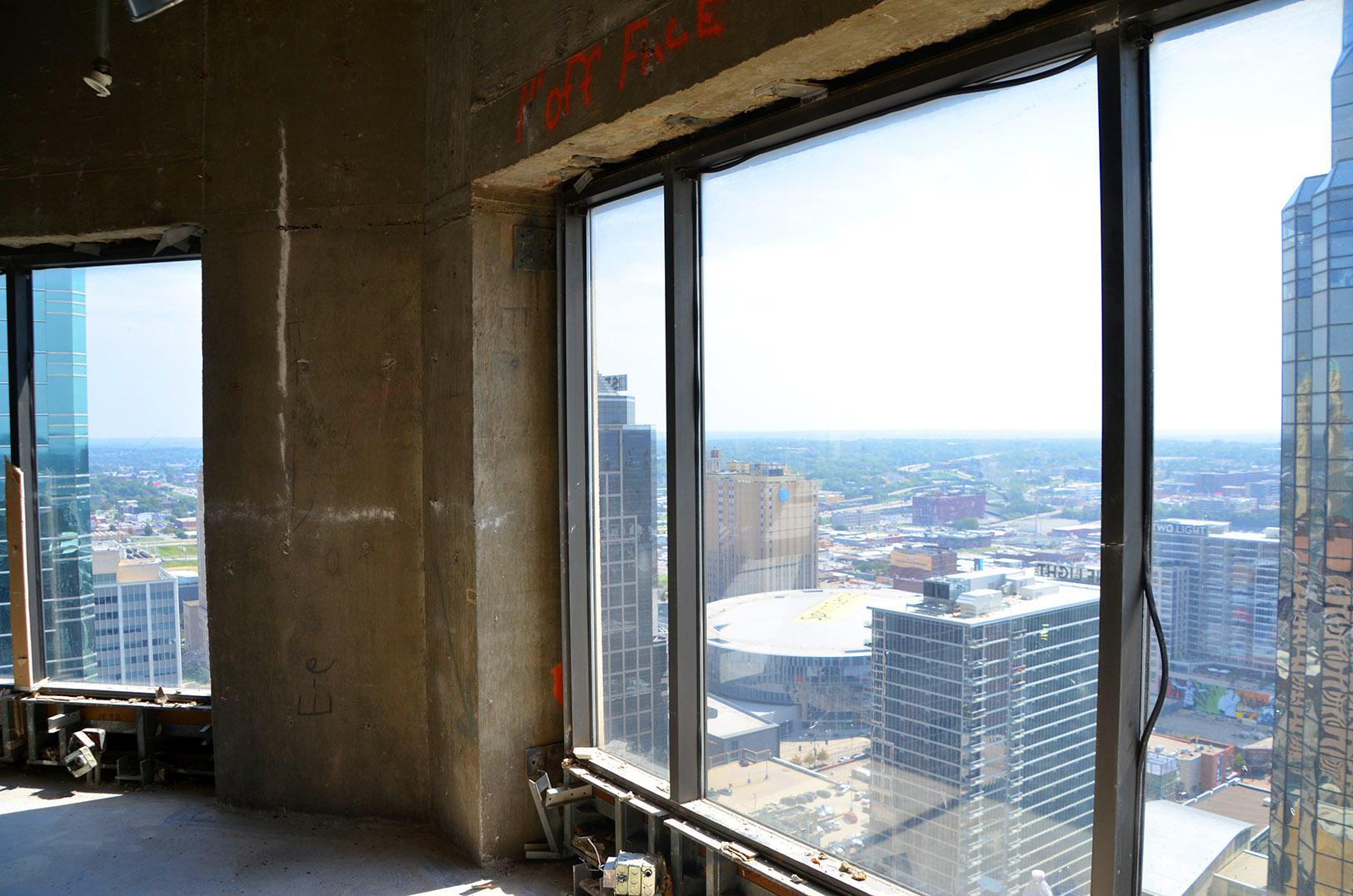
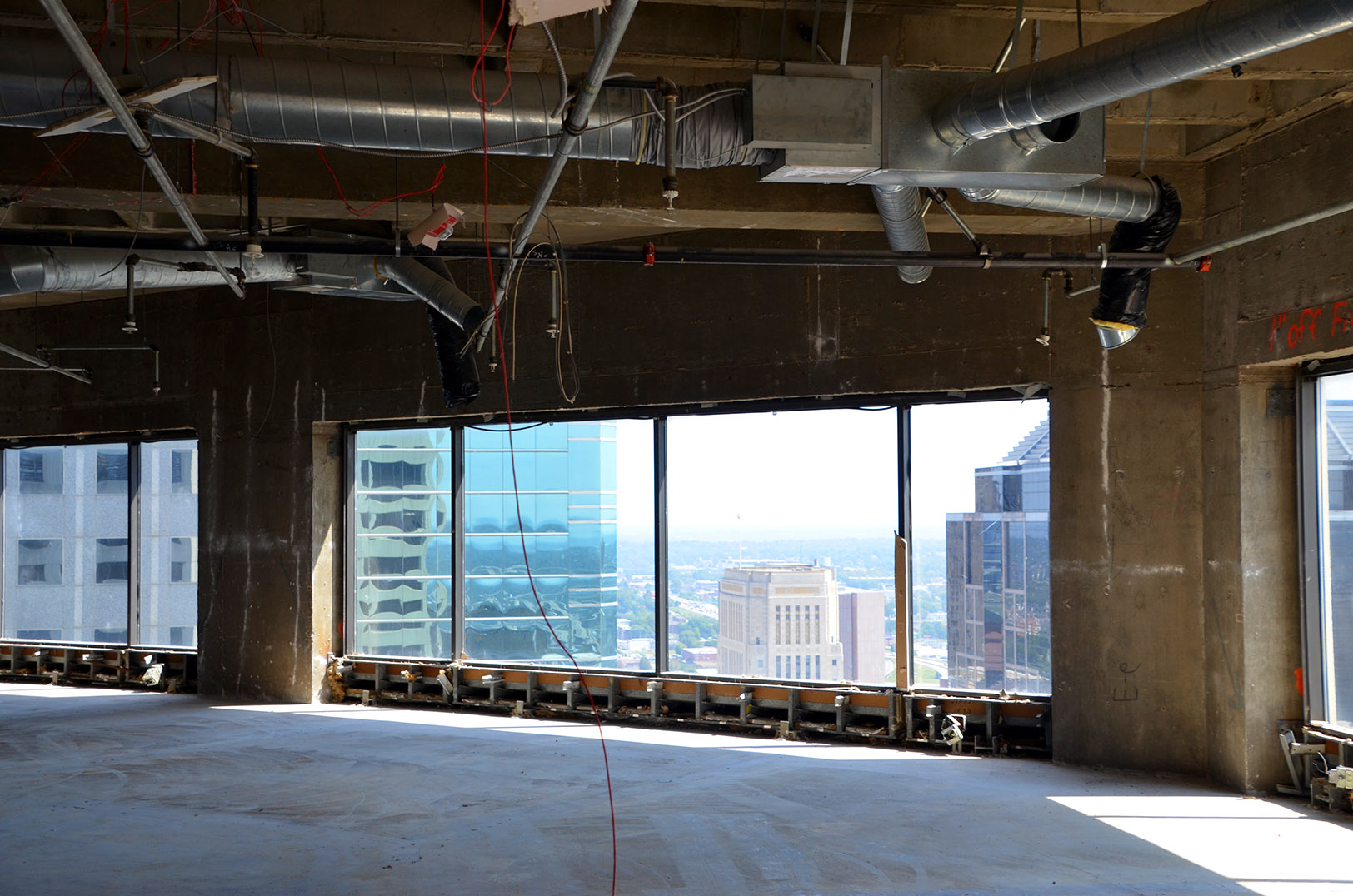
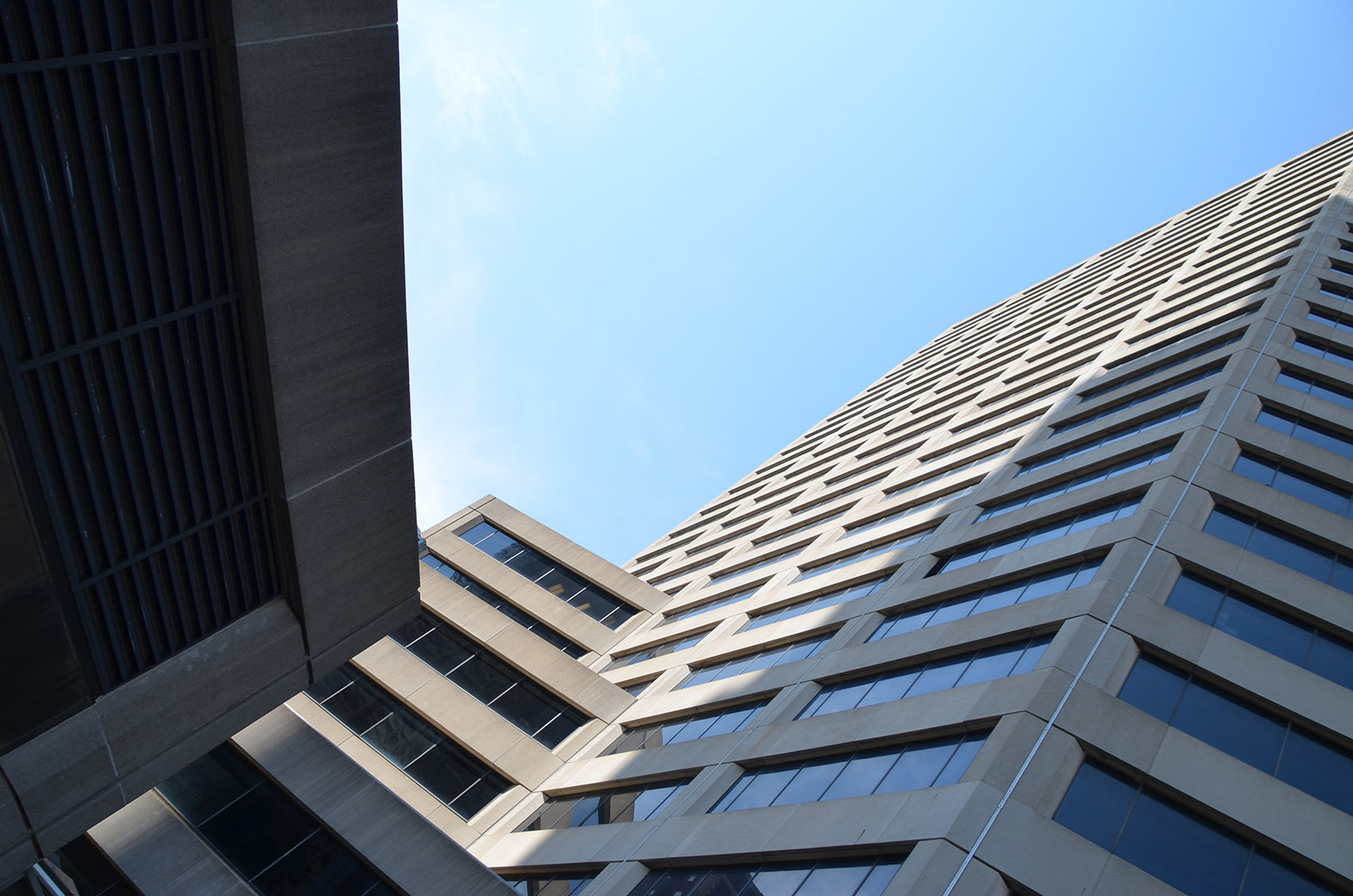
“[This model] helps us, helps them and helps the market,” Bataineh said, noting access to adequate and flexible office space as a growing need for entrepreneurs who want to drill down and build companies that exit.
Did you know?
The name of the Lightwell project comes from a city-block-spanning glass feature that illuminates some interior portions of the office development with natural light. Dating back to the building’s construction, the original lightwell is being replaced with an updated, cleaner version of the design as part of the Lightwell redevelopment.
“There wasn’t enough room for growing technology companies to have larger space in the Crossroads at an affordable cost,” he added.
“You have nice office space … but nothing that’s that cool or that different or that modern and that’s what we’re creating,” Bataineh said of what’s attracting startups to Lightwell.
Click here to read about BacklotCars recent relocation to a 20,000 square-foot space on the 15th floor of Lightwell.
Startup leaders with buy-in are taking notice of the momentum behind the emerging innovation district at Lightwell — including those at the wheel of another one of Kansas City’s most recognizable and heavily-funded tech startups, which is expected to announce a lease with Lightwell in the coming weeks, Schaffer teased.
“These are tech entrepreneurs who are trying to grow a business, not worry about real estate,” Bataineh said. “We’re trying to solve that problem for them.”
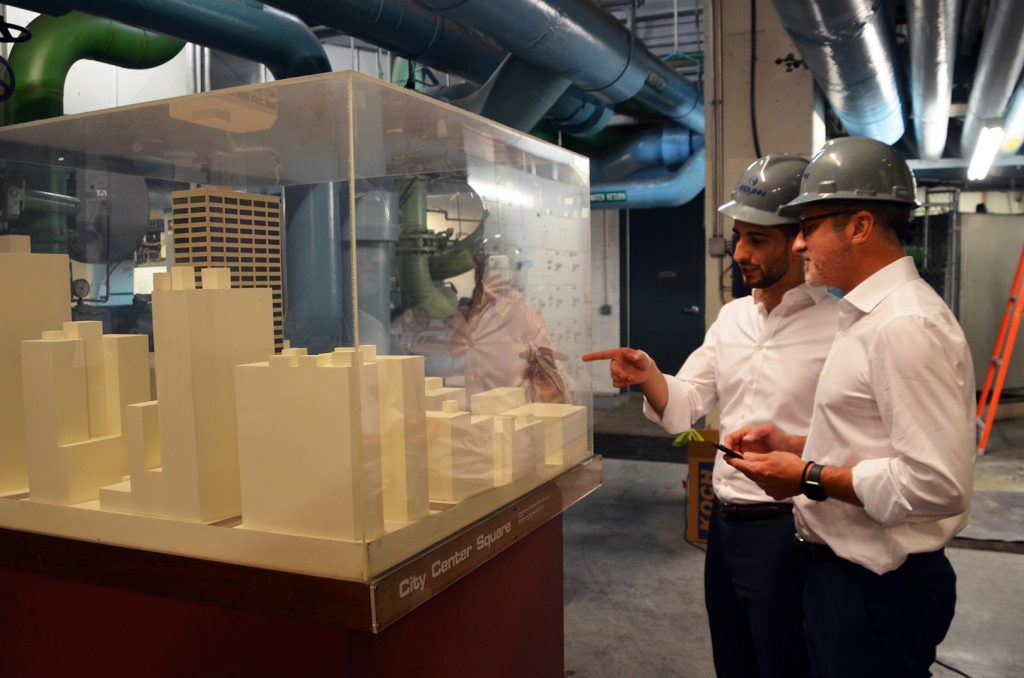
Basel Bataineh, Somera Road; and Tim Schaffer, AREA Real Estate Advisors
And it doesn’t end with the design of a modern and efficient office space, Batanieh added. As plans for Lightwell came together, he and Schaffer sat down with local founders and asked them about their needs, they said.
Rising high on the list of obstacles founders: drawing top tech talent to a still-fledgling Kansas City ecosystem.
“In combination with WeWork — which is naturally attracting startups — startups are going to be acquired, train new people … [this project] is creating an ecosystem that’s going to enable everyone’s growth,” Batanieh said. “We’re excited about it.”
Construction at Lightwell — which will also include a first floor food hall and event space — is expected to be complete in January 2020.

Featured Business

2019 Startups to Watch
stats here
Related Posts on Startland News

FCC head: Repealing net neutrality will boost innovation, investment; startups disagree
The Federal Communications Commission is preparing to eliminate regulatory rules that prohibit internet service providers from interfering with consumers’ access to web content. FCC chairman Ajit Pai announced in a Wall Street Journal op-ed that the regulatory body will vote Dec. 14 to repeal 2015 Obama-era regulations. That regulatory model, referred to as Title II,…

Bitten by Disney sharks, Roy Scott beats the odds with Healthy Hip Hop
When a potentially life-altering business deal suddenly vanished, Roy Scott didn’t get mad — he got funded. “Disney thought they were going to snuff us out, but all they did was put gasoline on this fire,” said Scott, founder of Kansas City-based H3 Enterprises (Healthy Hip Hop). Rewind. Starting his company with a live performance-based…

Governor-in-waiting talks startup funding, Amazon and why entrepreneurism is bigger than KC
The strongest person in the room isn’t necessarily the loudest, Jeff Colyer said. “Kansans are used to being overlooked,” he said. “My role as lieutenant governor was to be a little quieter. You give your best advice. And when decisions are made, you’re going to work to support them.” Soon, however, he’ll be the state’s…
Bus tech startup Transportant announces $11M in pre-sales at Lean Lab pitch night
School districts across North America are on board with Transportant — to the tune of $11 million in pre-sale agreements, co-founder John Styers said. The startup, which uses video-based technology to allow students, parents and school administrators to better monitor school buses, announced the milestone — $10 million over its goal of $1 million in…