

Watch: Tigersheep Friends creators build a ferociously off-beat, under-the-radar KC brand
August 6, 2019 | Rashi Shrivastava

From three-eyed leopards to strawberry cream giraffes, the creative minds behind Tigersheep Friends love illustrating off-beat versions of animals to keep their artistic passions alive, said Sarah Walsh.

Colin Walsh and Sarah Walsh, Tigersheep Friends
When the husband-and-wife duo started the company in 2011, they were looking for an alternate creative outlet, said Sarah Walsh, co-founder of the online product line.
Click here to check out Tigersheep Friends.
“I loved my job at Hallmark, but I really needed something to call my own and to have a purpose. It’s fun to make something … And you’re like, ‘I don’t know, maybe someone else will like it.’ So you put it up online,” she said about the couple’s quirky designs that are sold on Etsy as well as at select retail shops.
The name “Tigersheep” bounced across a conversation with friends, said co-founder Colin Walsh before they realized the juxtaposition would be an apt name for their company.
Though Tigersheep is their “side hustle,” sales of their products have been booming, he said.
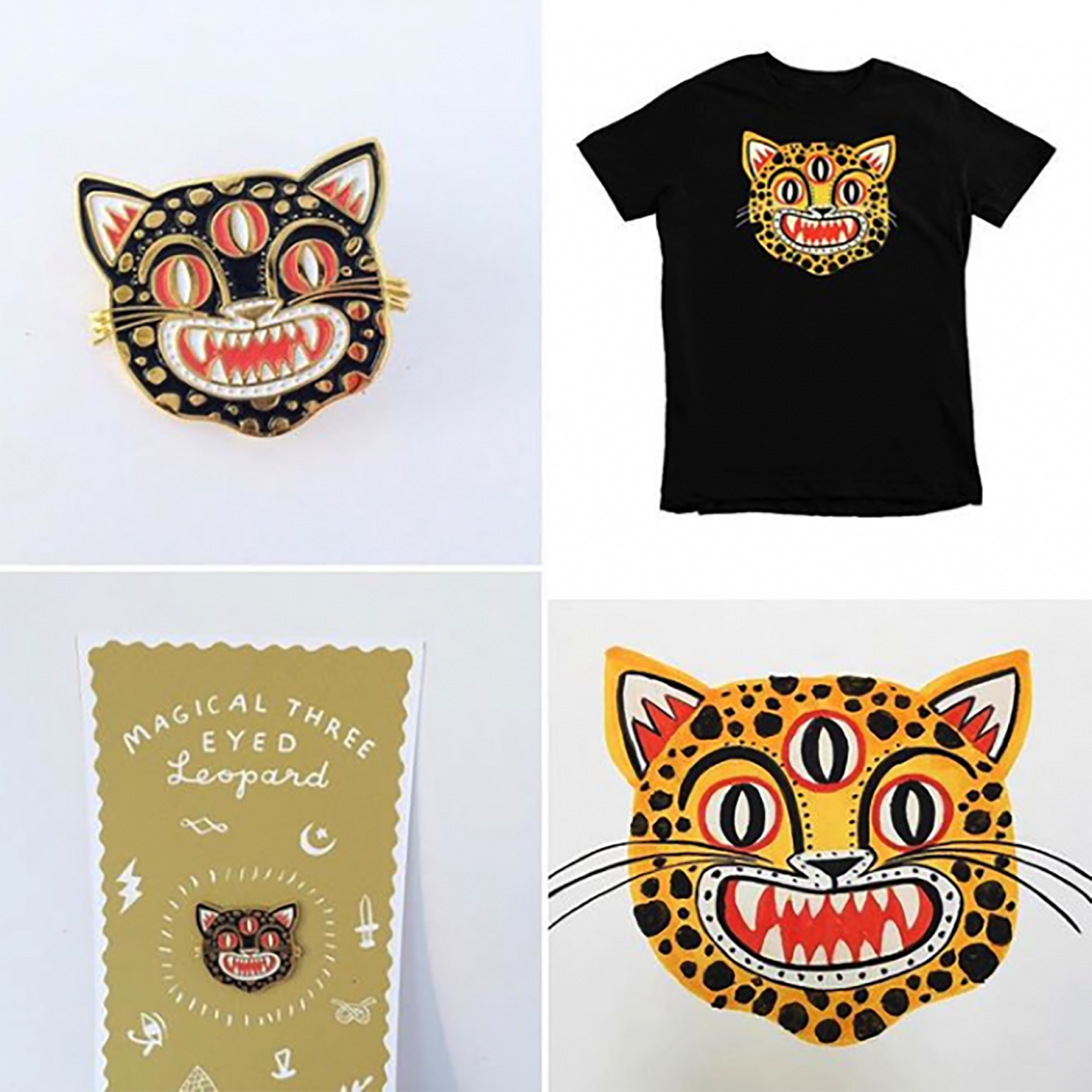
Tigersheep Friends
“We try to put in as many hours as we can and burn the midnight oil. Slowly, we’ve started receiving more and more orders from all over the world,” Colin Walsh said, recalling that the couple sold 67 pieces of their best seller, the three-eyed leopard design.
The two product designers-turned entrepreneurs found creative inspiration in each other before they got married, said Sarah Walsh.
“I was always into graphic design and I always drew even when I was a kid, but I hadn’t done it in a while. And she made me remember why I wanted to be an artist in the first place,” Colin Walsh said.
Tigersheep Friends partners with a Los Angeles based company called Printful, which produces their illustrations on everyday products like coffee mugs, T-shirts, pillows and tote bags, he said.
“When we make art we keep in mind that this tiger style pillow will be on somebody’s couch brightening up their homes or this Dire Wolf painting will be on somebody’s wall,” the founders said, completing each other’s sentences.
Craft fairs like Strawberry Swing in Kansas City give artists more exposure and opportunities for community building, said Colin Walsh.
“Just going to these pop up shops and Strawberry Swing, we’re building our brand. We have fans now that come by our booth, and they’re really stoked about the fun orange on the bike, or the fun new pillows that we’re making,” Colin Walsh said.
This story was produced through a collaboration between Missouri Business Alert and Startland News.

Featured Business

2019 Startups to Watch
stats here
Related Posts on Startland News

Novel Capital teams with Crux KC to offer growth-focused marketing to early-stage tech companies
An exclusive partnership between two Kansas City-based innovators is expected to help remove a traditional financial hurdle to business growth, said Ethan Whitehill, president and chief strategy officer for the KC Chamber-lauded marketing firm Crux KC. The collaboration between Crux and Overland Park-headquartered capital provider Novel Capital is expected to offer B2B SaaS and tech…
Neighborhood smart cans help Kansas Citians save the planet from their kitchens
Newly introduced composting technology is already turning new ground in Kansas City, Kristan Chamberlain said, with more solar-powered compost cans arriving later this spring across the metro’s urban landscape. Her social venture, KC Can Compost, installed three of the devices in October — free to use for KCMO residents wanting to deposit their soil-making food…

Voodoo Volleyball bounces back in OP: Father-daughter duo doubles as new venture’s setters
Quinn Austin put several sports to the test as a preteen — racing from basketball practice to softball to volleyball. But she latched on to just one. “Volleyball. It was my sport. Everyone was having a good time,” she said. “We just loved the cheers — a cheer when we got a hit, a cheer…

Black farmers are losing ground in the fight to feed their communities, advocates say
More than a century of systemic land dispossession and discriminatory practices has left Black farmers with less than 0.6 percent of U.S. farmland — less than a third of the 16 million acres they operated in 1910, according to local urban farming advocates. They gathered Tuesday at Independence Boulevard Christian Church to confront this history…