

Report: Kansas, Missouri economies hinge on homegrown startups, not border war wins
August 29, 2019 | Rashi Shrivastava
Kansas and Missouri must “grow from within” if the neighboring states aim to successfully confront structural challenges that face their economies, said Amy Liu, a contributor at national think tank the Brookings Institution.
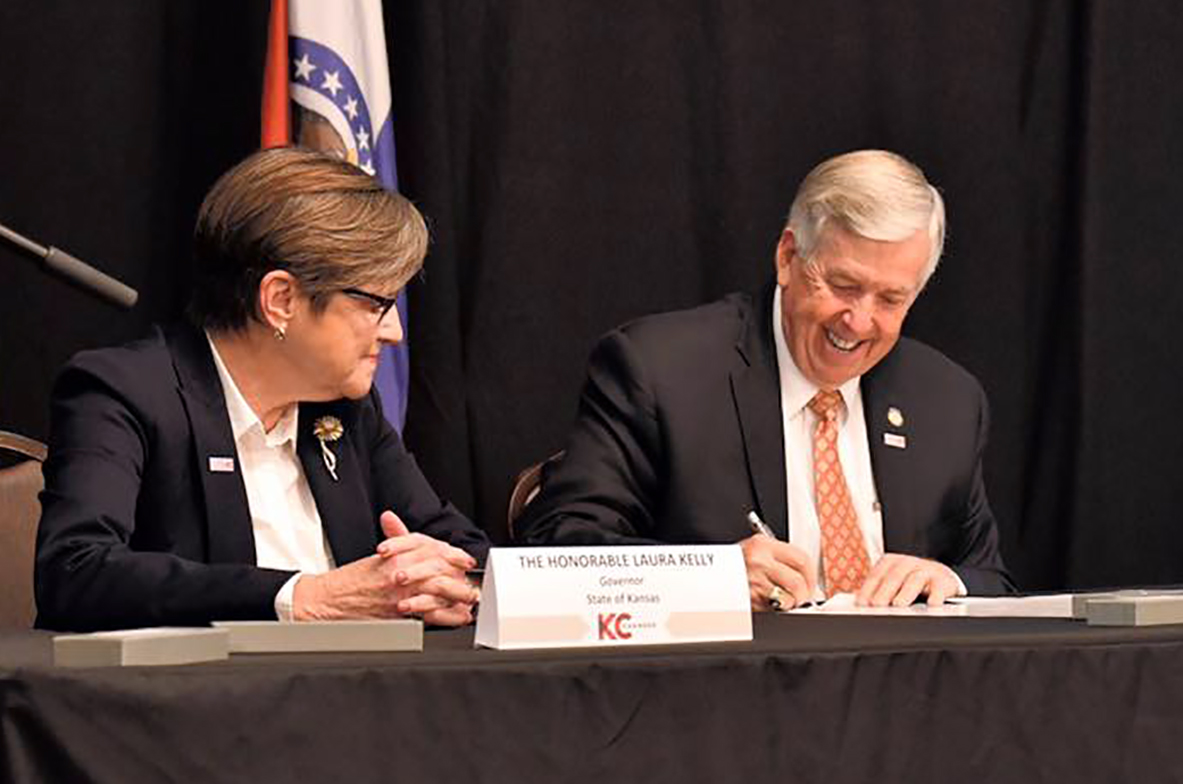
Govs. Laura Kelly, D-Kansas, and Mike Parson, R-Missouri
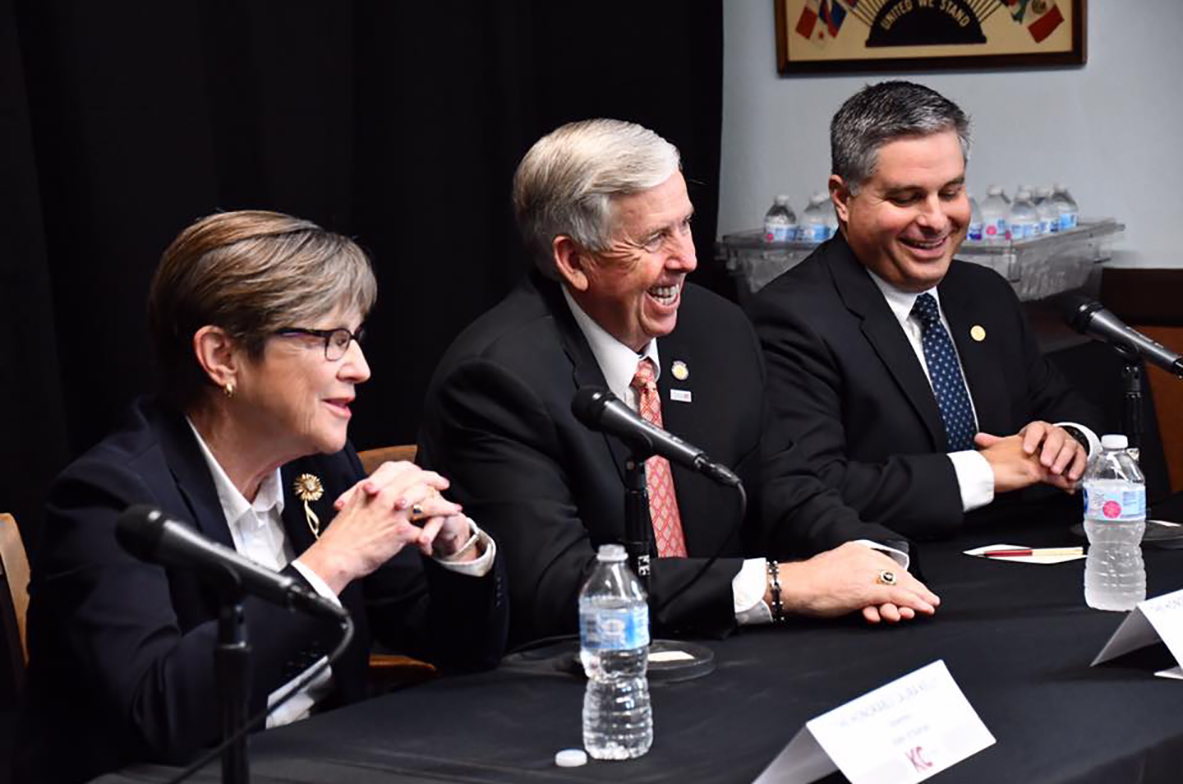
The “historic handshake” between Govs. Laura Kelly, D-Kansas, and Mike Parson, R-Missouri, earlier this month marked the symbolic end to an ongoing economic border war that produced headline-making wins for the states in a decades-long game of tit for tat — but little actual economic development or job creation in either state, according to previous reporting.
A new era of collaboration for Kansas and Missouri should focus on job growth linked to the expansion of existing businesses and startups — not from business relocations and tax incentive-based lures, said Liu.
“The opportunity is now there for both states to put the unbalanced tax abatements and hollow business relocations in the past,” she said. “They need to move forward vigorously by focusing on building homegrown talent, enriching education opportunities, and ensuring that each state’s workforce can access quality transportation and housing.”
The two Midwest states are among those geographic economies that lack the “critical mass of knowledge assets” like applied research and development capability and specialty skilled workers, Liu said. And while efforts like innovation districts in communities like Kansas City and St. Louis seek to address such challenges, statewide and even multi-state initiatives are needed to secure long-term wins in the world of rapidly-advancing innovation.
Click here to read about how communities and developers are working to craft the right formula for innovation hubs in Kansas City.
“We are in the midst of a winner-take-most economy where superstar cities like San Francisco, San Jose, Austin, and Boston are capturing an ever-growing share of the nation’s innovation jobs and talent,” Liu said.
Another trend putting Kansas and Missouri at risk: automation of jobs, she said, noting a quarter of jobs in the two bordering states are at “high-risk” of automation, according to a report published by Brookings.
“Leaders must embrace a vision of regional economic development that is comprehensive in scope, collaborative in spirit, and inclusive, improving incomes and employment for everyone, no matter their race or zip code,” Liu said.
This story was produced through a collaboration between Missouri Business Alert and Startland News.


2019 Startups to Watch
stats here
Related Posts on Startland News

DEG execs reflect on $100M+ exit: Join an armada before success puts a target on your back
Riding into battle solo won’t help a company win the war that is business, Neal Sharma told a crowd of ACG Kansas City members gathered to hear details behind the exit of homegrown marketing giant DEG. “One of the things we realized three years ago — about DEG — is it was a completely successful, self…

KC Outpost at SXSW: LaunchKC sparking interest in Kansas City-fueled Next-Gen tech talk
LaunchKC has landed in Austin for SXSW and is planting a flag in the ground for Kansas City this weekend, said Drew Solomon. Set for Sunday at the popular bar Maggie Mae’s in Austin, KC Outpost returns with presentations featuring expert speakers from Virgin Hyperloop One, Garmin, FishTech Group, Mastercard and other high-profile organizations, said…
Thirsty Coconut buys country’s worth of smoothie machines, hops state line
When opportunity knocks, entrepreneurs must throw risk out the window and do whatever it takes to open the door, said Luke Einsel. “[This was] really the deal of a lifetime,” said Einsel, founder and CEO of Thirsty Coconut, detailing a business deal he struck with 7-Eleven stores across Mexico late last year. The transaction saw…

WIRED together: How mentorship led 22 women to a million-dollar investment
Collaboration among like-minded women forms a dangerous advantage, said Sheryl Vickers and Audrey Navarro. The duo helped found WIRED — Women in Real Estate Development — to foster mentorship and investment among women in the male-dominated and individualistic commercial real estate world. “We believe we have a leg up in the industry because that siloed,…