

Report: Kansas, Missouri economies hinge on homegrown startups, not border war wins
August 29, 2019 | Rashi Shrivastava
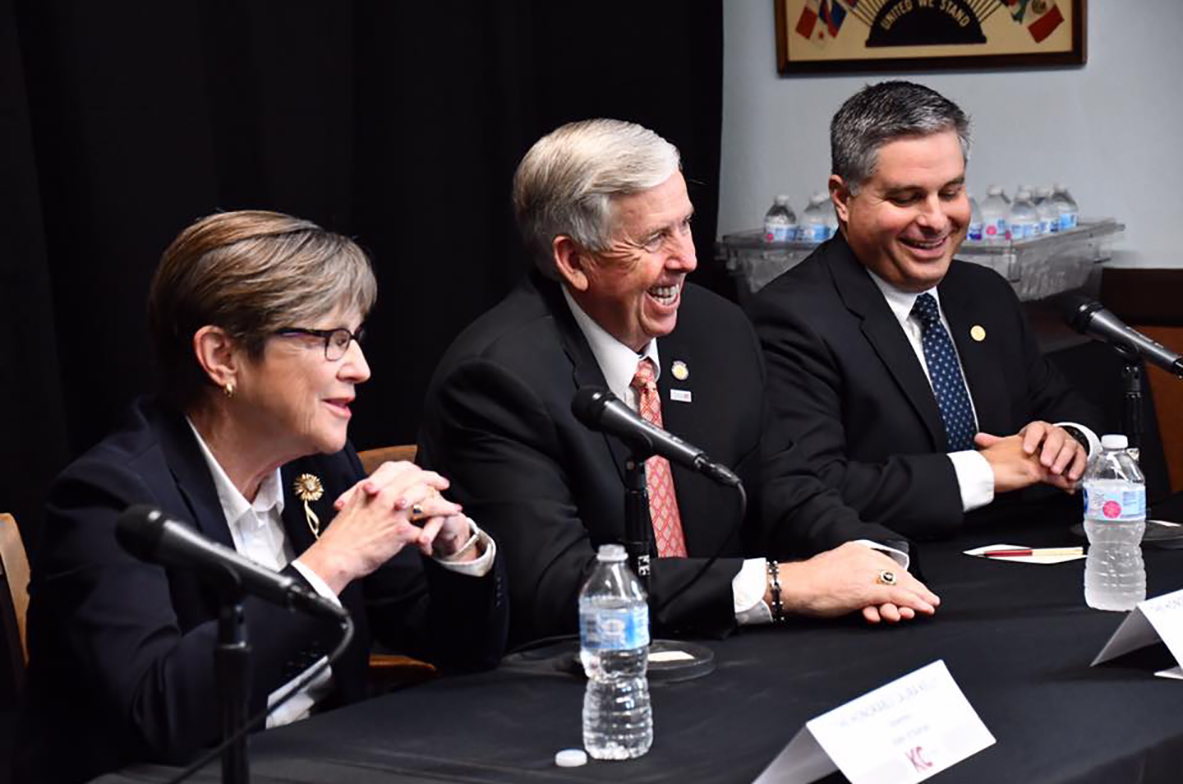
Kansas and Missouri must “grow from within” if the neighboring states aim to successfully confront structural challenges that face their economies, said Amy Liu, a contributor at national think tank the Brookings Institution.
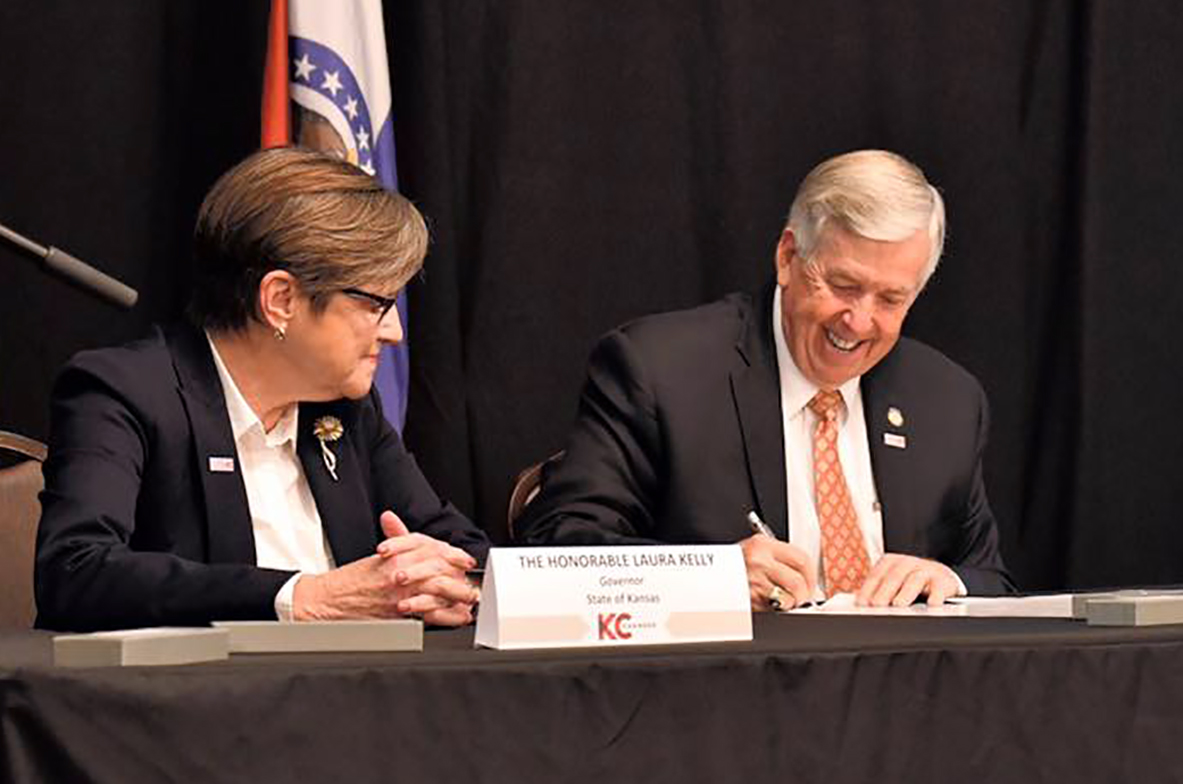
Govs. Laura Kelly, D-Kansas, and Mike Parson, R-Missouri
The “historic handshake” between Govs. Laura Kelly, D-Kansas, and Mike Parson, R-Missouri, earlier this month marked the symbolic end to an ongoing economic border war that produced headline-making wins for the states in a decades-long game of tit for tat — but little actual economic development or job creation in either state, according to previous reporting.
A new era of collaboration for Kansas and Missouri should focus on job growth linked to the expansion of existing businesses and startups — not from business relocations and tax incentive-based lures, said Liu.
“The opportunity is now there for both states to put the unbalanced tax abatements and hollow business relocations in the past,” she said. “They need to move forward vigorously by focusing on building homegrown talent, enriching education opportunities, and ensuring that each state’s workforce can access quality transportation and housing.”
The two Midwest states are among those geographic economies that lack the “critical mass of knowledge assets” like applied research and development capability and specialty skilled workers, Liu said. And while efforts like innovation districts in communities like Kansas City and St. Louis seek to address such challenges, statewide and even multi-state initiatives are needed to secure long-term wins in the world of rapidly-advancing innovation.
Click here to read about how communities and developers are working to craft the right formula for innovation hubs in Kansas City.
“We are in the midst of a winner-take-most economy where superstar cities like San Francisco, San Jose, Austin, and Boston are capturing an ever-growing share of the nation’s innovation jobs and talent,” Liu said.
Another trend putting Kansas and Missouri at risk: automation of jobs, she said, noting a quarter of jobs in the two bordering states are at “high-risk” of automation, according to a report published by Brookings.
“Leaders must embrace a vision of regional economic development that is comprehensive in scope, collaborative in spirit, and inclusive, improving incomes and employment for everyone, no matter their race or zip code,” Liu said.
This story was produced through a collaboration between Missouri Business Alert and Startland News.


2019 Startups to Watch
stats here
Related Posts on Startland News

We Grow KC investment summit aims to harness opportunity zones to empower neighborhood social fabric
Investment is a two-way street that can have a positive impact on both investors and community residents, said Dianne Cleaver. A new gathering — the June 26-27 We Grow KC Opportunity Zones Investor Summit — aims to bridge the potential divide between such neighbors with the back of Cleaver’s Urban Neighborhoods Initiative, the Ewing Marion…

USDA moving two key agencies to KC, expected to bring 568 new jobs to the animal health corridor
Corporate and government leaders agree: Kansas City is positioned at the hub of innovation in the animal health space, they said Thursday, announcing the metro has been chosen as the new home of two federal agencies. “Kansas City is a city with a small town feel, which makes it a great place to build a…

Local Legends unplugs Westport eSports gaming center; founder vows his vision won’t be reduced by May shooting
The doors at 3933 Main St. are locked tight, but the startup journey once housed inside them is far from over, teased AbdulRasheed Yahaya. “Local Legends isn’t going anywhere … unless we’re talking about the video game truck. That’s going everywhere,” said Yahaya, owner of Local Legends Gaming — an eSports and gaming business that…
Missouri governor signs bill to end KC ‘border war,’ awaits Kansas response
Missouri Gov. Mike Parson signed a bill Tuesday placing restrictions on tax incentives offered to businesses moving from certain counties in Kansas to Missouri. The bill represents a step toward ending the economic development “border war” between the two states. “This is really about being competitive with real competitors,” said Parson, who was in Kansas…