

Report: Kansas, Missouri economies hinge on homegrown startups, not border war wins
August 29, 2019 | Rashi Shrivastava
Kansas and Missouri must “grow from within” if the neighboring states aim to successfully confront structural challenges that face their economies, said Amy Liu, a contributor at national think tank the Brookings Institution.
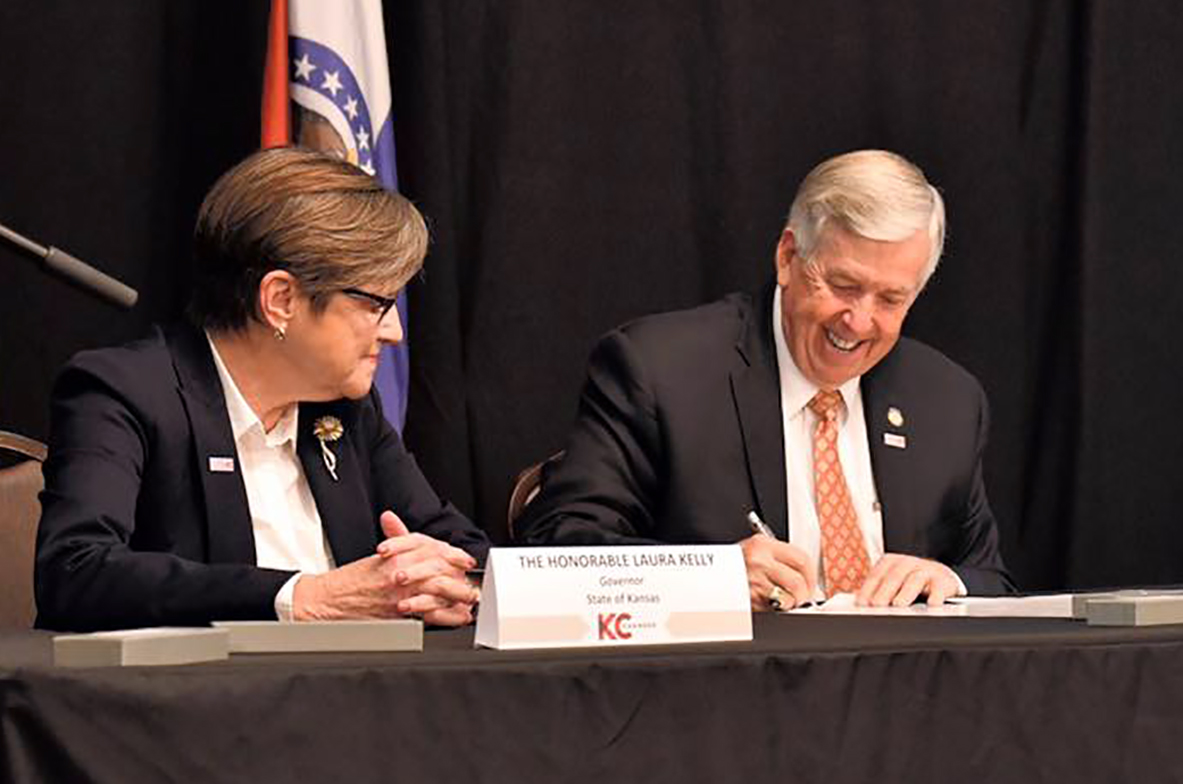
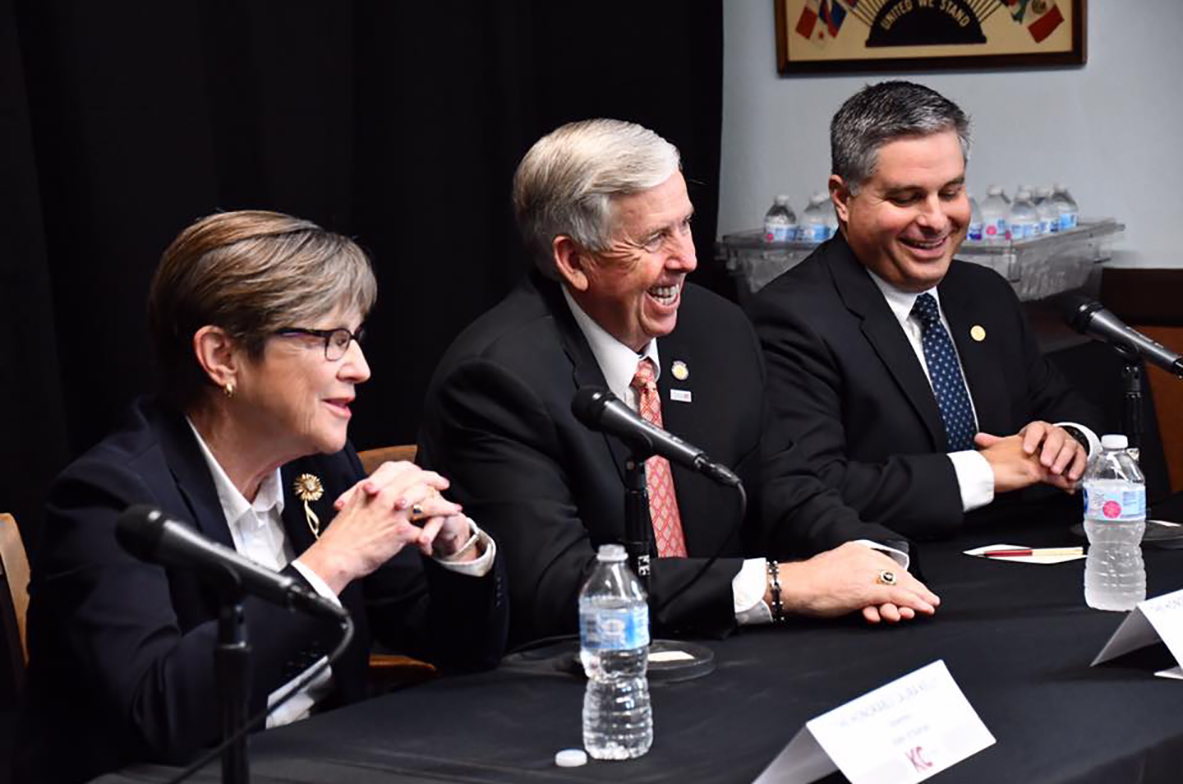
Govs. Laura Kelly, D-Kansas, and Mike Parson, R-Missouri
The “historic handshake” between Govs. Laura Kelly, D-Kansas, and Mike Parson, R-Missouri, earlier this month marked the symbolic end to an ongoing economic border war that produced headline-making wins for the states in a decades-long game of tit for tat — but little actual economic development or job creation in either state, according to previous reporting.
A new era of collaboration for Kansas and Missouri should focus on job growth linked to the expansion of existing businesses and startups — not from business relocations and tax incentive-based lures, said Liu.
“The opportunity is now there for both states to put the unbalanced tax abatements and hollow business relocations in the past,” she said. “They need to move forward vigorously by focusing on building homegrown talent, enriching education opportunities, and ensuring that each state’s workforce can access quality transportation and housing.”
The two Midwest states are among those geographic economies that lack the “critical mass of knowledge assets” like applied research and development capability and specialty skilled workers, Liu said. And while efforts like innovation districts in communities like Kansas City and St. Louis seek to address such challenges, statewide and even multi-state initiatives are needed to secure long-term wins in the world of rapidly-advancing innovation.
Click here to read about how communities and developers are working to craft the right formula for innovation hubs in Kansas City.
“We are in the midst of a winner-take-most economy where superstar cities like San Francisco, San Jose, Austin, and Boston are capturing an ever-growing share of the nation’s innovation jobs and talent,” Liu said.
Another trend putting Kansas and Missouri at risk: automation of jobs, she said, noting a quarter of jobs in the two bordering states are at “high-risk” of automation, according to a report published by Brookings.
“Leaders must embrace a vision of regional economic development that is comprehensive in scope, collaborative in spirit, and inclusive, improving incomes and employment for everyone, no matter their race or zip code,” Liu said.
This story was produced through a collaboration between Missouri Business Alert and Startland News.


2019 Startups to Watch
stats here
Related Posts on Startland News

Halo championship arrives downtown as KC-built esports team ‘pioneers a dynasty’
KC Pioneers gain support of Chiefs, Charlie Hustle and other hometown household names for its #MyCity campaign as Kansas City hosts major esports tournament It’s time to showcase Kansas City’s esports and tech community on a global scale, said Mark Josey — and what better way to do so than with a worldwide tournament hosted…
Meet the KC Chamber’s Top 10 for 2022: One will be the next ‘Small Business of the Year’
From a rapidly expanding restaurant chain to a 24/7 daycare facility to a workforce training and information technology leader building a statewide footprint, the finalists for the 2022 Small Business of the Year award run the gamut of forward-thinking Kansas City ventures, said Joe Reardon. “Every year I become more and more impressed with our…

Three-way tie: Public vote mixes ‘Fan Favorite’ small business honors between meals and more
A trio of Kansas City small businesses is sharing the Honeywell Fan Favorite Award this week after wowing the public during the Chamber’s recent candidate showcase at Union Station. “The rules can be bent,” said Eric Wollerman, president of Honeywell Federal Manufacturing and Technologies, announcing the three-way tie in the lead-up to the Greater Kansas…

Avatar for hire (in a few years): Gamified career platform helps kids explore their future in the workforce
It’s a powerful question asked in classrooms every day, Jessica Munoz Valerio said, recalling her own experience with the common prompt and how tapping into and gamifying it could change lives. “When my daughter was young — as early as 5 years old — she got asked, ‘What do you want to be when you grow up?’”she…