

Report: Kansas, Missouri economies hinge on homegrown startups, not border war wins
August 29, 2019 | Rashi Shrivastava
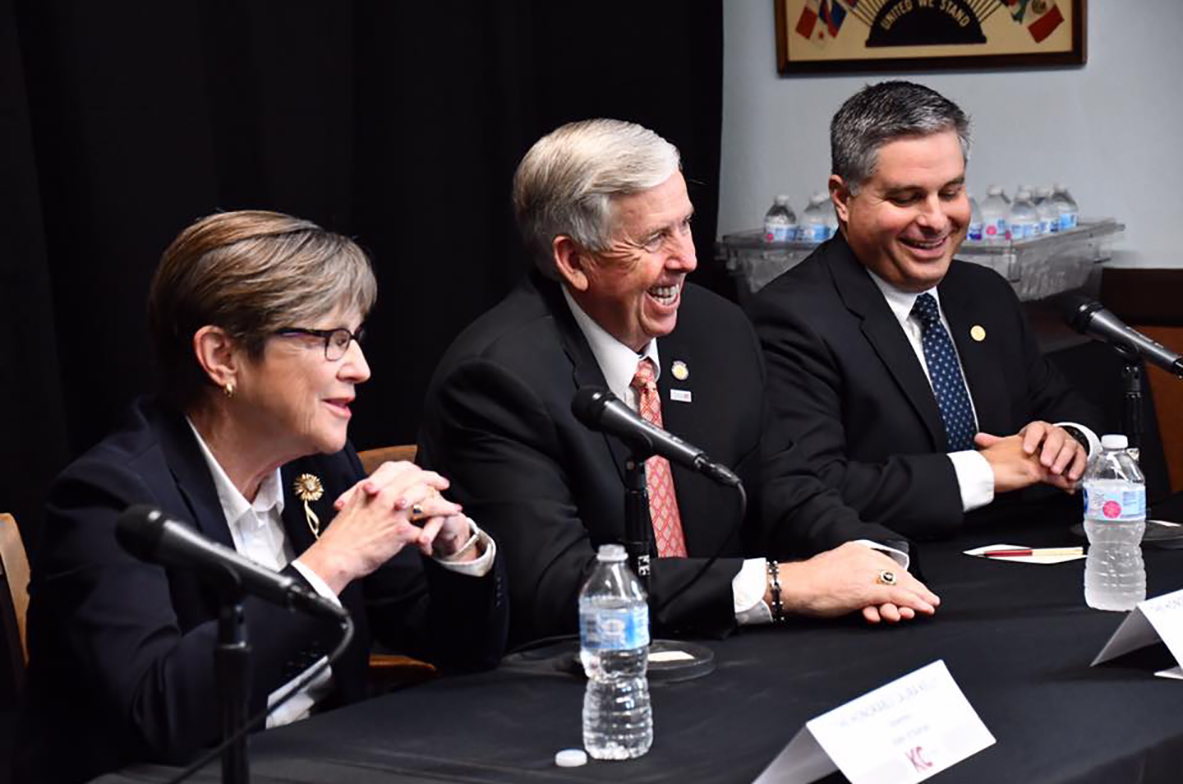
Kansas and Missouri must “grow from within” if the neighboring states aim to successfully confront structural challenges that face their economies, said Amy Liu, a contributor at national think tank the Brookings Institution.
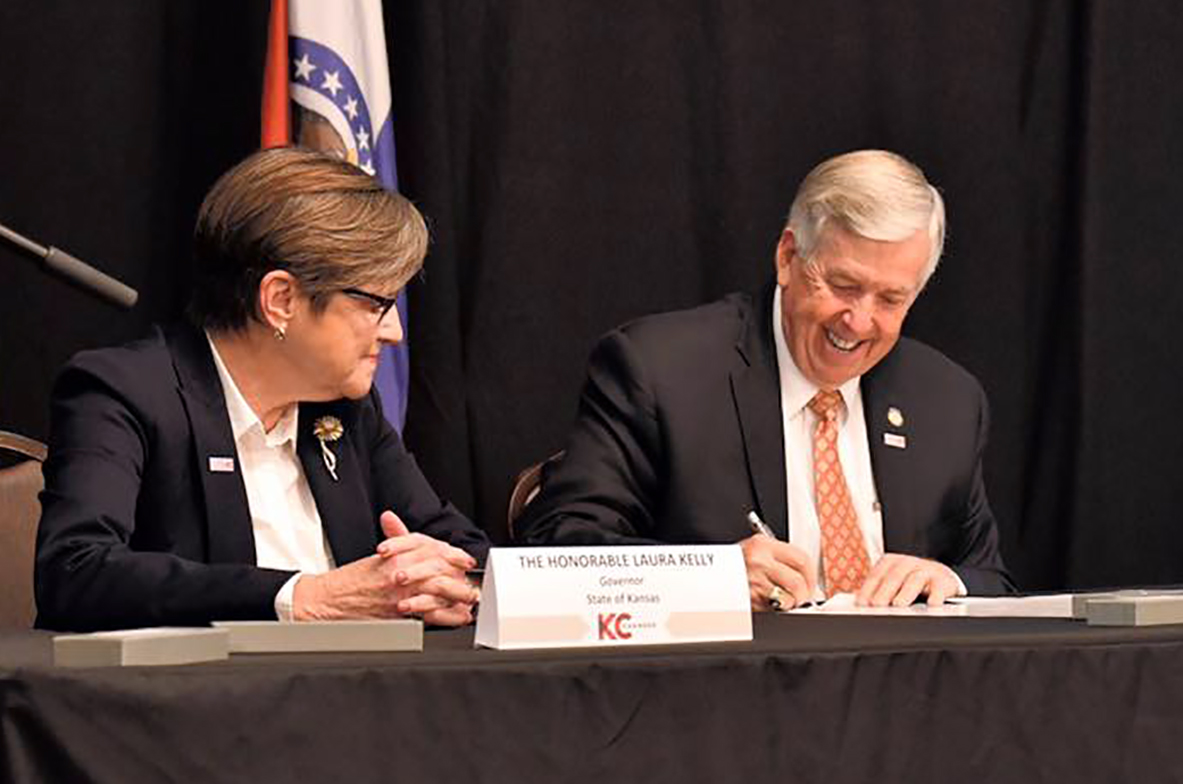
Govs. Laura Kelly, D-Kansas, and Mike Parson, R-Missouri
The “historic handshake” between Govs. Laura Kelly, D-Kansas, and Mike Parson, R-Missouri, earlier this month marked the symbolic end to an ongoing economic border war that produced headline-making wins for the states in a decades-long game of tit for tat — but little actual economic development or job creation in either state, according to previous reporting.
A new era of collaboration for Kansas and Missouri should focus on job growth linked to the expansion of existing businesses and startups — not from business relocations and tax incentive-based lures, said Liu.
“The opportunity is now there for both states to put the unbalanced tax abatements and hollow business relocations in the past,” she said. “They need to move forward vigorously by focusing on building homegrown talent, enriching education opportunities, and ensuring that each state’s workforce can access quality transportation and housing.”
The two Midwest states are among those geographic economies that lack the “critical mass of knowledge assets” like applied research and development capability and specialty skilled workers, Liu said. And while efforts like innovation districts in communities like Kansas City and St. Louis seek to address such challenges, statewide and even multi-state initiatives are needed to secure long-term wins in the world of rapidly-advancing innovation.
Click here to read about how communities and developers are working to craft the right formula for innovation hubs in Kansas City.
“We are in the midst of a winner-take-most economy where superstar cities like San Francisco, San Jose, Austin, and Boston are capturing an ever-growing share of the nation’s innovation jobs and talent,” Liu said.
Another trend putting Kansas and Missouri at risk: automation of jobs, she said, noting a quarter of jobs in the two bordering states are at “high-risk” of automation, according to a report published by Brookings.
“Leaders must embrace a vision of regional economic development that is comprehensive in scope, collaborative in spirit, and inclusive, improving incomes and employment for everyone, no matter their race or zip code,” Liu said.
This story was produced through a collaboration between Missouri Business Alert and Startland News.


2019 Startups to Watch
stats here
Related Posts on Startland News

Kansas company beefs up natural qualities of meat, tallow with tech, not enhancements
Startland News’ Startup Road Trip series explores innovative and uncommon ideas finding success in rural America and Midwestern startup hubs outside the Kansas City metro. WAKEENEY, Kan. — Plainview Beef is more than just a name for the western Kansas direct-to-consumer company, CEO Gabe Orr shared. It’s a nod to a mission rooted as much in…

Radar’s new pitch: How this Kansas sports tech startup spins data into speedier fastballs
When speed is the name of the game, data can be nearly as important as talent, said Jarrod Nichols, emphasizing the role his startup’s radar technology can play in helping baseball and softball athletes measure fastball performance, improve their stats, and swing for the fences. “Pitch speed has been captured since the early ’70s,” said…

Sacred sips: Alcohol-free bar on 39th Street creates healing space where ‘every drink is medicine’
Editor’s note: The following story was published by The Kansas City Defender, a nonprofit Black newsroom producing news, mutual aid and digital tools to keep Kansas City’s Black community informed and organized. Click here to read the original story or here to sign up for The Kansas City Defender’s email newsletter. In a neighborhood built to keep them…
Entrepreneurs say DoorDash accelerator delivered, prepping their small businesses for tall orders ahead
Ten graduates of DoorDash’s 12-week Midwest accelerator gathered Wednesday to celebrate successes from the program, along with lessons they say will last longer than the $5,000 grants each entrepreneur received. “Running a small business is tough work, and it meant so much to receive support from DoorDash and my home of Kansas City,” said Tanyech…