

Report: Kansas, Missouri economies hinge on homegrown startups, not border war wins
August 29, 2019 | Rashi Shrivastava
Kansas and Missouri must “grow from within” if the neighboring states aim to successfully confront structural challenges that face their economies, said Amy Liu, a contributor at national think tank the Brookings Institution.
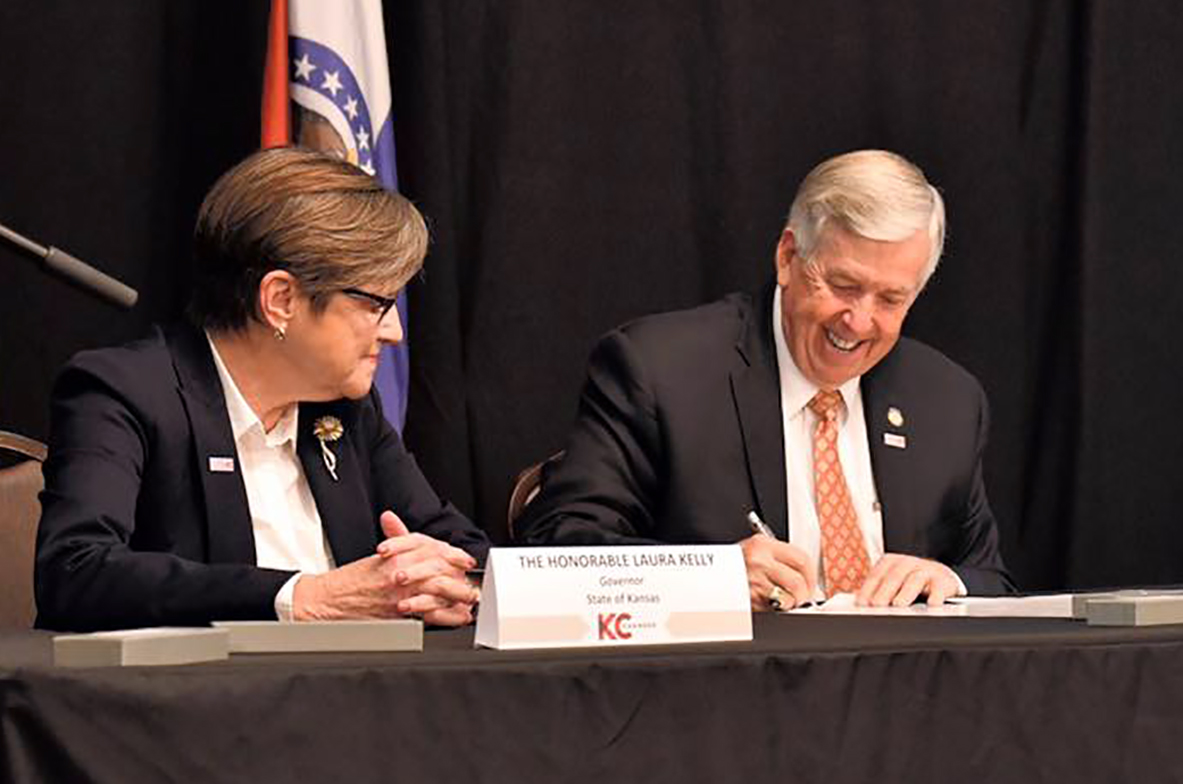
Govs. Laura Kelly, D-Kansas, and Mike Parson, R-Missouri
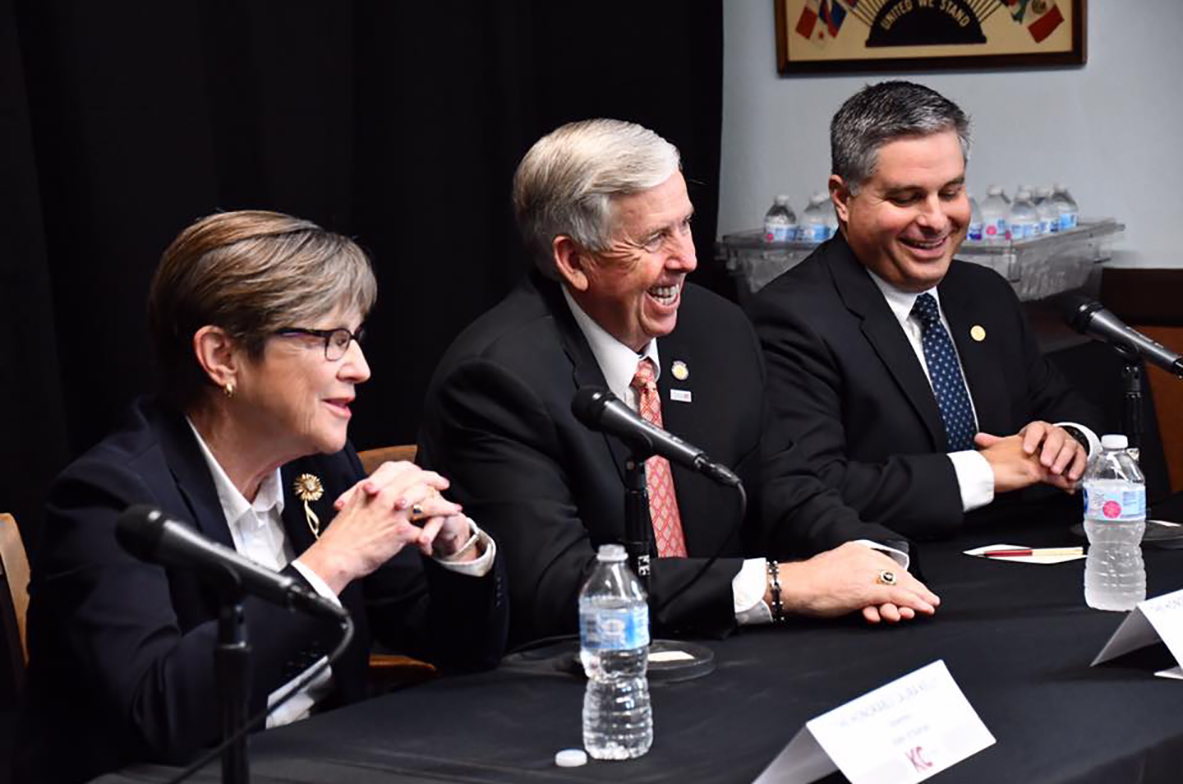
The “historic handshake” between Govs. Laura Kelly, D-Kansas, and Mike Parson, R-Missouri, earlier this month marked the symbolic end to an ongoing economic border war that produced headline-making wins for the states in a decades-long game of tit for tat — but little actual economic development or job creation in either state, according to previous reporting.
A new era of collaboration for Kansas and Missouri should focus on job growth linked to the expansion of existing businesses and startups — not from business relocations and tax incentive-based lures, said Liu.
“The opportunity is now there for both states to put the unbalanced tax abatements and hollow business relocations in the past,” she said. “They need to move forward vigorously by focusing on building homegrown talent, enriching education opportunities, and ensuring that each state’s workforce can access quality transportation and housing.”
The two Midwest states are among those geographic economies that lack the “critical mass of knowledge assets” like applied research and development capability and specialty skilled workers, Liu said. And while efforts like innovation districts in communities like Kansas City and St. Louis seek to address such challenges, statewide and even multi-state initiatives are needed to secure long-term wins in the world of rapidly-advancing innovation.
Click here to read about how communities and developers are working to craft the right formula for innovation hubs in Kansas City.
“We are in the midst of a winner-take-most economy where superstar cities like San Francisco, San Jose, Austin, and Boston are capturing an ever-growing share of the nation’s innovation jobs and talent,” Liu said.
Another trend putting Kansas and Missouri at risk: automation of jobs, she said, noting a quarter of jobs in the two bordering states are at “high-risk” of automation, according to a report published by Brookings.
“Leaders must embrace a vision of regional economic development that is comprehensive in scope, collaborative in spirit, and inclusive, improving incomes and employment for everyone, no matter their race or zip code,” Liu said.
This story was produced through a collaboration between Missouri Business Alert and Startland News.


2019 Startups to Watch
stats here
Related Posts on Startland News
MidxMidwest returns: Seizing opportunities from one-on-one founder-VC meetups more important than ever, organizers say
It’s a critical time within the startup funding ecosystem, Dan Kerr and Maggie Kenefake agreed, noting the slow tick of investments across the region present a core challenge — and opportunities — to be addressed by this fall’s MidxMidwest event. “If you look at capital, 80 percent went to the biggest three states again, and…
Brookside couple envisions upscale neighborhood escape in former Michael Forbes spot
A couple who first met as servers at a restaurant on the Country Club Plaza are setting the table for a new venture in Brookside: an “elevated” neighborhood bistro and bottle shop that’s expected to open in early 2025. After a light remodeling, Hannah Koenig and Avery Bailey plan to open CRU in late January…

KC Pioneers scored Kansas City a spot on the ‘gaming wave’; why this pro esports teams views its hometown as a championship asset
In the globe-spanning esports market, most of the top competitive gaming teams keep their hometown — if they have one — ambiguous to the public. With the industry expected to touch 1 billion people worldwide by 2029 and players untethered to physical locations, it’s simply an unimportant biographical detail to many. And potentially limiting for others.…

How a $527M development is poised to transform KC’s last ‘Wild West’ neighborhood
Editor’s note: The following story was published by KCUR, Kansas City’s NPR member station, and a fellow member of the KC Media Collective. Click here to read the original story or here to sign up for KCUR’s email newsletter. A New York developer plans to renovate several historic West Bottoms buildings into apartments and office space, in addition to new…