

Report: Kansas, Missouri economies hinge on homegrown startups, not border war wins
August 29, 2019 | Rashi Shrivastava
Kansas and Missouri must “grow from within” if the neighboring states aim to successfully confront structural challenges that face their economies, said Amy Liu, a contributor at national think tank the Brookings Institution.
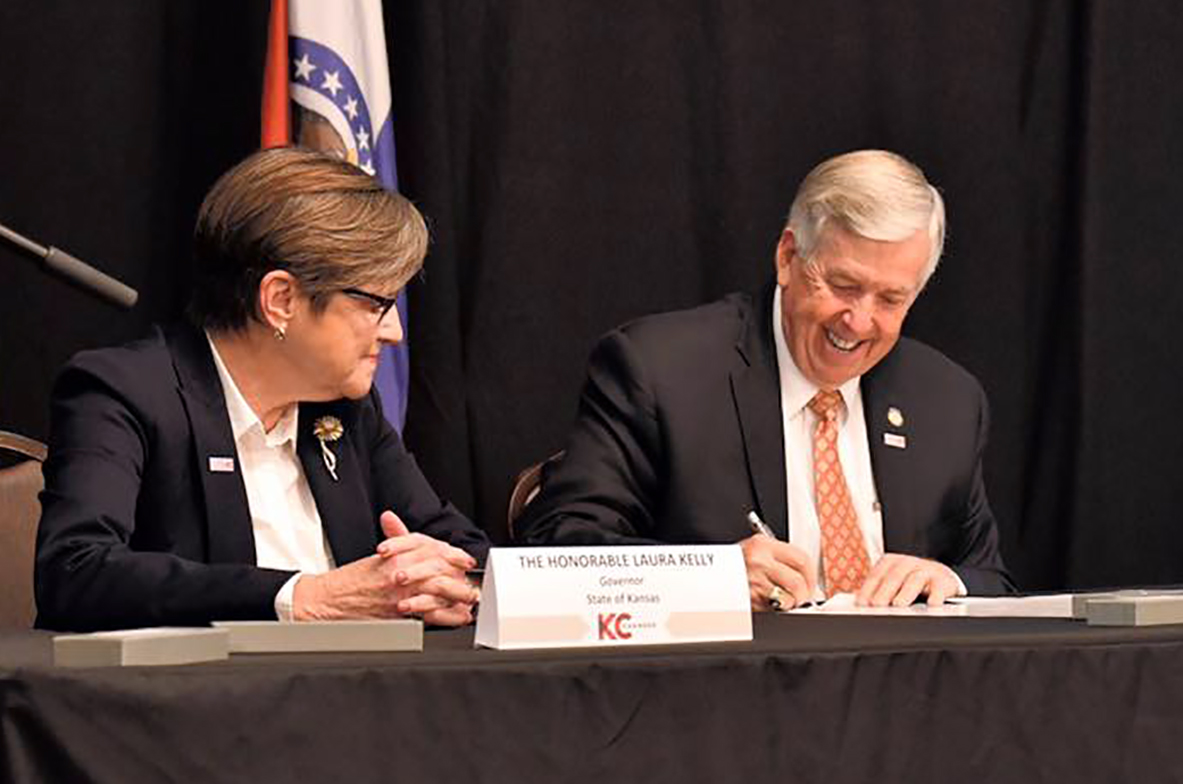
Govs. Laura Kelly, D-Kansas, and Mike Parson, R-Missouri
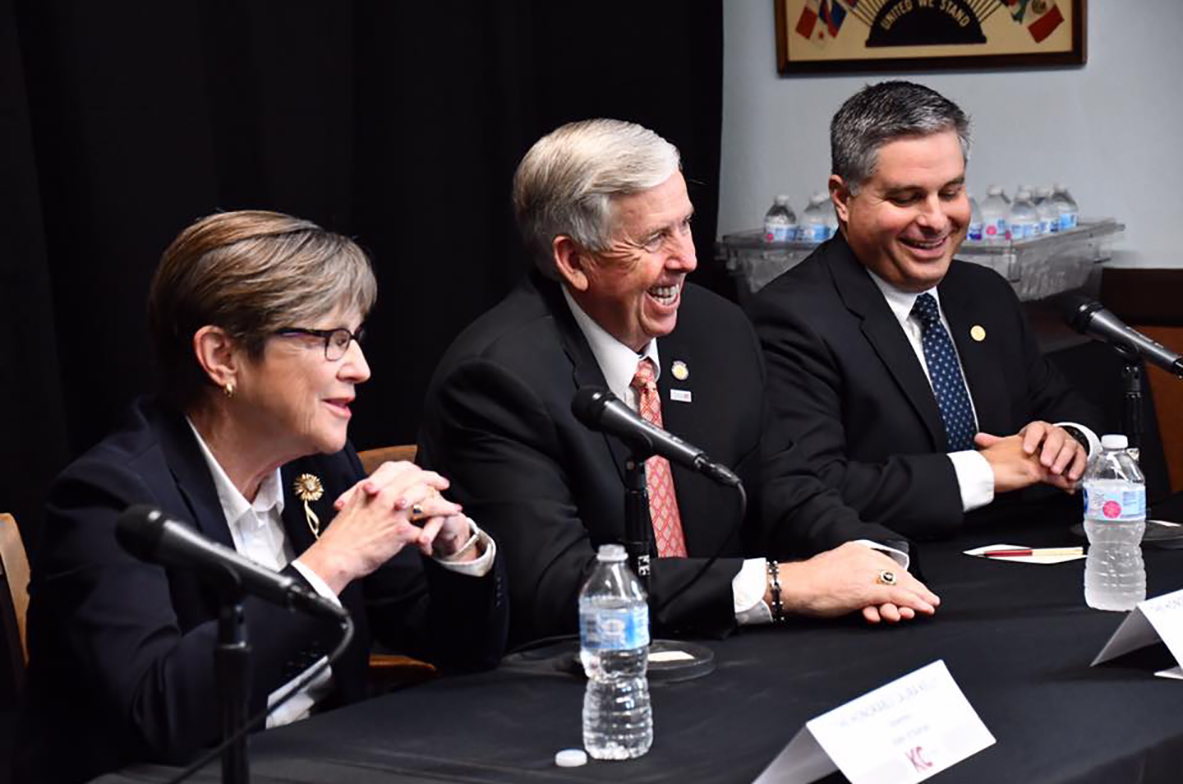
The “historic handshake” between Govs. Laura Kelly, D-Kansas, and Mike Parson, R-Missouri, earlier this month marked the symbolic end to an ongoing economic border war that produced headline-making wins for the states in a decades-long game of tit for tat — but little actual economic development or job creation in either state, according to previous reporting.
A new era of collaboration for Kansas and Missouri should focus on job growth linked to the expansion of existing businesses and startups — not from business relocations and tax incentive-based lures, said Liu.
“The opportunity is now there for both states to put the unbalanced tax abatements and hollow business relocations in the past,” she said. “They need to move forward vigorously by focusing on building homegrown talent, enriching education opportunities, and ensuring that each state’s workforce can access quality transportation and housing.”
The two Midwest states are among those geographic economies that lack the “critical mass of knowledge assets” like applied research and development capability and specialty skilled workers, Liu said. And while efforts like innovation districts in communities like Kansas City and St. Louis seek to address such challenges, statewide and even multi-state initiatives are needed to secure long-term wins in the world of rapidly-advancing innovation.
Click here to read about how communities and developers are working to craft the right formula for innovation hubs in Kansas City.
“We are in the midst of a winner-take-most economy where superstar cities like San Francisco, San Jose, Austin, and Boston are capturing an ever-growing share of the nation’s innovation jobs and talent,” Liu said.
Another trend putting Kansas and Missouri at risk: automation of jobs, she said, noting a quarter of jobs in the two bordering states are at “high-risk” of automation, according to a report published by Brookings.
“Leaders must embrace a vision of regional economic development that is comprehensive in scope, collaborative in spirit, and inclusive, improving incomes and employment for everyone, no matter their race or zip code,” Liu said.
This story was produced through a collaboration between Missouri Business Alert and Startland News.


2019 Startups to Watch
stats here
Related Posts on Startland News

Biotech startup’s latest partnership gets its UniPen into the hands of more pharmacists
A new strategic partnership for Love Lifesciences is expected to leverage its core product — a safe, self-administered injection medication delivery system — to new groups of like-minded, innovation-first companies, said Nick Love. The Overland Park biotech startup on Wednesday announced the deal with the Alliance for Pharmacy Compounding (APC), a leading trade organization, to…

Una Mas Empanadas folds authentic Argentinian flavors into new restaurant spot at Parlor
Expanding Silvia Herrera’s business from a food truck in Gardner to one of Kansas City’s most active and eclectic food hubs brings the Buenos Aires-born entrepreneur — and her grandmother’s 50-year-old handcrafted empanada recipe — to an even wider, more diverse audience, she said. “Our empanadas are more than just food,” Herrera said. “They represent…

It’s not too late to preserve KC’s Black-owned restaurants (or to enjoy Black Feast Week)
The recent closures of Soiree, The Krave, and Privee — Black-owned restaurants that each became a staple of Kansas City’s evolving food scene — leave a clear void that can’t be ignored, said Ryan Sorrell. An initiative to help save local culinary should-be hotspots in similar danger wraps this week, but the work to promote and…

Ancestry.com founder-turned-AI evangelist says rapidly advancing tech can uplift humanity, families
People across the globe are caught in an internet malaise, said Paul Allen, and tech visionaries’ response should be to renew humans’ dependence on faith and family and friendship and local community. One of their most critical tools, he said: decidedly non-human solutions from the rapidly evolving landscape of artificial intelligence. Allen — founder of…