

Report: Kansas, Missouri economies hinge on homegrown startups, not border war wins
August 29, 2019 | Rashi Shrivastava
Kansas and Missouri must “grow from within” if the neighboring states aim to successfully confront structural challenges that face their economies, said Amy Liu, a contributor at national think tank the Brookings Institution.
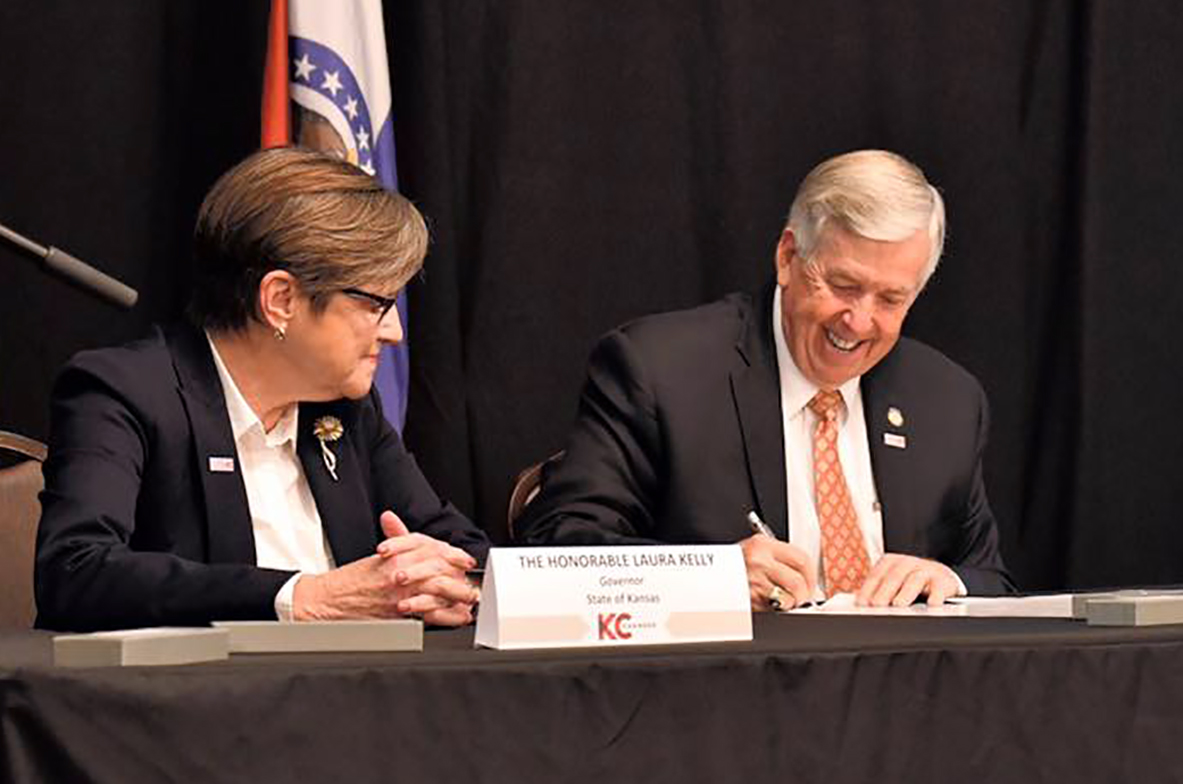
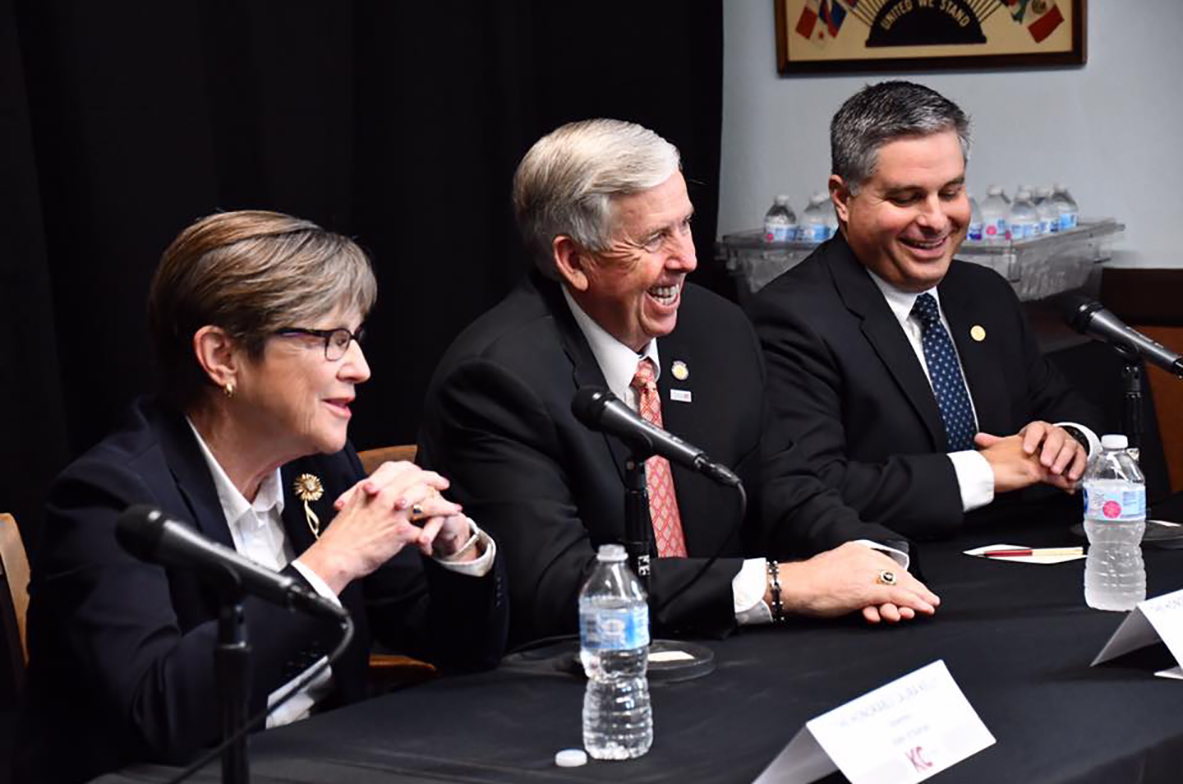
Govs. Laura Kelly, D-Kansas, and Mike Parson, R-Missouri
The “historic handshake” between Govs. Laura Kelly, D-Kansas, and Mike Parson, R-Missouri, earlier this month marked the symbolic end to an ongoing economic border war that produced headline-making wins for the states in a decades-long game of tit for tat — but little actual economic development or job creation in either state, according to previous reporting.
A new era of collaboration for Kansas and Missouri should focus on job growth linked to the expansion of existing businesses and startups — not from business relocations and tax incentive-based lures, said Liu.
“The opportunity is now there for both states to put the unbalanced tax abatements and hollow business relocations in the past,” she said. “They need to move forward vigorously by focusing on building homegrown talent, enriching education opportunities, and ensuring that each state’s workforce can access quality transportation and housing.”
The two Midwest states are among those geographic economies that lack the “critical mass of knowledge assets” like applied research and development capability and specialty skilled workers, Liu said. And while efforts like innovation districts in communities like Kansas City and St. Louis seek to address such challenges, statewide and even multi-state initiatives are needed to secure long-term wins in the world of rapidly-advancing innovation.
Click here to read about how communities and developers are working to craft the right formula for innovation hubs in Kansas City.
“We are in the midst of a winner-take-most economy where superstar cities like San Francisco, San Jose, Austin, and Boston are capturing an ever-growing share of the nation’s innovation jobs and talent,” Liu said.
Another trend putting Kansas and Missouri at risk: automation of jobs, she said, noting a quarter of jobs in the two bordering states are at “high-risk” of automation, according to a report published by Brookings.
“Leaders must embrace a vision of regional economic development that is comprehensive in scope, collaborative in spirit, and inclusive, improving incomes and employment for everyone, no matter their race or zip code,” Liu said.
This story was produced through a collaboration between Missouri Business Alert and Startland News.


2019 Startups to Watch
stats here
Related Posts on Startland News

Events Preview: Innovation Exchange, the Sales Series and April Tech Talk
There are a plethora of entrepreneurial events hosted in Kansas City on a weekly basis. Whether you’re an entrepreneur, investor, supporter, or curious community member — we recommend these upcoming events for you. Are you hosting a relevant community event? Feel free to add it to the FWD/KC calendar for increased exposure. Once your event…
With data pouring in, leaders discuss what’s next for the Smart City
As Kansas City’s Smart City initiative wraps up its first phase, advisory board members on Monday began looking to the future of the public-private project. Since the initiative’s launch in 2016, the City of Kansas City, Mo. has established itself as a leader in smart city infrastructure, KCMO innovation analyst Kate Garman said. But while…

Athlete Network adds hall-of-famer Warren Moon to its roster
It’s not everyday that you add a hall-of-fame quarterback to your team. In establishing a new, high-impact advisory board, Athlete Network has landed former NFL superstar Warren Moon as a team member that will help guide the startup moving forward. Moon previously played for the Houston Oilers, Minnesota Vikings and other pro teams, racking up…
2017 Sprint Accelerator class makes its KC introductions at 1 Million Cups
Less than two weeks into the program, the 2017 Sprint Accelerator cohort introduced themselves to the community on Wednesday at 1 Million Cups. The accelerator recently welcomed seven startups representing its two tracks — ag tech and digital — that arrives from all around the country. Hailing from states like Texas, New York, Florida, Georgia…