

Report: Kansas, Missouri economies hinge on homegrown startups, not border war wins
August 29, 2019 | Rashi Shrivastava
Kansas and Missouri must “grow from within” if the neighboring states aim to successfully confront structural challenges that face their economies, said Amy Liu, a contributor at national think tank the Brookings Institution.
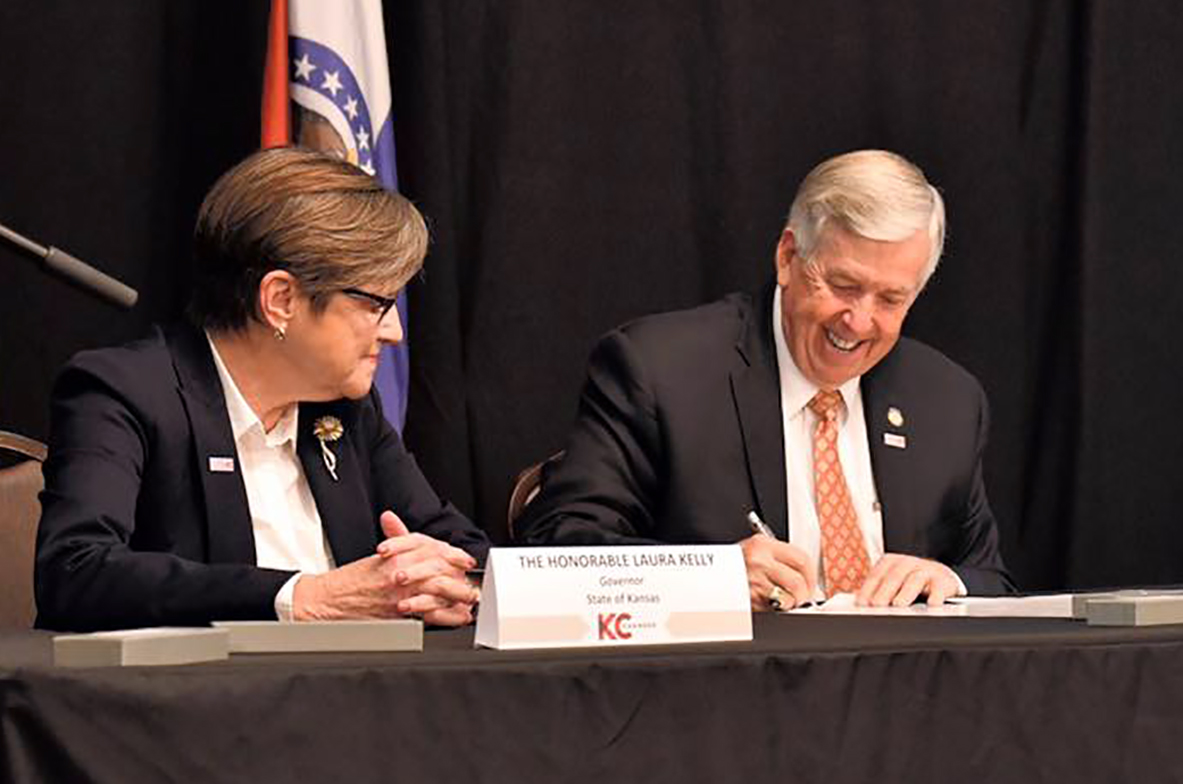
Govs. Laura Kelly, D-Kansas, and Mike Parson, R-Missouri
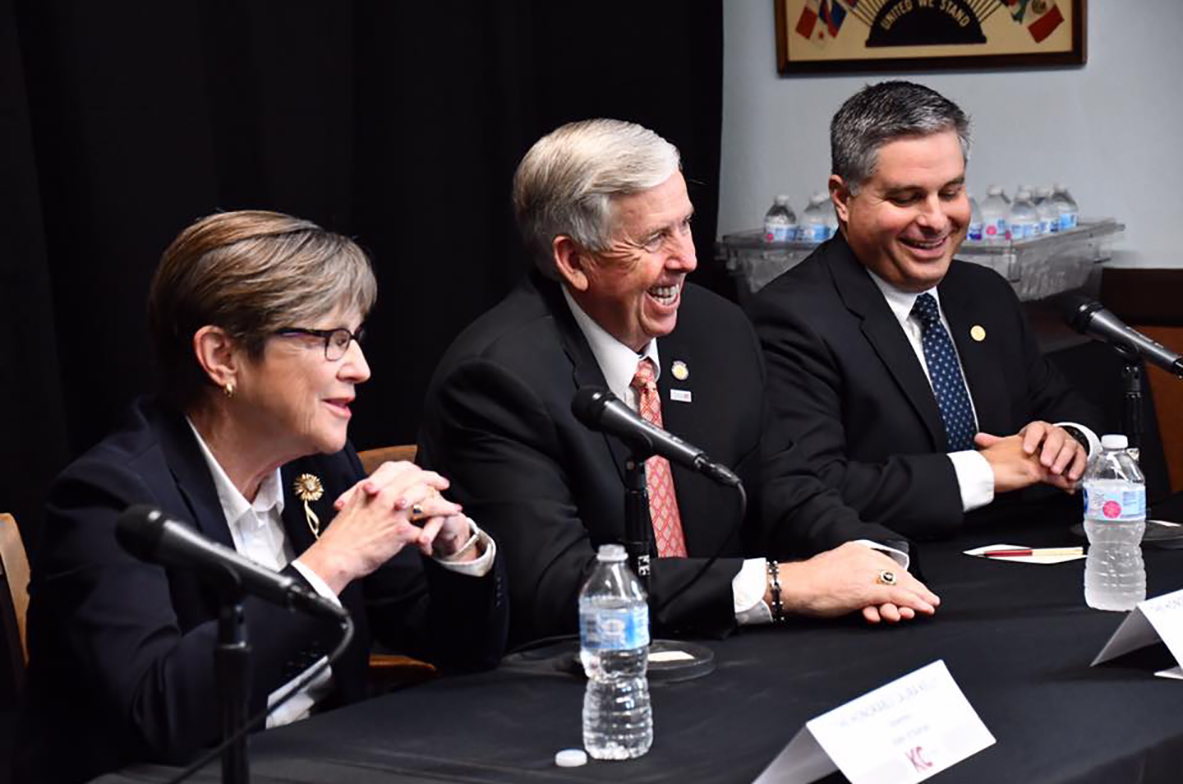
The “historic handshake” between Govs. Laura Kelly, D-Kansas, and Mike Parson, R-Missouri, earlier this month marked the symbolic end to an ongoing economic border war that produced headline-making wins for the states in a decades-long game of tit for tat — but little actual economic development or job creation in either state, according to previous reporting.
A new era of collaboration for Kansas and Missouri should focus on job growth linked to the expansion of existing businesses and startups — not from business relocations and tax incentive-based lures, said Liu.
“The opportunity is now there for both states to put the unbalanced tax abatements and hollow business relocations in the past,” she said. “They need to move forward vigorously by focusing on building homegrown talent, enriching education opportunities, and ensuring that each state’s workforce can access quality transportation and housing.”
The two Midwest states are among those geographic economies that lack the “critical mass of knowledge assets” like applied research and development capability and specialty skilled workers, Liu said. And while efforts like innovation districts in communities like Kansas City and St. Louis seek to address such challenges, statewide and even multi-state initiatives are needed to secure long-term wins in the world of rapidly-advancing innovation.
Click here to read about how communities and developers are working to craft the right formula for innovation hubs in Kansas City.
“We are in the midst of a winner-take-most economy where superstar cities like San Francisco, San Jose, Austin, and Boston are capturing an ever-growing share of the nation’s innovation jobs and talent,” Liu said.
Another trend putting Kansas and Missouri at risk: automation of jobs, she said, noting a quarter of jobs in the two bordering states are at “high-risk” of automation, according to a report published by Brookings.
“Leaders must embrace a vision of regional economic development that is comprehensive in scope, collaborative in spirit, and inclusive, improving incomes and employment for everyone, no matter their race or zip code,” Liu said.
This story was produced through a collaboration between Missouri Business Alert and Startland News.


2019 Startups to Watch
stats here
Related Posts on Startland News

Smart City tech enables KCMO to predict potholes before they happen
It seems a dash of innovation can make even the most mundane subjects exciting. That is if Kansas City chief innovation officer Bob Bennett’s enthusiasm for a new pothole technology is any indication. This month, the City of Kansas City, Mo. will pilot a machine learning program that will predict potholes before they occur, saving…

SoftBank’s $100B fund manager: Kansas City is a place people want to stay
SoftBank Capital managing partner Ron Fisher recently said he’s open to deploying some of the $100 billion fund he helps manage in the Midwest, including Kansas City. In an interview with VentureBeat, Fisher discussed Tokyo-based SoftBank’s bold plans to dish some $50 billion in venture capital to U.S. firms and thereby create 50,000 jobs. SoftBank…

Fund Me, KC: KCGeoLab is bringing geographical science, open data to the mainstream
Editor’s note: Startland News is continuing its new segment to highlight area entrepreneurs’ efforts to accelerate their businesses. This is an opportunity for entrepreneurs to share their stories to gain a little help from their supporters. If you or your startup is running a crowdfunding campaign, let us know by contacting news@startlandnews.com Who are you?…

KC mom turns entrepreneur to help kiddo’s kidney condition
In 2013, Tamra Johnson’s daughter faced a life-or-death situation. After contracting an E. coli bacterial infection, Johnson’s daughter, Maleena, lost function to both of her kidneys. Fortunately, a kidney transplant from Maleena’s father, Jamie, saved her life, but it created a new problem: hydration. Maleena was expected to drink over four liters of water per…