

Q&A: Startup life isn’t all risk-taking and sexy, big-name investors, Kelly Sievers says
July 2, 2019 | Rashi Shrivastava
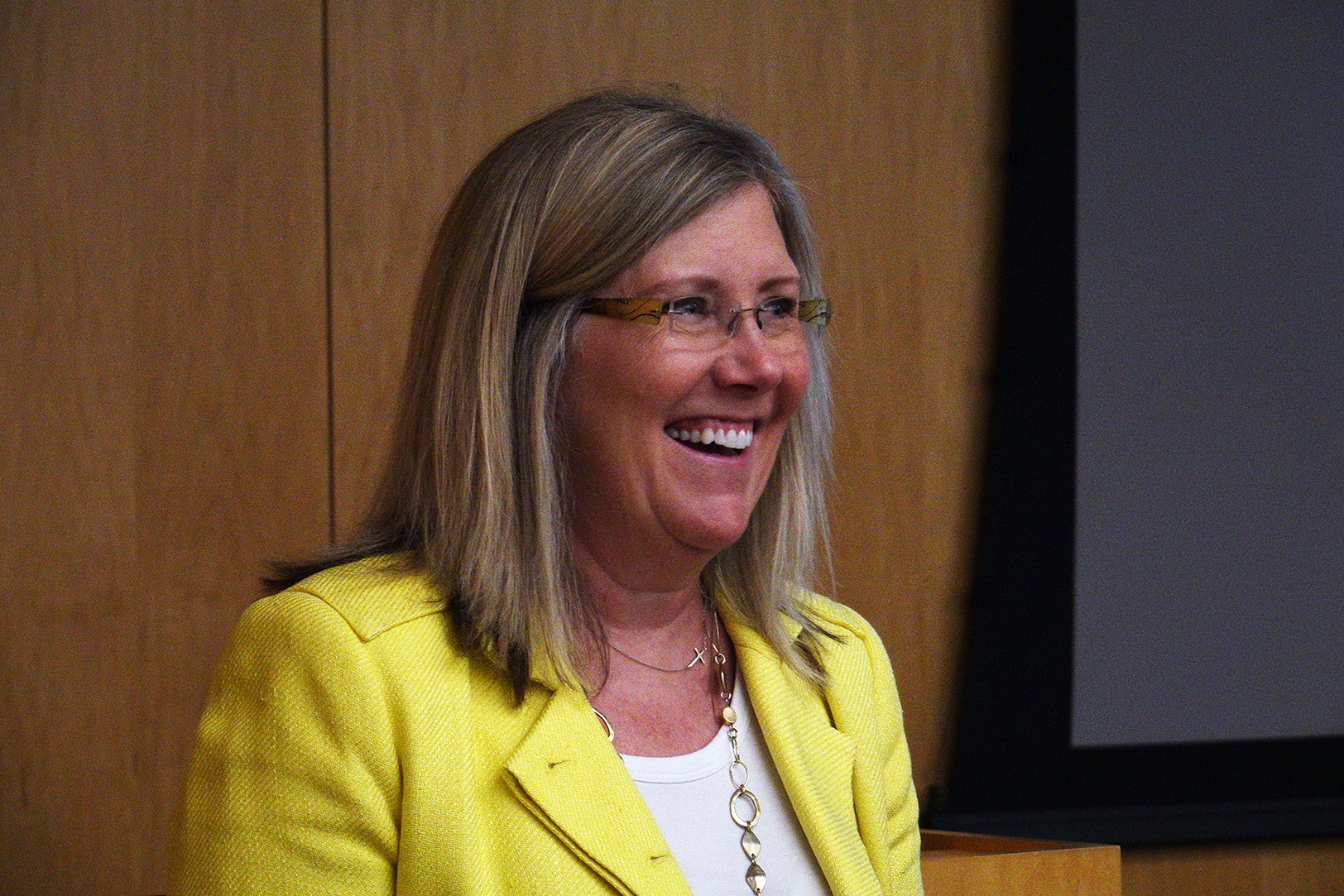
Investing doesn’t just hinge a dollar amount, said Kelly Sievers.
“It’s also about finding the right kind of funding for your business,” the Women’s Capital Connection managing director told 26 small business owners at a recent Kansas City SCORE mentoring event.
Sievers, an entrepreneurial advisor for the Women’s Business Center, has owned, operated and sold businesses since graduating from college, she said.
“A lot of times when people think of entrepreneurs, the first thing that comes out of their mouth is that they’re risk takers. Well, a lot of entrepreneurs don’t feel that way because they feel that it’s less risky to run a business than it is to go work for somebody else,” said Sievers.
From microlending programs to crowdfunding to angel investments, Sievers ventured into a variety of capital sources.
Startland and Missouri Business Alert caught up with Sievers after the mentoring event to dive deeper into trends in raising capital in Kansas City.
Click here to listen to a Missouri Business Alert podcast featuring Sievers.
MBA/Startland News: Can you describe your journey as a businesswoman?
Kelly Sievers: I was fortunate to grow up with a dad as an entrepreneur. And so when I got out of college at 24, I thought I just needed to own my own business. Retail sounded fun. So with my dad’s financial help, I purchased a gift shop in a hotel, and then ended up purchasing two more gift shops, and ran those for about five years. In 2003, I went to work with the Women’s Business Center, which is part of the OneKC for Women alliance.
MBA/Startland News: What are the top three tips would give to an entrepreneur who is just getting started?
KS: Find mentors, find programs — Don’t think you can figure it all out by yourself, please. It’s really a lot to learn. If you have the opportunity, work with a smaller type of entrepreneurial company before you launch out on your own, so you can learn from a small business. A lot of entrepreneurs don’t go through programs or learn from other people’s successes and failures. What the entrepreneur always says is “Ready, aim, fire,” right? So you just do it.
MBA/Startland News: What should entrepreneurs and small business owners keep in mind when they’re seeking capital in Kansas City?
KS: Try to find the banks that are the most active in SBA funding or in lending to startups. It’s also about building relationships. You need to be careful and learn because you might be giving up a bunch of your company for very little money. That’s why you go talk to people who have been there, done that — who have that have experienced a lot of things. A lot of times people also think they can get by with just a little bit of money. Other times, people will take money early. Both are not smart ways to grow.
MBA/Startland News: You spoke about microlending programs and angel investors. What trends are you noticing when it comes to different types of funding available?
KS: There are a lot more funding mechanisms in Kansas City now. A lot of people think having an investor sounds really sexy. Well, it might not be the right type of financing for your business. You might need to go get some money from friends and family or a bank loan or just a loan from somebody. You have to make a lot of effort.
MBA/Startland News: How do you view the narrative that it’s more difficult to raise money in the Midwest?
KS: There is a lot more focus on mid-America than there has been for a long time, mostly because of the cost of living here. I mean, people are pricing themselves out of the market on the coasts. There’s a lot of work being done here locally, because we have a lot of agriculture and ag-tech being developed in Kansas City right now. We have the internet here too, you know! I do think we are a bit more conservative and that we don’t tend to fund what we call “back of the napkin” ideas, but we are always looking to fund good deals.
MBA/Startland News: What exactly qualifies as a “good deal?”
KS: Yeah, there’s a lot of things you need to have to get funding — you should have a product, you should have some customers, you should have a clear cut path to gain market share, you should have a good thought out exit strategy.
MBA/Startland News: There has been an increasing emphasis on access to capital for underrepresented founders. What is the scope for growth of such companies and what remains to be done on this front?
KS: The statistics prove it out. Companies that are run and invested in by both men and women are more successful companies. I think it’s really important for companies to have diversity because I think you get a lot of different perspectives on things. If you get a whole bunch of exactly like-minded people in a room, you’re never going to grow because you aren’t going to hear different ideas. There are actually certifications for minority-owned businesses, like the Women Business Enterprise and Minority Business Enterprise certifications. A lot of times, women will say, “Well, I want to do it on my own. I don’t want people to give me a contract just because I’m leading a woman-owned business.” But I think those are just different things you could put tools in your tool kit to have and to help you grow your business.
MBA/Startland News: What fiscal resources does Kansas City offer to entrepreneurs looking to access capital?
KS: There are a bunch of good resources out here like KCSourceLink; they are the navigators. Then there’s the KC Small Business Development Technology Center and the Digital Sandbox, which is proof-of-concept funding. Funding also come from some friends and families. A lot of these organizations are funded heavily by the SBA, Small Business Administration. There also the Women’s Business Center, if you’re a woman starting up or growing your business and SCORE mentoring events are great starting points.
This story was produced through a collaboration between Missouri Business Alert and Startland News.

Featured Business

2019 Startups to Watch
stats here
Related Posts on Startland News

‘Mr. K’ finalists tease what it’s like to work for the next Small Business of the Year
Editor’s note: The Greater Kansas City Chamber of Commerce is a non-financial partner of Startland News, which serves as the media partner for the Small Business Superstars program. Finalists for the KC Chamber’s Small Business of the Year award highlighted their companies’ commitments to strong workplace culture, DEI initiatives, and community relations during a panel…

KCMO forms small biz task force for entrepreneurs; underinvested businesses a key focus
Editor’s note: KC BizCare, the small business office of Kansas City, Missouri, is a partner of Startland News. A new task force committed to giving space for Kansas City small business owners to share their voices — on issues ranging from major events like the NFL Draft to everyday concerns on permits and zoning —…
Rescue florists give new life to leftover flowers; nonprofit just needs 6-inch stems and someone to surprise
Impact is growing again for an initiative that sends recycled floral arrangements — flowers otherwise headed for the trash after events — to homebound Kansas City seniors. Volunteer-run Unexpected Blooms recently celebrated its sixth birthday, after being forced to take a pause when the pandemic stalled many large gatherings from which they sourced flowers, shared…

Poio’s chef-owner lets go of his popular KCK restaurant: ‘I’m still learning how to relax’
Carlos Mortera struggled with the idea of not working all hours of the waking day, he shared, explaining that this subconscious guilt is sometimes known as “immigrant shame.” “Being a first-generation [American], you see all the sacrifices your parents made to get you to this country. Because of their sacrifices, you feel like you should…