

You’ll soon have 20+ smart devices in your home; How many will steal your data?
July 18, 2019 | Rashi Shrivastava
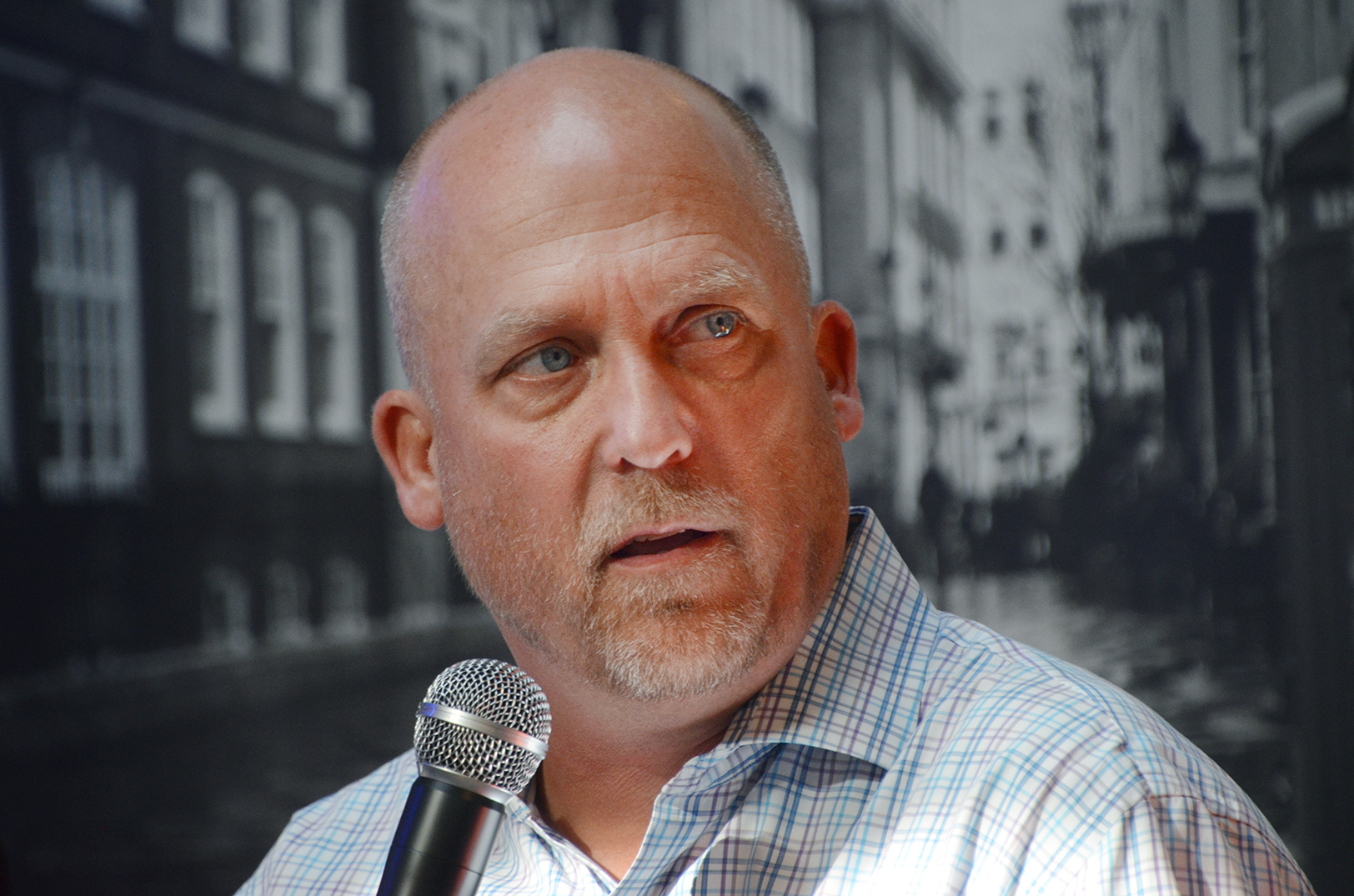
Consumers of smart technology need to be wary of most of the lesser-known brands in retail stores, said Scott Ford.
“Most likely they’re using a platform architecture that sits on a foreign market, sending your data to who knows where, without the protections that are common in the U.S,” said Ford, CEO of Pepper IoT, a Kansas City-based firm focused on delivering connected Internet of Things services.
From a cyber security and privacy perspective, the marketplace is a complete mess for consumers and service providers, he said.
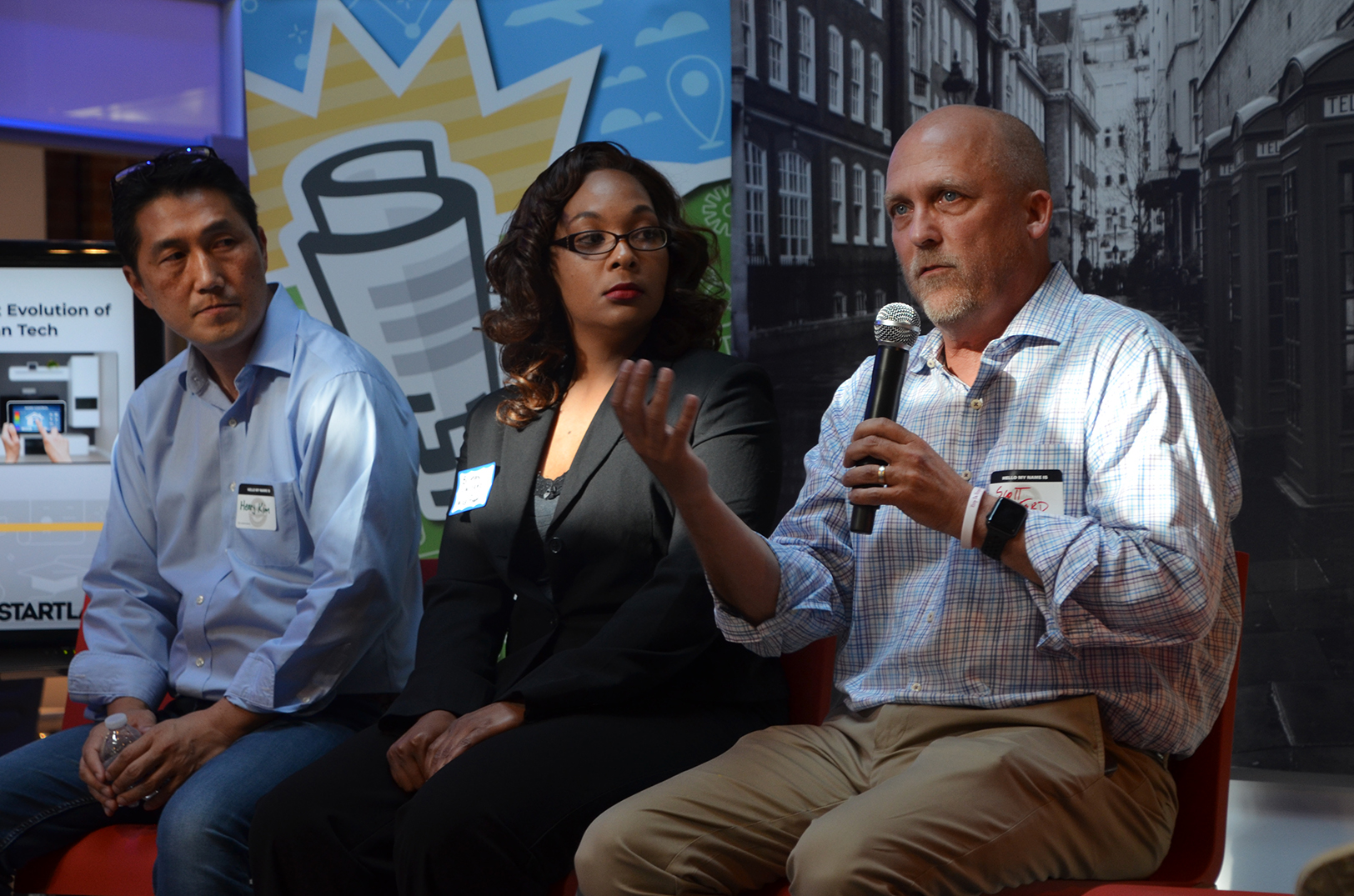
Henry Kim, LG Electronics; Brittany Williams, WISE Power; and Scott Ford, Pepper; Innovation Exchange
Pepper caters to global consumer electronics manufacturers, and is focused on creating platform security, privacy, and scalability, he said. The startup was one of Startland’s Kansas City Startups to Watch in 2019.
Ford, who was among three Urban Tech panelists this week at Startland’s Innovation Exchange — hosted by Homebase and presented by Energy Ventures — engaged in a conversation about how home automation and IoT are providing solutions like affordable housing and cyber security.
Pepper is a portfolio company of Evergy Ventures, the investment arm of Evergy.
Startland and Missouri Business Alert caught up with Ford for a one-on-one Q&A about the glitches and growth of the smart home tech industry and Pepper IoT’s role in $15 billion market.
SLN: What led to the creation of Pepper IoT?
Scott Ford: We started the company as a network home automation provider in conjunction with Best Buy. We created a product that had a powered hub and devices that you’d buy in a starter kit and take home and put them up in your house and connect them to our platform. We decided to move away from that business model, because we learned that consumers in the IoT market today are buying one device at a time, not bundles of devices. So, we shifted our business model and created a more progressive, futuristic platform to enable IoT services. Now our customers are enterprises who want to launch and manage IoT services for their consumer users.
SLN: What’s the scope for the IoT and smart home tech markets? How far has the industry come and how do you think it’s going to grow in the future?
SF: It’s still very early on, but it has come a long way in terms of technology and what’s available to us to create high utility experiences, but it’s very much on the front edge of growth. Today, most of us who run in these tech circles have five or six connected devices in our connected lifestyle. That’ll grow to something in the 20s in the next few years. What you need is a platform infrastructure and a software solution to be able to help you manage all of those devices in your life. So I think the growth is significant and it’s just the beginning years of IoT.
SLN: What is your startup’s approach to ensuring that your customers have cyber security and privacy? How do you address the balance between security and convenience?
SF: In the United States, when you’re talking about consumer-grade connected devices, it’s a complete mess right now, from a cyber security and privacy perspective. If you go into a retail location, there are big brands like LG or Samsung and you can be completely confident that they’re taking care of you from the cyber security and privacy perspective. That only represents maybe 20 percent of the devices. The 80 percent is where you have to worry with brands that you’re only vaguely familiar with or have never heard of before. Most likely, they’re using a platform architecture that sits on a foreign market, sending your data to who knows where without the protections that are common in the U.S. It’s a very big problem. Pepper is a solution to that problem. We work with manufacturers of these devices to allow them to use a highly secure, highly private environment to allow the communication between the devices and the consumers.
SLN: What is being done to make smart technology accessible to everyone?
SF: Home security has generally been unaffordable to the mass market but with IoT and new technologies, it is going to be more affordable. Instead of paying a big security company upto $70 a month, you’ll be able to have the same level of central station monitored security for $5 or $10 a month.

Scott Ford, Pepper
SLN: What are some of the recent milestones forPepper IoT?
SF: We just passed 700,000 users on our platform, which we’re proud of. We have devices that are powered by Pepper that are available in over 10,000 retail locations around the world. We have recently enabled our seventh language, Japanese, as a language for devices that are sold in Japan. We support eight currencies around the world. So we have a very global approach with devices everywhere. We’re beginning to onboard service providers, which are companies that have millions of customers and they want to create a branded experience. So they use our platform to do that. We just signed one it’s not public yet but we’re excited about that.
SLN: What is the biggest challenge that is going to be faced by the smart home technology industry and the IoT industry in the near future? And specifically, what challenges is Pepper facing now?
SF: The biggest limiter to growth is around security and privacy, which has to be solved or the general public is just going to be going to be worried about the communication and integrity of their devices. As a company, we are taking a bold move to make sure cyber security and privacy is at the center of everything we do. The industry is very unorganized right now and a lot of misunderstanding of what’s required to create really high-quality IoT experiences. So our challenge as a young startup entering this massive space is to make sure that the general market understands what Pepper is and what we bring to the marketplace. Slowly but surely the industry is evolving and we’re getting a lot of inbound interest of people.
SLN: What does success look like for Pepper?
SF: Success for us, just to be blunt, is a multi-hundred million dollar exit and a couple of years. That’s really what we’re shooting for and we expect that to be the case given where we sit in the market and the opportunity that’s coming toward us.
This story was produced through a collaboration between Missouri Business Alert and Startland News.

Featured Business

2019 Startups to Watch
stats here
Related Posts on Startland News

Dozer debut: Indoor sandbox concept revives zero-screens play for JoCo children
A giant sandbox playroom in Johnson County evokes a simpler era, said Justin Finn, whose immersive entertainment concept for children opens Tuesday in Leawood. “No screens,” explained Finn. “I like to say it’s how we grew up as kids. Imagination, the wheels turning.” Dozer — launched this week as the first of multiple locations alongside co-founder…

Prayer-built coffee shop brews holistic healing with fuel from Grandview father’s faith
GRANDVIEW, Mo. — Nate Thomas saw something others didn’t in the near-windowless former Masonic lodge and one-time Christian school in southern Jackson County, he said. The Missouri father-of-two envisioned a gathering place with handcrafted coffee and holistic care under one roof. “Through prayer and patience, the Lord blessed us with this huge space,” said Thomas,…

Meet your new (northern) neighbor: Tim Hortons arrives in KC with plans for 30 locations
A Canadian fast food cult favorite known for its “Timbits” is ramping up its area expansion with five locations scheduled to open by the end of 2025 — part of an aggressive, long-term move orchestrated by a single franchisee. The breakfast-famous Tim Hortons is expected to become a more prominent player across the Kansas City…

‘Volatile times’: C2FO targets capital access to businesses rattled by global tariff disruptions
Companies — especially small businesses with limited banking options — need liquidity during times of global economic uncertainty, said Sandy Kemper, detailing C2FO’s fruitful efforts to meet growing demand for fast capital amid unpredictable tariff-related disruptions. Kansas City-based C2FO funded $18 billion through its global working capital platform to businesses worldwide during the first quarter…