

Value rich: Crema shifts gears in startup support approach as agency evolves
July 13, 2019 | Austin Barnes
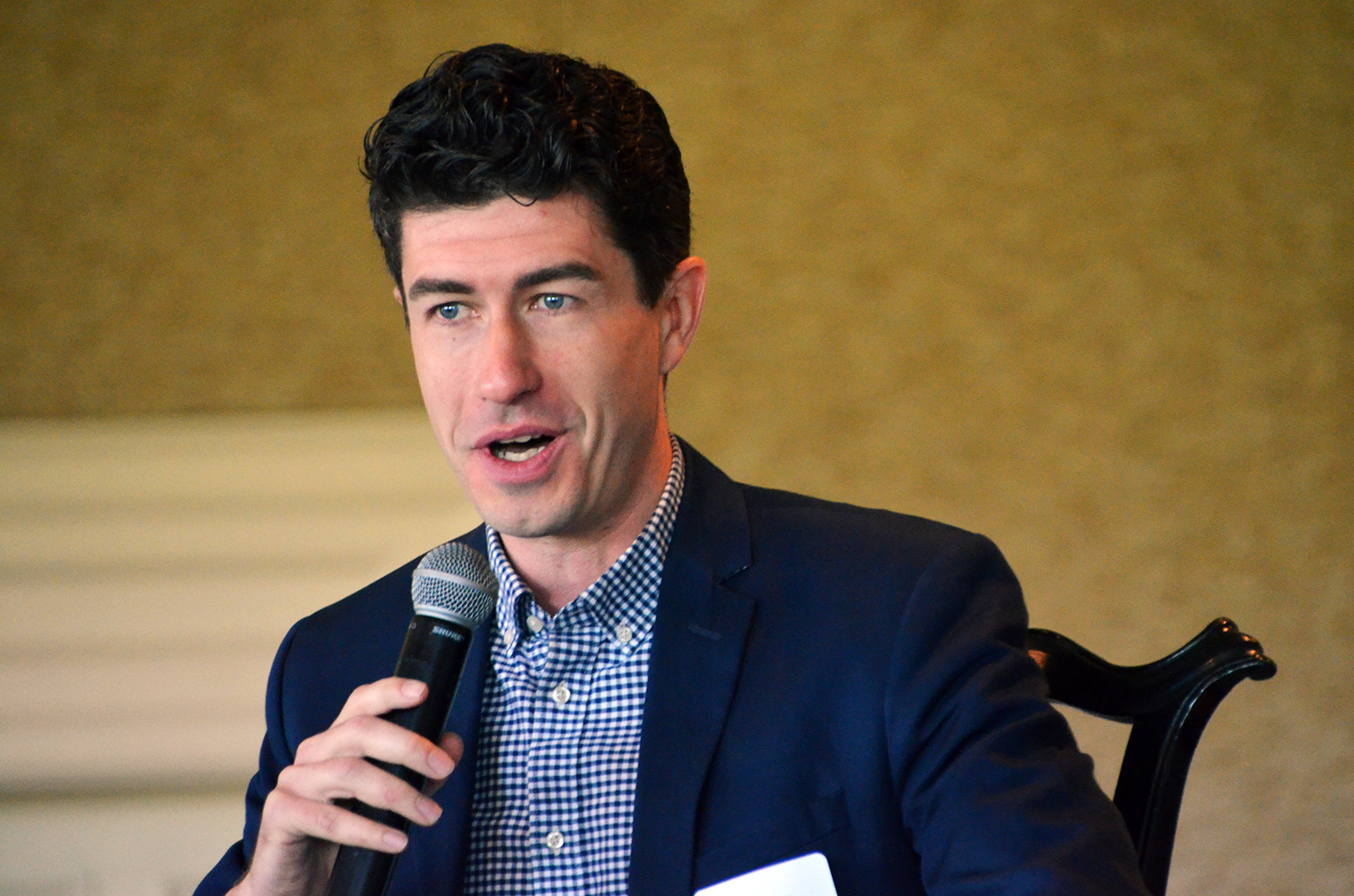
Providing scaling companies with new pathways to learning is the latest objective for Crema, said George Brooks, detailing the digital agency’s constant evolution.
“We had this opportunity with the brands that we’ve been working with over the past few years to basically figure out, ‘Hey, how do we increase the value of your company?’” explained Brooks, co-founder of Crema, highlighting the company’s new commitment to providing educational resources to companies at all ends of the growth spectrum.
George Brooks, Crema
The first in what Brooks expects to become a series, Crema played host to two professional development events early this month: a high-value startup webinar that detailed Crema’s interactions with startup success stories, featuring Landon Young, the company’s on-staff PhD; and an introduction to design sprints, which introduced clients to collaborative decision making tactics
“We want to give away this information because a lot of our clients, we want them to grow. As they grow themselves, they grow with us,” Brooks said, noting a recent realization about Crema’s client base.
“I’ll be honest, the majority of our work isn’t with startups as much anymore. It’s pivoted as we’ve kind of grown,” Brooks said. “We’ve just had a hard time saying that an agency model of a full stack product team is affordable for a startup — if we’re honest. But we do think that the startups that have been uniquely positioned to work with us, they’ve succeeded because of those quantitative and qualitative factors. They made learning their highest priority.”
Click here to read more about the Crema vision for expansion.
Often prioritizing outcomes over output, the way startups approach the world served as influence for Crema as the company put thought behind adopting educational efforts, Brooks elaborated.
“We may not be able to be the solution to help you go build your product end-to-end on Day 1, because that might be just too … rich. It might be difficult to do with an agency model, but what you can be focused on as you create your product, as you work with teams to actually fill that out, you need to be thinking about all these factors for the success of your company,” he said.
Face-to-face interaction is another core component of the Crema model, made much easier by dabbling in community-forward initiatives, Brooks added.
“In order to build that team … I have to keep my talent high quality,” he said. “I have to pay them at market rate. I have to make sure that I’m continuing to invest in their education and their increase in skill. And as you do that, then you have to find clients that also value the same thing.”
Saying no to projects that sounded fun or that Crema wanted to put its stamp on proved tough, but drilling down has — so far — proved to be the best growth strategy of them all, Brooks said of the strategy.
“We knew there were constraints on what we could actually help [startup clients] with and actually have our own company survive during the process … it really came down to just a practical look at: we’re not producing a product, we’re producing services,” he said. “So, let’s do the math on how much work we need to bring in, where we can continue to invest in local talent, and what kind of client is going to support and value that.”
Such a pivot is funny to Brooks because — with a team of more than 40 people and clients across the country — he doesn’t always see himself as being detached from startup life, he said.
“In my mind, I’m still that kid in my second bedroom … showing up and pretending like I’m not 24 years old — which I’m not 24 anymore,” he joked.
Granting companies big and small access to the tools that helped Crema reach its present status is a resource the could prevent many founders from spinning their wheels in the early days of their company, Brooks noted.
“We know it works internally, we know it works with other companies. We know a lot of other agencies, globally, that do similar things,” he said. “We’re going to be doing these events so we can kind of say, ‘Hey, here’s some practical ways that you can take this back to your organization and do this thing tomorrow.”
Crema hopes to roll out similar development offerings over the coming months. Future endeavors could include long-form, paid courses, Brooks teased.


2019 Startups to Watch
stats here
Related Posts on Startland News

KC’s next LGBTQ+ space wants to be more than just a raging club; How this permanent takeover aims to better reflect queer nightlife
Westport nightlife is set for transformation as a sweeping expansion adds seven late-night hotspots to the historic entertainment district — anchored by a new bar catering specifically to Kansas City’s LGBTQ+ community. Q Kansas City — a collaboration with Lance Pierce of Queer Bar Takeover — is expected open its doors in October at 504 Westport…

Chef brings Urban concept back to Troost; $25K GIFT grant boosts fight against gentrification
Chef Justin Clark’s latest venture — an eatery that blends Asian and soul food influences — aims to not only blur the boundaries between menus, but break down dividing lines within and between communities. “The goal was to create familiar items that everyone actually can relate to as Americans, but then again, we add some…

How one small town Missouri entrepreneur built a professional video business in a town of 10,000
Editor’s note: The following story was produced through a paid partnership with MOSourceLink, which boasts a mission to help entrepreneurs and small businesses across the state of Missouri grow and succeed by providing free, easy access to the help they need — when they need it. HARRISONVILLE, Missouri — Byron Brooks received his first video camera…

Ruby Jean’s founder juices up STL small biz accelerator as entrepreneur in residence
Chris Goode is sharing the fruits of his business success as the Ruby Jean’s Juicery founder takes on the apron of “entrepreneur in residence” for a Missouri program aimed at supporting Black and Latinx small businesses in St. Louis. In his role with the WEPower All-Industry Accelerator, Goode will guide 10 small businesses through a…