

USDA moving two key agencies to KC, expected to bring 568 new jobs to the animal health corridor
June 13, 2019 | Startland News Staff

Corporate and government leaders agree: Kansas City is positioned at the hub of innovation in the animal health space, they said Thursday, announcing the metro has been chosen as the new home of two federal agencies.
“Kansas City is a city with a small town feel, which makes it a great place to build a close-knit business community that works together to solve global challenges on a local level,” said Joyce Lee, president, Bayer Animal Health, North America.
“Kansas City is a sum of its many parts: Great people with strong work ethic and values, outstanding culture of diversity, art and sport, and an immense appreciation and respect for the land and its animals that have made it the epicenter of animal agriculture. If you are in animal ag, there is no better place to live, work and call home than Kansas City.”
— Scott Bormann, senior vice president, North America Operations, Merck Animal Health
The U.S. Department of Agriculture’s (USDA) Economic Research Service (ERS) and National Institute of Food and Agriculture (NIFA) are expected to relocate and be operational by fall 2019, according to the Kansas City Area Development Council, which led the effort to attract the agencies. The USDA team is evaluating multiple Class A office properties in Kansas and Missouri for its 120,000-square-foot space, which will house both agencies and 568 employees.
The Kansas City region was selected for its existing concentration of USDA employees and operations, the more than 150 federal agencies in the area, proximity to 13 land grant universities, and central location in the agricultural heart of the country, according to the Kansas City Area Development Council. This concentration is enhanced by the area’s research capabilities and industry-led initiatives like the KC Animal Health Corridor.
“Because of Kansas City’s 100-plus-year legacy of leadership in the agriculture and animal health industries, this decision feels like a homecoming for the USDA,” said Tim Cowden, president and CEO, KCADC. “We welcome the ERS and NIFA teams and look forward to introducing them to KC’s incredible culture, robust scientific community and unprecedented access to the research, farm, agribusiness and financial customers they serve.”
Within 300 miles of Kansas City are 13 land grant universities — including agriculture research giants Kansas State University and the University of Missouri — more than any other U.S. location, the KCADC said. The National Bio and Agro Defense Facility, the USDA’s state-of-the-art bio-containment laboratory for the study of diseases threatening the nation’s animal agricultural industries, is opening in Manhattan in 2022.
“With 56 percent of total worldwide animal health, diagnostics and pet food sales, the Kansas City region is home to more than 300 animal health companies, representing the largest concentration in the world,” said Kimberly Young, president, KC Animal Health Corridor. “We welcome the opportunity to collaborate with the USDA to advance cutting edge discoveries, develop the next generation of agriculture talent and ensure the safety of the nation’s food supply.”
Kansas City is already home to more than a dozen USDA agency operations. More than 5,000 USDA employees and contractors work in Kansas City for operations such as the Office of Animal & Plant Health Inspection Service and the Farm Service Agency. The Kansas City area also boasts 35,000 federal employees, and a robust Federal Executive Board serving the metro’s 150 federal agencies.
“It is always positive when our government can operate outside of Washington and closer to the people it serves, and I am certain that the decision to relocate NIFA and ERS to Kansas City is a good one,” said U.S. Sen. Jerry Moran, R-Kansas.
KCADC partnered with more than 300 KC area organizations, community partners, civic groups and elected officials to attract these two coveted USDA offices to the KC region.
Click here to see the full list of KCADC’s regional partners.

Featured Business

2019 Startups to Watch
stats here
Related Posts on Startland News

Not too late for the ‘naughty’ list: Roll into 2022 with a year-round Kansas City bourbon ball
A nip of locally distilled Tom’s Town bourbon mingles with bittersweet chocolate and a bourbon pecan mash with each bite into “guilty pleasure” — one of dozens of “notoriously naughty” bourbon and rum balls made by Lisa Fitch. “A lot of people associate them with the holidays, like they do with divinity fudge,” explained Fitch, founder…

The future is local: How masks helped neighbors look each other in the eyes again
Editor’s note: The opinions expressed in this commentary are the author’s alone. Keith Bradley is co-owner of Made in KC, a brick-and-mortar and online retailer of locally made goods with neighborhood, marketplace and cafe locations downtown, on the Country Club Plaza, in Lee’s Summit, Lenexa, and across the metro. As we wind down our second…
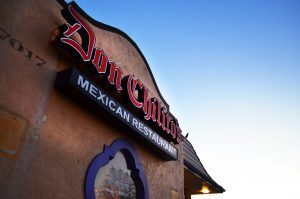
RIP to free chips and salsa: Why Don Chilitos just released the KC Tex-Mex staple’s secret family recipes
Don Chilitos might have served its last bit of CCQ sauce — but that doesn’t mean its final customers had to settle for a handful of chiclets as a memento on their way out the door, Barry Cowden said, explaining his decision to go public with dozens of recipes from the beloved restaurant in a newly…

A Silicon Valley startup relocated to Kansas in June; it’s latest move goes ‘all-in’ on Wichita
Startland News’ Startup Road Trip series explores innovative and uncommon ideas finding success in rural America and Midwestern startup hubs outside the Kansas City metro. This series is possible thanks to the Ewing Marion Kauffman Foundation, which leads a collaborative, nationwide effort to identify and remove large and small barriers to new business creation. One…