

Pride outside: How the outdoor industry is missing out with a $1 trillion LGBTQ+ blind spot
June 18, 2019 | Rashi Shrivastava
“You can’t be what you can’t see,” said adventurer and speaker Mikah Meyer, quoting activist Marian Wright Edelman last week in Kansas City.
Representation of LGBTQ+ consumers and entrepreneurs formed a thematic trail throughout the recent Mid-America Gay & Lesbian Chamber of Commerce awards luncheon where Meyer made keynote remarks. His borrowed quote also reflected Theresa M. Van Ackeren’s struggle to take the outdoor recreation industry by the handlebars, she said.
Van Ackeren, owner of Family Bicycles, described a market that typically doesn’t cater to the diverse audiences that could serve as new demographic verticals for male-centric, outdoor-oriented companies that face a shrinking traditional customer base, she said.
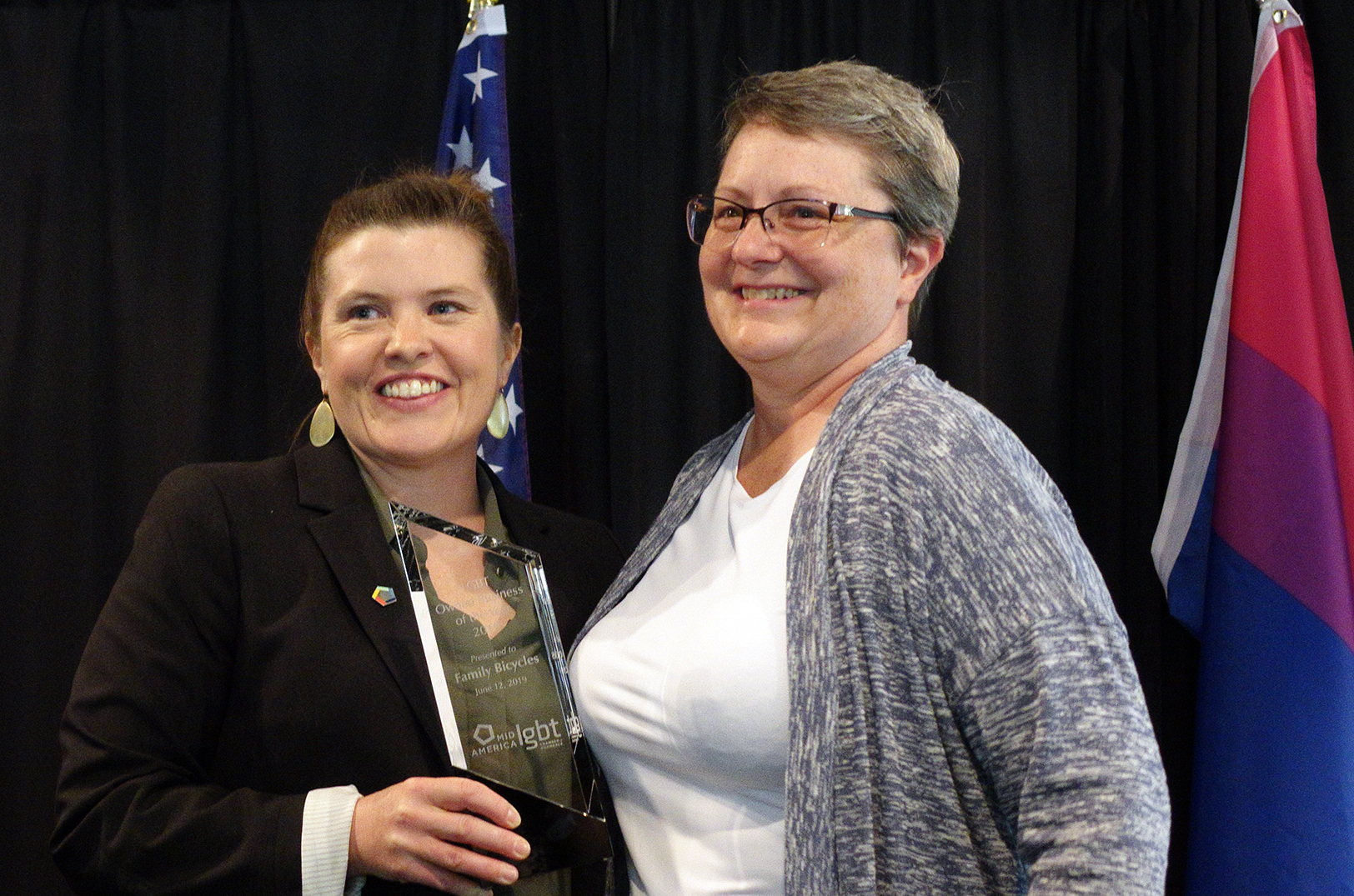
Her venture — a minority-owed bicycle shop founded in 2008 when Van Ackeren left a corporate job at DST Systems — was honored with the LGBT-owned business of the year award at the inaugural Business Equality Awards Luncheon.
For Van Ackeren, the journey to entrepreneurship began after a five-day bike trip covering the entire length of the Katy Trail. She realized her love for biking, but found she didn’t like shopping for bicycles in a male-dominated industry that seemed to focus its messaging on people who race bikes, she said.
“We have created a culture here so that anyone who comes here is welcome, feel safe and represented,” she said of Family Bicycles’ contribution to the Kansas City and LGBTQ+ business scene.
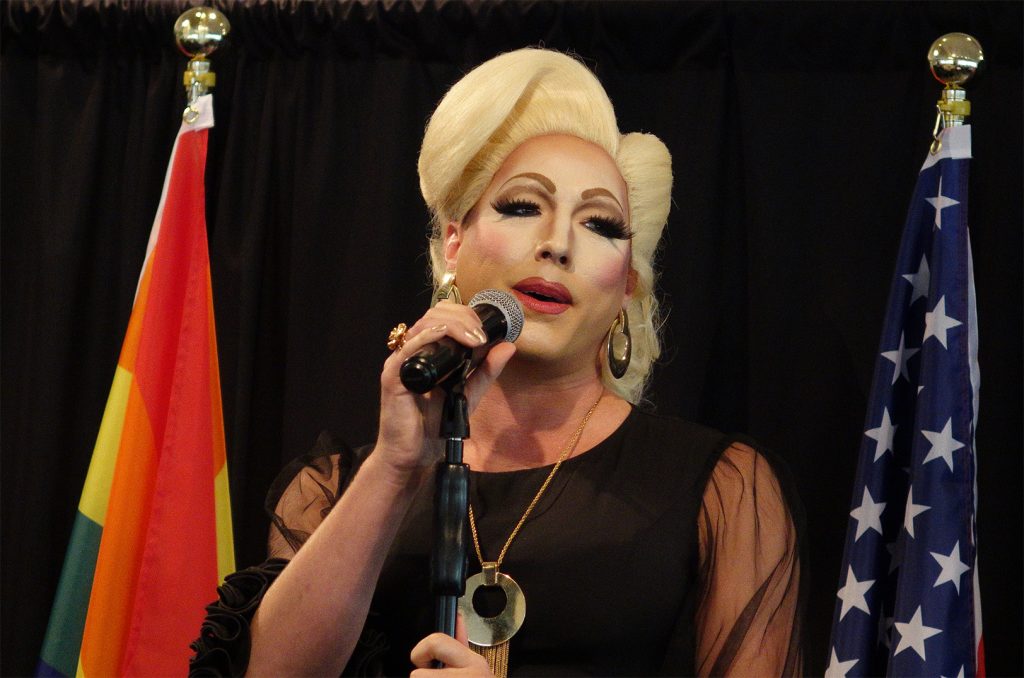
Daisy Buckët, Business Equality Awards Luncheon organized by the Mid-America Gay & Lesbian Chamber of Commerce in Kansas City
Into the woods, into the closet
“Creativity requires diversity, there’s no way we can solve real-world problems with a bunch of straight white men sitting around the table,” said Dan Nilsen, founder of the Mid-America Gay & Lesbian Chamber of Commerce, addressing its 240 attendees.
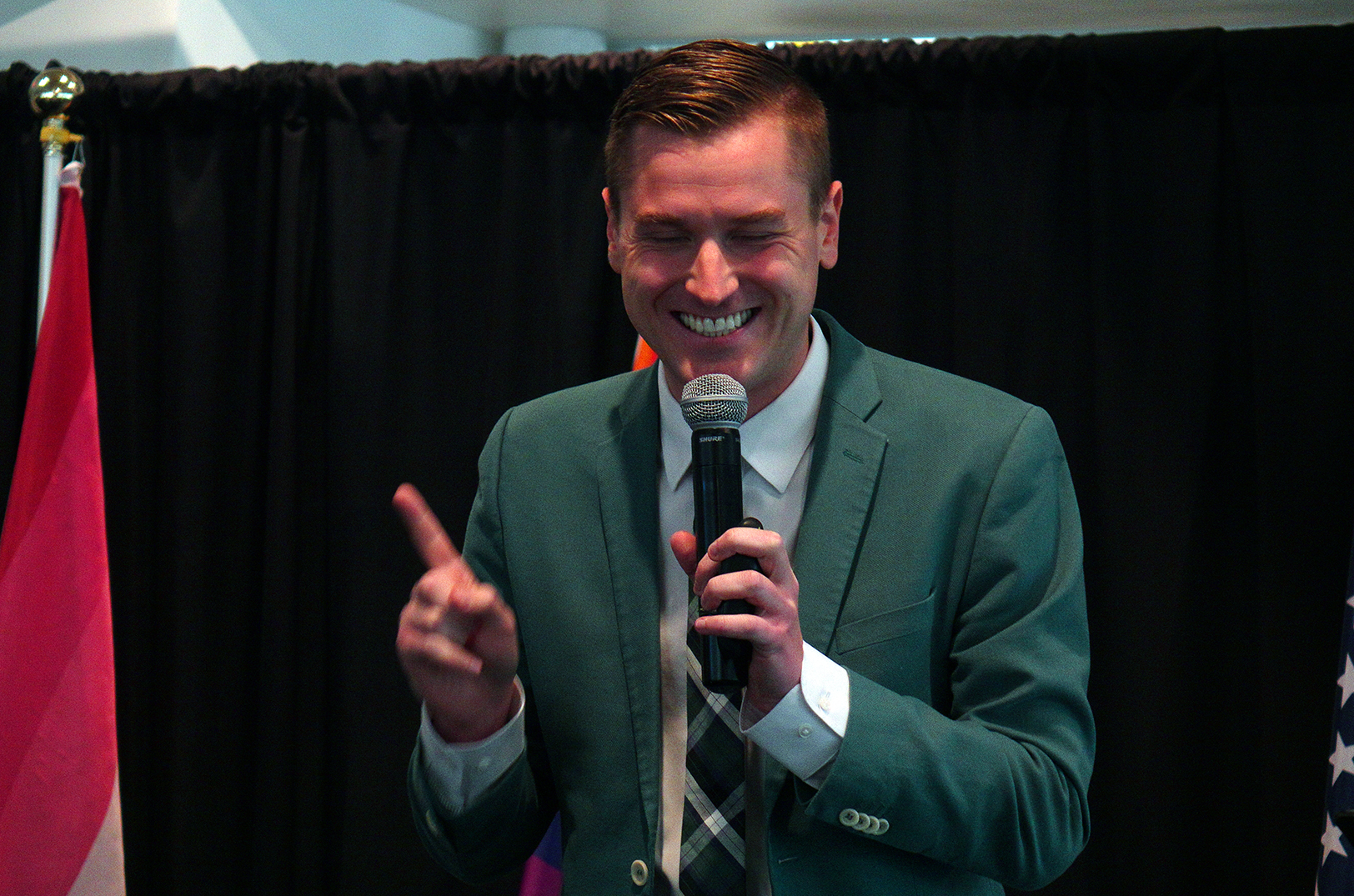
Mikah Meyer, Business Equality Awards Luncheon organized by the Mid-America Gay & Lesbian Chamber of Commerce in Kansas City
Keynote speaker Meyer encountered the same siloed outdoor industry Van Ackeren detailed. With four pride flags hoisted behind him, Meyer recalled his world record journey to visit all 419 U.S. National Park Service sites.
Despite a lack of funding, he persisted as a way to honor his late father’s love for travel and driving, he reminisced.
Meyer soon came to believe he was having trouble getting sponsors for the trip because he was “gay on Google” — meaning sponsors would back out at a critical moment when they realized Meyer is gay, he said.
“I always wondered, was it because they googled me, and found that I was gay?… I was working with a sponsor for 11 months and they called me one day and said, ‘You’re doing too much LGBT outreach, we are terminating your contract immediately,’” he said.
Convinced he had to choose between his identity and funding his travels, Meyer faced a difficult decision, he said.
“If I wanted to be successful in this outdoor journey I would have to go back in the closet because America did not associate gay with outdoorsy,” Meyer said.
A rainbow of consumers
The idea that gay people don’t participate or even excel at traditionally masculine activities has been reinforced in society, Meyer said.
Mikah Meyer
The LGBTQ+ community has a combined purchasing power of $1 trillion, according to a study conducted by gaysocial networking platform Hornet and Kantar. Most LGBT couples are less likely to have children and have more time for outdoor activities, so it is a smart financial decision to market to them, Meyer said.
“Yet their lifestyles are underrepresented in advertising,” said Meyer.
He ultimately realized he needed to be a voice for the LGBT community that had been hidden under a canopy for years. Meyer decided that if the outdoor recreation industry would not tap into the pink dollar by marketing products to the LGBT community, he would take matters into his own hands.
“So I pulled out a rainbow flag … and I said I will take pictures with this in front of some of the most iconic National Park Service sites so that people will see this and know that if I can be out in the middle of a national park with a giant rainbow flag, they are welcome there too,” he said.
He soon started selling T-shirts with the words “Pride Outside” printed across the front. A few months later, Outdoor sporting gear retailer Recreation Equipment Inc. (REI) picked up the breadcrumbs and approached Meyer to help the company market its OPT outside campaign.
“It was the first time in the history of the industry that an openly gay man was ever featured in any outdoor recreation campaign,” Meyer said.
This story was produced through a collaboration between Missouri Business Alert and Startland News.

Featured Business

2019 Startups to Watch
stats here
Related Posts on Startland News

Convenience unlocked: Amazon now offering delivery directly to vehicles in KCK
Adding to its area delivery offerings, Amazon is turning trunks in Kansas City, Kansas, into mailboxes. The Seattle-based tech giant on Tuesday introduced in-car delivery options in 37 U.S. cities, allowing its Prime members to receive packages in their parked vehicle. Kansas City, Kansas, and St. Louis are the only cities in Kansas and Missouri…

Big food hall concept Parlor KC plans fall opening in Crossroads
Parlor KC, a collaborative food hall now under construction in the Crossroads Arts District, hopes to serve as a laboratory and incubation hub for area chefs and restaurateurs. Eyeing a fall opening in the east Crossroads, Parlor will offer chefs and restaurateurs a physical space to test dishes and concepts on diners that want variety…

Looking for nation’s lowest-cost small cities for startups? No. 9’s in the KC metro
A Kansas City suburb finds itself among the top 10 lowest-cost small cities for starting a business, according to a new nationwide report. Raytown, Missouri, lands at No. 9 on the ranking by personal finance website WalletHub — just below Cape Girardeau, Missouri, at No. 8. The rest of the top 10 is filled by…

Merit-based economy is an illusion ripe for AI disruption, talent coop founder says
Organizing Midwest talent to use artificial intelligence and machine learning to combat societal challenges like income inequality could be a powerful tool for a new generation of problem solvers, said Brian Curry. “I truly believe in the possibility of artificial intelligence for changing the way we look at jobs, income, capitalism, poverty, wealth disparity, disease…