

Food delivery giants are eating up restaurant profits; KC startups add survival back to the menu
June 27, 2019 | Rashi Shrivastava
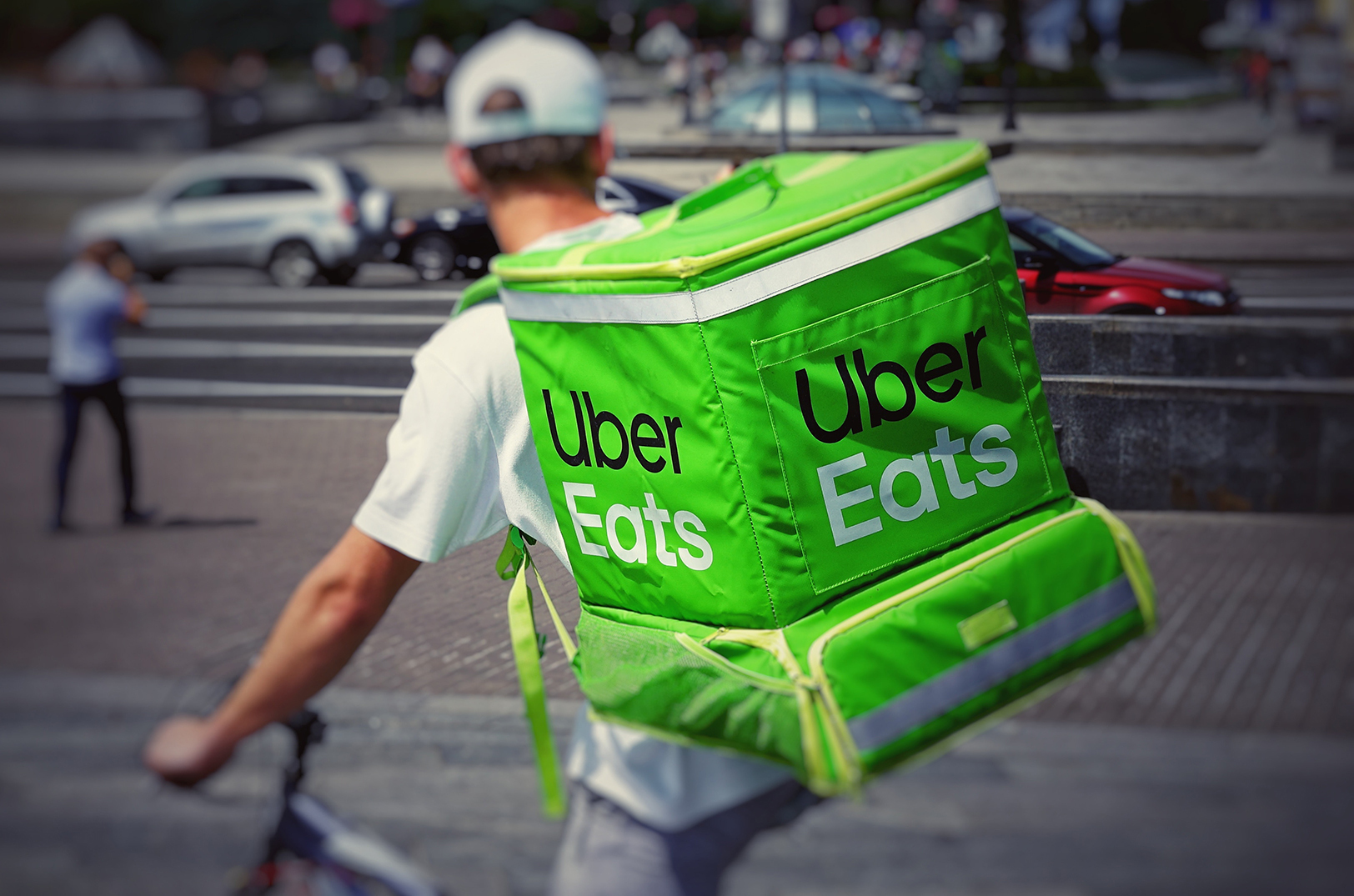
Ordering a meal at the press of a button is convenient for customers, but behind-the-scenes deals with the delivery giants that made on-demand food popular are running some independently owned restaurants out of business, said Vincent Son.
“We’re not making a dime,” said Son, owner of China Feast in River Market, which uses five different third-party food delivery companies, including Uber Eats, to reach customers.
The restaurant industry has a thin profit margin, which often falls below 5 percent. Topping that with a 30-percent commission fee to companies like Grubhub and Uber Eats on every delivery order eats up all overhead profits, Son said.
The online food delivery industry in the U.S. amassed about $20 billion in revenue with about 105 million users as of 2019, according to data gathering firm Statista.
“We moved to Uber Eats only because we wanted to be where our competition is, but it is turning out to be a headache now,” said Son who wanted to get a sliver of the growing customer base online.
The Chinese cuisine restaurant owner bought into the services of food delivery giants two years ago, later realizing his restaurant’s listing details typically are buried at the bottom of the third-party websites, he said.
Spending time and money to package meals going out the door also is a hassle with no payback, Son added.
“We have to prioritize online orders over dine-in orders because we want to make sure the delivery driver gets enough time,” he said.
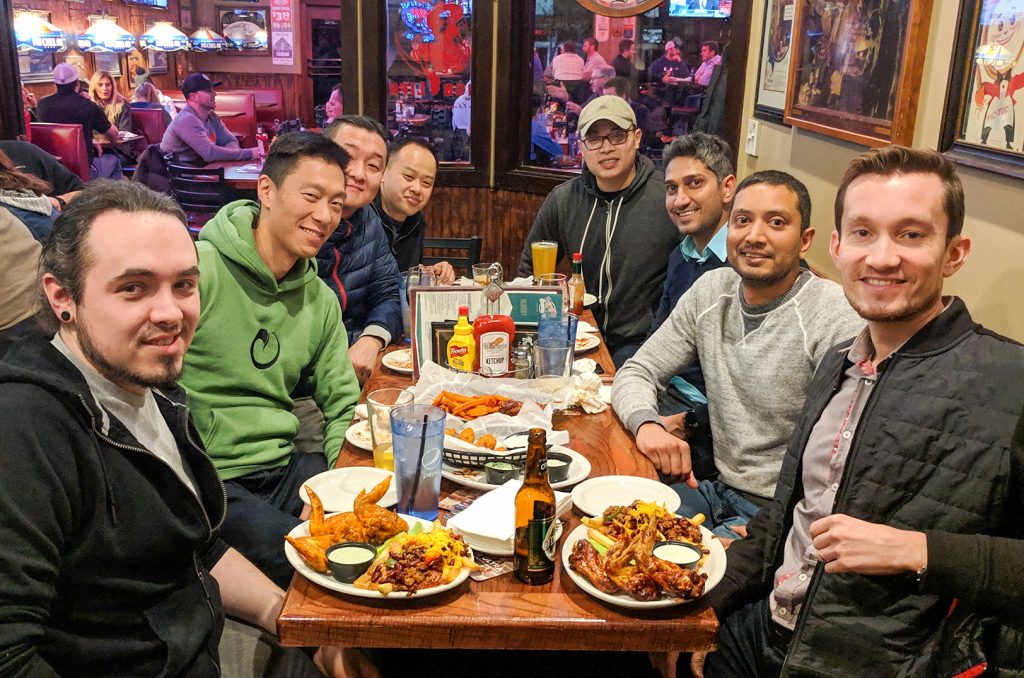
Menufy founders and team
A native negotiator
“You’re basically turning your hamster on a wheel — but you’re not going anywhere, right? Every order they make, they’re not making money,” said Ashishh Desai, sales director at Overland Park-based Menufy, summing up the dilemma.

In 2009, Desai, Hoang Nguyen and Shawn Lee were working at an Asian eatery, Stix Restaurant in Kansas City, Kansas, when they noticed setbacks in the logistics of the ordering process. They saw a need for creating an e-commerce solution so customers could directly order from the restaurant’s branded website.
Duplicating the idea for other restaurants struggling to compete on the web marked the beginning of Menufy, Desai said.
Click here to read more about Menufy and its origin story.
“We partner with third-party delivery companies and negotiate on behalf of restaurants so that [restaurant owners] have to pay lower delivery fees. … We also make it affordable for restaurants to do anything digitally, so we actually develop websites for restaurants,” he said.
Click here to see China Feast’s website via Menufy.
Menufy, which operates in 1,700 cities across the country, has partnered with DoorDash to reduce the delivery commission down from 30 percent per order to about 12 percent for its customers, said Desai. In return for its services, the bootstrapped startup charges restaurants a convenience fee of $1.50 per order.
“Our fee remains the same whether a customer orders $20 or $100 worth of food. We also let restaurateurs choose between absorbing the cost or passing it onto their customers,” said Jeremy Kuo, marketing director at Menufy.
Menufy has a symbiotic relationship with restaurants, said Desai. Their profit depends on how many orders the restaurants get.
Josh Rogers opened his restaurant, Krokstrom Scandanavian Comfort Food, three and a half years ago. He used Postmates for six months before switching to Menufy because of its lower commission fees and better customer service, Rogers said.
“A lot of us local restaurant owners see online delivery as a necessary evil; it is what it is and the customers want it,” said Rogers.
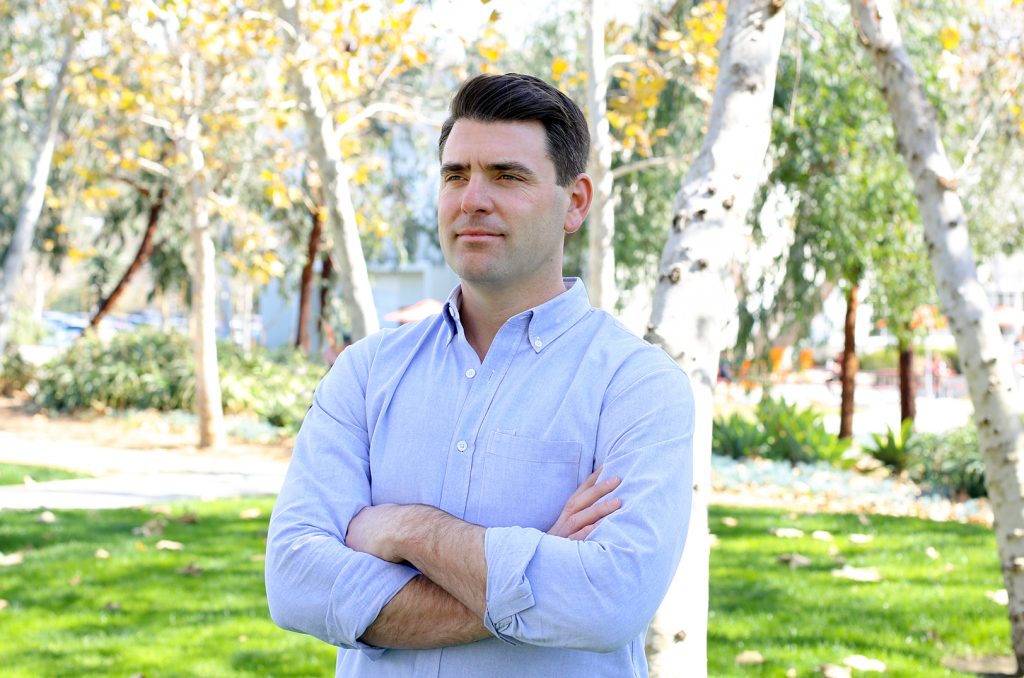
Chris Webb, ChowNow
Duopolising the market
Attracted by the benefits of a prime location in the Midwest with a diverse food culture, ChowNow, a Los Angeles-based food delivery startup flocked to the city. It has a similar goal to Menufy: offer local restaurants a sustainable online presence — but with a different business model.
Click here for more on ChowNow’s move to KC.

“We fell in love with Kansas City; the city government was supportive, there are universities nearby, there are at least a million people living in the city,” said Chris Webb, CEO and co-founder of ChowNow. “We were convinced Kansas City would be a good home for us.”
It took an investor’s eye to realize that local restaurants were suffering because they weren’t yet adept with technology, said Webb, who invested in his favorite local restaurant in LA 13 years ago.
“We want to get restaurants to have their own tools so that they don’t fall behind franchise restaurants just because they have a tight budget,” said Webb, who worked as a delivery driver for a restaurant in high school.
ChowNow, which was founded in 2011, provides online exposure for local restaurants through customized mobile applications and partnerships with Google, Yelp and Instagram. Unlike Menufy, ChowNow charges restaurants a flat fee between $99 and $150 per month in exchange for making the eateries more accessible to customers online.
“We think the flat monthly fee is very similar to the telephone, right? So for decades, restaurants would get orders directly off the telephone. The telephone company would never charge anything on a per order basis,” Webb said.
Restaurants are now seeing food delivery systems as a marketing tool, not as a source of revenue, said Jeff Brack, general manager at Classic Cup Cafe.
“We can kill out the business pretty quickly if we just operate on Uber Eats — the margins aren’t good enough, you need to completely revamp your business and pricing accordingly to take those service fees into account,” said Brack.
This story was produced through a collaboration between Missouri Business Alert and Startland News.

Featured Business

2019 Startups to Watch
stats here
Related Posts on Startland News
UMKC, Digital Sandbox KC partnership to maximize resources, create jobs
The University of Missouri-Kansas City’s E-Scholars program has partnered with a business incubator program to provide resources and capital to student entrepreneurs. The program has partnered with Digital Sandbox KC to offer inroads to students to further develop their business projects with additional funding. “The UMKC Entrepreneurship Scholars program has a very specific goal –…

KC smart city ‘an invitation’ to innovators, entrepreneurs
The City of Kansas City, Mo., has signed an agreement with Sprint and Cisco to create the largest smart city in North America in the City of Fountains. Sprint will be building a network of connectivity worth up to $7 million dollars while Cisco will be providing smart city infrastructure worth upwards of $5 million. The…
Startup Little Hoots working with Today Show, Huffington Post
Kansas City-based Little Hoots has scored two high-profile partnerships that are scoring its memory-saving app thousands of additional downloads. The tech firm is working with the Today Show and the Huffington Post to provide snippets from its memory-keeping platform that captures youngsters’ memorable quotations to share with friends and family. “Whenever they publish one of these Little Hoots…
RECAP: 1 Million Cups panel offers decision-making advice
Three entrepreneurs took the stage at 1 Million Cups this week to offer advice on navigating the tough world of entrepreneurship. Alex Altomare, co-founder of BetaBlox, Linda Buchner, co-founder and president of Minddrive, and Ben Kittrell, co-founder and CTO of Doodlekit, all spoke about the variety of hard choices entrepreneurs face. On handling tough decisions……