

Investors, students find potential and power in High School eSports League
June 18, 2019 | Michaela Kitchen

Benjie Lewis saw potential in eSports from the beginning — first as a mentor, then an investor, he said.

Benjie Lewis
Rapidly evolving from recreational pastime to official leagues and high school sports programs, the competitive multiplayer gaming concept has created a new space for startup opportunity, he said.
“When I was growing up … they weren’t really real teams, and now it’s full-on sport,” Lewis said.
His investment in High School eSports League already is paying off in terms of growth and momentum, he said. The startup now has 1,700 partner schools and more than 60,000 users.
Click here to learn more about High School eSports League.
Filling a void for students who are less interested in such programs as football, baseball and basketball, eSports has a place at the top of today’s secondary education extracurriculars, said HSEL founder Mason Mullenioux.
The league creates a partnership opportunity for students and schools to bring varsity gaming, premium tournaments and other league opportunities to high school gamers, he said, noting eSports high school students are learning STEM, programming, and management skills.
Now developing credited school curriculums, Mullenioux and the league is focused on social and emotional development called “Gaming Concepts,” which aim to teach such skills as team building, leadership, social interaction, college and career readiness, and teach basic-level technical skills, he said.

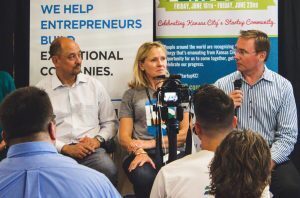
Photo by Anthony Brolin
High schools like Lee’s Summit North and Park Hill South already are on board, stoking confidence for potential investors, Lewis said.
“Once they start to prove themselves, then you’re going to get the real investors, they’re going to say, Yeah, I want to put in a million dollars, or I want to put in $5 million,” he said. “What were doing with high school eSports now is just a tiny segment of it … There are all sorts of facets off of eSports where there’s a ton of potential revenue models that are going to come out — models we probably haven’t even thought of yet.”
The numbers speak for themselves, Mullenioux said of the league’s growth.
“That’s what investors see,” he said. “I think they see huge dollar signs.”
Beyond the potential for revenue, Mullenioux ties the league’s success to a genuine passion for gaming, and the community it creates, he said. Starting HSEL six years ago as a passion project, his drive remains for a place where students can feel at home, Mullenioux said.
“We’re in it because this is what we wanted in high school,” he said. “There’s a lot of kids out there who don’t have a place to belong and this is where they find that. … They make friends and they come out of their shells. … It’s something that they can feel part of for the first time — that’s the big power of eSports.”

Featured Business

2019 Startups to Watch
stats here
Related Posts on Startland News

Nearly $5M remains in Kansas angel tax credits as Aug 31 deadline looms; startups urged to apply
The clock is ticking for Kansas angel tax credits to be awarded to growing startups in 2018, said Rachèll Rowand. “We are looking for innovative businesses in Kansas that are under five years old,” said Rowand, program manager for the Kansas Department of Commerce, which administers the state’s angel tax program. “The biotechnology industry is…
Startland list reflects big wins across KC — but don’t get comfortable, warns founder
Kansas City has traction, said Davyeon Ross, but the city and its support network must keep the ball moving. “It’s impressive how much these startups and companies are contributing to the community and the economy,” said Ross co-founder and COO of ShotTracker, reacting to data within Startland’s 2018 list of Top Venture Capital-Backed Companies in…

Kansas-vs-Missouri investment record tied to state support for innovation, experts say
The Sunflower State appears to set itself apart based on trends indicated by Startland’s 2018 list of Top Venture Capital-Backed Companies in KC. But does Kansas really have the competitive edge? Kansas companies are on average two years older than Missouri companies; they’ve raised more than four times as much capital than their Missouri counterparts;…

Think globally, invest locally: Are KC dollars worth more than outside capital?
Hometown capital is validating, said Darcy Howe, but it isn’t everything. Half of the firms in Startland’s 2018 list of Top Venture Capital-Backed Companies in Kansas City received 50 percent or more of their funding from KC investors — a promising indicator of local support that suggests to outside investors that a company is ready…